




Carved Oak Desk Cabinet
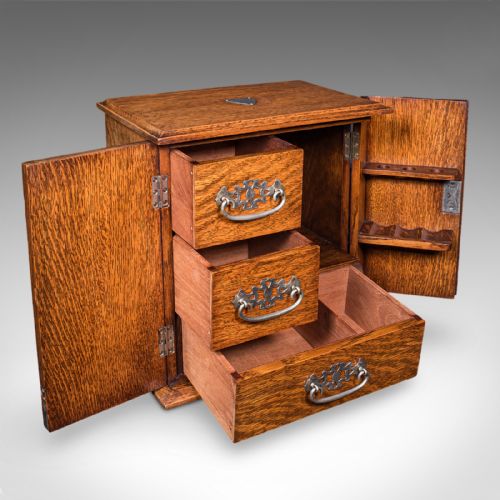
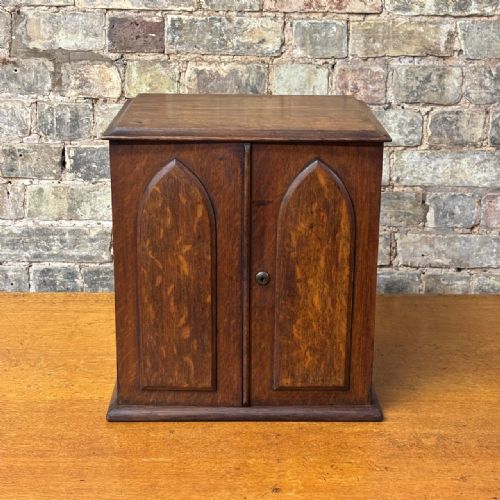
A carved oak desk cabinet combines solid timber construction with intricate hand-carved detailing, offering practical storage for writing materials and documents.
Carved Oak Desk Cabinet
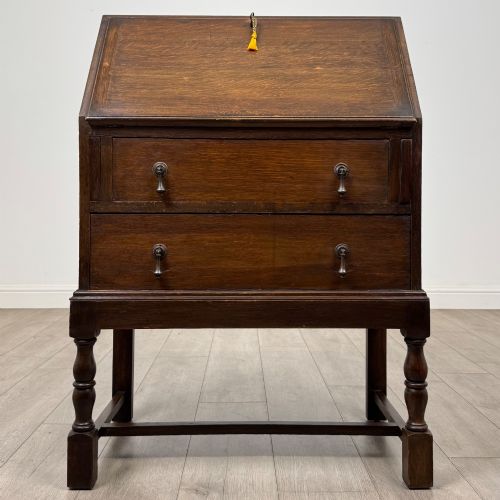
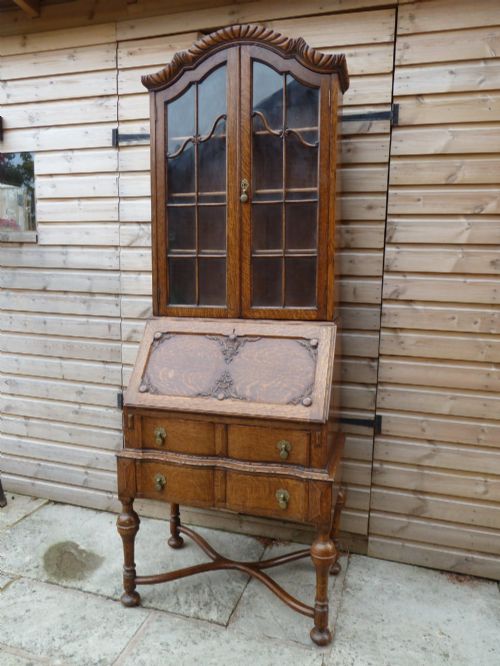
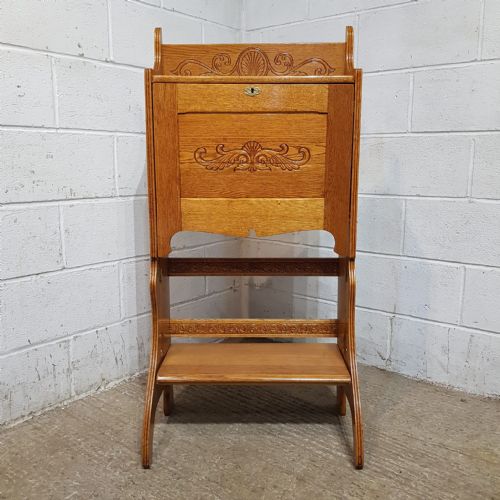
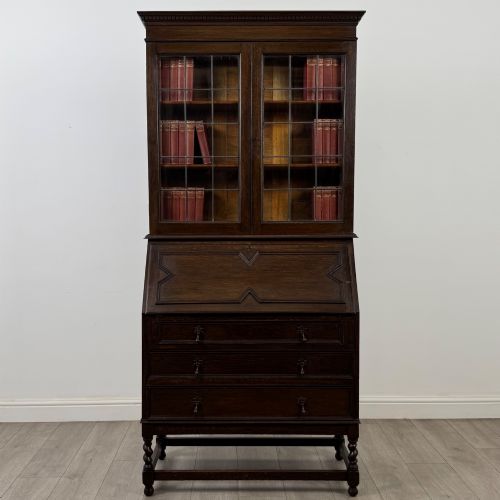
A carved oak desk cabinet is a functional workspace storage piece designed for letters, books, and writing implements. The examples found here range from compact table-top cupboards and smoker's cases to larger bureau bookcases and writing desks.
Most items on this page date from the Victorian and Edwardian eras, alongside earlier seventeenth-century vernacular pieces and twentieth-century interpretations. These domestic and library fittings use solid timber forms adapted for writing, filing, and small-scale storage.
Makers and designers from the Arts and Crafts movement also produced versions of these cabinets, incorporating distinctive vernacular details. Buyers encounter everything from drop-front bureau desks to standing secretaire bookcases in this selection.
How they were made
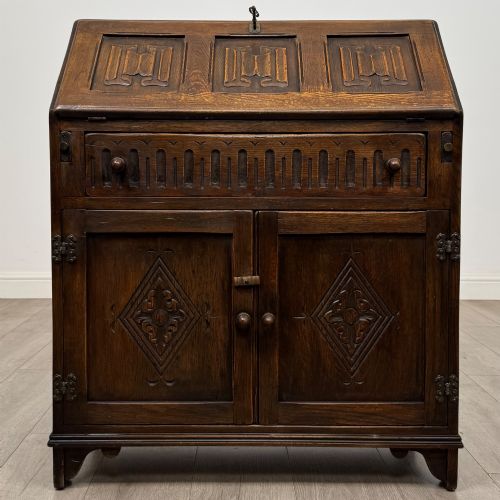
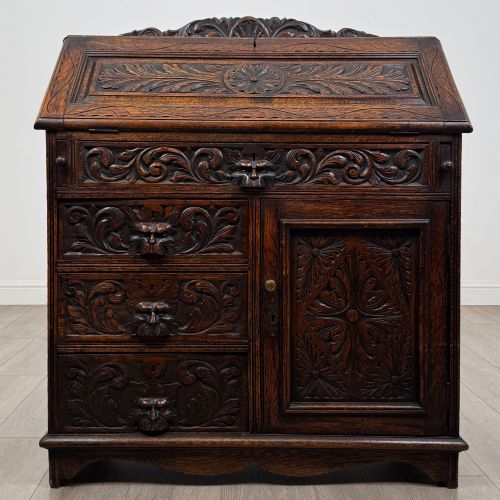
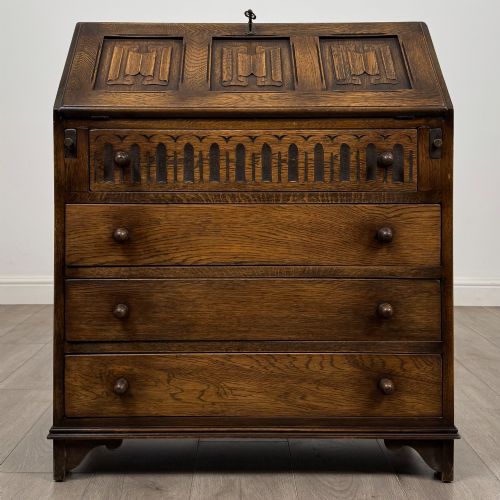
The primary material across these listings is oak, occasionally complemented by walnut or pollard oak veneers, brass handles, glass panes, and iron fittings. Timber surfaces frequently display deep relief carving, linenfold panels, or characteristic Gothic and Jacobean motifs.
Joinery techniques rely on solid construction methods suited to heavy timbers, with panelled doors and fitted writing interiors built to withstand daily use. Metalwork fixtures such as brass hinges and wrought iron handles secure drop fronts, drawers, and cabinet doors.
What varies in quality
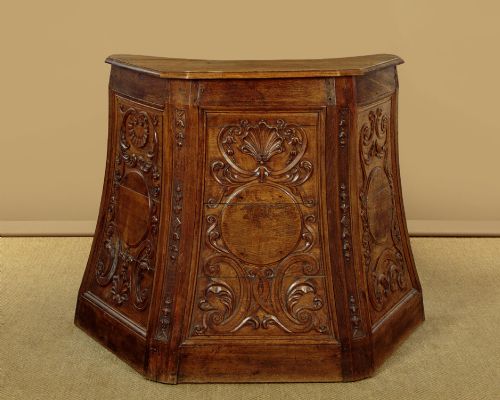
Quality in a carved oak desk cabinet rests upon the crispness of the hand-carved ornamentation and the selection of the timber grain. Pieces exhibiting deep, well-defined relief work and substantial solid oak construction stand apart from simpler vernacular items.
The sophistication of the internal mechanism also dictates value, with moving writing compartments, secret drawers, and fitted pigeonholes indicating superior cabinet-making. Original brass hardware, intact glass panels, and well-preserved surface patination complete the higher tier.
Morris & Co·Liberty & Co·Robert Mouseman Thompson·George W Jack
The Carved Oak Desk Cabinet Glossary
- Bureau
- A writing desk with a sloping hinged lid that covers a fitted interior of pigeonholes and small drawers. This form forms a primary category within these desk cabinet listings.
- Linenfold
- A style of carved wooden panelling that resembles folded folds of fabric or linen. It frequently decorates the door panels and drops fronts of Edwardian oak pieces.
- Secretaire
- A piece of furniture containing a pull-out writing drawer or drop-down desk compartment concealed behind a drawer front or cabinet door. It often appears combined with a bookcase top.
- Vernacular
- Everyday domestic furniture made by regional carpenters using local traditions rather than high-style metropolitan designs. Seventeenth-century oak items often fall into this category.
Carved Oak Desk Cabinet: Frequently Asked Questions
What is a carved oak desk cabinet?
A carved oak desk cabinet is a compact wooden storage piece designed for writing equipment, stationery, and documents. These items feature hinged writing surfaces, small drawers, and decorative relief carving across the exterior.
They serve as practical desktop organisers, wall cupboards, or freestanding bureau bookcases suited to studies and libraries. The category encompasses everything from table-top smoking cabinets to large Victorian secretaire bookcases.
How do I date a carved oak piece?
Dating relies on examining the construction methods, timber selection, and decorative style of the cabinet. Pieces from the seventeenth century display heavy vernacular framing, while Victorian and Edwardian examples incorporate revival styles like linenfold and Gothic panelling.
Hardware such as brass handles and hinges also helps determine age, alongside maker signatures or dated presentation inscriptions found on select items. Comparing the drawer joints and internal layout to documented period pieces provides further clarity.
Where were these cabinets used?
These cabinets were historically placed in studies, libraries, parlours, and doctor's consulting rooms for daily correspondence and record keeping. Compact table-top versions sat upon larger desks or sideboards to hold specific writing supplies and tobacco.
Larger standing bureau bookcases fulfilled the role of a personal workstation before modern office furniture became widespread. They provided secure storage for account books, letters, and valuable documents in private homes.
How do I care for antique oak?
Maintaining antique oak involves keeping the timber away from direct heat sources and sudden humidity changes to prevent splitting. Regular dusting with a soft, dry cloth preserves the surface without damaging the historic patinated finish.
Occasional application of traditional beeswax helps nourish the wood and maintain its natural lustre. Avoid using modern liquid silicones or harsh chemical sprays on vintage wooden surfaces.