
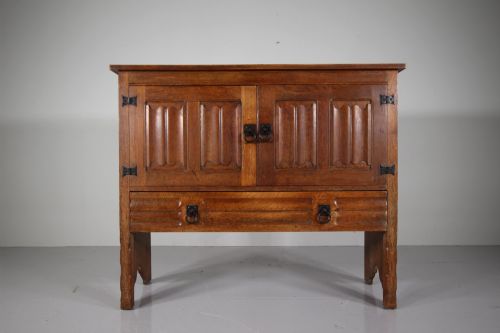
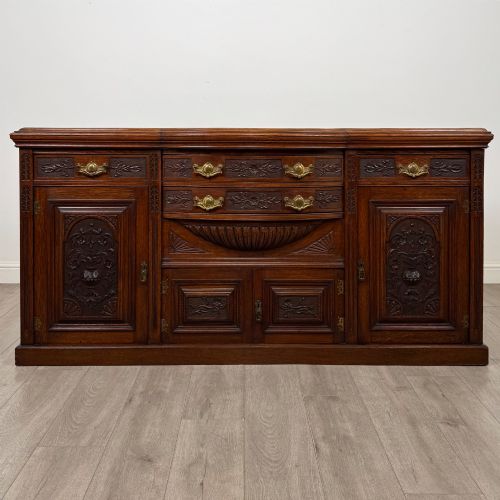
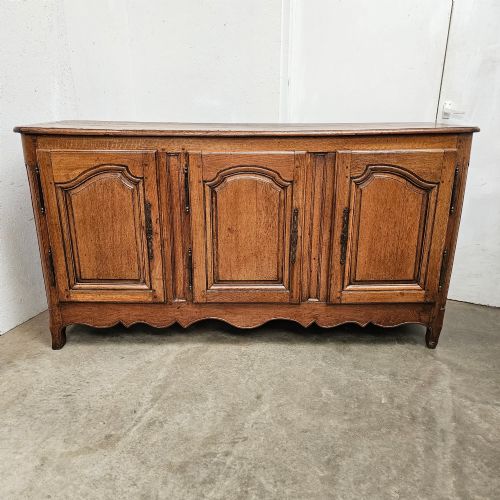
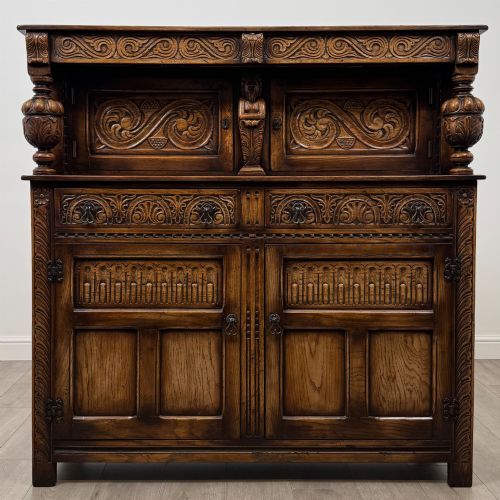
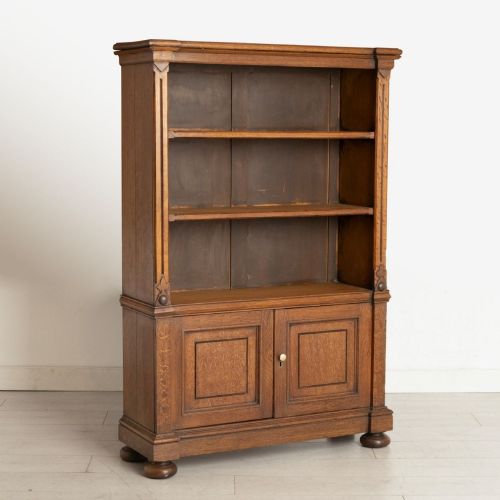
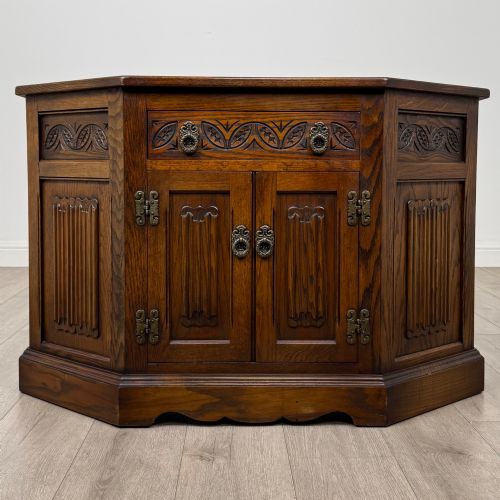
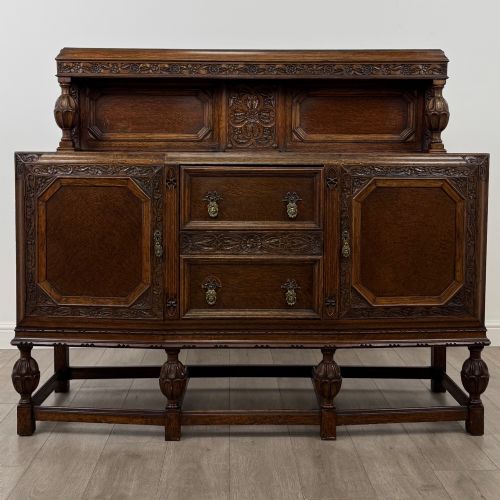
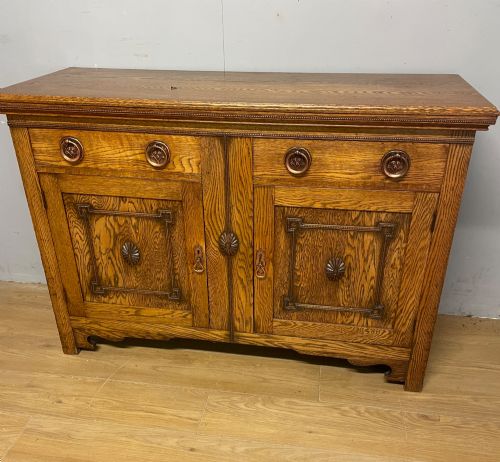
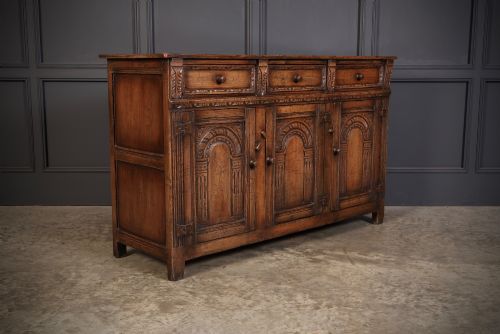
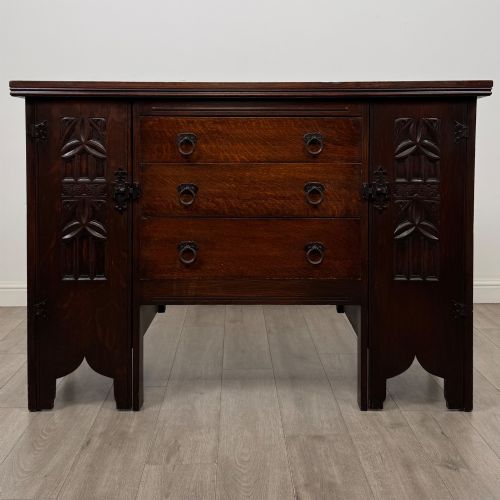
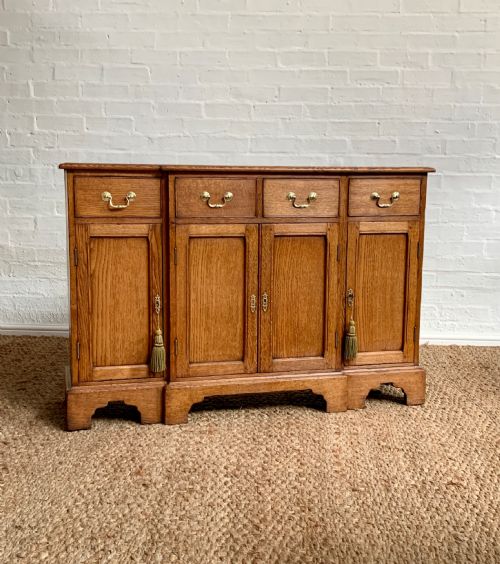
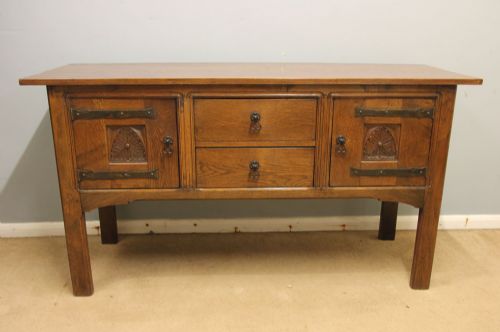
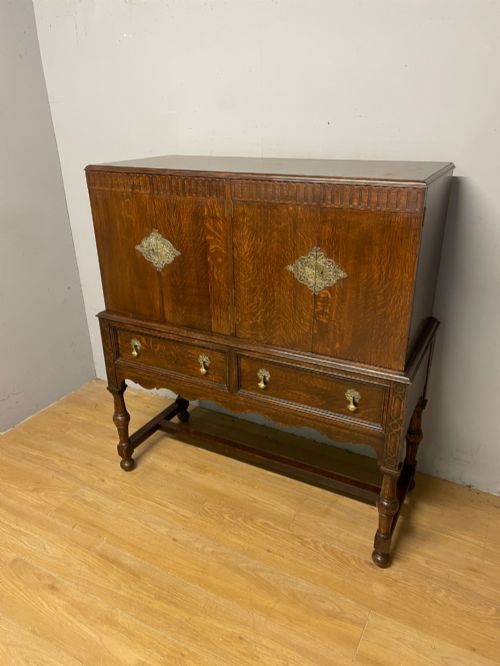
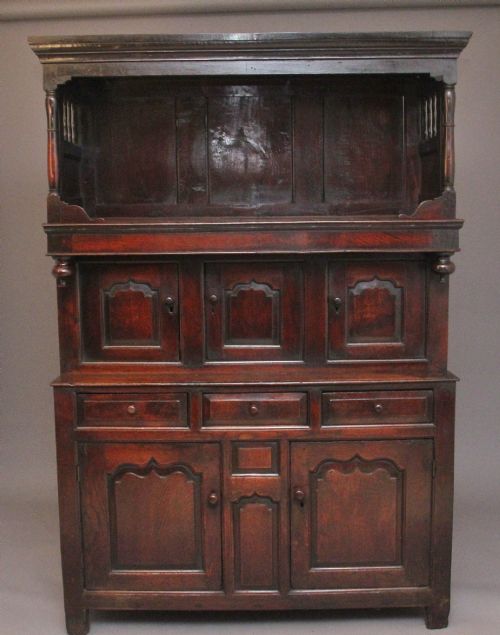
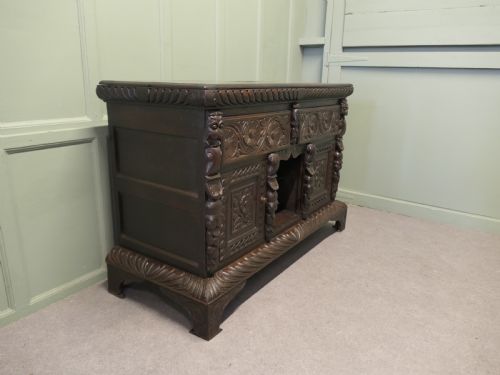

Carved Oak Cupboard Base
A carved oak cupboard base provides sturdy lower storage, bringing heavy timber grain and traditional joinery directly into a room.
Carved Oak Cupboard Base
A carved oak cupboard base sits at the heavier end of traditional storage furniture, functioning primarily as a low sideboard, dresser base, or court cupboard. These pieces serve as practical storage units with enclosed lower compartments, often topped by flat surfaces suited for display or serving.
Most examples found on this page date from the seventeenth century through to the early twentieth century, taking in vernacular country styles alongside revivals like the Jacobean and Gothic tastes. The common thread is the use of robust timber carcasses built to withstand centuries of domestic use.
Materials and construction
Construction relies heavily on solid oak timber, frequently augmented with secondary woods and held together using traditional frame-and-panel joinery, pegged mortise and tenon joints, and hand-cut dovetails. Surfaces display deep relief carving, linenfold panelling, or geometric mouldings worked directly into the thick timber.
Hardware consists mainly of wrought iron or brass drop handles, hinges, and escutcheons that secure heavy doors and drawers. Occasional inclusion of bone, copper, or glass elements adds textural contrast to the dark or golden patinated oak surfaces.
Several cupboards stare back with Green Man faces carved straight into the oak.
Evaluating standard and survival
Quality rests heavily on the depth and crispness of the hand-carved ornamentation, the integrity of the original timber frame, and the survival of period brass or iron hardware. Pieces retaining their initial patination and uncompromised structural joints stand clearly apart from heavily altered examples.
The sophistication of the joinery, from precisely fitted panel-work to smooth-running drawer linings, separates everyday regional pieces from high-status commissions. Proportion, timber selection, and the absence of intrusive later modifications dictate the overall standing of an individual base.
The Carved Oak Cupboard Base Glossary
- Court cupboard
- A traditional enclosed piece of dining furniture featuring a recessed upper section or a compact lower cupboard base supported by heavy turned posts.
- Dresser base
- The lower section of a kitchen or dining dresser, comprising rows of drawers above cupboards, designed to stand independently against a wall.
- Linenfold
- A style of wood carving that mimics the appearance of folded vertical cloth panels, frequently seen on sixteenth and seventeenth century cabinetry.
- Tridarn
- A large Welsh storage piece built in three distinct tiers, combining open display shelves and enclosed cupboard sections in heavy oak.
- Potboard
- An open slatted lower shelf incorporated into the base of traditional dressers for storing heavy pots, pans, and serving dishes.
Carved Oak Cupboard Base: Frequently Asked Questions
What is a carved oak cupboard base used for?
These low timber units provide substantial concealed storage behind heavy doors alongside a wide surface area on top.
Historically placed in dining rooms or halls, they now function well as sideboards, media units, or hallway consoles in contemporary homes.
How do I date a carved oak cupboard?
Dating relies on observing construction methods, tool marks, timber shrinkage, and stylistic motifs such as strapwork or linenfold panelling.
Early pieces utilise pegged joints and hand-riven boards, whereas revival pieces from the Victorian and Edwardian eras show mechanical saw marks and standardised fixings.
Are these pieces made of solid oak?
The primary structure, doors, and top boards consist of solid oak, though secondary timbers like deal or pine occasionally appear in drawer linings and backboards.
Heavy native oak gives these cupboards their characteristic weight, durability, and resistance to wear over centuries of use.
How do I care for antique oak furniture?
Keep wooden furniture away from direct heat sources and sudden humidity changes to prevent the thick oak panels from splitting.
Feed the timber periodically with traditional beeswax to maintain the natural lustre and protect the patinated surface from drying out.