




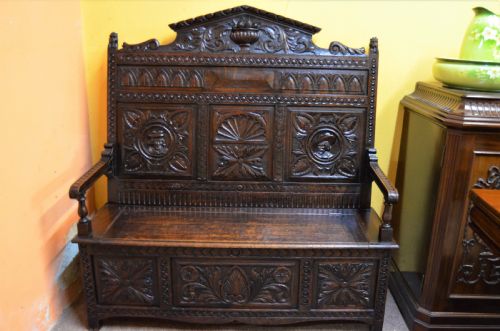
Carved Oak Chest Bench
These carved oak chest bench pieces combine storage and seating, offering solid timber construction and traditional period styles for the home.
Carved Oak Chest Bench
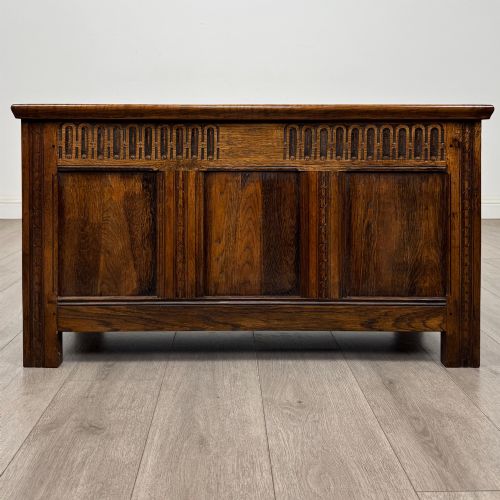
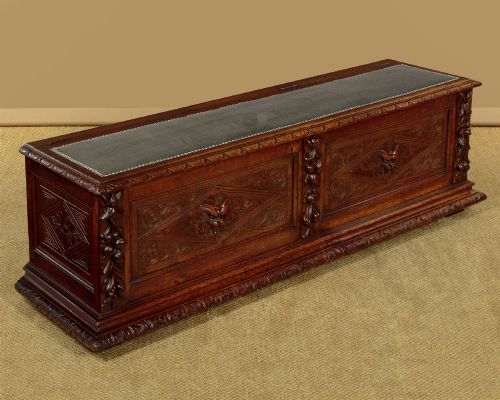
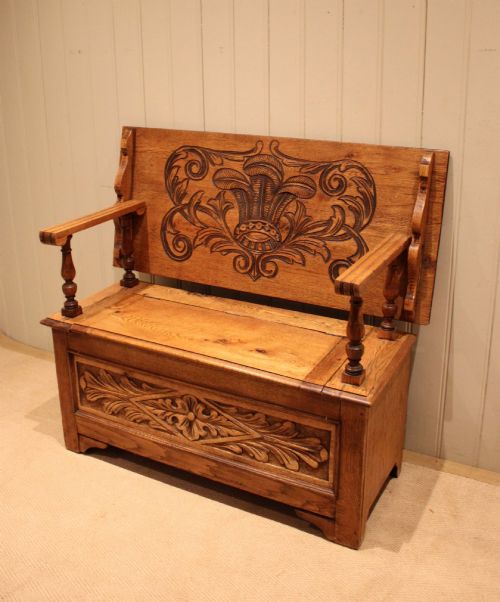
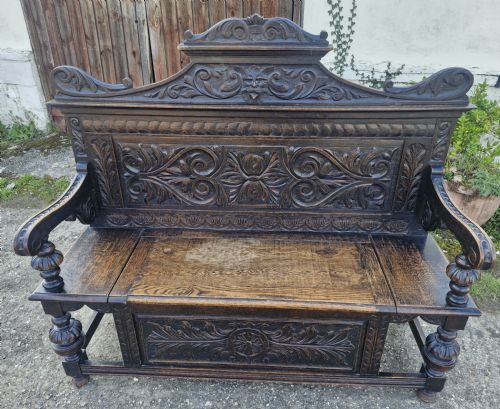
When you search for a carved oak chest bench, you find dual-purpose furniture that functions as both a lidded box for storage and a seat or settle. The pieces on this page span several centuries, reaching from the eighteenth century through the Victorian period and into the twentieth century. Forms range from blanket boxes and coffers to monks benches, settles, and mule chests designed for halls and living spaces.
You are most likely to meet Victorian and Edwardian examples, alongside pieces from the 1900s and 1920s. Styles lean heavily into revivals, showing Jacobean, Gothic, Renaissance, and rustic farmhouse influences. These items served practical domestic storage needs while providing heavy wooden seating in hallways and rooms.
How they were made
Construction relies on solid oak timbers, chosen for strength and durability. Makers joined panels using traditional methods, incorporating structural iron and brass hardware such as hinges and catches.
Carving defines the decoration, utilising chisels to render motifs such as the Green Man and geometric panels. Leather sometimes appears on seating surfaces, complementing the primary timber structure.
Listings feature solid oak combined with iron and brass hardware, spanning periods from the eighteenth century to the 1930s.
What varies in quality
Quality shows in the depth and crispness of the carving across the oak surfaces. Sharply defined details on panels and figural elements indicate skilled workmanship rather than mechanical or hurried production.
The integrity of the solid oak timber and the original hardware also distinguish finer examples. Heavier, well-proportioned pieces with sound joints represent the upper tier of the range.
The Carved Oak Chest Bench Glossary
- Monks bench
- A convertible piece of furniture featuring a hinged back that folds down over the arms to form a table top above a chest base.
- Mule chest
- A storage chest fitted with one or more drawers beneath the main compartment, combining coffer storage with drawer accessibility.
- Settle
- A wooden bench with a high solid back, solid arms, and enclosed storage or seating base designed to block draughts.
- Coffer
- A heavy wooden chest traditionally used for storing valuables, linen, or documents securely.
- Green Man
- A sculptural architectural ornament depicting a human face carved with leaves, vines, or foliage emerging from the mouth.
Carved Oak Chest Bench: Frequently Asked Questions
Where were these benches used?
These benches were traditionally placed in hallways, entrance passages, and principal rooms of country houses. They provided seating for putting on shoes while storing blankets or outerwear.
The enclosed design helped keep draughts away when positioned in large, open interior spaces.
How do I date an oak chest bench?
Dating relies on observing the construction methods, style influences, and overall patination of the oak timber. Eighteenth-century pieces show hand-tool marks and traditional joinery.
Victorian and Edwardian examples often incorporate revival styles such as Gothic or Jacobean motifs. Hardware elements also help indicate the period of manufacture.
How do I care for solid oak furniture?
Solid oak furniture benefits from consistent indoor humidity levels to prevent the timber from drying out or splitting. Avoid placing pieces near direct heat sources.
Regular dusting with a soft cloth maintains the finish. Conditioning the wood occasionally with appropriate wax helps preserve the natural grain.