
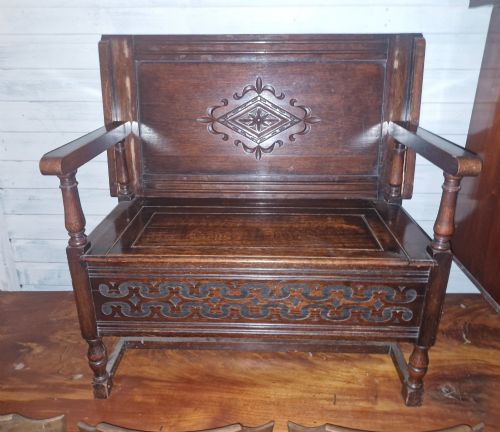
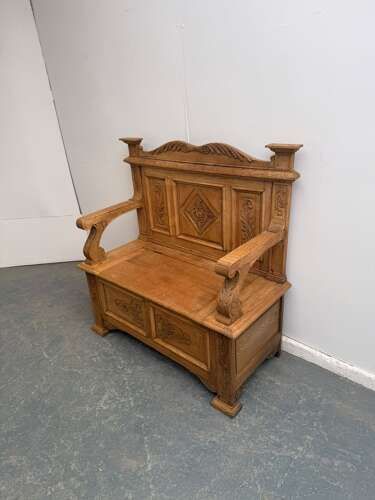
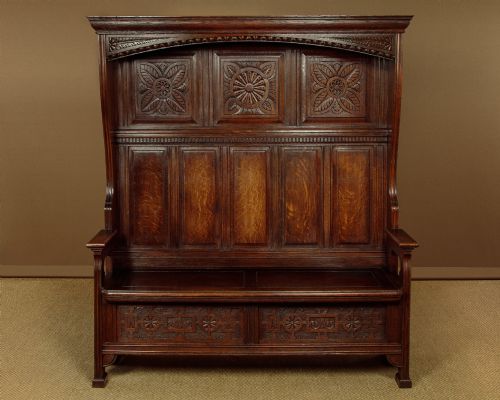
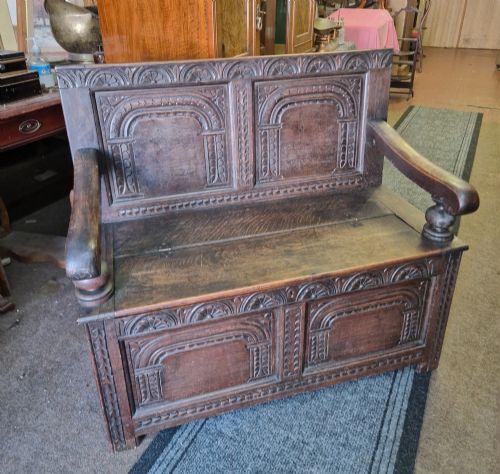



Carved Oak Box Bench
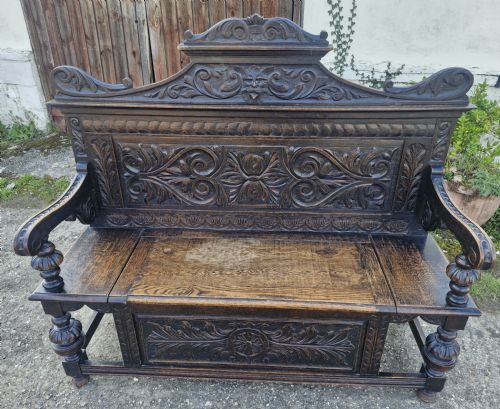
A carved oak box bench brings dual purpose to a hallway, offering a seat above storage space.
Carved Oak Box Bench
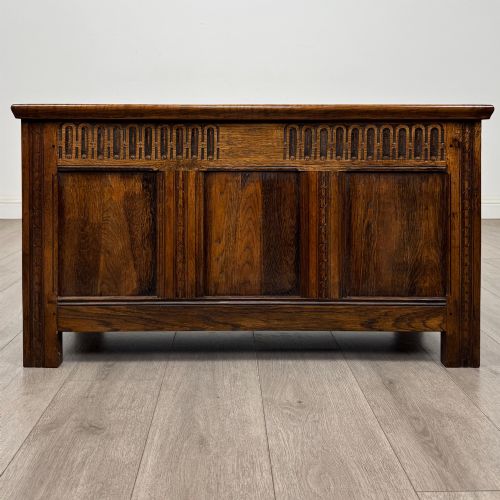
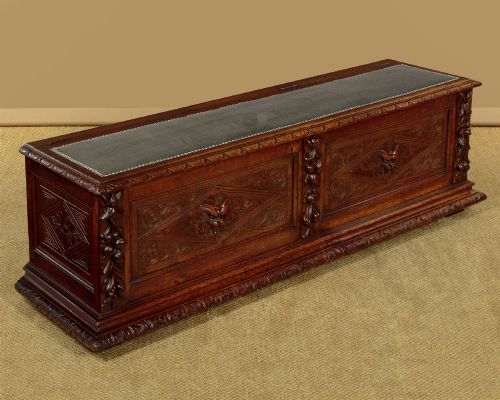
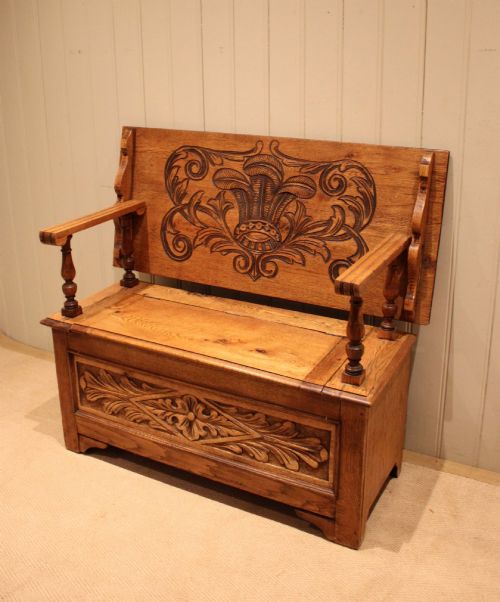
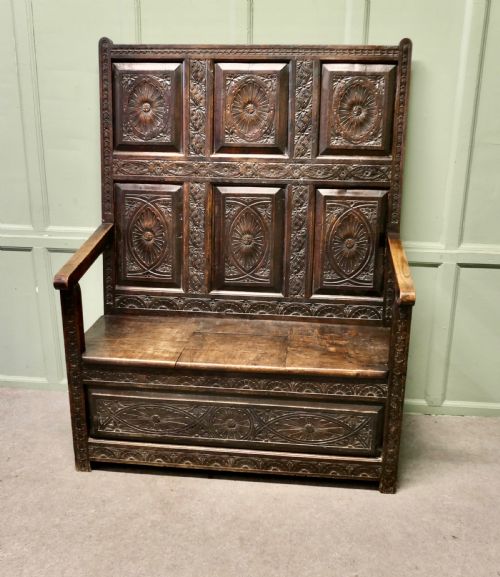
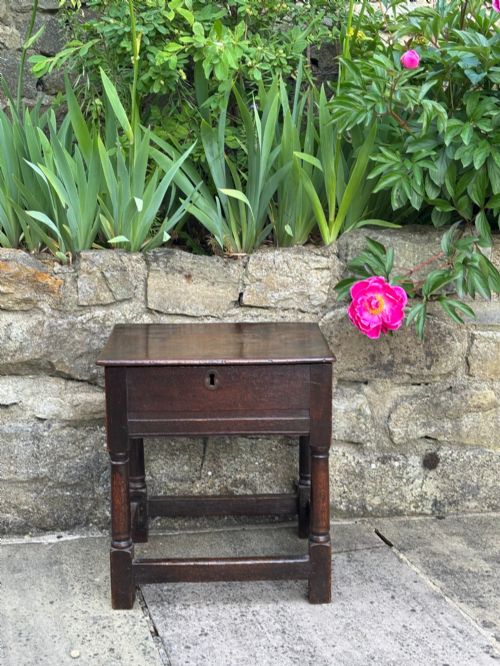
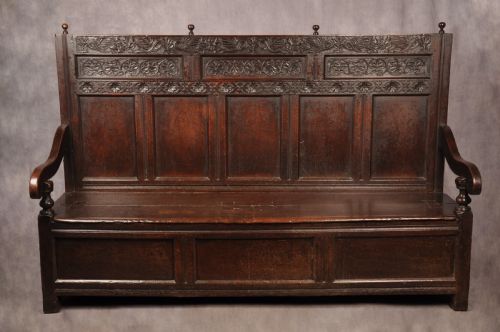
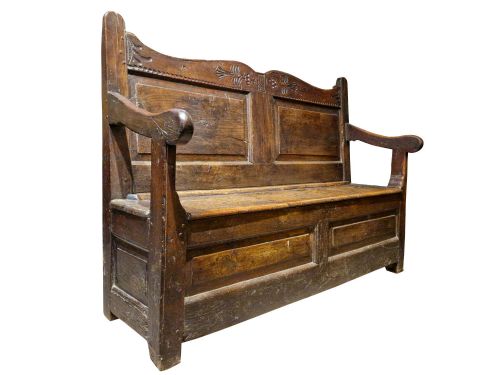
A carved oak box bench combines seating with a lift-up lid or hinged top to conceal storage underneath, functioning as a practical piece for an entrance hall. You encounter high-back settlers alongside smaller hall seats, monks benches, and mule chests with integrated seats.
The materials span solid oak with occasional walnut or secondary timbers, joined by iron and brass fittings. Pieces range from the seventeenth century through the eighteenth and nineteenth centuries into Edwardian and later twentieth-century revivals.
Materials and Methods
Construction relies heavily on solid oak, shaped through panel work, mortise and tenon joints, and hand carving. Surfaces display wax finishes or stripped golden tones, complemented by iron hinges and brass elements.
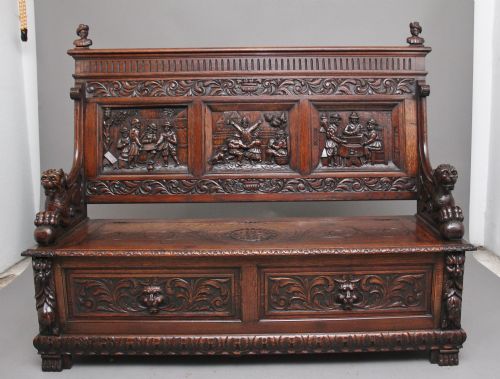
Makers utilised traditional hand tools to carve decorative motifs such as the Green Man or geometric panels into the timber. The heavy framework supports the dual role of a robust bench and a deep storage box.
Several pieces feature grinning Green Man carvings peering out from the foliage to watch over your hallway.
Evaluating Quality
Quality rests upon the crispness of the hand carving, the thickness of the timber, and the integrity of the original joints. Earlier seventeenth and eighteenth-century examples display deeply cut relief work and substantial proportions compared to later revival pieces.
The balance between the weight of the lid and the stability of the base indicates superior craftsmanship. Original ironwork and undisturbed patina elevate a piece above later adaptations.
The Carved Oak Box Bench Glossary
- Box Settle
- A wooden bench featuring a high back and a enclosed compartment beneath the seat for storage. This form kept draughts away from the sitter in older hallways.
- Monks Bench
- A convertible piece of furniture featuring a folding back that transforms the seat into a small table. These often appear in golden oak from the Edwardian period.
- Mule Chest
- A chest with a drawer or compartment at the base beneath a lift-up lid, sometimes adapted with a back and arms to form a seat. They combine chest storage with casual seating.
- Green Man
- A sculptural architectural ornament depicting a human face disgorged from foliage or vines. This motif frequently decorates the back panels of nineteenth-century carved seating.
Carved Oak Box Bench: Frequently Asked Questions
What is a carved oak box bench used for?
These pieces serve as hallway seating while providing concealed storage within the base beneath the lift-up lid. Historically, they kept boots, textiles, and household goods out of sight.
Today, they suit modern entranceways and boot rooms for organising everyday items while functioning as a sturdy bench.
How do I tell an older piece from a revival?
Examination of the timber movement, joint construction, and tool marks reveals the age of the oak. Seventeenth and eighteenth-century examples display hand-cut joinery and aged patination.
Revival pieces from the Victorian and Edwardian eras often show machine-sawn elements and standardised carving styles beneath waxed or golden finishes.
Where should I place a box bench at home?
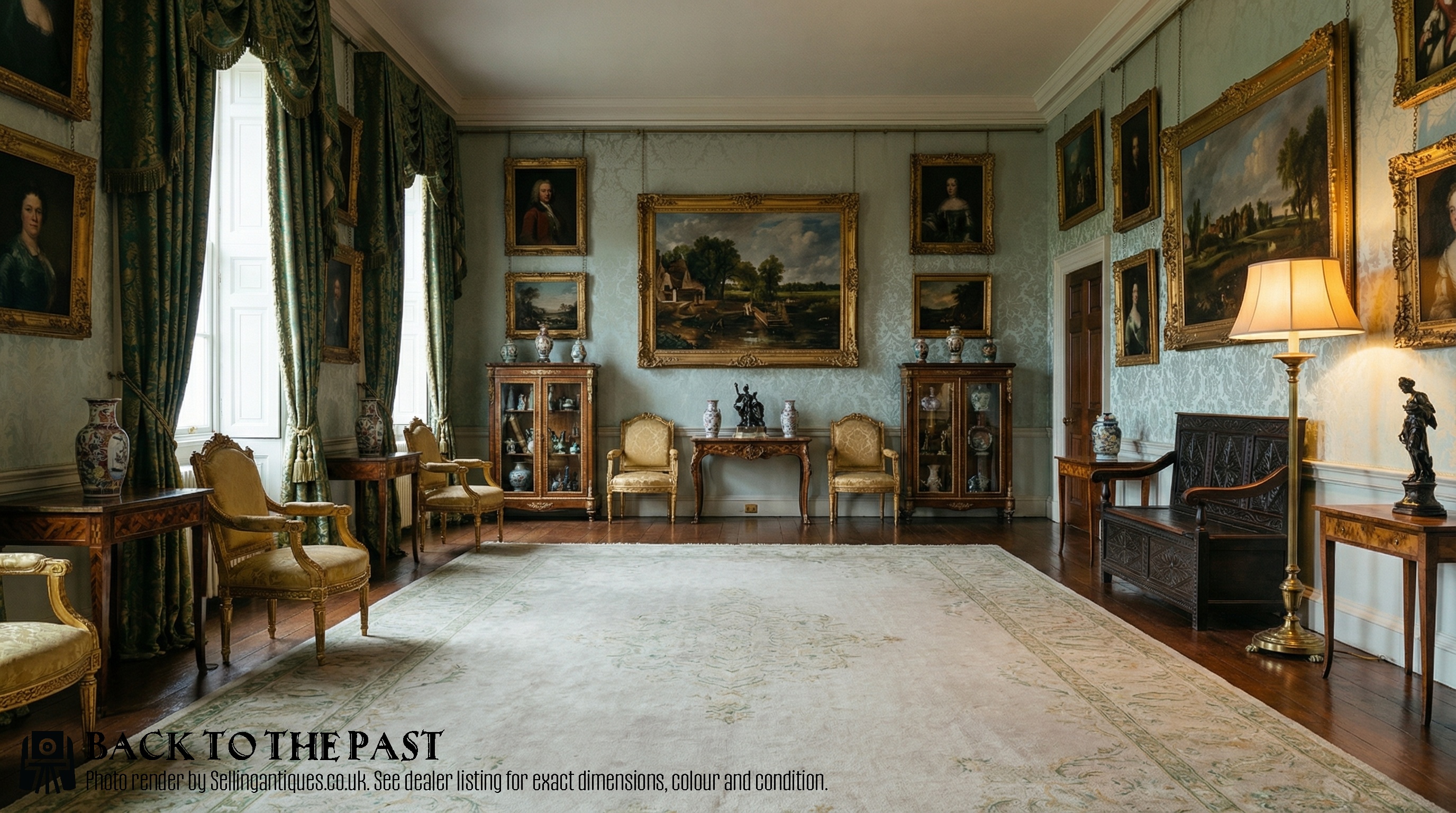
An entrance hall or boot room provides the traditional setting for these pieces, offering a convenient place to sit when removing footwear. High-back versions work best against large blank walls where they act as focal points.
Shorter hall seats fit narrow corridors or reception spaces where depth is limited.
Are these benches comfortable to sit on?
Original wooden seats are firm and upright, designed for short periods of sitting rather than lounging. Adding a loose cushion provides extra comfort without altering the timber.
The high backs on settles and monks benches were originally designed to block cold draughts in unheated hallways.