
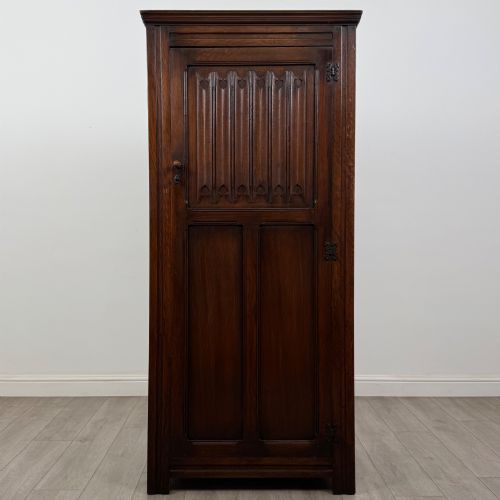
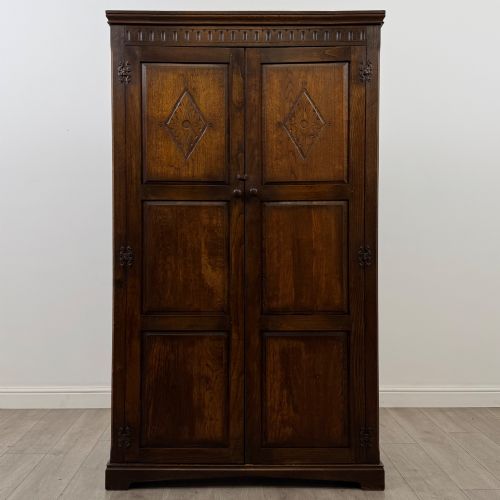
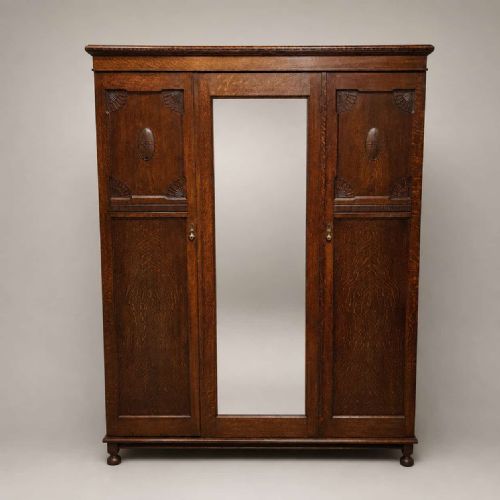
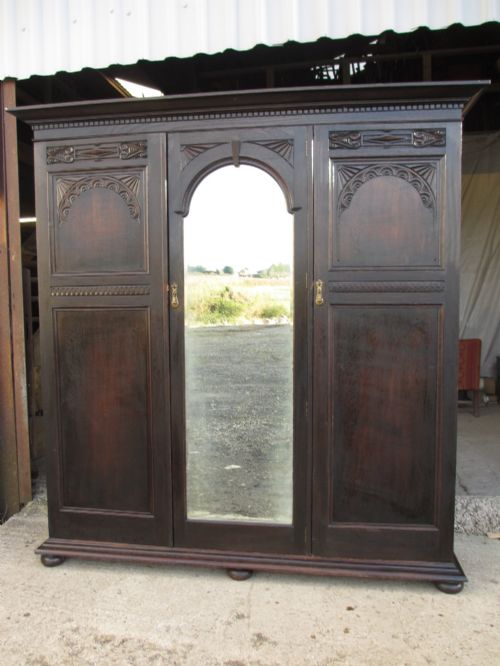
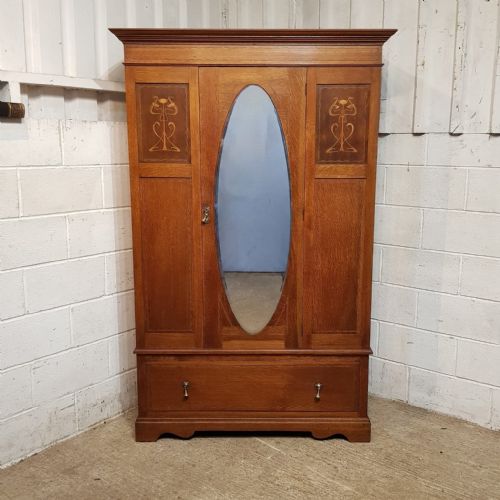
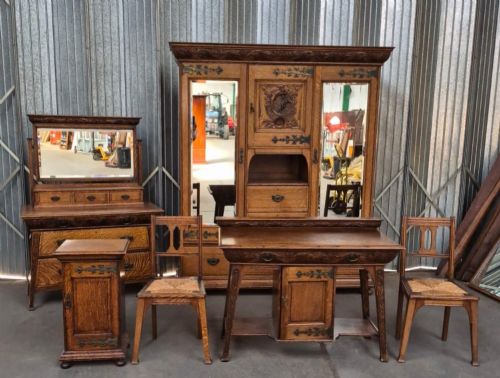
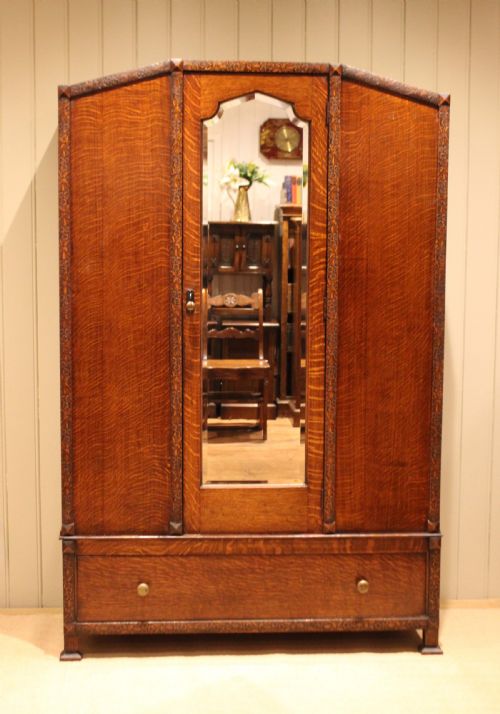


Carved Oak Bedroom Wardrobe
A carved oak bedroom wardrobe offers generous storage anchored in solid timber, built to last generations while grounding a room with its rich grain.
Carved Oak Bedroom Wardrobe
A carved oak bedroom wardrobe is a substantial piece of furniture designed for hanging garments and storing linens, frequently found in styles ranging from Victorian and Edwardian to Arts and Crafts. Buyers exploring this phrase encounter large double or triple configurations, often fitted with mirrored doors or interior drawers.
The pieces on this page span the late nineteenth century through to the nineteen-thirties, reflecting periods such as the Edwardian era and Jacobean Revival. Alongside standard wardrobes, the selection includes linen presses, gentleman's wardrobes, and complete bedroom suites.
Origins vary from English workshops to French provincial makers, introducing regional differences in carving depth and timber finish. Whether in golden oak or dark fumed surfaces, these wardrobes provide architectural weight and traditional utility to domestic spaces.
What varies in quality
The distinction between standard production and superior craftsmanship lies in the depth and crispness of the hand carving, as well as the selection of the timber grain. Finer examples display carefully matched quarter-sawn oak panels and integrated architectural mouldings rather than applied cast ornament.
Hardware and internal construction further define the tier of the piece, with heavier brass fittings, panelled backs, and dovetailed internal drawers marking out workshop production. The integrity of the original bevelled mirror glass and the smoothness of large panelled doors indicate how well a wardrobe retains its structural balance.
Several pieces include hidden interior tie racks and velvet-lined compartments designed for Edwardian accessories.
Maple & Co·Gillows of Lancaster·Arnott & Co
The Carved Oak Bedroom Wardrobe Glossary
- Quarter-sawn oak
- Timber cut radially from the log to produce a distinct decorative grain pattern known as medullary rays. This method provides greater dimensional stability for large wardrobe panels.
- Gentleman's wardrobe
- A hybrid storage piece featuring a combination of hanging space, sliding trays, and smaller drawers. These units were traditionally designed to accommodate folded shirts and accessories.
- Linen press
- A traditional tall cabinet with upper sliding shelves for textiles and lower drawers for bulkier items. They pre-date standard hanging wardrobes and often use deep panelled construction.
- Fumed oak
- Oak exposed to ammonia fumes to darken the natural tannins without staining the wood. This technique was widely adopted by Arts and Crafts workshops to achieve an aged appearance.
Carved Oak Bedroom Wardrobe: Frequently Asked Questions
How do I dismantle a large oak wardrobe?
Many period wardrobes utilise knockdown construction with pegged or bolted joints designed to allow dismantling for transport. Marking the internal components during disassembly ensures correct reassembly in a new room.
Because of the heavy solid timber and large mirror doors, professional removal and installation is recommended to protect the structural integrity of the frame.
Will a triple wardrobe fit in a modern bedroom?
Triple wardrobes and pieces of grand proportion require substantial wall space and high ceilings to sit comfortably within a room. Measuring ceiling clearance is essential, particularly for pieces with deep moulded cornices.
Internal depths must also be checked against modern hangers, as older wardrobes occasionally feature shallow hanging spaces running front-to-back rather than sideways.
How do I care for antique oak furniture?
Maintaining solid oak requires consistent humidity levels to prevent the timber from splitting or warping over time. Periodic application of traditional beeswax nourishes the grain and preserves the patina.
Harsh chemical cleaners should be avoided in favour of a soft, dry cloth for dusting carved panels and brass hardware.
What is the difference between an armoire and a wardrobe?
Armoires originated on the continent as large freestanding cupboards, often displaying regional French provincial carving and lighter bleached finishes. Wardrobes developed primarily in Britain as dedicated hanging spaces for garments.
In modern usage, the terms overlap significantly, though armoires frequently retain a slightly more architectural or decorative cabinet form.