


Carved Music Chair
A carved music chair serves the parlour or drawing room, offering the adjustable height and stable support required for daily performance.
Carved Music Chair
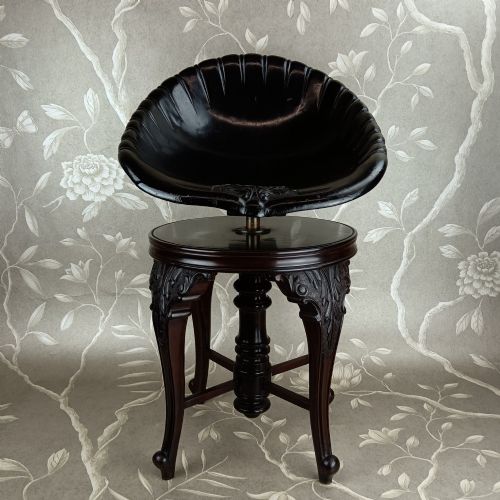
A carved music chair is designed specifically for keyboard players, harpists, and salon musicians needing a secure seat that accommodates movement during performance. These pieces appear frequently across the nineteenth century, including Victorian, William IV, and Regency periods, alongside earlier Georgian examples.
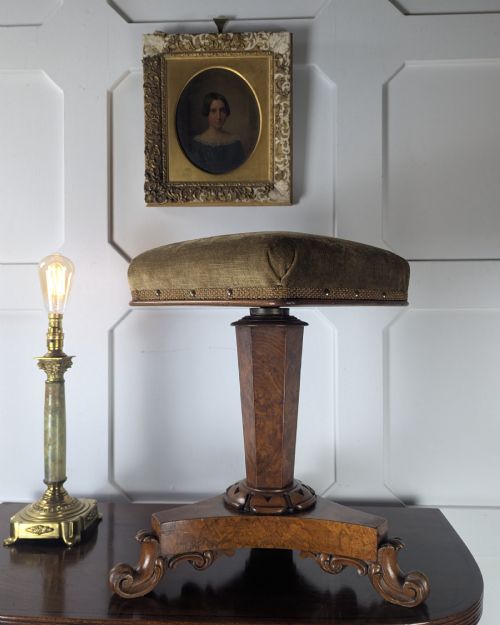
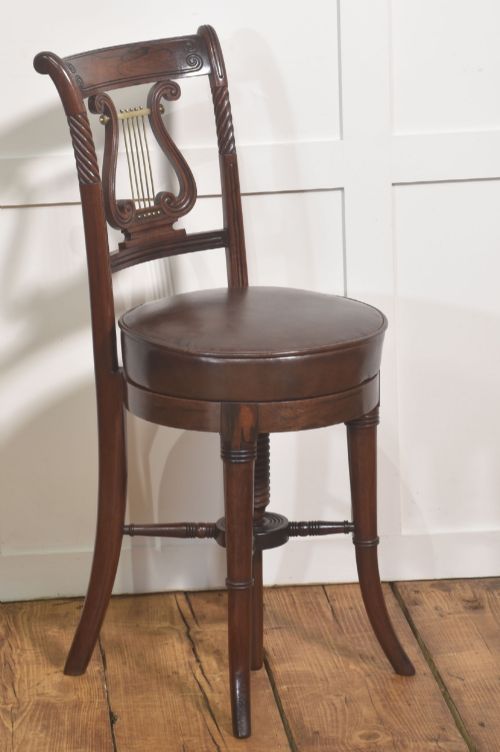
The form encompasses revolving piano stools, adjustable rise-and-fall seats, harpist chairs with asymmetric or supportive backs, and music stools with music risers or fixed frames. Mahogany and walnut dominate the surviving pieces, often paired with rosewood and occasional papier-mâché structures.
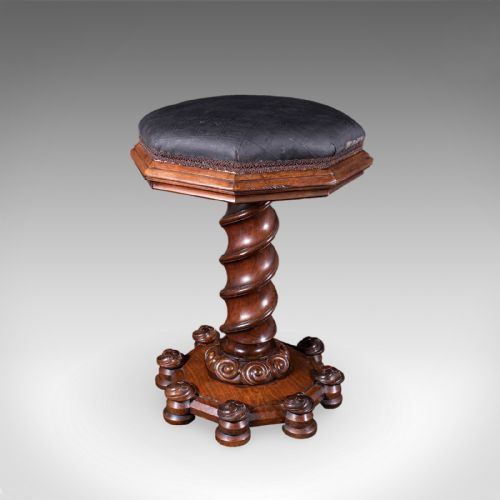
Buyers will most commonly encounter revolving walnut or rosewood stools featuring carved tripod bases or pedestal supports. Side chairs and armchairs with specialised mechanical adjustments for dressing tables or organs also populate this category.
Materials and construction
Cabinet makers utilised dense hardwoods like mahogany, walnut, and rosewood to withstand the torque and pressure of the mechanical adjustment screws. These timbers were carved with floral motifs, gadrooning, and scrollwork, particularly around the pedestals and tripod legs.
Internal mechanisms rely on heavy brass screws, threaded steel shafts, and wooden ratchets to achieve the rise-and-fall action. Upholstery materials include velvet, leather, and woven fabric over padded seats, frequently secured with brass tacking.
One exceptional chapel organist had to struggle through hymns on a Scottish walnut music riser.
Assessing quality and execution
The distinction between ordinary and superior pieces rests upon the crispness of the timber carving and the engineering of the height mechanism. Finer examples feature intricate hand-carved tripod legs, brass inlay, and smooth-operating screws that elevate the seat without binding or wobble.
Secondary elements such as marquetry inlay, uncommon seat configurations like the harpist chair design, and named makers elevate a piece above standard utility seating. The integration of solid mahogany or figured walnut throughout the framework marks higher workshop standards.
Jennens & Bettridge
The Carved Music Chair Glossary
- Rise and fall
- A mechanical system employing a central threaded screw to adjust the height of the seat by turning the top.
- Revolving stool
- A seat mounted on a central pivot that allows full rotation without changing the vertical height.
- Harpist chair
- A specialised music seat featuring an asymmetric or partially open back designed to accommodate the frame of a harp.
- Tripod base
- A three-legged support structure commonly utilised on pedestal piano stools for stability on uneven floors.
- Marquetry
- Decorative veneer work forming pictorial patterns using various tinted woods fitted into a contrasting ground.
Carved Music Chair: Frequently Asked Questions
How do I adjust the height on these chairs?
Most pieces operate via a central wooden or metal screw mechanism hidden beneath the upholstery. Turning the seat clockwise or anticlockwise raises or lowers the platform.
Some models utilise a ratchet or peg system located beneath the frame for stepped height alterations.
Can these chairs be used daily at a modern piano?
These historical seats function well for contemporary keyboard use, provided the mechanical thread remains stable and secure. The adjustable height allows proper posture for players of varying statures.
Care should be taken not to over-extend the central screw beyond its intended operational limit during daily adjustment.
How do I date a Victorian or Regency music seat?
Stylistic clues such as heavy gadrooned carving, rosewood veneers, and bold scroll feet point towards Regency and William IV periods. Later Victorian examples often display slender walnut tripod legs, papier-mâché accents, and revolving top mechanisms.
Hardware construction also assists with dating, as early nineteenth-century brass screws differ markedly from late Victorian iron fixings.