



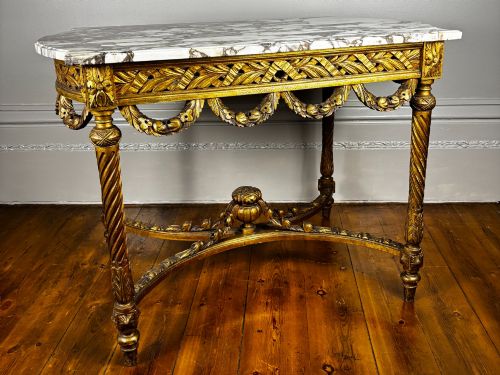
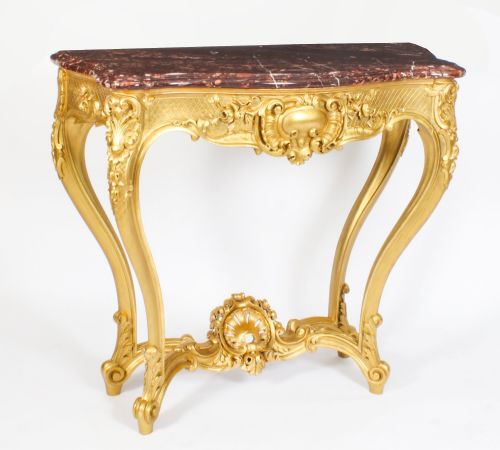
Carved Marble Top Table
When you search for a carved marble top table, you find a heavy furniture form designed to anchor a room with stone and carved timber.
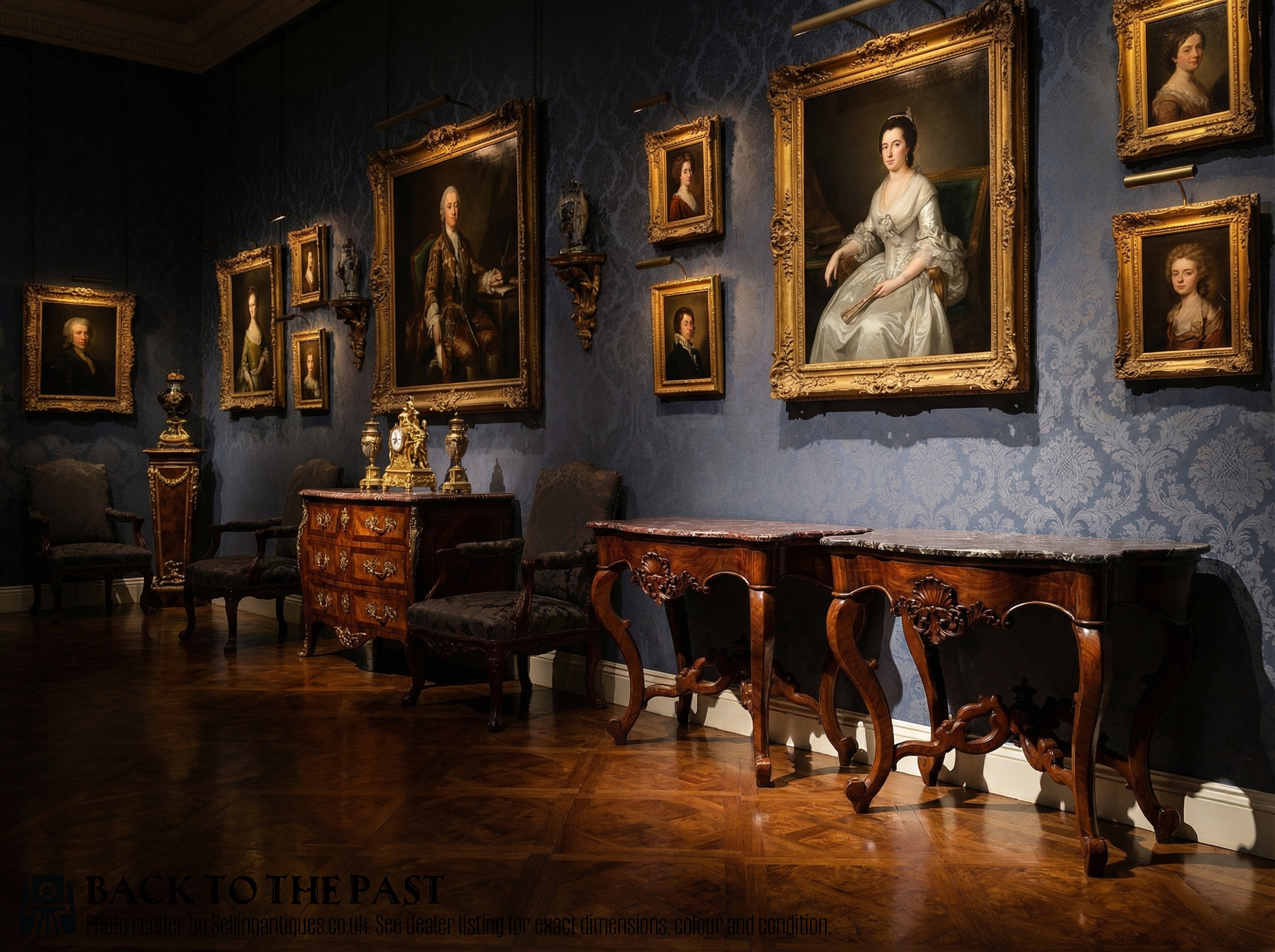
Carved Marble Top Table
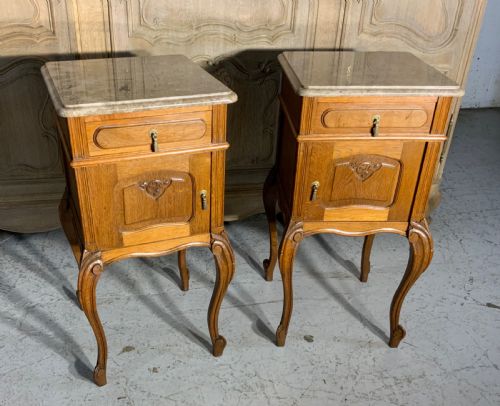
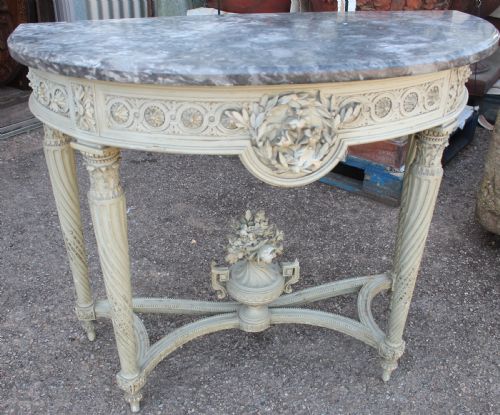
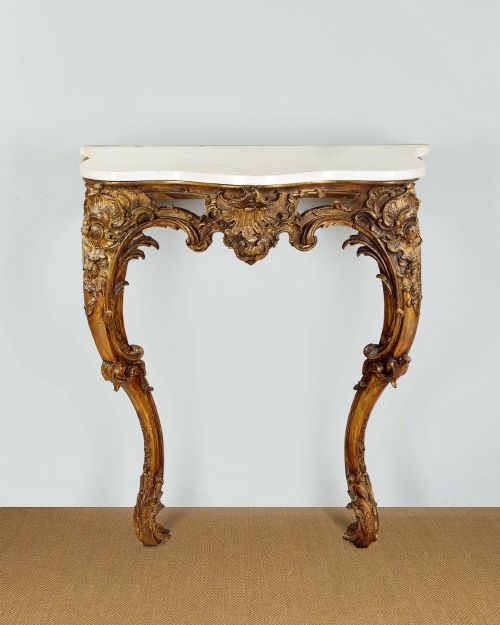
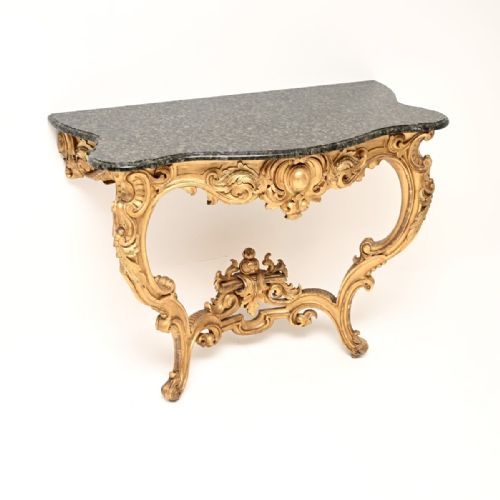
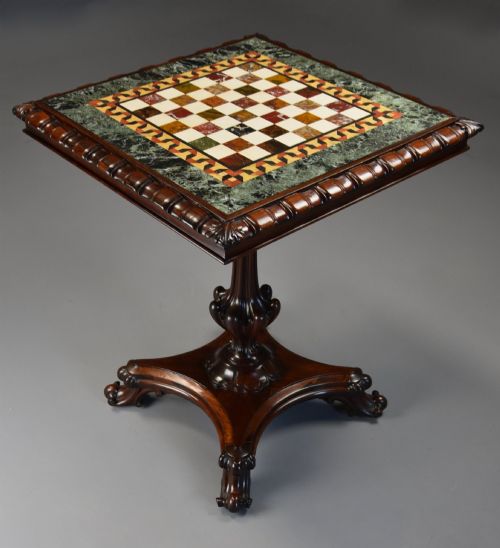
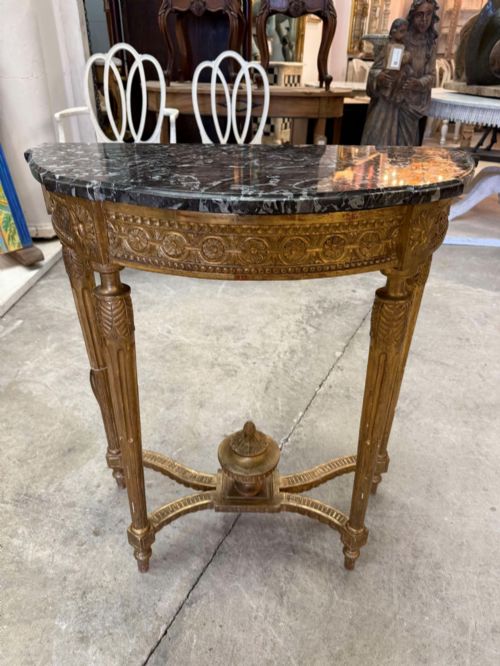
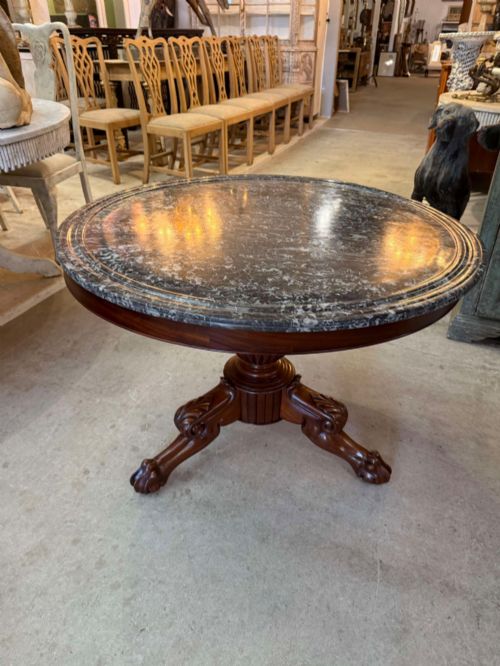
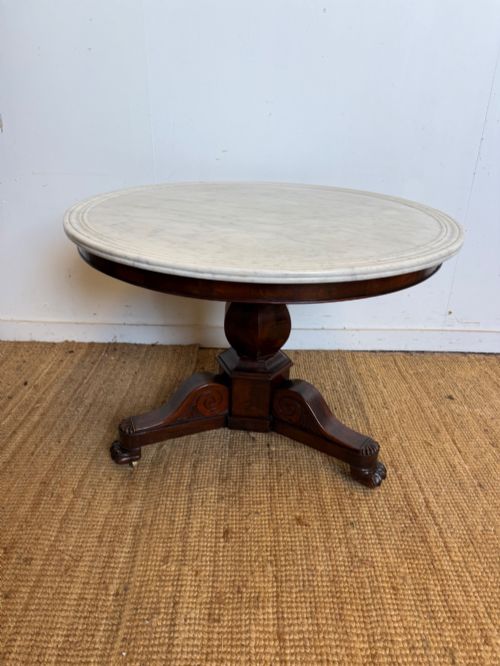
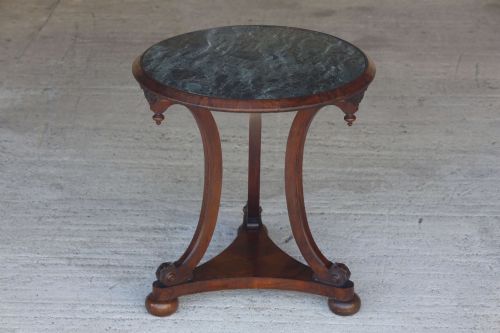
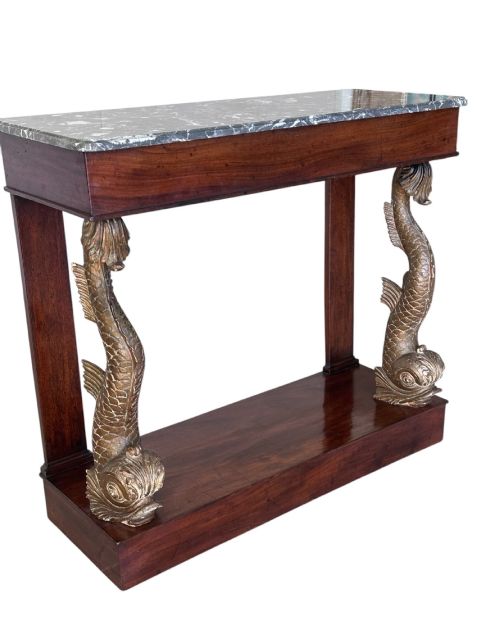
When buyers search for a carved marble top table, they encounter console tables meant for wall placement, circular gueridon centre tables, and occasional stands originating from English, French, Italian, and Chinese workshops. Console variants often display elaborate carved giltwood frames designed to stand against salon walls, while centre tables occupy the middle of a room.
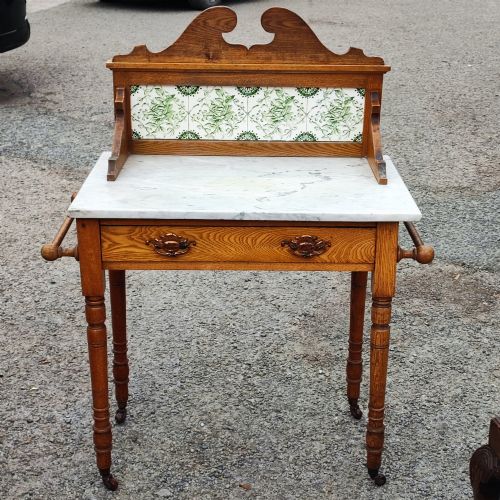
The selection ranges from eighteenth-century Italian giltwood pieces to nineteenth-century French rococo and Victorian mahogany designs, alongside Chinese hardwood plant stands with inset stone panels. Bedside cabinets and low coffee tables also appear frequently across the period ranges.
Materials and Construction
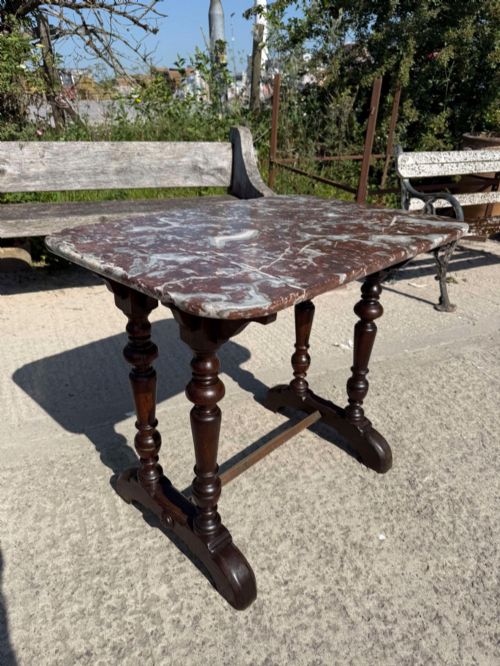
Carpenters and cabinetmakers utilised dense timbers such as mahogany, walnut, oak, and rosewood alongside softer woods treated with gesso and gold leaf for carved frames. Tabletops consist of heavy natural stone, including white marble, veined varieties, rouge marble, and onyx, often cut to follow serpentine or circular wooden rails.
Carving techniques involve deep relief work on wooden skirts, cabriole legs, and console supports, frequently incorporating floral motifs, scrollwork, or animal figures. Stone tops rest within rebated wooden frames or sit directly upon the supporting structure.
Carved Marble Top Table Retail Price Guide 2026
Typical asking prices for carved marble top table among the pieces listed under this phrase on Sellingantiques today, from the lower quarter to the upper quarter. They describe what is for sale here now, not the wider market.
Several tables feature solid stone eagles and ancient Roman lion paws holding up the weight of the world, or at least the breakfast tray.
Evaluating Craftsmanship
Quality depends on the depth and crispness of the wood carving, where hand-chiseled detail on acanthus leaves and scrolls demonstrates superior artisan skill compared to shallow or mechanical shaping. The weight, thickness, and geological character of the marble insert also indicate the standard of the piece.
Integration between the stone top and the wooden base determines structural integrity, with superior items showing precise joints and custom-fitted stone edges. Gilded surfaces reveal craftsmanship through the application method of the gold leaf over gesso, while timber surfaces depend on the selection of figured mahogany or walnut veneers.
Amleto Bertoni
The Carved Marble Top Table Glossary
- Console table
- A wall-mounted or freestanding table designed to stand flat against a vertical surface, frequently fitted with a stone top. These pieces often include matching pier mirrors above them.
- Gueridon
- A small French circular table supported by a central pillar or tripod legs, commonly topped with marble for serving or display. Originating in the seventeenth century, they remained popular through the Victorian era.
- Giltwood
- Timber coated in a thin layer of gold leaf applied over a prepared gesso ground. This finish appears extensively on eighteenth and nineteenth-century frames.
- Serpentine front
- A furniture contour that curves outward at the centre and inward at the sides in a gentle wave shape. This profile requires precise woodworking to fit marble slabs accurately.
- Monopodia
- Furniture supports formed from the leg and paw of a lion or other beast, frequently seen on neoclassical designs. They provide a solid structural base beneath heavy stone surfaces.
Carved Marble Top Table: Frequently Asked Questions
What rooms suit a carved marble top table?
Console variants function well in entrance halls or principal reception rooms against flat walls, particularly when paired with a matching mirror. Centre tables suit large spaces where foot traffic allows circulation around the stone surface.
Smaller occasional tables and bedside cabinets fit into bedrooms or studies, offering a durable surface resistant to liquid rings and general wear.
How do I clean the marble top?
Stone surfaces require plain warm water and a soft cloth to remove dust and daily grime, avoiding acidic cleaners that etch the polished finish. Professional poultices can draw out deeper stains from porous marble over time.
Wooden frames need dry dusting with a soft brush to protect gilt or polished timber from moisture damage during routine maintenance.
Are these tables heavy to move?
The inclusion of thick natural stone makes these items considerably heavier than standard wooden furniture. Moving them generally requires two people to lift the heavy marble slab separately from the carved wooden base where possible.
Securing wall-mounted console variants to studs or masonry is essential to prevent tipping due to the weight distribution of the stone top.
How can I tell the period?
Stylistic indicators such as French rococo curves, Victorian mahogany construction, or Chinese hardwood joinery point toward specific manufacturing eras. Tool marks on the underside of timber frames and the cut of the marble edge provide further chronological clues.
Comparing construction methods against dated examples helps narrow down the decade of production for unmarked items.