



Carved Marble Top Jardiniere
A carved marble top jardiniere marries heavy stone with intricate timber framing to elevate household greenery.
Carved Marble Top Jardiniere
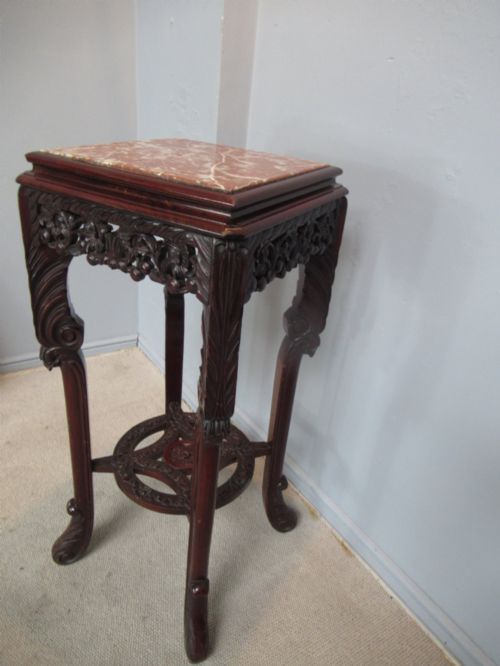
A carved marble top jardiniere is a low table or pedestal designed specifically to hold heavy ceramic plant pots, urns and vases indoors. These pieces combine a solid stone inset with a sturdy timber framework to support the weight of wet earth and large foliage.
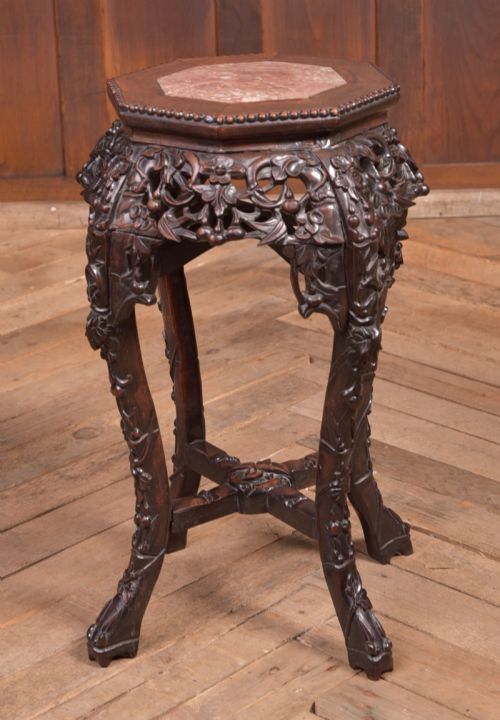
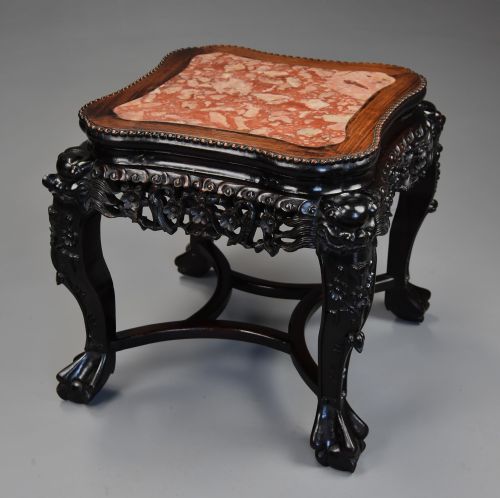
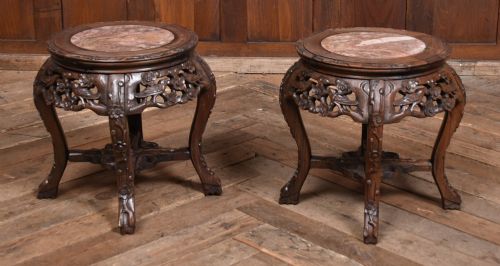
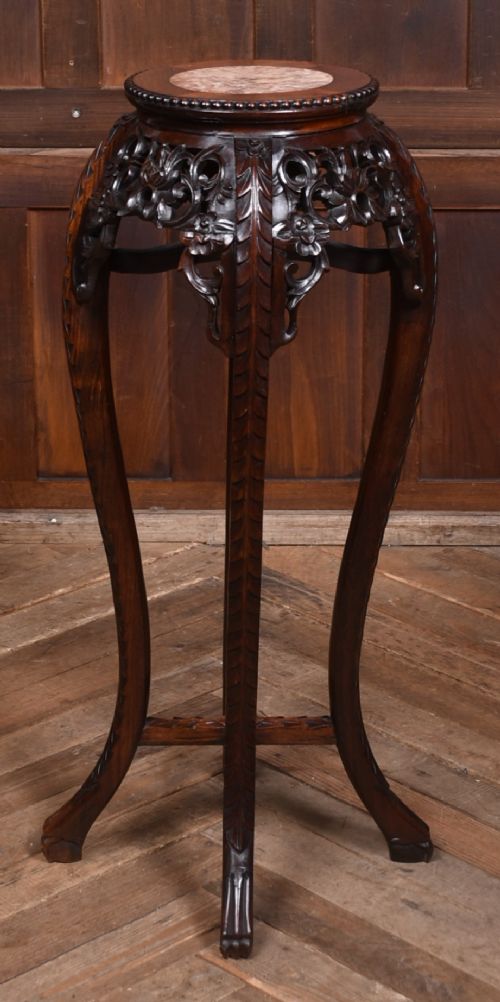
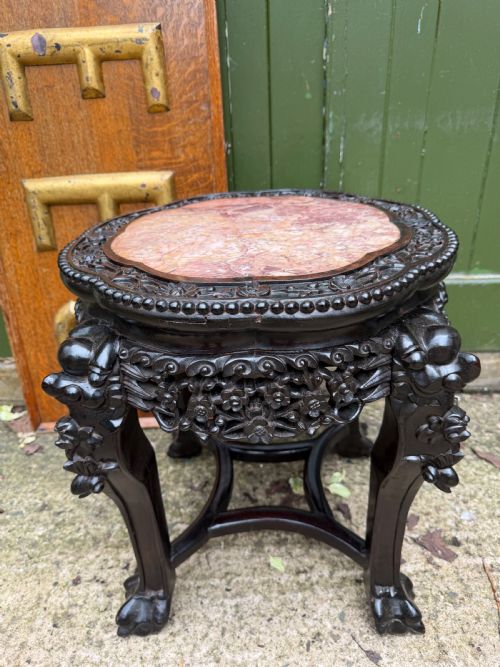
You are most likely to encounter nineteenth-century Chinese export pieces on this page, particularly low stands fashioned from dense hardwoods like padouk, rosewood and hongmu. These items often feature shaped aprons and inset variegated rouge marble surfaces.
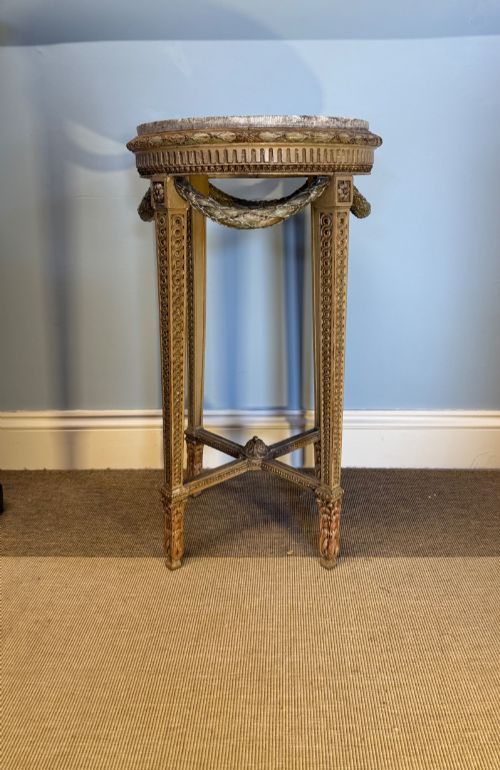
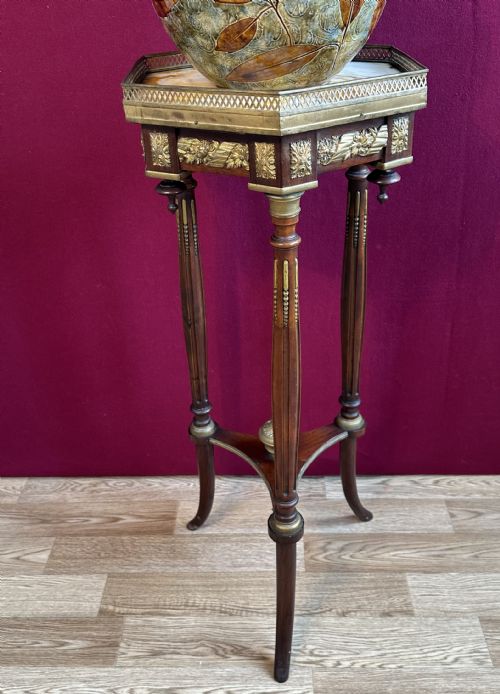
European examples also appear alongside the Asian imports, spanning Victorian and Edwardian periods with occasional French or English walnut and brass variations. Their primary function remains displaying decorative plants and porcelain vessels securely within a reception room or parlour.
Materials and construction
The framework relies on dense tropical hardwoods, including rosewood, padouk and hongmu, which possess the structural strength required to support heavy stone without warping. Artisans carved deep relief decoration into these timbers, forming scrolling foliage, dragons and intricate floral motifs along the skirts and legs.
A smooth slab of marble, frequently rouge or variegated in tone, sits flush within the wooden top to provide a cool, water-resistant surface for potted plants. Traditional joinery secures the timber frame tightly around the stone insert, accommodating natural expansion and contraction of the materials over time.
Listings feature items dated from the Georgian and Victorian eras through to the Edwardian period.
Distinctions in quality
The depth and crispness of the wood carving separate standard utility pieces from exceptional works of craftsmanship. Superior examples display undercut detailing and clean relief work without soft edges or mechanical uniformity.
The choice and figure of the inset marble also dictate the grade of the piece, with richly patterned rouge stone carrying more presence than plain grey slabs. Heavier gauge timbers and robust joinery indicate superior workshop standards from the period.
The Carved Marble Top Jardiniere Glossary
- Hongmu
- A traditional Chinese term for dense, dark hardwood species such as padouk and rosewood. It translates literally to red wood and provides a heavy, durable base for carved furniture.
- Jardiniere
- An ornamental pot or stand for holding flowers and plants. The term derives from the French word for gardener.
- Rouge marble
- A decorative limestone featuring deep red, pink and white veining. This material provides a colourful, smooth surface resistant to water damage from plant pots.
- Apron
- The decorative wooden member beneath the tabletop that connects the legs. Carved stands often feature pierced or scalloped aprons depicting flora and fauna.
Carved Marble Top Jardiniere: Frequently Asked Questions
What were carved marble top jardinieres used for?
These pieces served as elevated platforms for large indoor plants, palms and ceramic fishbowls in nineteenth-century homes. The stone top protected the timber frame from water spills and damp soil.
They also functioned as occasional tables for lamps and decorative ornaments when plant displays changed seasonally.
How do I care for the marble inset?
Wipe the stone surface regularly with a soft, damp cloth to remove dust and moisture. Avoid acidic cleaners that can etch the polished finish.
Apply a neutral stone wax occasionally to maintain the sheen and protect against minor stains.
Are these stands suitable for modern rooms?
The compact footprint and sturdy construction make them practical surfaces for house plants and bedside lamps today. Their sculptural wooden frames fit easily beside low seating.
They bring tactile contrast to contemporary interiors through natural stone and carved timber textures.
How do I distinguish Chinese export pieces from European ones?
Chinese export stands typically utilise dense Asian hardwoods like padouk and feature distinctive corner brackets, stepped feet and deeply undercut floral carving. European equivalents often employ walnut, mahogany or brass with simpler turned legs.
The joinery methods and specific marble types also point directly to the region of manufacture.