



Carved Mahogany Tea Caddy
A carved mahogany tea caddy brings substantial weight and rich timber grain to a room, holding the history of formal hospitality.
Carved Mahogany Tea Caddy
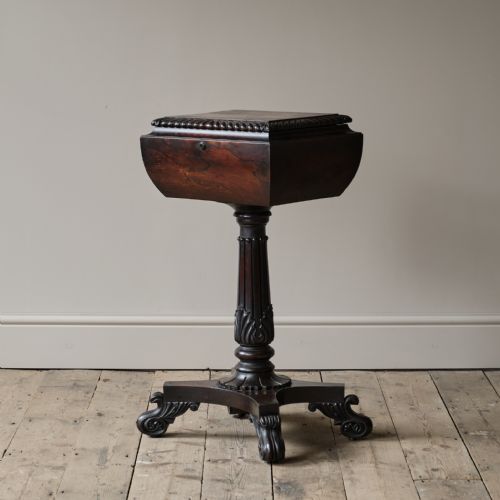
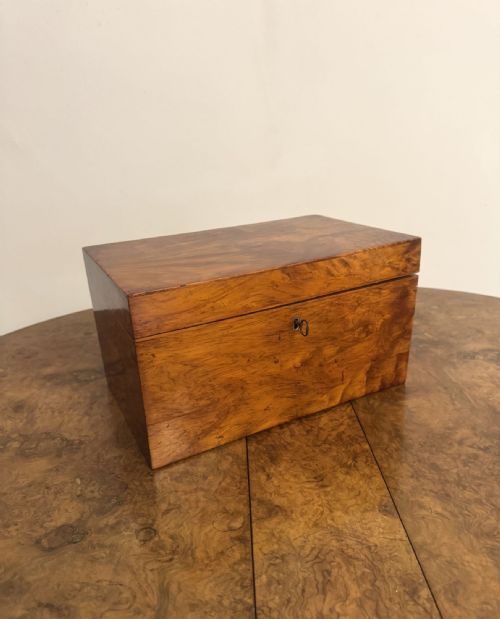
A carved mahogany tea caddy is a domestic container designed to store valuable loose tea leaves safely under lock, reflecting the high status of tea in past centuries. These pieces range from compact tabletop boxes to larger freestanding teapoys supported on stands or columns.
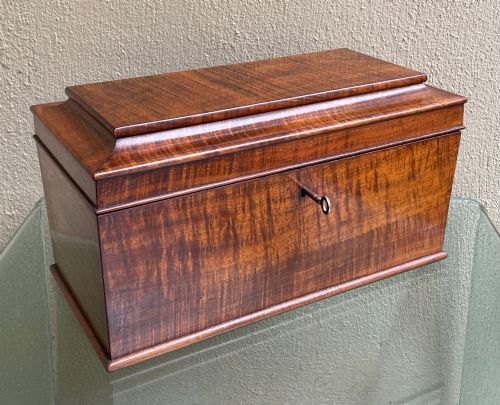
The versions most commonly met on this page date from the Georgian, Regency, William IV and Victorian periods, often taking box or sarcophagus forms. Many incorporate interior compartments or mixing bowls alongside the main storage sections.
How they were made
Cabinet makers utilised solid mahogany and flame mahogany veneers over secondary woods, shaping the carcasses with precise joinery. Surfaces frequently show carved decorative motifs, sometimes complemented by contrasting inlay work in ebony or brass.
Internal compartments often feature fitted wooden lids and small bone knobs, while exterior mounts and lion paw feet utilise cast brass. The finish relies on traditional polish that enhances the natural depth and figuring of the timber.
Carved Mahogany Tea Caddy Retail Price Guide 2026
Typical asking prices for carved mahogany tea caddy among the pieces listed under this phrase on Sellingantiques today, from the lower quarter to the upper quarter. They describe what is for sale here now, not the wider market.
Some tea containers include hidden secret drawers that require pressing a concealed internal spring to release.
What varies in quality
The standard of carving defines the upper tier of these pieces, showing crisp relief work rather than soft or mechanical detailing. Selection of the timber also dictates value, with highly figured flame mahogany marking out superior examples.
Completeness of the internal fittings, original mixing bowls and working locks with matching keys elevates a piece significantly. Workshop attribution to known makers such as Gillows provides a further distinction in historical standing.
Gillows·Strahan
The Carved Mahogany Tea Caddy Glossary
- Teapoy
- A larger version of a tea caddy, usually mounted on a pillar and claw foot or a miniature sideboard base rather than resting directly on a table.
- Sarcophagus
- A box shape featuring a domed lid and flared sides, popular during the Regency period for grander tea containers.
- Flame mahogany
- A veneer cut from the fork of the mahogany tree, producing a distinctive rippled pattern resembling flickering flames.
- Inlay
- A technique where contrasting materials such as ebony or brass are set flush into the wood surface to create decorative borders.
Carved Mahogany Tea Caddy: Frequently Asked Questions
What is the difference between a tea caddy and a teapoy?
A tea caddy is a smaller box intended to sit upon a table or sideboard, designed primarily for holding portions of tea leaves.
A teapoy is a larger, freestanding piece of furniture supported on a pedestal or legs, often housing mixing bowls and multiple internal compartments.
How do I date a mahogany tea container?
Dating relies on observing the prevailing style, cabinet-making techniques, and secondary woods used within the carcass. Georgian and Regency pieces typically show crisp carving and sarcophagus proportions, while Victorian examples introduce heavier proportions.
Hardware styles, such as brass ring handles and escutcheons, also provide reliable chronological indicators.
Did these boxes originally hold locks?
Tea was an expensive commodity in the eighteenth and nineteenth centuries, making security essential for households. Most quality pieces were fitted with working brass locks and keys to restrict access to the contents.
Many surviving examples retain their original escutcheons and lock mechanisms, though functional keys are less common today.
How should I care for antique mahogany wood?
Keep wooden pieces away from direct sunlight and sudden temperature shifts to prevent the veneer from drying or lifting. Regular dusting with a soft, dry cloth maintains the surface without the need for heavy modern polishes.
Occasional application of traditional wax helps nourish the timber and preserve the historic finish.