
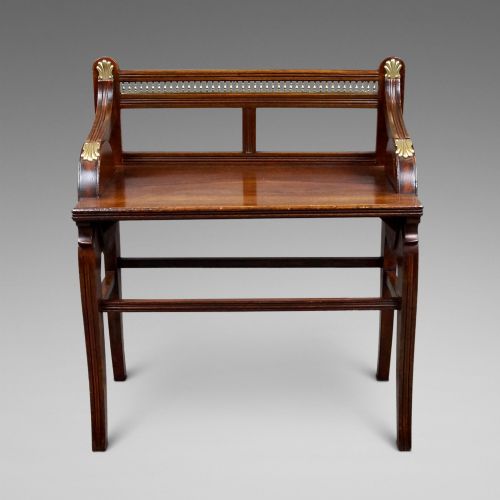


Carved Mahogany Piano Stool
A carved mahogany piano stool offers practical seating for musicians and collectors alike, combining solid timber frames with adjustable mechanisms and period upholstery.
Carved Mahogany Piano Stool
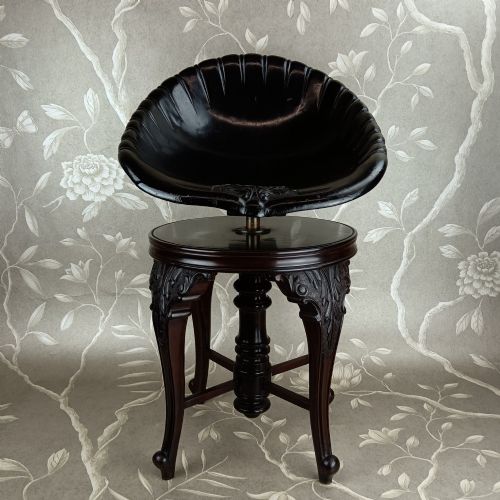
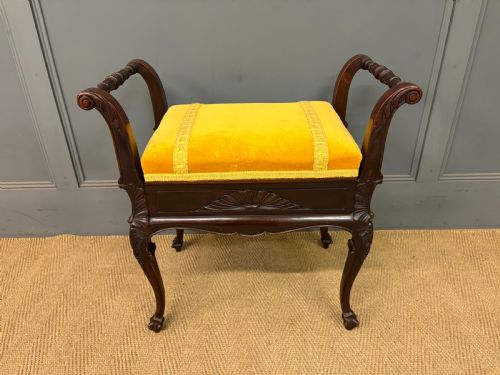
A carved mahogany piano stool is typically designed for the keyboard player, emerging in various forms from the Georgian era through to the Edwardian period and the 1930s. Buyers searching this phrase encounter revolving seats, screw-top mechanisms, duet lengths, and fixed frames with cabriole legs or cross stretchers.
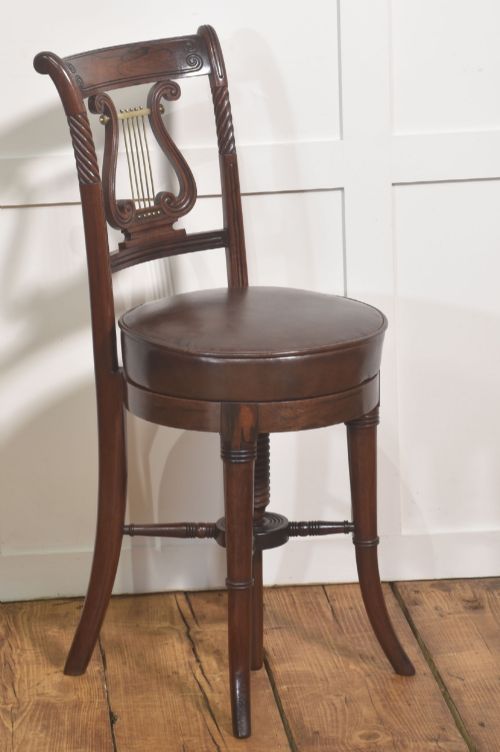
The Victorian era dominates the selection, often featuring tripod legs, revolving actions, and hinged seats for sheet music storage. Alongside standard piano stools, related variants such as music chairs, dressing stools, and harpist stools appear frequently in the listings.
Materials and construction
Makers utilised solid mahogany for the structural frames, often carving details such as ball and claw feet, cabriole legs, or grotto motifs directly into the timber. Brass components frequently support the adjustable screw mechanisms found on revolving music seats.
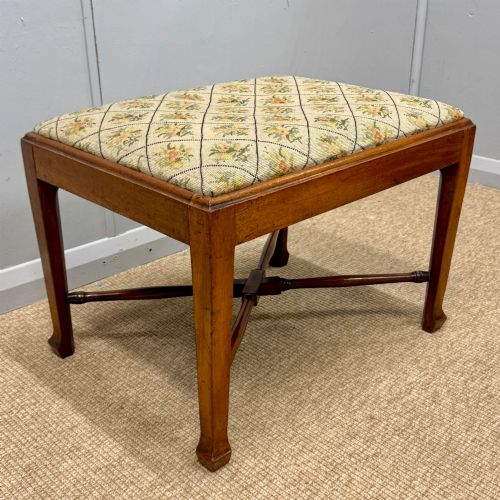
Upholstery forms an integral part of the construction, employing materials like leather, velvet, tapestry, and fabric. Original needlepoint and damask textiles also survive on seats from the nineteenth and early twentieth centuries.
Listings span from the Georgian period through the Victorian and Edwardian eras into the 1930s, constructed predominantly in mahogany with varied fabric upholstery.
Distinctions in quality
The standard of carving determines much of the distinction between pieces, with deeply worked foliage and detailed ball and claw feet separating finer examples from plain frames. The smoothness and stability of the revolving or screw-top mechanism further mark out better-made music stools.
The integrity of the original upholstery and the preservation of textile coverings such as needlepoint or damask contribute significantly to the standing of an antique stool. Heavier timber framing and sophisticated joinery, such as cross stretchers, indicate higher workshop standards.
Jennens and Bettridge·Jas Shoolbred
The Carved Mahogany Piano Stool Glossary
- Revolving piano stool
- A seat featuring a screw mechanism that allows the top to turn and adjust in height.
- Duet stool
- A longer seat designed to accommodate two players side by side at the keyboard.
- Cabriole leg
- A furniture leg that curves outward at the knee and tapers inward toward the foot.
- Cross stretcher
- Wooden bracing members connecting the legs beneath the seat to provide structural stability.
- Needlepoint
- A form of canvas embroidery frequently used for historical seat upholstery.
Carved Mahogany Piano Stool: Frequently Asked Questions
How do you adjust the height on these stools?
Many examples utilise a central screw mechanism operated by rotating the wooden seat itself. This allows the player to raise or lower the sitting position smoothly.
Other variations may feature fixed frames or different mechanical adjustments depending on the specific period and workshop design.
Were these stools only used for pianos?
While primarily built for keyboard instruments, many pieces served multiple domestic purposes. Makers also produced similar designs for dressing tables, harp playing, and general music rooms.
Listings often include dressing chairs, music chairs, and long benches alongside dedicated piano seating.
How can I tell Victorian stools from Edwardian ones?
Victorian pieces frequently display heavier mahogany framing, tripod base designs, and elaborate revolving screw mechanisms. Carving often leans toward robust Victorian interpretations of earlier styles.
Edwardian examples tend to exhibit lighter proportions, refined legs, and different upholstery treatments while maintaining the core mahogany construction.
Do these stools provide sheet music storage?
Certain designs incorporate hinged seats that lift to reveal an internal compartment for storing music scores. This practical feature is particularly common on duet stools from the nineteenth century.
Not all models include storage, as revolving and tripod variations prioritize mechanical height adjustment instead.
Are original upholstery and needlepoint common?
Original textiles do survive on select nineteenth-century pieces, featuring materials such as needlepoint, damask, and velvet. These surviving coverings offer insight into the original decorative scheme.
Many pieces have undergone reupholstery over time to ensure structural soundness and usability in modern interiors.