

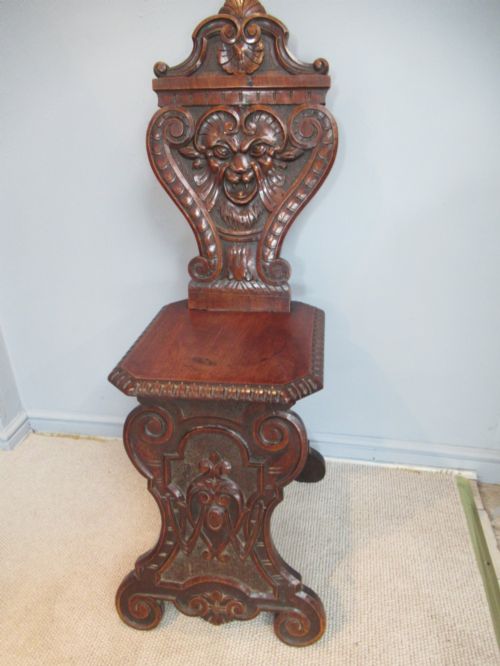


Carved Mahogany Hall Bench
A carved mahogany hall bench sits as a sturdy architectural statement in an entranceway, offering a firm seat and centuries of cabinet-making skill.
Carved Mahogany Hall Bench
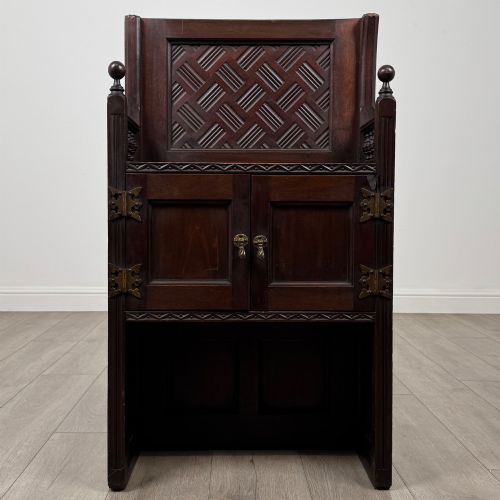
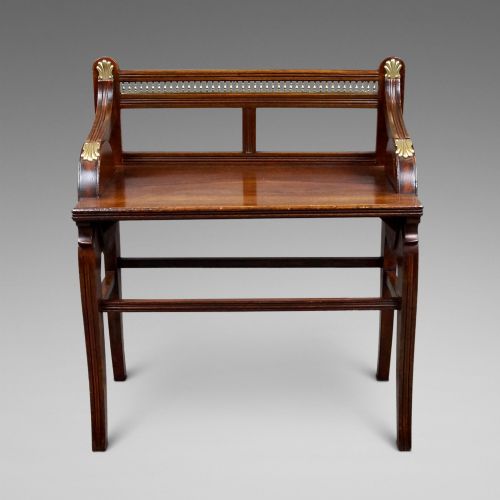
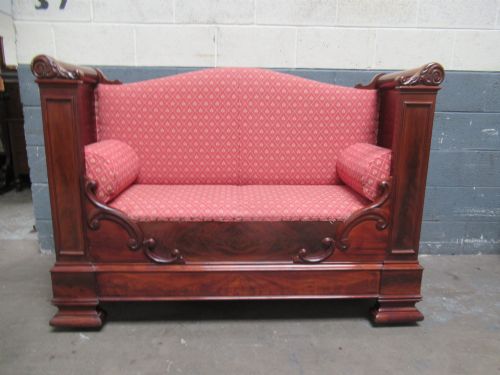
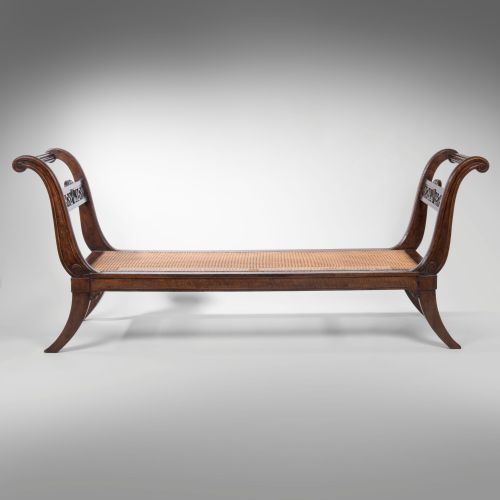
A carved mahogany hall bench encompasses substantial entranceway seating, window seats, and panelled box settles originating across the nineteenth and early twentieth centuries. Pieces span the Regency, Victorian, and Edwardian eras, displaying stylistic influences from Gothic revivals to Hepplewhite and Georgian designs.
The most common examples on this page are nineteenth-century window seats and robust hall benches built from solid mahogany. These range from simple upholstered forms to elaborately panelled box settles and X-frame structures designed for narrow corridors and grand reception spaces.
Materials and construction methods
Makers utilised dense timber, predominantly mahogany alongside Brazilian mahogany, shaping structural frames with mortise and tenon joints to withstand heavy domestic use. Surfaces received hand-carved detailing, panelled construction, and occasional satinwood inlay.
Upholstery, fabric, and cane additions provide contrasting textures to the dark wood, while brass fittings occasionally secure structural elements or support umbrella and coat sections in multi-functional hall stands.
Listings feature items dated from the Georgian and Regency eras through to the Edwardian period, constructed in mahogany, fabric, brass, and cane.
Distinguishing quality across periods
Excellence lies in the crispness of the timber carving and the architectural proportions of the frame, where sharp hand-chiselled details outlast softer mechanical moulding. Timber selection matters greatly, with rich grain patterns and solid construction elevating certain examples above simpler vernacular builds.
Integration of secondary materials also dictates standard, as seen in tightly woven cane work, well-fitted brass hardware, and tightly joined panelled box settles. The cohesion between the revival style and the underlying cabinetwork marks the distinction between standard utilitarian seating and high-workshop output.
Jas Shoolbred·Richard Bridgens
The Carved Mahogany Hall Bench Glossary
- Mahogany
- A durable, reddish-brown tropical hardwood prized by cabinet-makers for its stability and suitability for carving intricate details. It forms the primary structural material for the pieces gathered here.
- Settle
- A wooden bench with high backrests, solid arms, and often a box compartment beneath the seat for storage. These items appeared frequently in hallways to block draughts.
- Window seat
- A long, upholstered or wooden bench designed specifically to fit within a window recess. They often share stylistic traits with formal hall seating.
- X-frame
- A structural furniture support formed by intersecting diagonal cross-members resembling the letter X. This classical form frequently appears on Regency window seats.
- Inlay
- A decorative technique where contrasting woods or materials like satinwood are set flush into the primary surface of the mahogany. This creates geometric or floral patterns along the borders and backrests.
Carved Mahogany Hall Bench: Frequently Asked Questions
Where should I place a hall bench?
These pieces suit entrance halls, corridors, and wide landings where guests remove outerwear. Their narrow proportions allow them to occupy circulation space without blocking movement.
Position them against load-bearing walls, pairing them occasionally with mirrors or coat hooks to complete an entranceway arrangement.
How do I care for mahogany woodwork?
Maintain the timber by dusting regularly with a soft, dry cloth and avoiding placement near direct heat sources or strong sunlight. These precautions prevent the wood from drying out or splitting.
Apply occasional microcrystalline wax to nourish the surface and preserve the natural lustre of the polished grain.
How do I identify Regency style?
Regency designs draw heavily from classical Greek, Roman, and Egyptian architecture, favouring clean lines and restrained ornamentation. You will often see sabre legs, reeding, and X-frame supports.
Mahogany during this period was frequently polished to a dark, reflective finish highlighting the natural figure of the wood.