
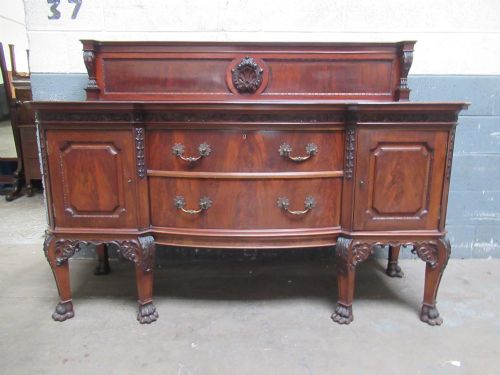
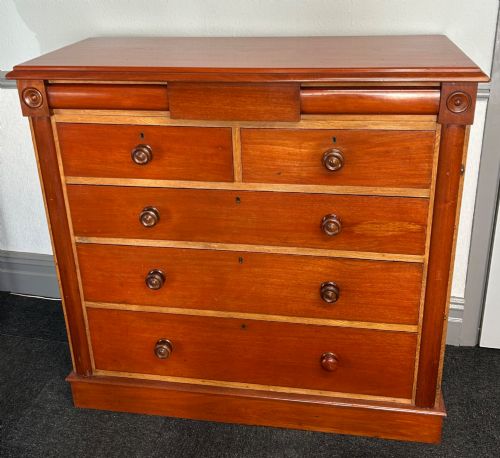


Carved Mahogany Dresser Base
A carved mahogany dresser base is a substantial timber sideboard offering deep storage and sturdy display surfaces.
Carved Mahogany Dresser Base
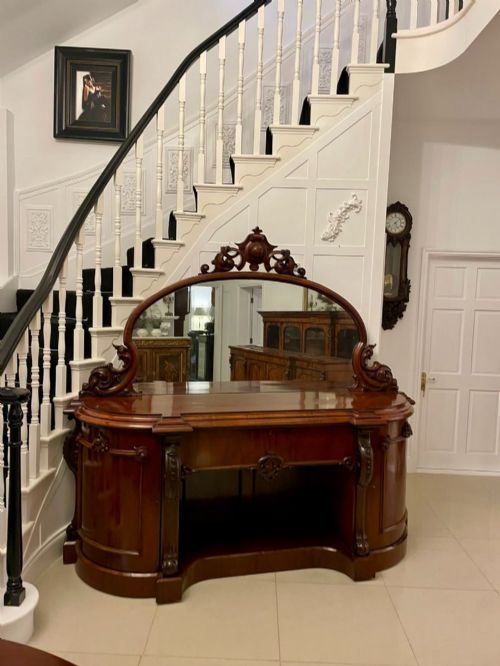
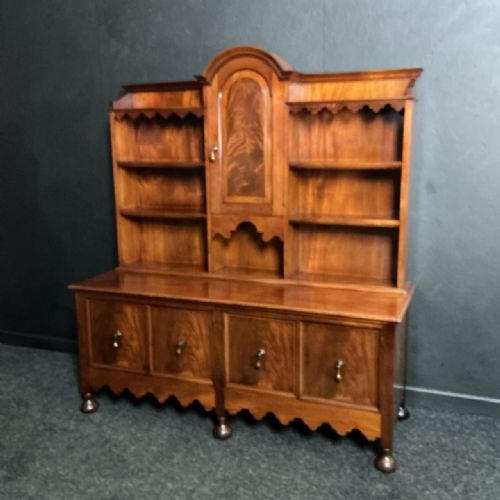
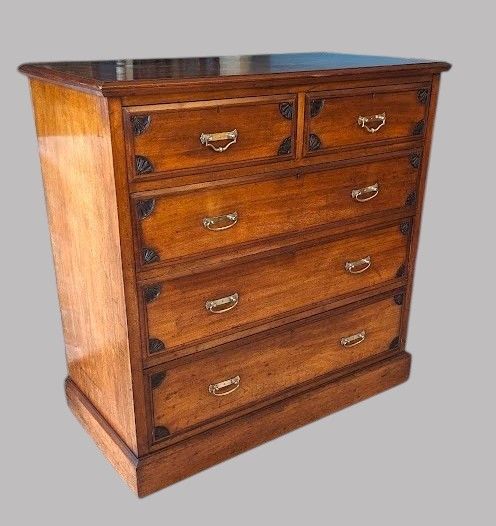
A carved mahogany dresser base represents a heavy storage piece built from timber during the Victorian and Edwardian periods. These large items function primarily as dining room sideboards, kitchen dressers, or storage cupboards with deep drawers.
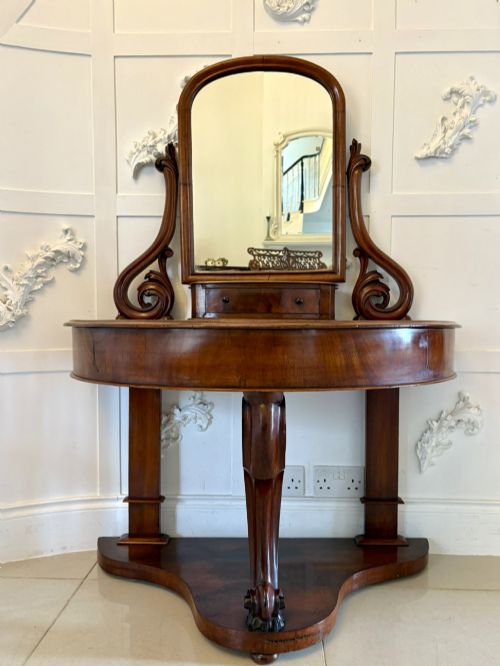
The versions met most frequently on this page span the mid nineteenth century to the early twentieth century, incorporating styles from standard Victorian designs to Edwardian Art Nouveau. They appear under various descriptions including sideboards, buffets, and chiffoniers alongside traditional dresser bases.
Makers utilised dense timber to construct these items, often pairing solid mahogany with flame mahogany veneers and secondary woods such as oak. Many examples include substantial mirror backs or raised shelf structures above the main lower storage compartment.
Materials and construction methods
Makers built these pieces primarily from solid mahogany and flame mahogany veneer, supported occasionally by internal framing in oak. The rich grain of the timber receives polish to highlight the natural figuration across the heavy doors and drawer fronts.
Decorative elements involve carved details applied directly into the solid mahogany or integrated into the structural mouldings of the Victorian and Edwardian periods. Hardware components consist largely of brass fixtures, while mirror glass appears frequently in the tall upper backs of the sideboards.
Listings span the Victorian and Edwardian periods, utilising mahogany, flame mahogany veneer, oak, and brass hardware across multiple sideboard forms.
Distinguishing quality in timber and design
The standard of a carved mahogany dresser base depends heavily on the selection of the timber and the depth of the carving. Superior examples display striking flame mahogany veneer figures matched symmetrically across large surfaces.
Structural integrity and the precision of the joinery separate simpler utility items from superior cabinet work. Workshop execution determines whether doors hang true and drawers operate smoothly within their mahogany housings over decades of daily use.
Maple & Co
The Carved Mahogany Dresser Base Glossary
- Flame mahogany
- A veneer cut from timber where the grain creates a flickering, flame-like pattern. This decorative slicing appears on the most prominent exterior surfaces of better furniture.
- Chiffonier
- A compact sideboard cabinet featuring lower cupboards, sometimes surmounted by a shelf or mirror. The form evolved during the nineteenth century to serve dining and parlour rooms.
- Mirror back
- An upright wooden frame holding a glass mirror attached to the rear of a sideboard. This component reflects light and displays decorative objects placed on the surface below.
- Pedestal sideboard
- A heavy dining room storage base featuring two substantial cupboards flanking a central section. The design provides maximum internal capacity for household china and linen.
Carved Mahogany Dresser Base: Frequently Asked Questions
What is a dresser base used for?
A carved mahogany dresser base functions as a heavy storage unit designed to hold dining room china, cutlery, and household linen. The wide top surface provides space for serving food or displaying decorative ceramics.
Historically placed in dining rooms or large kitchens, these pieces offer deep cupboards and drawers to keep domestic items organised out of sight.
How do I date a mahogany sideboard?
Dating relies on observing stylistic details such as heavy Victorian mouldings, Edwardian inlay work, or flowing Art Nouveau carved motifs. The presence of mirror backs and specific secondary woods like oak also helps place the piece within the nineteenth or early twentieth century.
Examining the construction methods and the type of mahogany veneer used provides further clues to the manufacturing decade.
Where should I place a large dresser base?
These substantial items require a wall with sufficient length and load-bearing floor space to support heavy timber construction. Dining rooms and large open hallways suit the scale of these pieces best.
Positioning the furniture away from direct heat sources prevents the mahogany timber and veneer from drying out or splitting over time.
What maintenance does polished mahogany need?
Maintaining polished mahogany involves dusting regularly with a soft, dry cloth to prevent dirt accumulation on the carved surfaces. Applying a quality beeswax occasionally helps nourish the timber and preserve the sheen of the polish.
Avoiding moisture and excessive sunlight protects both the solid wood and the delicate flame mahogany veneers from fading or water marking.