


Carved Mahogany Coat Tree
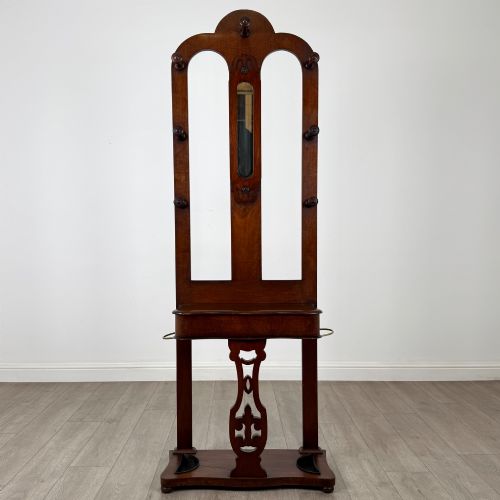
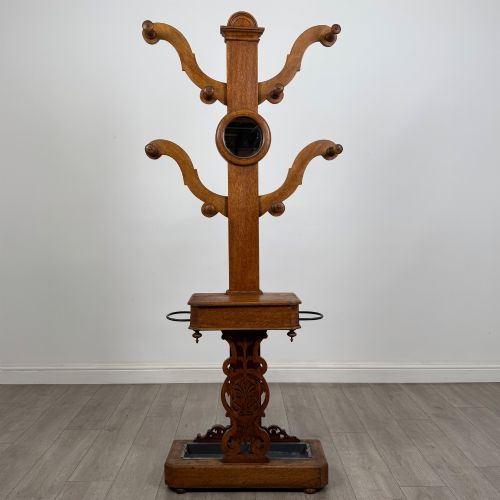
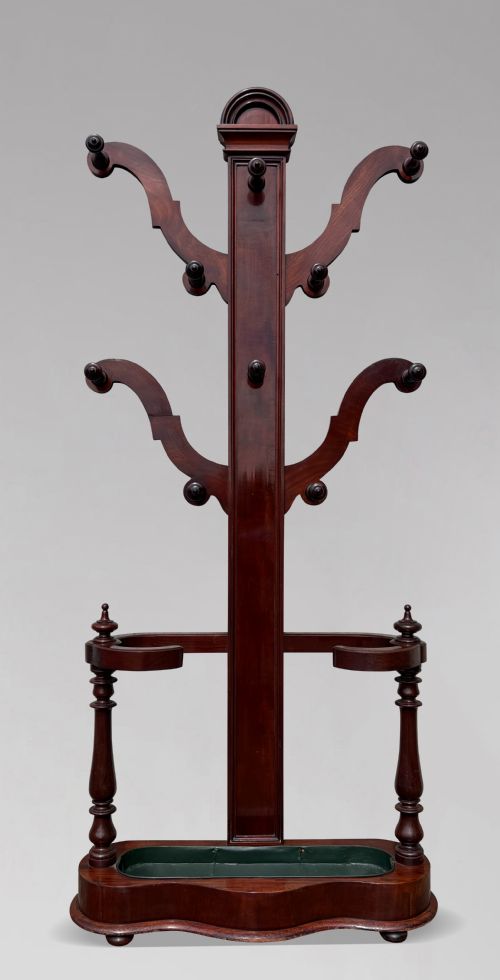
These carved mahogany coat tree pieces are substantial hall furniture designed for organising outerwear, bringing period utility and timber warmth to an entrance.
Carved Mahogany Coat Tree
A carved mahogany coat tree functions primarily as a grand entranceway piece for hanging hats, coats and storing umbrellas. The selection encountered here spans pieces listed under hall stands, coat stands and coat trees.
The prevailing form on this page originates from the Victorian period, alongside earlier Regency examples and later Edwardian variations. Pieces frequently incorporate useful additions such as central mirrors, marble shelves and drip pans for umbrellas.
Makers designed these items for domestic hallways where visitors first arrived. The timber choice ensured both structural rigidity for heavy garments and a rich surface appearance.
Construction and Materials
Makers utilised solid mahogany for the primary structure, turning timber into sturdy columns and brackets capable of bearing heavy winter garments. This dense wood accepted deep carving while maintaining the load-bearing strength required for daily domestic use.
Secondary materials integrated into the construction include brass and metal for hooks, alongside marble used for central display shelves and fitted umbrella bases. Glass forms the backing for integrated mirror plates set into the larger backboards.
Victorian examples make up the largest share of periods seen, supplemented by Regency and Edwardian pieces.
Judging Quality
Quality rests upon the crispness of the timber carving and the architectural ambition of the overall frame. Superior examples display deeply moulded cornices, well-turned columns and substantial carved brackets rather than plain timber surfaces.
The integration of functional elements dictates distinction within the range. Pieces fitted with original bevelled mirror plates, intact marble surfaces and matching brass or metal drip trays represent the higher tier of manufacture.
The Carved Mahogany Coat Tree Glossary
- Hall stand
- A large piece of entrance hall furniture incorporating coat hooks, a mirror, a shelf and umbrella storage. It combines multiple domestic storage needs into a single vertical unit.
- Mahogany
- A durable tropical hardwood known for its reddish-brown colour and fine grain. It became the premier timber for formal cabinet making throughout the nineteenth century.
- Marble
- A metamorphic rock used for the central counters and base inserts of hall stands. It provided a durable, water-resistant surface for wet umbrellas and visiting cards.
- Drip pan
- A metal or zinc tray positioned at the base of a hall stand to catch water from wet umbrellas. It protected the wooden floorboards from moisture damage.
- Cornice
- The decorative mouldings finishing the uppermost edge of a piece of furniture. It crowns the vertical structure of the hall stand.
Carved Mahogany Coat Tree: Frequently Asked Questions
What is a hall stand?
A hall stand is a tall piece of furniture designed for an entrance hall to hold coats, hats and umbrellas. It typically combines wooden framing with hooks, a mirror and storage trays.
These items served as the primary tidy for outerwear in nineteenth-century homes, welcoming visitors right inside the front door.
How do I care for mahogany?
Mahogany furniture requires regular dusting with a soft cloth and occasional treatment with quality wax to maintain the finish. Keep the timber away from direct heat sources and strong sunlight to prevent drying.
Treat marble inserts with mild soap and water, ensuring no liquid seeps into unsealed edges of the surrounding woodwork.
Are these pieces original Victorian?
The pieces listed originate predominantly from the Victorian period, spanning the mid to late nineteenth century. Construction methods, timber ageing and traditional joinery confirm their period manufacture.
Individual listings denote specific decades or styles such as Regency and Edwardian to help date each item accurately.
Where should I place a coat tree?
A coat tree or hall stand belongs in an entrance hall or spacious boot room where outerwear access is practical. Ensure the floor is level and the piece has adequate clearance for hanging garments.
Allow enough surrounding space to utilise any integrated mirrors and umbrella compartments comfortably.