
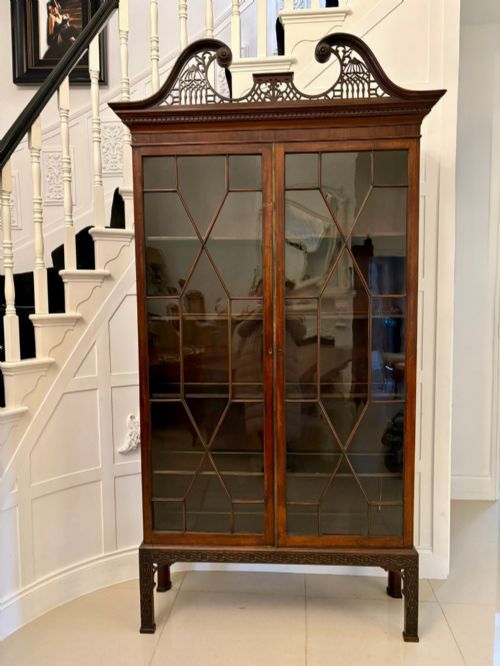
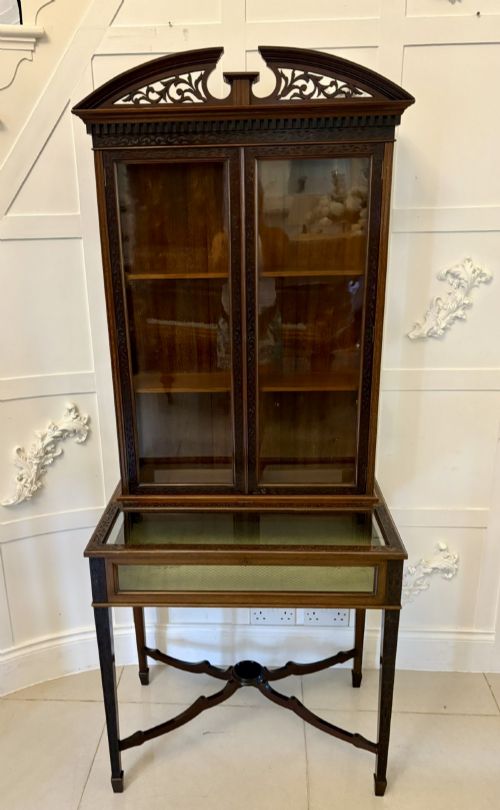
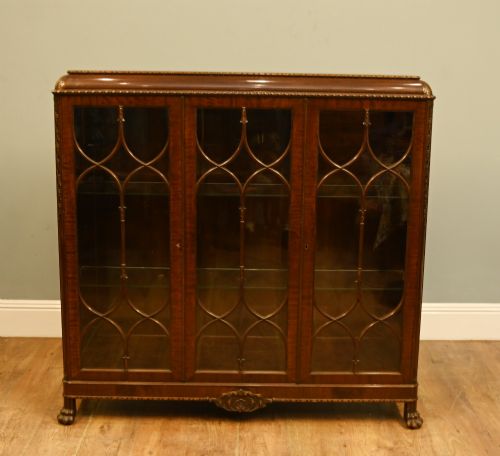
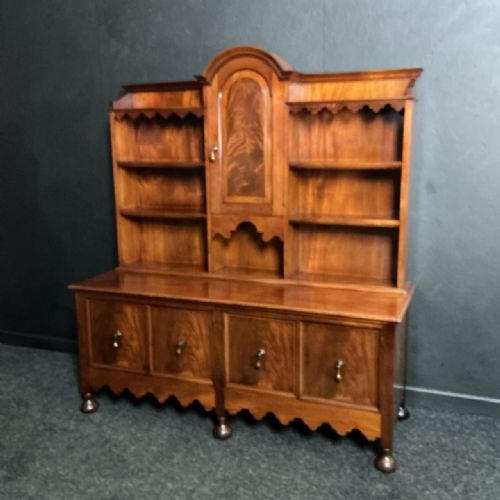

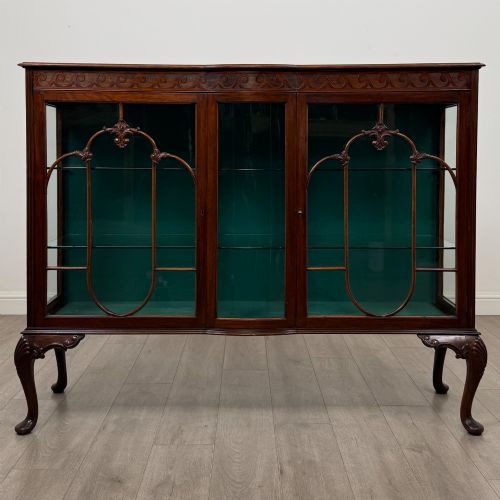
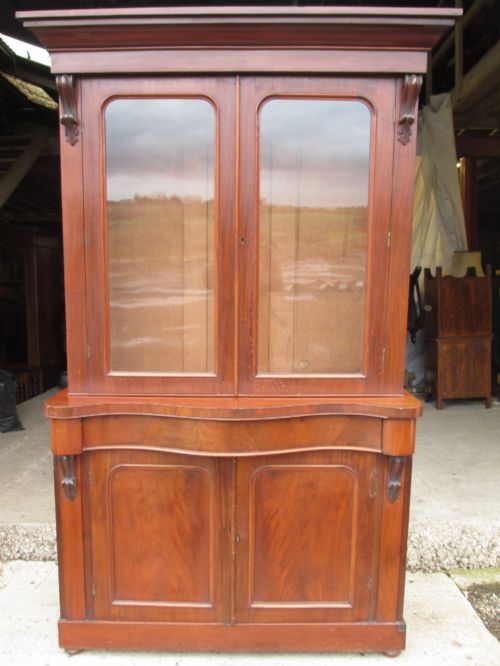
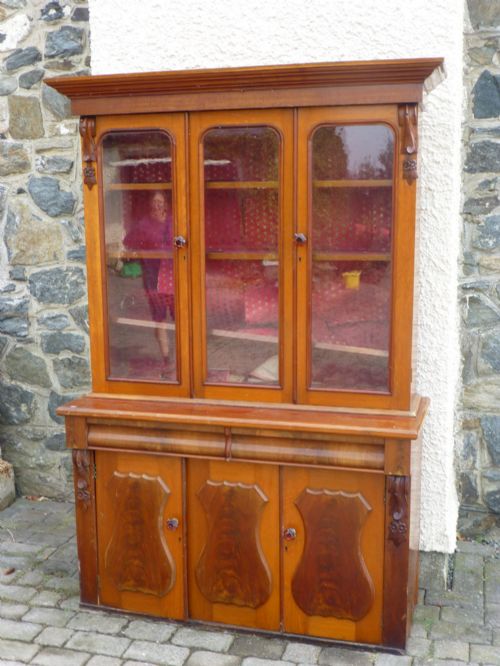
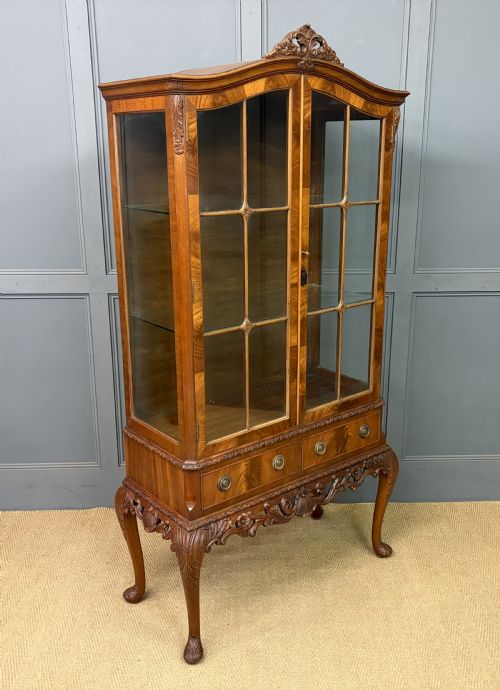
Carved Mahogany China Display
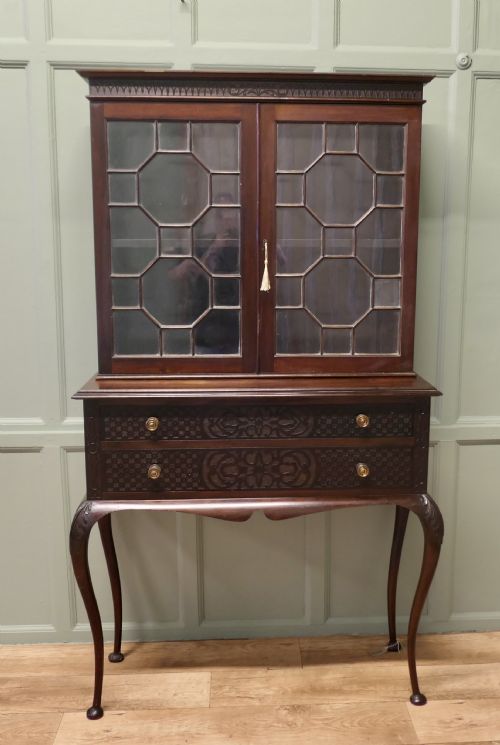
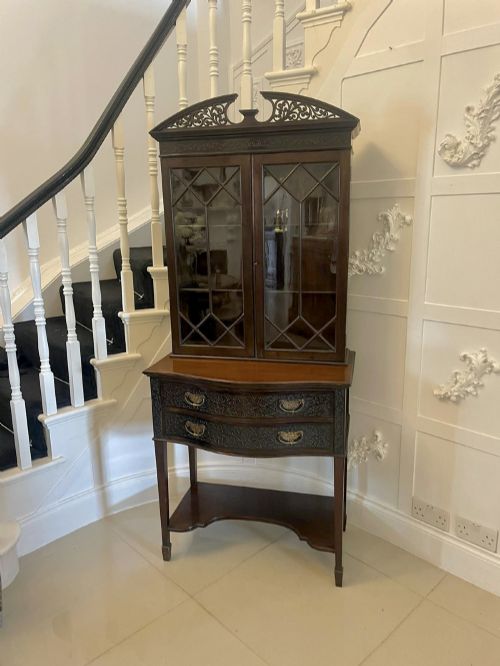
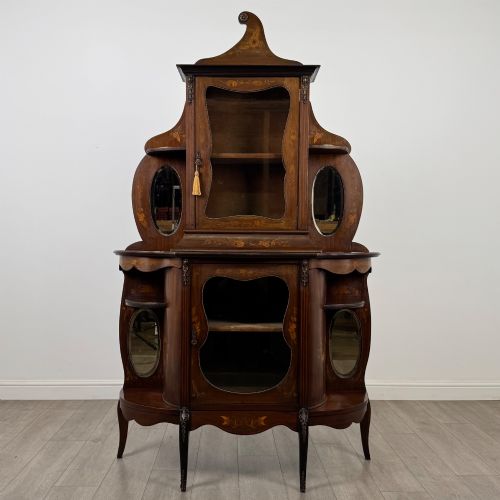
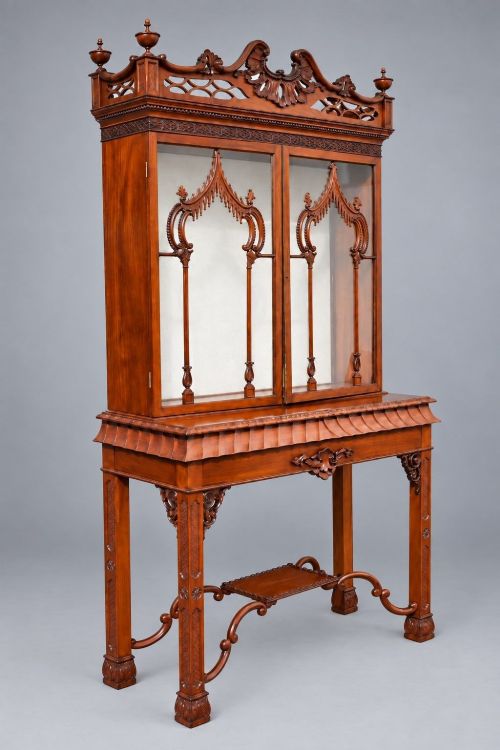
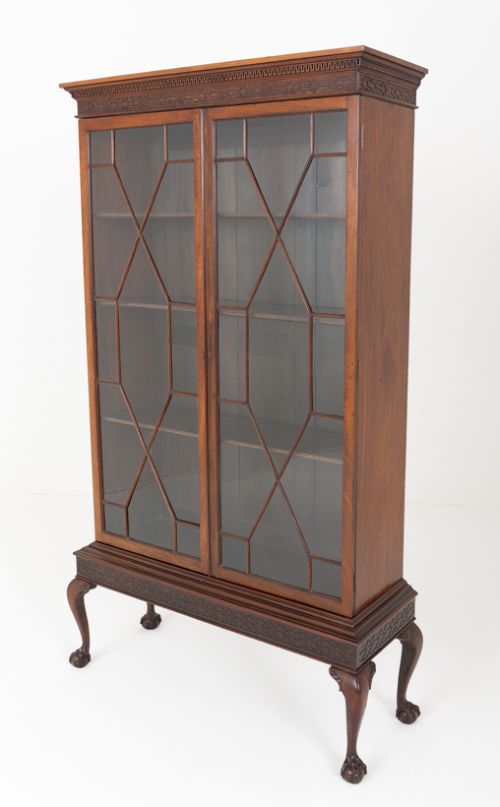
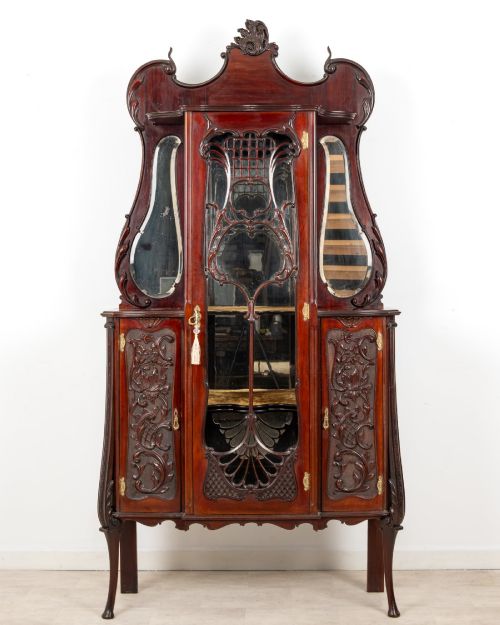
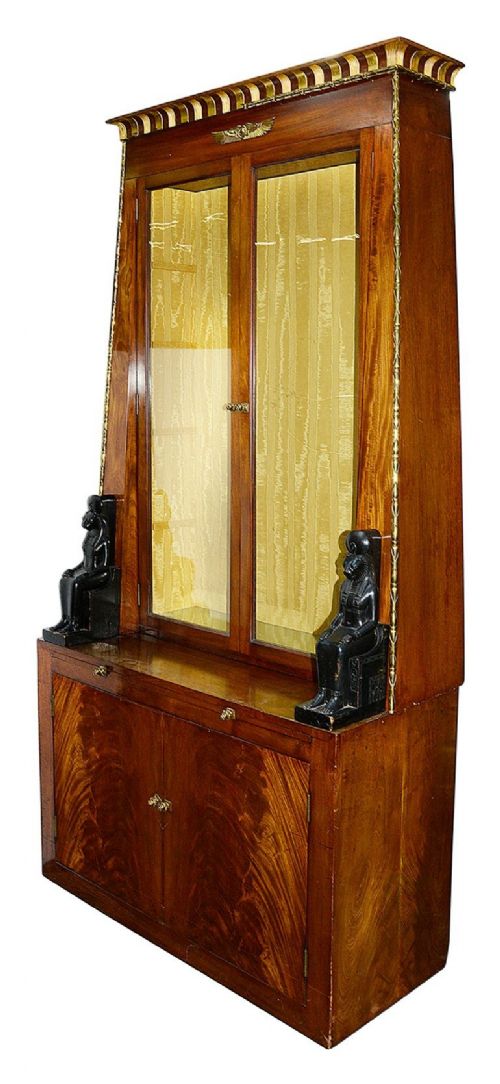
These carved mahogany china display pieces bring polished timber and clear glass together to hold porcelain and books.
Carved Mahogany China Display
A carved mahogany china display cabinet provides tall vertical storage behind glazed doors, bringing together timber framing and transparent panes to hold collections of porcelain or books. When you search for this phrase, you encounter forms that range from upright Victorian uprights to Edwardian parlour pieces and revival styles.
The dominant version on this page is the glazed display cabinet or bookcase, frequently built with astragal bars dividing the glass panes. Many examples adopt Chippendale revival aesthetics, featuring carved details and classical proportions that reflect earlier Georgian tastes.
Makers and workshops constructed these pieces primarily for formal reception rooms, using glass panels to protect delicate ceramics from dust while keeping them visible. Formats extend from tall double-door cupboards on stands to demi-lune cabinets and smaller pier display units.
How they were made
Cabinet makers utilised solid mahogany and flame mahogany veneers over secondary timbers, building structural carcasses that supported heavy glass doors and internal shelving. Workshops applied carved ornamentation directly to the timber cornices, friezes and borders, drawing on motifs from Chinese Chippendale and neoclassical styles.
Glazing techniques relied on timber astragal bars or brass framing to hold individual glass panes securely within the door frames. Secondary materials such as satinwood stringing, mirror glass backs and fabric linings appeared in Edwardian and late Victorian interiors to enhance the reflection of light inside the cabinet.
Listings feature mahogany, satinwood and oak, alongside glass panels, brass hardware and mirrored backs.
What varies in quality
The standard of carving determines much of the distinction between ordinary production and top-tier work, with crisp hand-chiseled details showing far greater depth than shallow machine shaping. Heavier timbers, substantial brass hardware and well-figured flame mahogany veneer indicate superior material selection by the maker.
Construction integrity is visible in the precision of the glazed door joints, the snug fit of opening drawers and the balance of the overarching cornice. Pieces bearing signatures from established cabinet makers or retail firms demonstrate a higher level of workshop execution.
Maple & Co.·James Winter & Sons·Edwards & Roberts·Waring & Gillow·Wylie and Lochhead Ltd·Epstein
The Carved Mahogany China Display Glossary
- Astragal
- Moulding profile used to hold glass panes within a door frame. These slender wooden bars divide the window into smaller geometric sections.
- Flame mahogany
- A decorative veneer cut from the fork of the mahogany tree where the branch meets the trunk. This produces a fiery, undulating grain pattern prized in fine cabinetry.
- Demi-lune
- Half-moon shape used for table and cabinet fronts. Such curved forms fit neatly against drawing room walls.
- Vitrine
- An all-glass or glass-fronted display cabinet designed for porcelain and small objects of vertu. These pieces prioritise visibility from multiple angles.
Carved Mahogany China Display: Frequently Asked Questions
What is a carved mahogany china display?
A carved mahogany china display is a cabinet built to showcase porcelain and decorative objects behind glass doors. These tall storage units combine timber frames with transparent panes.
Craftsmen produced them across the Victorian and Edwardian periods, frequently incorporating carved flourishes inspired by earlier Georgian furniture designs.
How do I date a mahogany display cabinet?
Dating relies on observing stylistic markers, construction methods and secondary timbers used inside the carcass. Victorian pieces often display heavier proportions and rich dark finishes.
Edwardian examples tend to show lighter satinwood inlay, while revival pieces borrow motifs from Chippendale or neoclassical vocabularies that help narrow down the decade.
Where were these cabinets used?
These cabinets stood in formal drawing rooms, dining spaces and libraries of period homes. Their primary purpose was to protect valuable ceramics and glassware from dust.
At the same time, the glass panels allowed hosts to exhibit their collected dinner services and ornaments to visiting guests.
How do I care for mahogany furniture?
Mahogany requires stable room temperatures and protection from direct sunlight to prevent the timber and veneers from drying out. Regular dusting with a soft dry cloth maintains the polished surface.
Avoiding harsh chemical polishes preserves the original patina built up over decades of domestic use.