
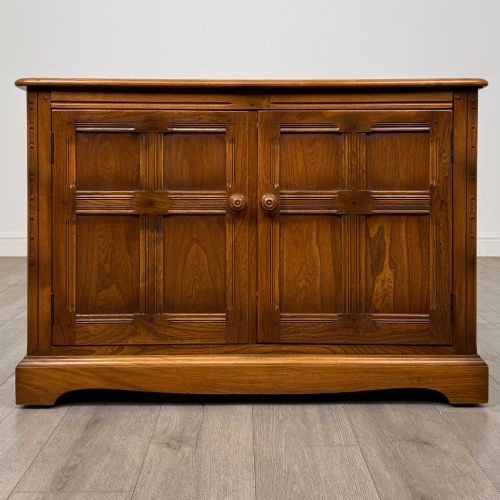
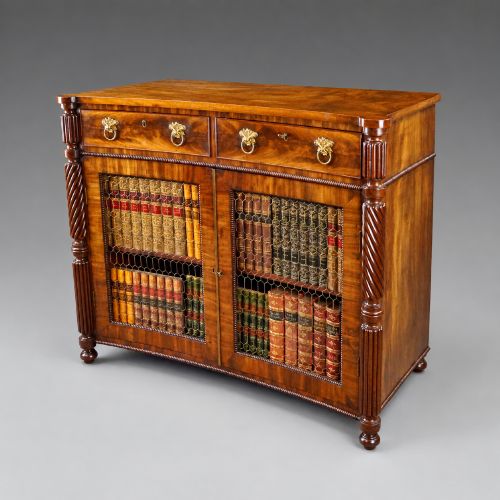
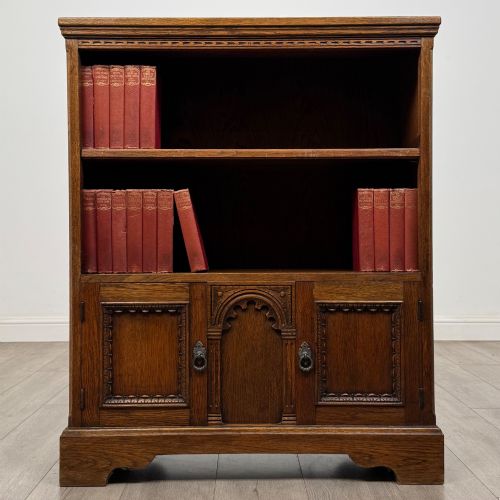
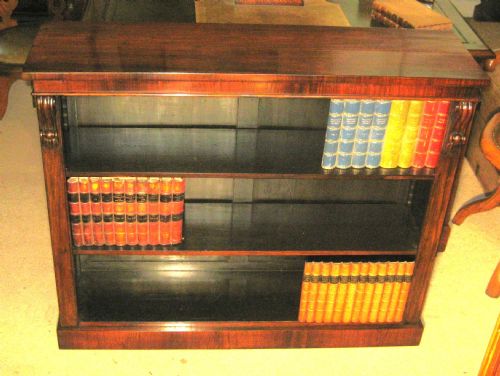
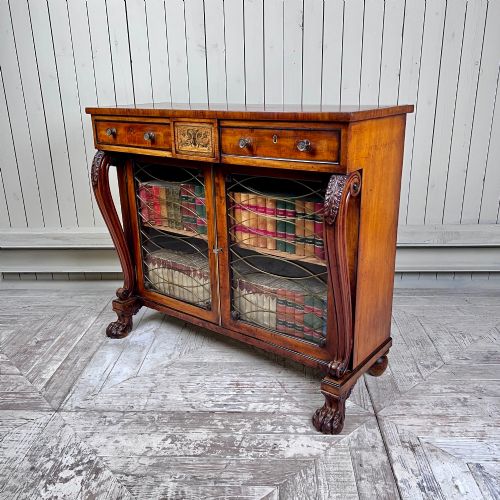
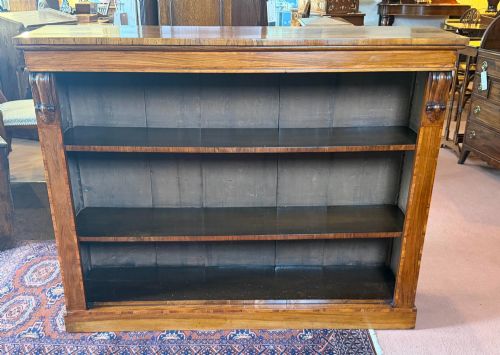
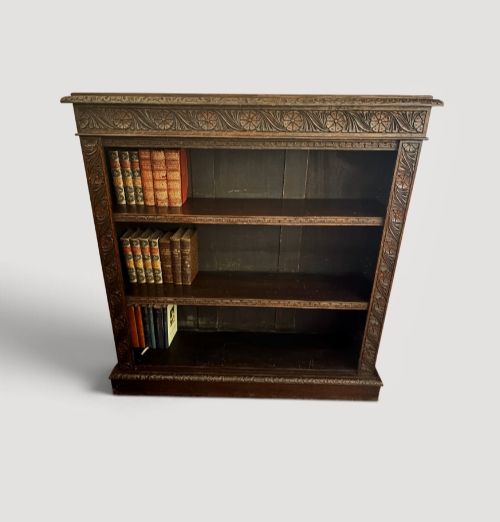
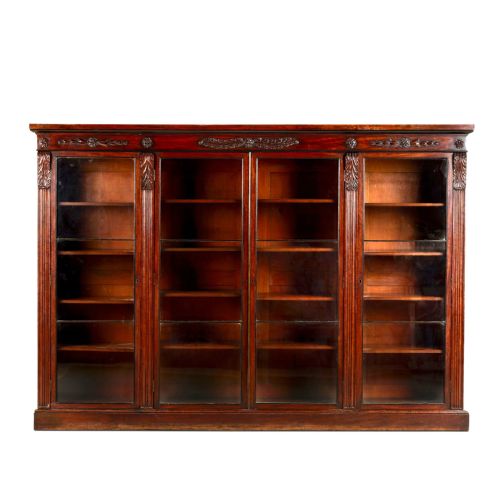
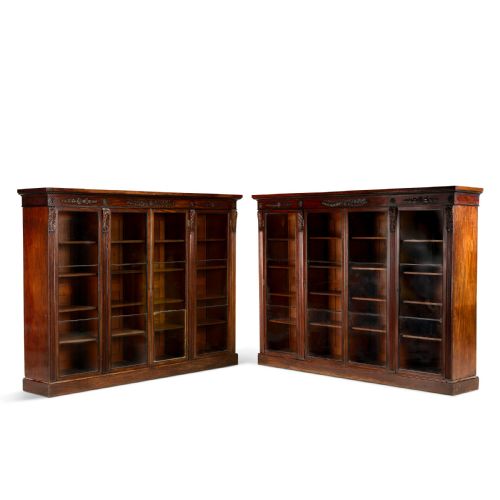
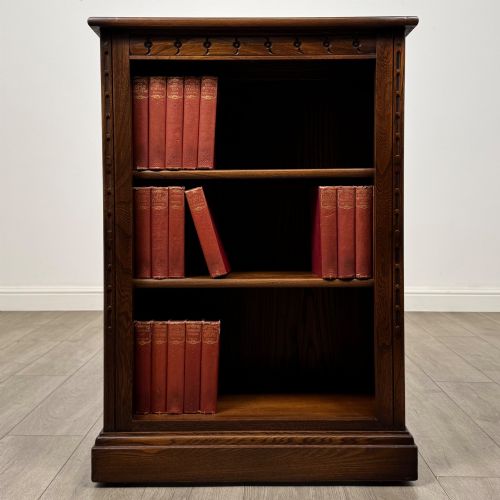
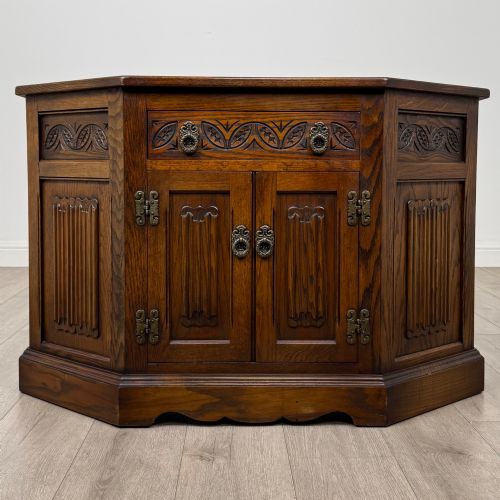
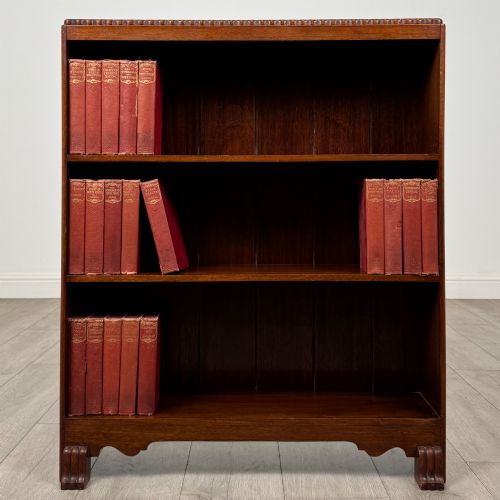
Carved Low Cabinet
A carved low cabinet provides practical storage whilst sitting low in a room, appearing in oak, mahogany, and rosewood across Victorian and Regency periods.
Carved Low Cabinet
A carved low cabinet brings together low-slung storage forms and detailed timber work, appearing frequently in the evidence as side cabinets, bookcase units, and low cupboards. When searching for a carved low cabinet, buyers encounter pieces spanning the 17th century style through to Edwardian interpretations, with Victorian and Regency examples appearing regularly.
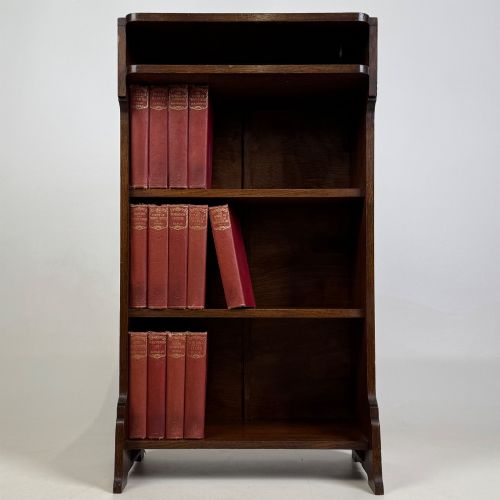
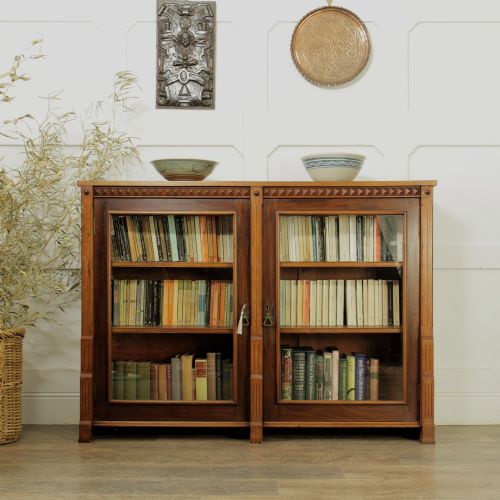
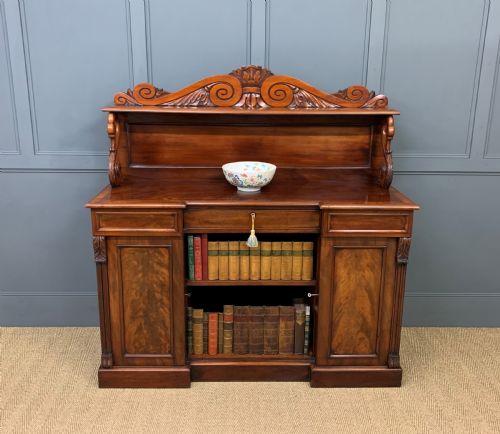
The materials recorded in these listings show a preference for oak, mahogany, and rosewood, often enhanced by glass, brass, and marble elements. Forms range from open bookcases and chiffoniers to sideboards, dressers, and enfilades, providing varied storage heights and display surfaces.
How they were made
Timbers such as oak, mahogany, rosewood, and walnut form the structural core of these pieces, selected for their grain and durability. Craftspeople employed solid construction alongside veneers, incorporating flame mahogany, burr walnut, and figured walnut surfaces.
Carving techniques define the decorative vocabulary, featuring linenfold patterns, green man motifs, sunflower details, and Gothic elements. Metal components in brass and inset marble tops complete the construction of the finer examples.
Listings feature oak, brass, mahogany, rosewood, walnut, glass, pine, and marble across Victorian, Regency, and Edwardian periods.
What varies in quality
The refinement of the timber selection dictates much of the distinction between pieces, particularly when comparing plain pine or oak to figured walnut, flame mahogany, or rich rosewood. Greater depth in the grain and more sophisticated veneer work signal higher grade material use.
The execution and depth of the carving separate standard workshop output from superior items. Crisp detailing in motifs such as linenfold panels or Gothic tracery demonstrates the hand of a more skilled cabinetmaker.
Gillows
The Carved Low Cabinet Glossary
- Chiffonier
- A low sideboard or cabinet, typically featuring shelves or a raised back. These pieces became popular during the Regency and Victorian periods for drawing rooms.
- Enfilade
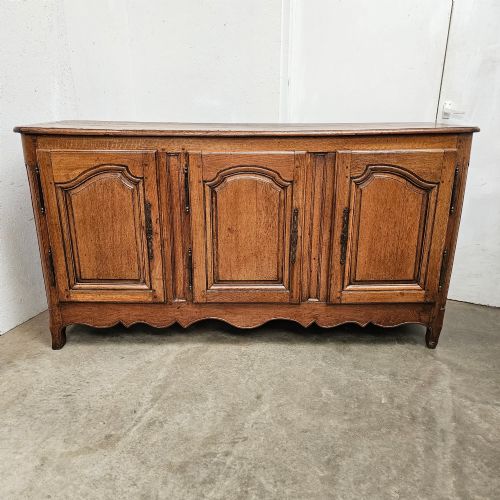
- A suite of rooms or a long cabinet arrangement with aligned doors. The evidence records French three-door examples in oak.
- Linenfold
- A style of wood carving that imitates folded linen. This decoration appears frequently on Edwardian oak cupboards.
- Secretaire
- A piece of furniture containing a writing drawer or fold-down desk flap. The evidence includes George IV dwarf examples attributed to Gillows.
- Gonçalo Alves
- A dense exotic hardwood with striking figuring, utilised in high-status Victorian credenzas and bookcases.
Carved Low Cabinet: Frequently Asked Questions
What periods do these cabinets date from?
The pieces span multiple centuries, with items recorded from the 17th century style, Regency, William IV, and Victorian eras, up to Edwardian and early 20th century productions.
Craftsmanship and timber choices shift across these eras, moving from solid regional oak work to refined rosewood and figured walnut veneering.
How were low cabinets used originally?
These low-profile pieces served multiple domestic functions, functioning as morning room book cabinets, salon display units, and side cabinets for serving or storage.
Many incorporated adjustable shelves or drawer space to accommodate books, linens, and household paraphernalia while keeping sightlines clear across the room.
Which timbers are most common?
Oak and mahogany appear most frequently across the listings, supported by rosewood, walnut, and pine elements.
Exotic selections like Gonçalo Alves and amboyna also surface in high-status Victorian pieces, whilst brass and marble provide contrasting hardware and top surfaces.
Are the shelves adjustable?
Certain pieces, such as the Regency and William IV rosewood open bookcases, specifically record adjustable shelving within their descriptions.
Other low cupboards and cabinets rely on fixed internal partitions depending on their primary function as bookcases or general storage units.