

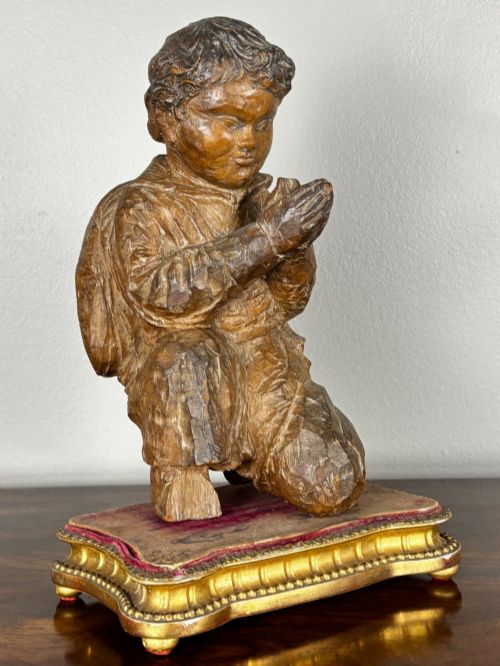
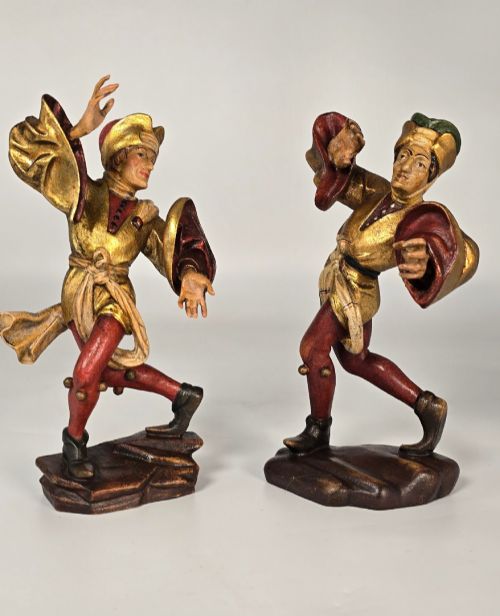
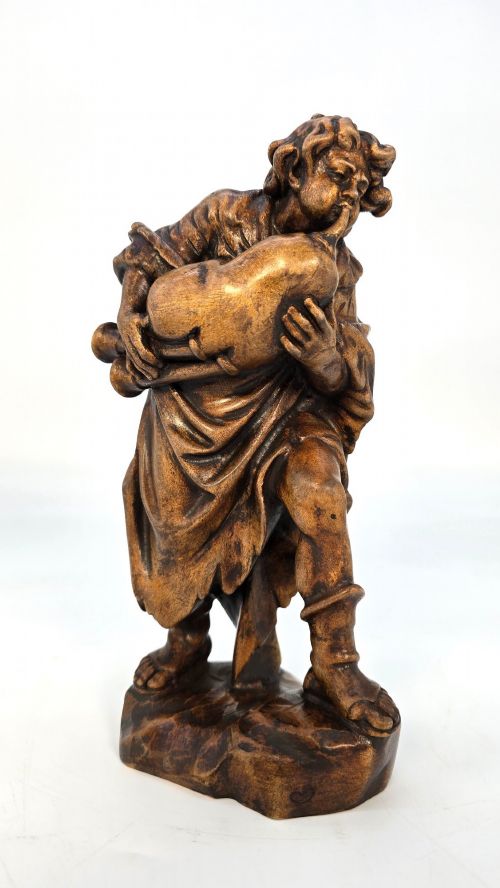
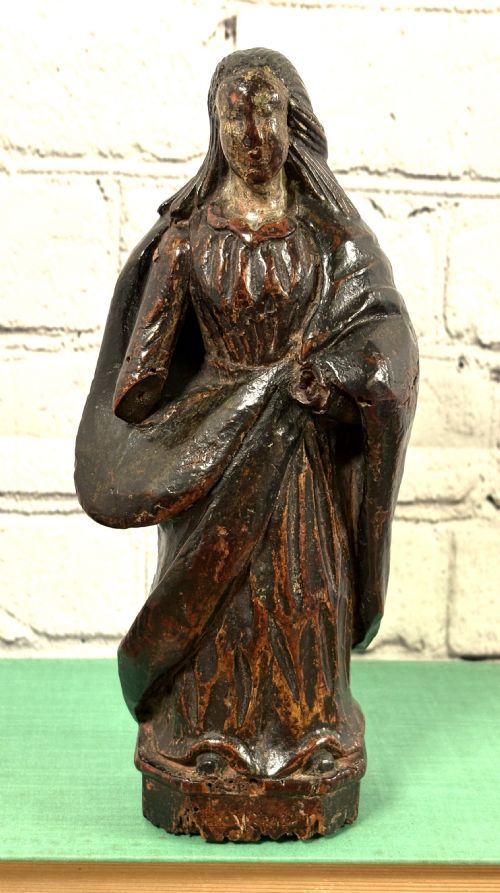


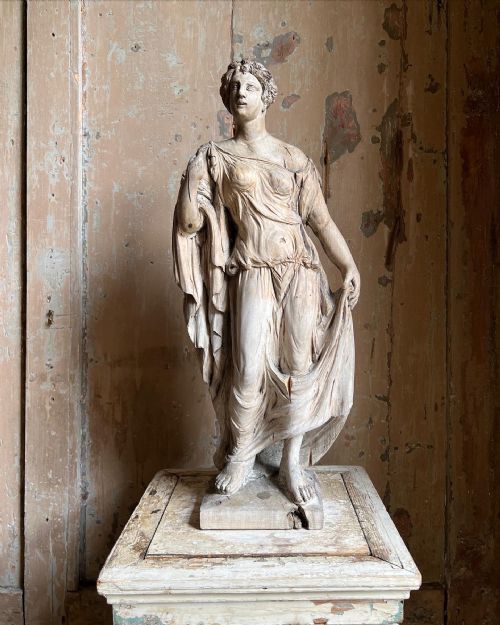


Carved Limewood Sculpture
These carved limewood sculpture pieces offer striking depth and tactile grain, bringing centuries of European craftsmanship directly into your room.
Carved Limewood Sculpture
A carved limewood sculpture brings together fine European woodworking traditions, ranging from intense religious figures to playful folk art animals. When you examine a carved limewood sculpture on this page, you frequently encounter Continental workshops working in lime wood, lindenwood, or limewood across several centuries.
The selection encompasses devotional saints and figures alongside Black Forest animals like fawns and ibexes. German Baroque pieces and Swiss dancing figures demonstrate the remarkable versatility of the medium.
Many examples arrive mounted on stands or retain traces of gold leaf, paint, and velvet. Collectors will find everything from early sixteenth century religious works to twentieth century decorative figures.
Materials and carving techniques
Makers utilised limewood and lindenwood for its fine, even grain, which permits exceptionally crisp detail without splitting. Carvers worked the timber while seasoned, employing sharp gouges to achieve deep undercut drapery and delicate facial expressions.
Surfaces were frequently finished with polychrome paint, parcel gilt details, or gold leaf to enhance devotional and decorative impact. Some sculptures retain their original velvet mounts or stands, completing the intended presentation.
Carved Limewood Sculpture Retail Price Guide 2026
Typical asking prices for carved limewood sculpture among the pieces listed under this phrase on Sellingantiques today, from the lower quarter to the upper quarter. They describe what is for sale here now, not the wider market.
Judging the carving
Quality rests entirely in the anatomical accuracy and the depth of the tool work across the grain. A superior piece displays confident, fluid cuts that define muscle, fabric, and expression without relying on heavy surface paint to mask hesitation.
Hans Müller
The Carved Limewood Sculpture Glossary
- Limewood
- A pale timber with a tight, uniform grain favoured by European carvers for intricate detail work. It is also known as lindenwood.
- Polychromed
- Decorated or painted in several colours, frequently applied over a gesso ground on religious wooden figures. This technique was standard for medieval and Baroque church art.
- Parcel Gilt
- Partially gilded with gold leaf, leaving portions of the natural wood or painted surface exposed. This creates a striking contrast against the dark timber.
- Black Forest
- A nineteenth and twentieth century Swiss and German style known for realistic carved animals and figures. These works often celebrate regional fauna and folklore.
- Baroque
- An elaborate artistic style spanning the seventeenth and eighteenth centuries characterised by dramatic movement and deep relief. Sculptures from this period feature dynamic, swirling drapery.
Carved Limewood Sculpture: Frequently Asked Questions
How do I clean limewood?
Dust the sculpture gently with a soft, dry brush to prevent dirt accumulation in the carved crevices. Avoid using water, oils, or modern chemical polishes on exposed timber.
Keep the piece away from direct sunlight and strong heat sources to prevent the wood from drying out and splitting over time.
Are these figures solid wood?
Most pieces are carved from a single block or assembled from seasoned limewood sections. The tight grain of the timber allows for deep undercutting without requiring internal framing.
Inspect the base and reverse to understand how the maker constructed the larger figural groups.
How do I date a carving?
Examine the tool marks left behind by the carver, as hand gouges differ significantly from later mechanical machinery. Patina, wear patterns, and the style of the base provide reliable clues to the age.
Compare the costume and posture against known regional sculpture styles from the sixteenth through the twentieth centuries.
Where should I display sculpture?
Place your sculpture on a stable surface away from fluctuating humidity and draughts. Limewood reacts to environmental changes, so steady indoor conditions preserve the timber best.
Position the piece where side lighting can catch the depth of the carving and reveal the subtle tool marks.