



Carved Leg Stool Bench
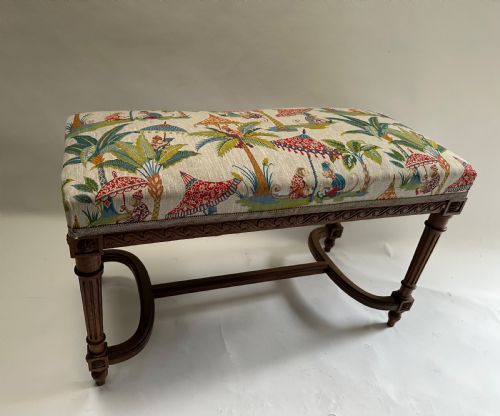
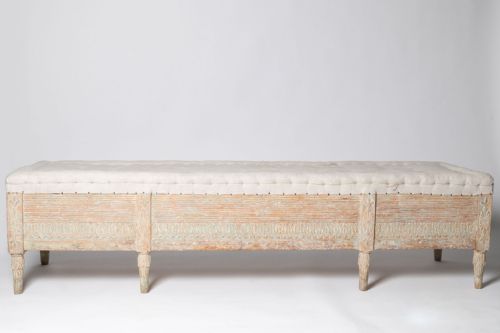
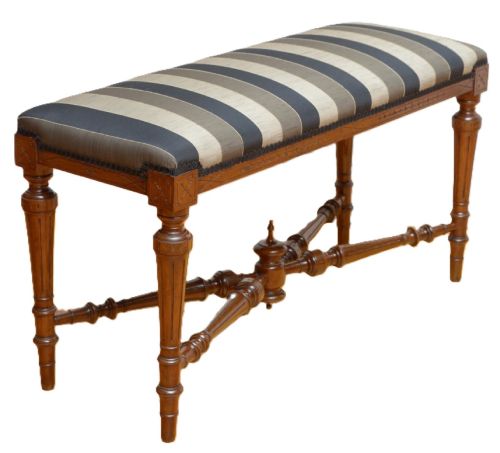
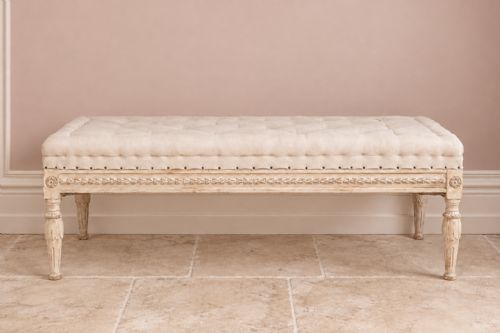
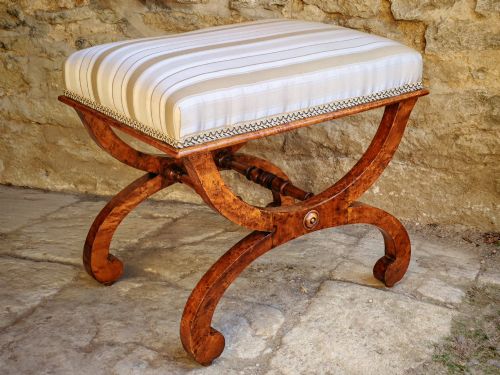
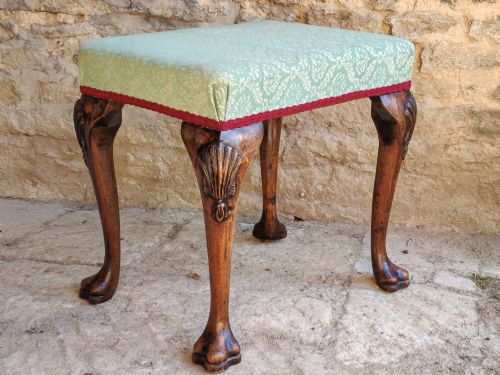
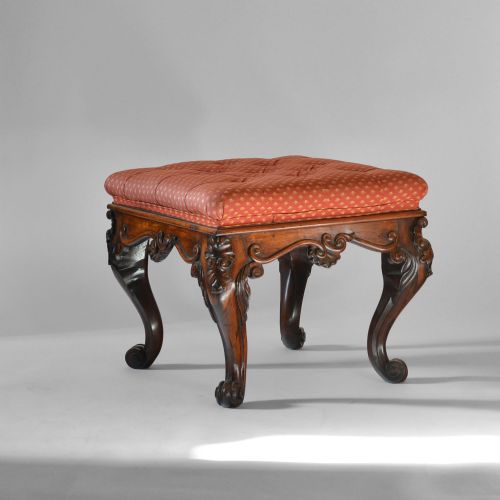
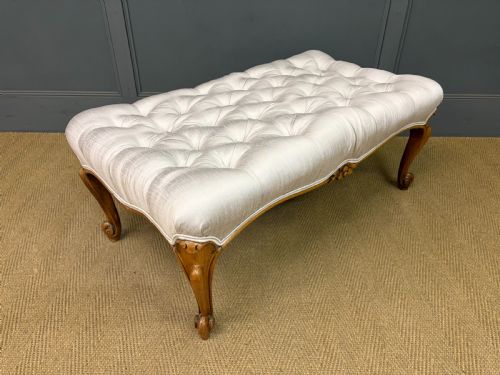
These carved leg stool bench examples unite solid timber frames with rich upholstery to provide versatile seating.
Carved Leg Stool Bench
A carved leg stool bench spans versatile forms including footstools, window seats, duet stools, and long benches designed for domestic interiors. Most pieces encountered on this page originate from the nineteenth century, alongside examples stretching back to the eighteenth century and forward into the early twentieth century.
Makers produced these seats in various regional interpretations, from English country house styles and Anglo-Indian designs to Continental European pieces. Common formats range from compact dressing table stools to large centre stools and piano stools fitted with padded tops.
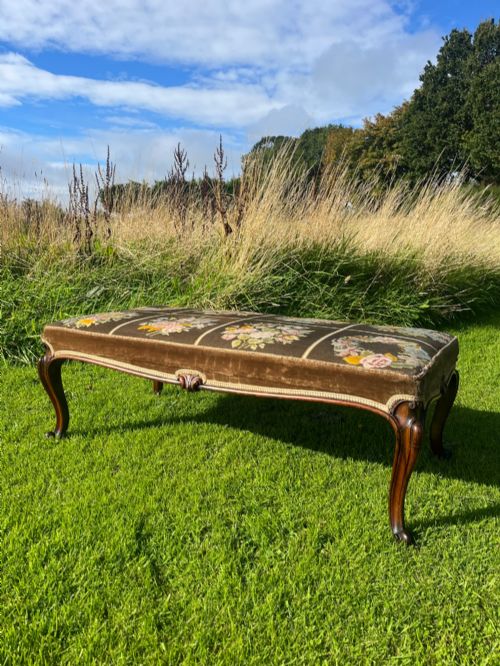
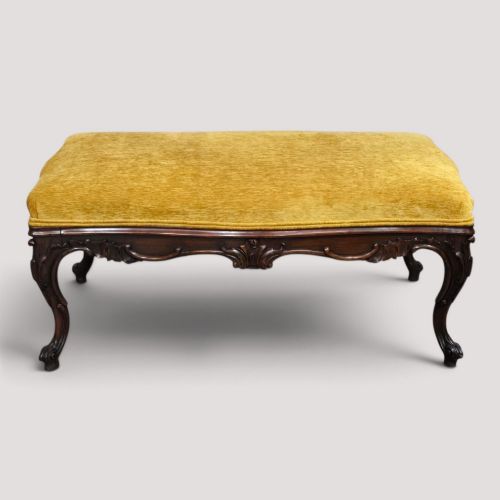
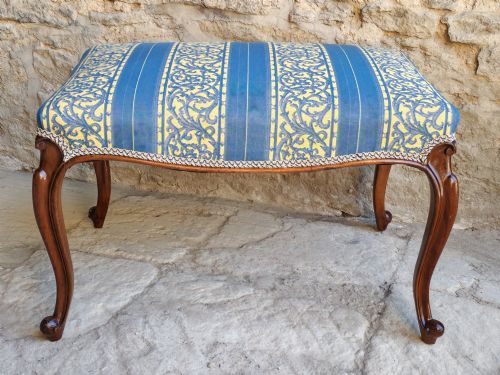
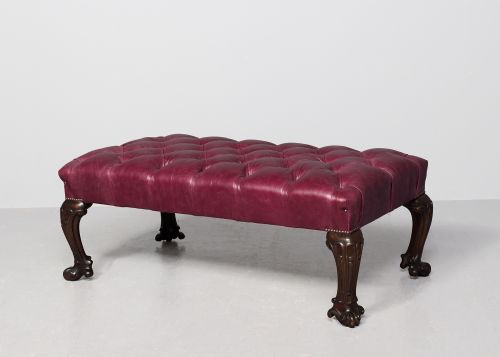
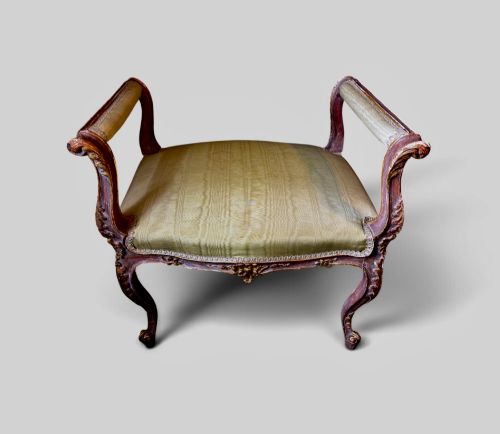
Victorian walnut and mahogany pieces with cabriole legs appear frequently alongside revival styles mimicking Georgian, Queen Anne, and Rococo aesthetics. Vernacular items such as primitive milking stools and diminutive carved wooden seats also feature within the selection.
Materials and construction
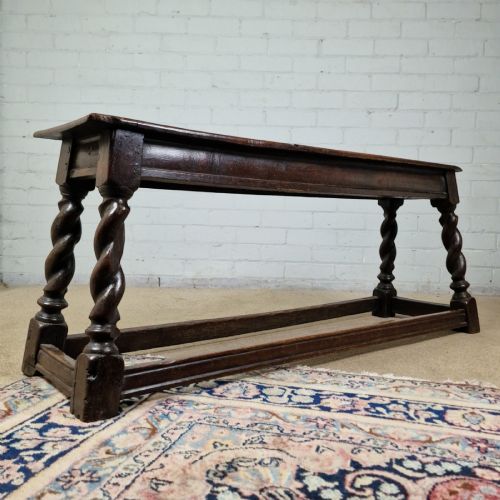
Frames rely primarily on dense hardwoods such as mahogany, walnut, rosewood, and oak, shaped with carved details like cabriole legs and twisted rope turnings. Giltwood, painted pine, and burr maple also appear, demonstrating diverse cabinet-making traditions across different decades.
Upholstery techniques involve textiles ranging from contemporary fabrics and velvet to traditional needlepoint, buttoned red hide, and original coverings. Structural support relies on sturdy timber joinery, occasionally complemented by brass mounts or intricate hand-carved ornamentation along the aprons and legs.
Carved Leg Stool Bench Retail Price Guide 2026
Typical asking prices for carved leg stool bench among the pieces listed under this phrase on Sellingantiques today, from the lower quarter to the upper quarter. They describe what is for sale here now, not the wider market.
Assessing craftsmanship and condition
Quality reveals itself in the crispness of the hand-carved woodwork and the structural integrity of the timber frame, distinguishing master cabinet-making from simpler vernacular carpentry. Dense, well-figured hardwoods and robust joinery indicate superior construction that endures centuries of use.
The sophistication of the stylistic revival influences the character of each piece, whether through exuberant baroque forms or refined Georgian proportions. Upholstery choices and the preservation of original fabric or period appropriate needlepoint further differentiate standard examples from exceptional decorative seating.
The Carved Leg Stool Bench Glossary
- Cabriole leg
- A furniture leg that curves outward and then tapers inward, resembling an animal's curving leg. This form appears frequently on eighteenth and nineteenth-century seating.
- Window seat
- An elongated stool or bench designed specifically to sit within the recess of a window. These pieces often feature upholstered tops and decorative carved frames.
- Centre stool
- A large freestanding stool intended to occupy the middle of a room rather than sit against a wall. They function as both decorative centrepieces and practical seating.
- Duet stool
- An extended piano stool built to accommodate two musicians side by side. They typically incorporate hinged seats revealing internal storage for sheet music.
- Vernacular
- Everyday furniture made by regional artisans using local traditions rather than following high-style academic designs. These pieces emphasise functional simplicity and honest construction.
Carved Leg Stool Bench: Frequently Asked Questions
How do I use a window seat?
Window seats fit naturally beneath window recesses to create comfortable spots for reading or admiring views. They also serve effectively at the foot of a bed or as freestanding benches in hallways.
Their elongated proportions allow them to double as low coffee tables when topped with a sturdy tray. This versatility makes them practical additions to both traditional and contemporary living spaces.
What is a duet stool?
A duet stool is an extended seating bench designed originally for two people sharing a piano keyboard. Many examples feature hinged tops that lift to store sheet music inside the frame.
Today these benches function well in bedrooms and dressing rooms where extra surface space and internal storage prove useful. Their wider proportions distinguish them from standard single piano stools.
How do I distinguish Victorian from Georgian styles?
Georgian furniture prioritises classical symmetry, restraint, and proportional balance, often utilising mahogany with subtle carved details. Victorian pieces tend toward heavier proportions, exuberant ornamentation, and darker walnut or rosewood timbers.
Revival pieces from the nineteenth century often borrow earlier motifs like cabriole legs or ball-and-claw feet. Examining the timber patination and internal construction helps clarify the true age of the piece.
Can I reupholster an antique stool?
Reupholstering an antique stool is a common practice to refresh worn fabric or match modern interior colour schemes. Traditional stuffing and webbing can be repaired or replaced while preserving the historical wooden frame.
Choosing appropriate period textiles ensures the piece retains its decorative integrity. Many collectors prefer traditional techniques that respect the original craftsmanship of the maker.