

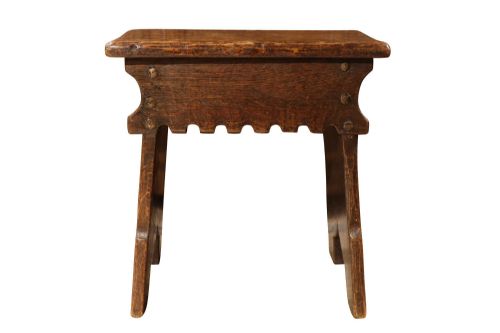
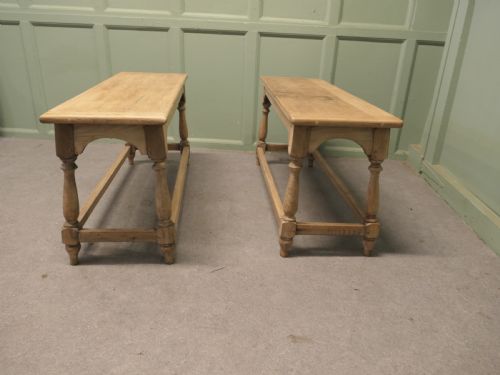


Traditional Oak Bench Stool
These traditional oak bench stool options bring honest timber and solid proportions to domestic spaces, offering sturdy seating with centuries of character behind them.
Traditional Oak Bench Stool
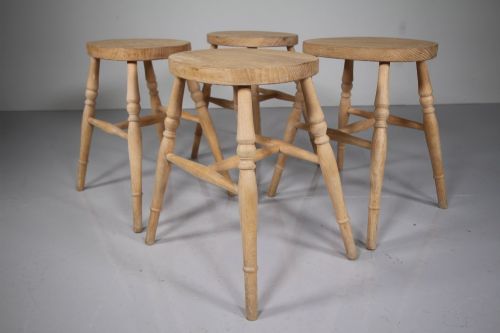
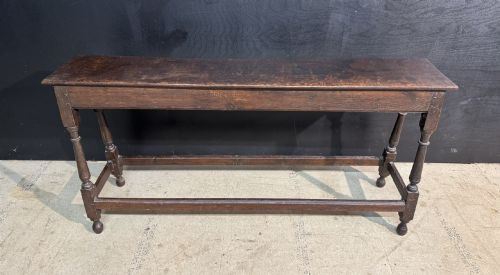
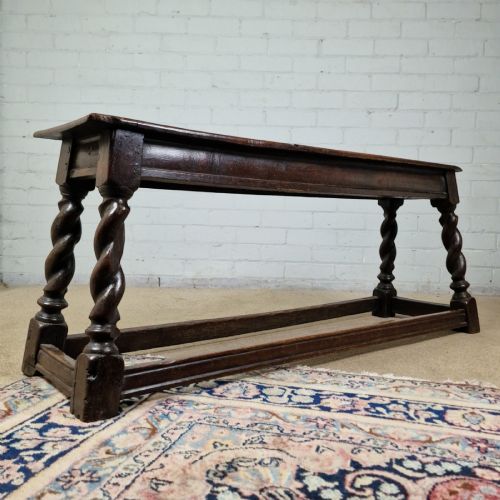
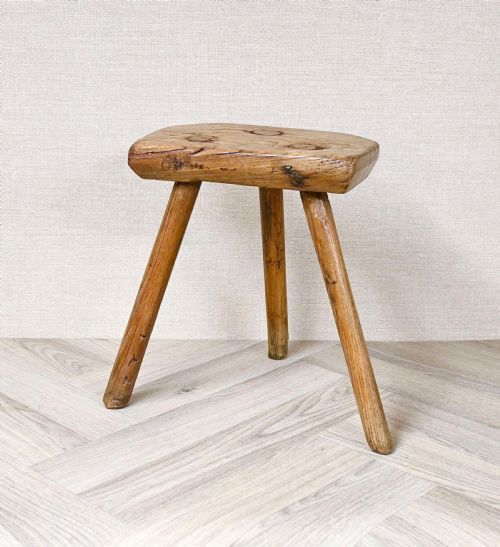
A traditional oak bench stool spans forms from long joint benches and narrow dining stools to low foot boards and primitive milking seats. Buyers searching for a traditional oak bench stool encounter utilitarian seating rooted in centuries of vernacular woodworking.
The pieces on this page draw from periods ranging through the eighteenth, nineteenth, and early twentieth centuries, alongside revival styles like Jacobean and rustic farmhouse. Solid timber construction unites these examples, whether configured as low footstools, heavy centre stools, or pegged joint benches.
Materials and construction methods
Makers relied on English oak, elm, and native timber, often working green wood into heavy planks and sturdy frames. Construction frequently employs pegged joints, visible tenons, and solid timber tops rather than applied veneers.
Surface treatments vary from raw bleached oak to surfaces retaining rich patination from decades of handling. Secondary elements occasionally introduce brass fittings, cane work, or upholstered pads set within the timber framework.
Traditional Oak Bench Stool Retail Price Guide 2026
Typical asking prices for traditional oak bench stool among the pieces listed under this phrase on Sellingantiques today, from the lower quarter to the upper quarter. They describe what is for sale here now, not the wider market.
Current listings feature oak, elm, fabric, and brass elements across periods from the eighteenth century through the nineteen-thirties.
Distinctions in standard and execution
Quality rests in the integrity of the timber selection and the tightness of the joinery, particularly where legs meet the underside of the seat. Superior examples display thoughtful proportions, such as well-balanced stretcher placement and cleanly hand-cut pegs.
The distinction between a utilitarian workshop piece and a finer revival model lies in the crispness of carved details and the weight of the solid oak planks. Wear and patination should appear organic rather than forced, reflecting genuine domestic use over generations.
The Traditional Oak Bench Stool Glossary
- Joint stool
- A sturdy wooden seat constructed with mortise and tenon joints secured by wooden pegs, common in early domestic interiors. These forms pre-date upholstered chairs and served versatile household roles.
- Pegged construction
- A method of joining wooden components using cylindrical wooden pins driven through drilled holes in mortise and tenon joints. This technique avoids metal nails and tightens as the timber seasons.
- Jacobean Revival
- A nineteenth and early twentieth century style copying the heavy turned legs, strapwork carving, and dark finishes of seventeenth century English furniture. It brings seventeenth century forms into later domestic settings.
- Bleached oak
- Timber treated to lighten its natural tone, removing dark wax or varnish to expose the grain in a paler finish. This treatment alters the visual weight of heavy nineteenth or twentieth century pieces.
- Stretcher
- A horizontal wooden rail connecting the legs of a stool to provide structural rigidity and prevent splaying. On older seating, stretchers also served as footrests away from cold floors.
Traditional Oak Bench Stool: Frequently Asked Questions
How were these stools originally used?
These low seats and benches served practical domestic functions around the hearth, at dining tables, or as auxiliary perches in hallways and bedrooms.
Longer forms accommodated multiple sitters or functioned as luggage stands in guest spaces, while smaller versions supported daily tasks or rested feet.
Are these seats comfortable for daily seating?
Unupholstered timber tops offer firm support rather than plush cushioning, making them suited for short seating intervals or as occasional hallway furniture.
Upholstered variations provide softer seating while retaining the structural oak frames underneath.
How do I tell an older stool from a later revival?
Examination of tool marks, timber shrinkage, and peg placement helps reveal the age and construction methods behind the piece.
Revival pieces from the nineteenth and twentieth centuries often feature machine-sawn elements and uniform wear compared to earlier vernacular work.
Can these benches be used in modern kitchens?
Solid timber construction makes these benches durable additions to contemporary kitchen spaces, dining areas, or boot rooms.
Their narrow profiles allow them to slide beneath tables or fit into compact hallways easily.