
Carved Leg Sofa Table
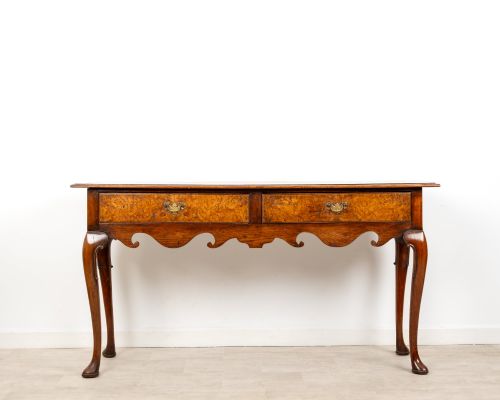
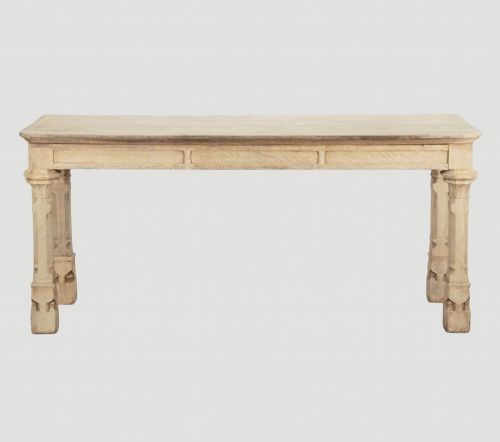
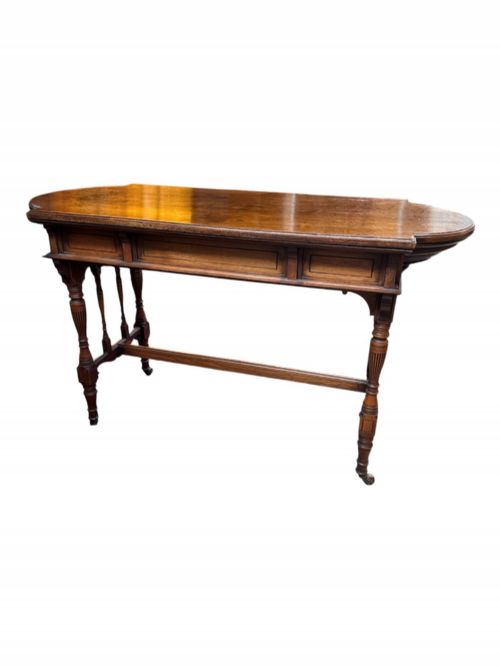
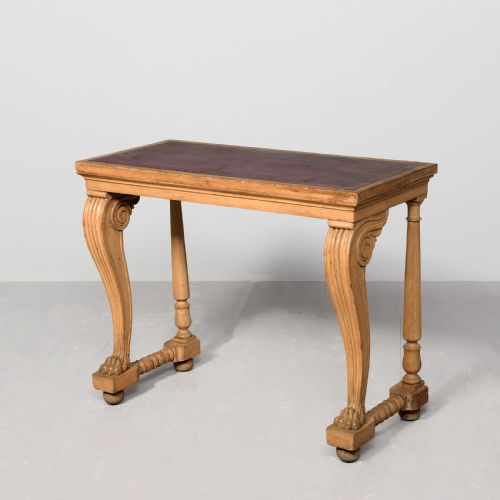
A carved leg sofa table brings architectural presence and versatile surface space to a room, drawing the eye with solid proportions and detailed timber work.
Carved Leg Sofa Table
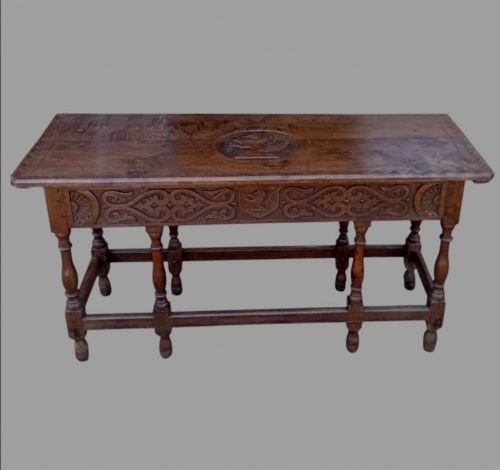
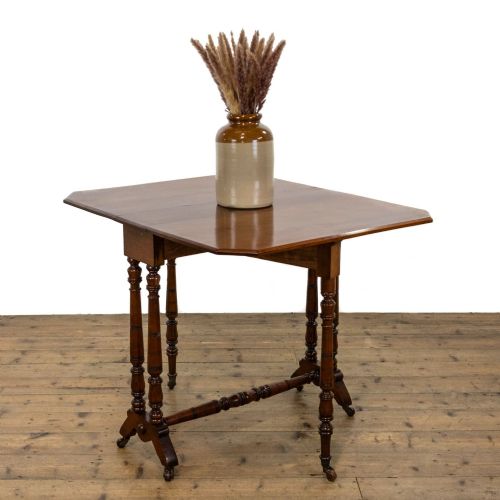
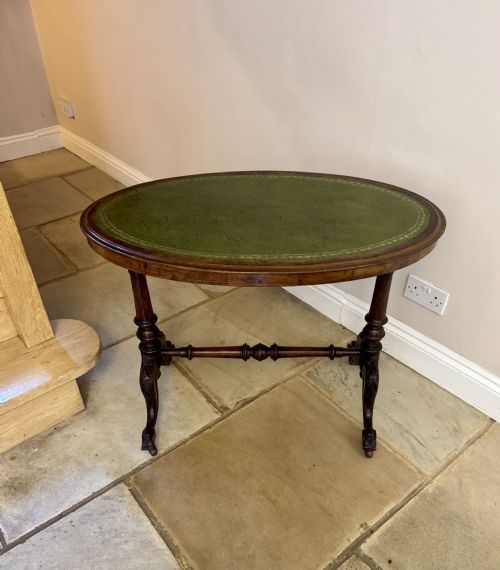
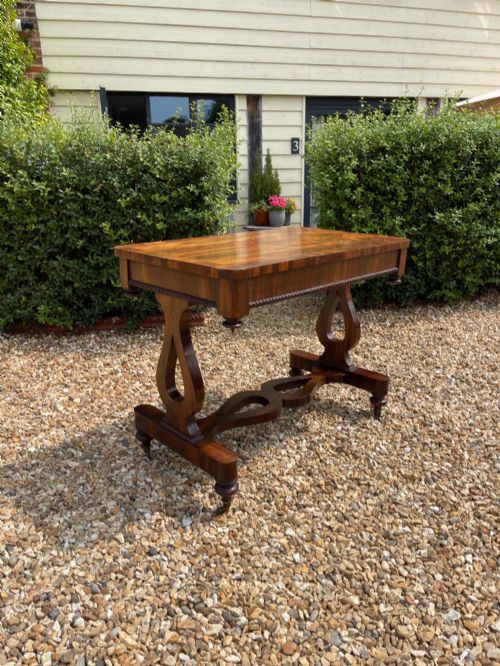
A carved leg sofa table encompasses a variety of support furniture designed for domestic use, predominantly appearing on this page through console tables, side tables, and occasional tables. These pieces emerge from periods spanning the Georgian era through to the Edwardian period and the early twentieth century.
Buyers will encounter forms fashioned from walnut, burr walnut, mahogany, oak, and rosewood, often styled within Victorian, Regency, and Queen Anne revivals. The selection demonstrates how makers adapted these compact or console formats for halls, libraries, and drawing rooms across multiple centuries.
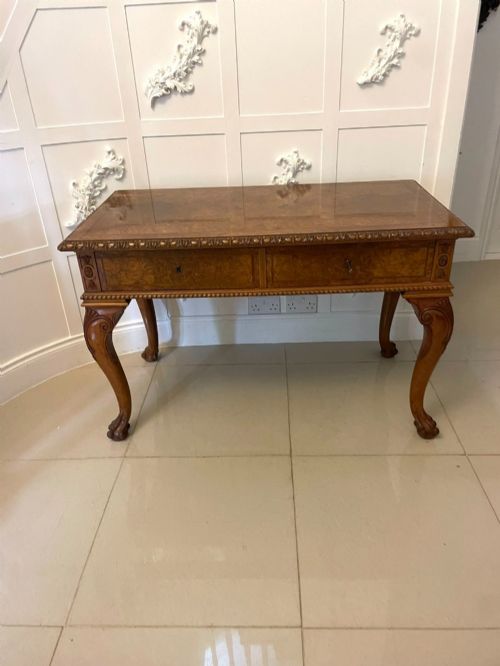
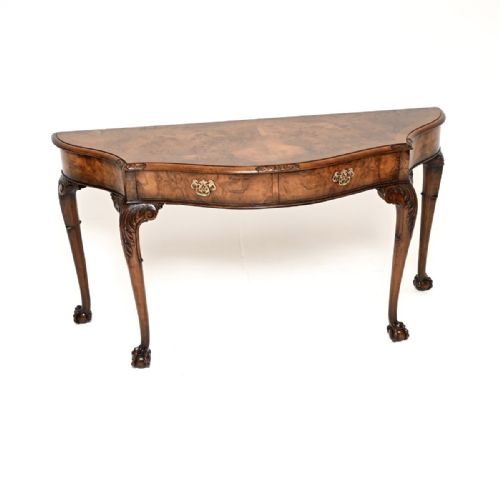
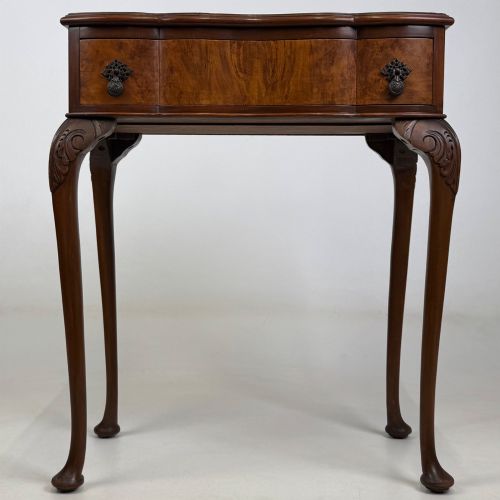
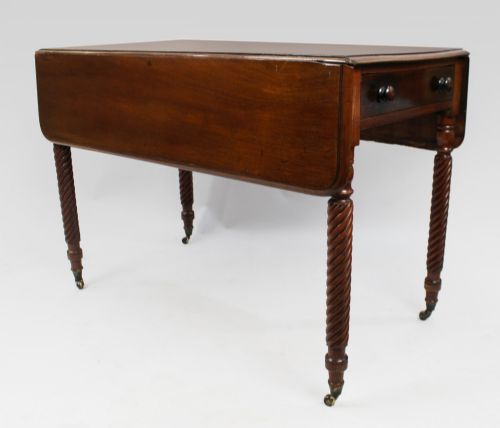
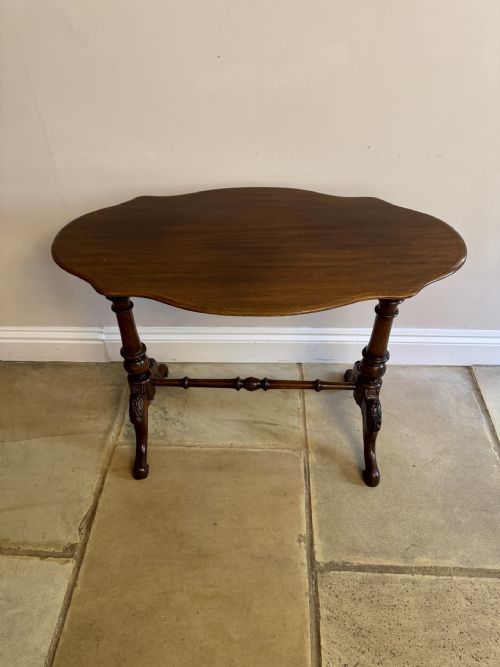
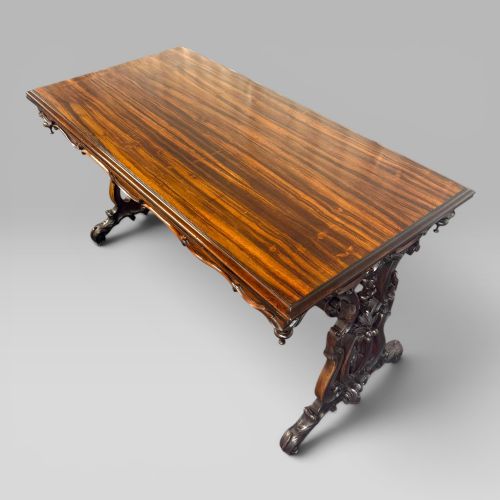
The specific version most likely to meet a buyer here is the walnut or mahogany console or side table bearing carved detailing on its legs, reflecting the craftsmanship of the nineteenth and early twentieth centuries. Such pieces bridge the gap between utilitarian surface area and decorative focal point.
How they were made
Carpenters and cabinet makers utilised dense hardwoods such as mahogany, oak, walnut, and exotic rosewood to construct the primary frames and surfaces of these tables. Figured veneers, particularly burr walnut, were frequently applied to tabletops to create striking visual patterns across the grain.
Structural integrity relied on traditional joinery methods, whilst decorative emphasis concentrated on the legs, where intricate carving defined the silhouette. Supplementary materials such as brass fittings, ceramic elements, and leather writing inserts appeared on specific desk and library variants.
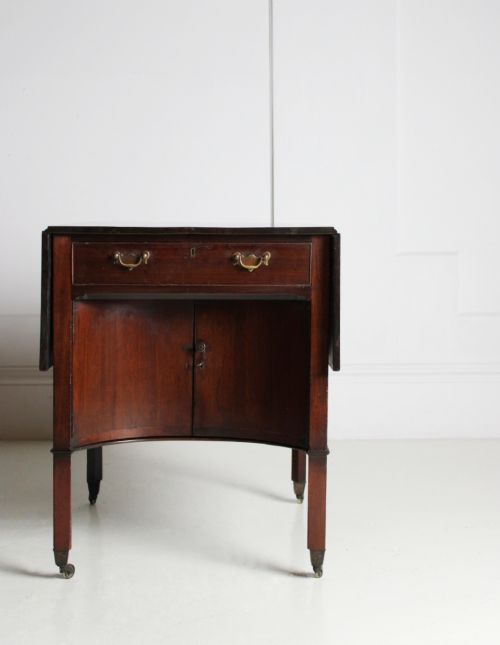
Some tables hide drop leaves and clever drawers, ready to transform from a quiet hallway perch into a full writing desk at a moment's notice.
What varies in quality
The standard of a carved leg sofa table depends heavily on the selection of timber and the depth of the carving on the supports. Tables featuring highly figured burr walnut or carefully matched mahogany display a superior visual harmony that elevates the piece beyond standard utility.
Execution of the joinery and the crispness of the carved details separate modest production items from finer workshop output. Well-proportioned frames with balanced legs demonstrate a higher tier of cabinet-making skill across both Georgian origins and later revival periods.
James Mein of Kelso·Johnstone and Jeanes·Jean-Joseph Chapuis
The Carved Leg Sofa Table Glossary
- Console table
- A table designed to stand against a wall, frequently supported by carved legs or brackets at the front. These pieces often serve decorative functions in entrance halls or reception rooms.
- Pembroke table
- A table featuring two hinged drop leaves on opposing sides, allowing the surface area to expand or contract. This form commonly includes one or two drawers beneath the top.
- Burr walnut
- A specialised timber cut from the abnormal growth or burl of a walnut tree, prized by cabinet makers for its intricate swirling grain patterns. It is frequently used as a veneer on tabletops.
- Library table
- A substantial freestanding table traditionally utilised for reading and writing, often fitted with drawers and finished on all sides. These pieces typically date from the Victorian and Georgian eras.
- Serpentine console table
- A console table characterised by a gently undulating front edge that curves inward and outward. This design adds fluid movement to the silhouette of the furniture.
Carved Leg Sofa Table: Frequently Asked Questions
What rooms suit a carved leg sofa table?
These tables adapt well to entrance halls, living rooms, and studies where surface space and decorative presence are required. Console and side variants fit neatly against perimeter walls.
Freestanding centre and library tables occupy central positions in larger spaces, offering access from multiple sides for writing or display purposes.
How do I identify a Victorian piece?
Victorian examples frequently utilise dense mahogany or walnut, often displaying robust proportions and dark finishes. Cabinet makers during this era drew on earlier revival styles.
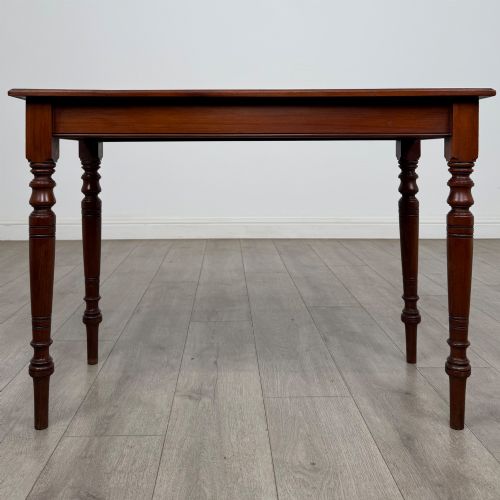
Look for structural characteristics like turned or carved legs, substantial secondary timbers, and traditional drawer construction typical of the nineteenth century.
Are these tables suitable for daily use?
Solid hardwood construction makes these items durable for contemporary domestic environments. Regular maintenance keeps the timber surfaces protected and preserves the finish.
Care should be taken with leather inserts and veneered tops to avoid moisture damage, ensuring the tables remain functional and visually appealing.
What is the difference between a console and a side table?
A console table is traditionally designed to stand against a wall, sometimes requiring fastening for stability due to its leg arrangement. Side tables are generally freestanding.
Both forms offer convenient surface space, though console variations often lean more towards architectural display and decorative carving.