



Carved Leg Rosewood Desk
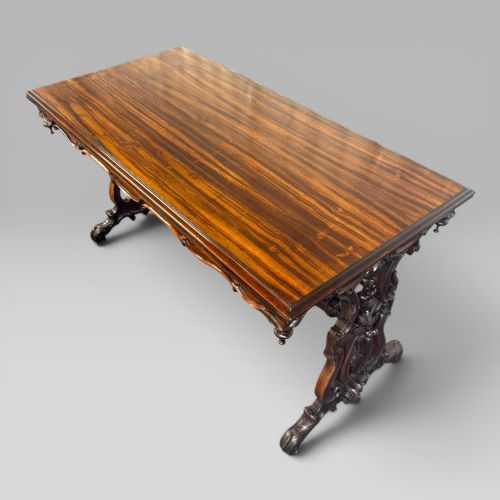
A carved leg rosewood desk brings rich timber and sculptural form into a room, offering a functional workspace with undeniable presence.
Carved Leg Rosewood Desk
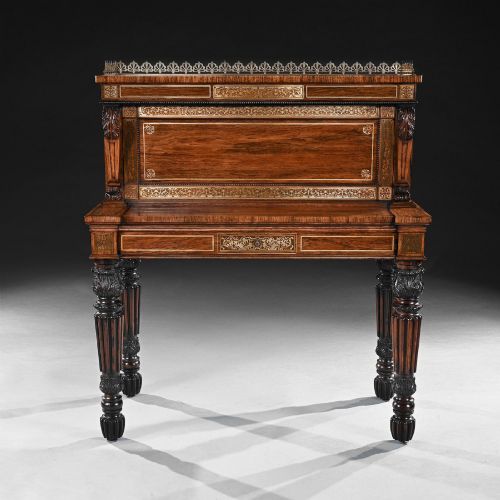
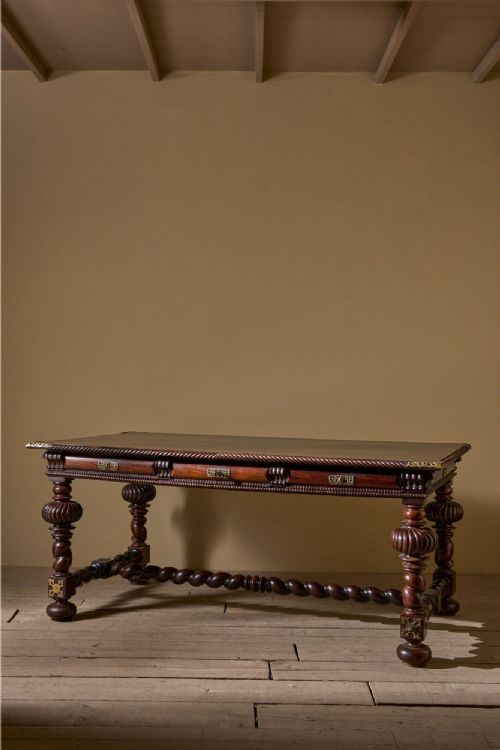
When you search for a carved leg rosewood desk, you encounter writing furniture rooted primarily in the nineteenth century, alongside earlier eighteenth-century examples. These pieces range from Victorian library and writing tables to Portuguese colonial forms and compact davenports, each utilising dense, figured timber.
The desks you meet on this page often display elaborate turning or cabriole supports beneath surfaces lined in leather or finished in solid rosewood. Makers incorporated brass inlay, dragon details, or pop-up mechanisms to elevate utilitarian writing furniture into ornamental status symbols.
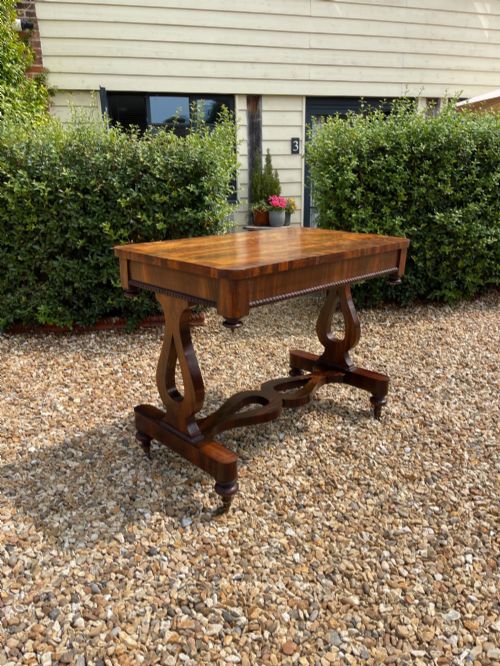
Beyond standard writing tables, the category encompasses kidney-shaped variants and low opium tables, reflecting diverse regional tastes from British workshops to Portuguese tradition. Every piece relies on the deep reddish-brown tones and heavy grain of rosewood to define its character.
Distinctions in craftsmanship
The hierarchy of quality rests upon the depth of the carving and the selection of the timber figures, where symmetrical grain and rich natural lustre command attention. Superior workshops employed crisp, deep relief work on legs and borders rather than shallow or mechanical shaping.
Integration of secondary materials also separates standard production from exceptional output, seen in precision brass inlay and the quality of fitted interiors within davenports. Structural integrity in the legs and joints determines how well a desk survives centuries of daily use.
Carved Leg Rosewood Desk Retail Price Guide 2026
Typical asking prices for carved leg rosewood desk among the pieces listed under this phrase on Sellingantiques today, from the lower quarter to the upper quarter. They describe what is for sale here now, not the wider market.
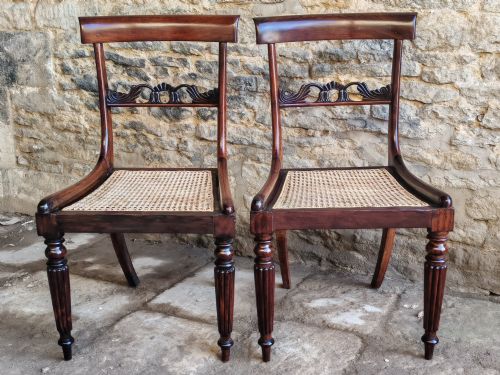
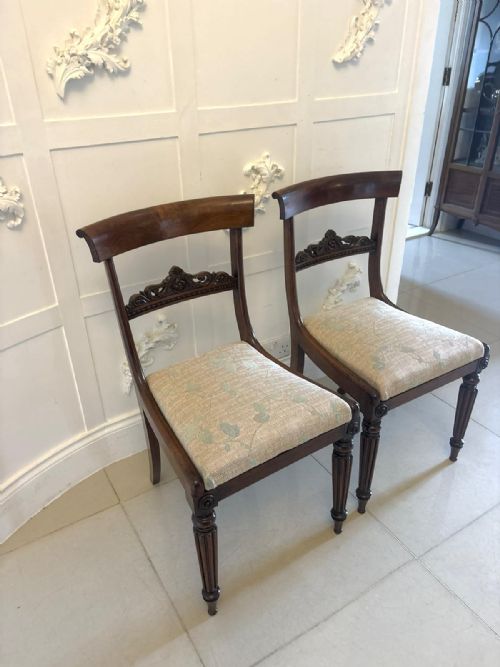
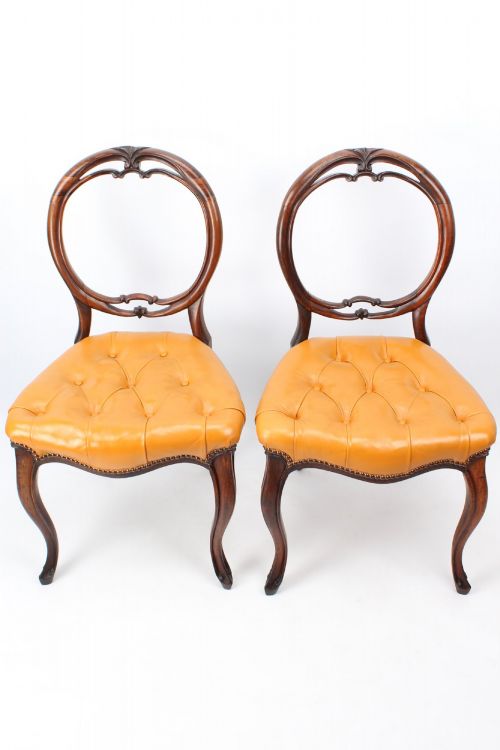
Several chairs matching these desks feature balloon backs and dragon details, proving that nineteenth-century artisans loved a dramatic carved motif just as much as we do.
Gillows Oxford Street Workshop·William Trotter
The Carved Leg Rosewood Desk Glossary
- Rosewood
- A dense, heavily figured tropical hardwood prized for its deep reddish-brown colour and dark grain markings. It takes a high polish and forms the primary structural and decorative material for these desks.
- Cabriole leg
- A furniture leg that curves outward and then tapers inward, mimicking an animal's leg. This form frequently appears on mid-nineteenth-century chairs and tables.
- Davenport
- A compact pedestal desk featuring a sloping, hinged writing surface and a set of drawers accessed from the side. Victorian cabinetmakers refined this form to save space while maintaining storage.
- Brass inlay
- The technique of embedding thin strips or shaped pieces of brass into the wood surface to create geometric or floral patterns. It requires precise chiselling and fitting by skilled hands.
Carved Leg Rosewood Desk: Frequently Asked Questions
How do I care for a rosewood desk?
Keep the timber away from direct sunlight and excessive heat sources to prevent the rich rosewood finish from drying out or fading over time. Regular dusting with a soft, dry cloth maintains the lustre without building up heavy chemical residues.
Condition the wood sparingly using traditional wax polish when the surface appears dull. Protect the leather writing insert by avoiding sharp objects and moisture.
Are these desks suitable for daily work?
Most antique writing tables and desks accommodate modern writing tasks and laptops comfortably, provided the working height matches your seating. Nineteenth-century writing surfaces were built for substantial daily use by scholars and clerks.
Consider the kneehole clearance and surface area of specific variants like kidney-shaped desks or davenports before committing to heavy daily administration.
How can I tell the period of the desk?
Examine the timber selection, hardware, and structural styling to distinguish between Regency, Victorian, and earlier eighteenth-century craftsmanship. Regency pieces often incorporate brass inlay and classical proportions, while Victorian examples lean towards heavier carved cabriole legs.
Tooling on leather inserts and secondary woods hidden inside drawers also offer reliable clues to the exact decade of manufacture.
What is a Portuguese colonial rosewood desk?
Portuguese colonial tables and desks reflect trade routes that brought exotic timbers like rosewood into European design vocabularies. These pieces frequently exhibit baroque influences, deep carving, and robust construction.
They stand apart from British Victorian furniture through distinctive regional proportions and ornamental detailing rooted in Iberian traditions.