
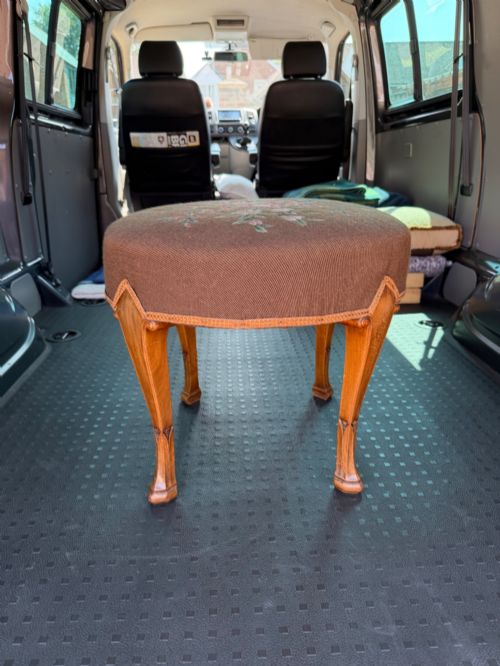
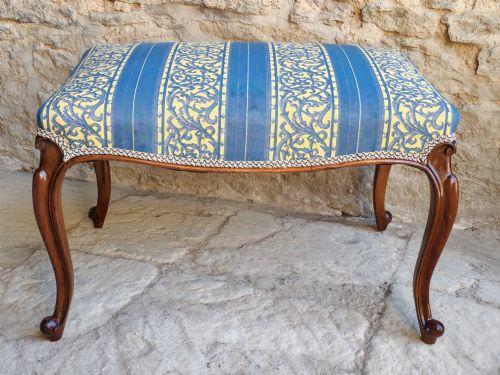
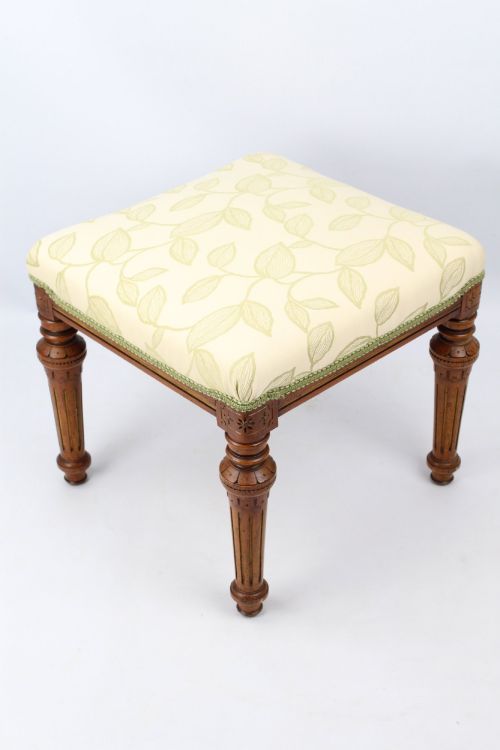
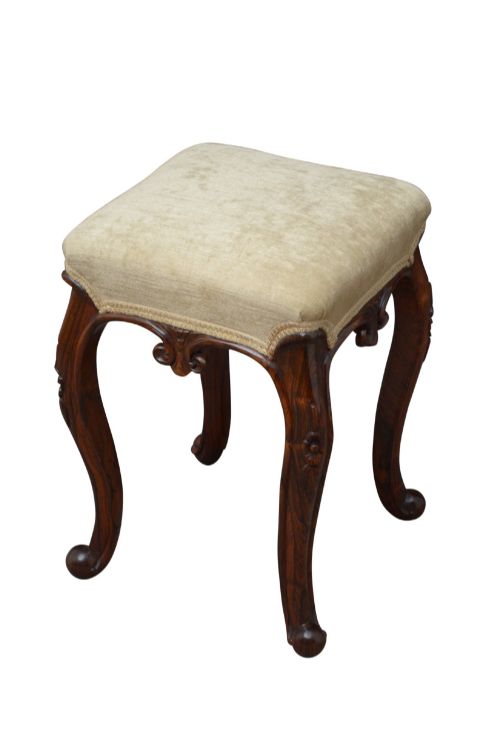
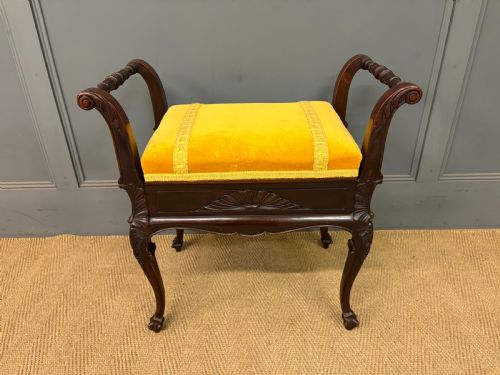
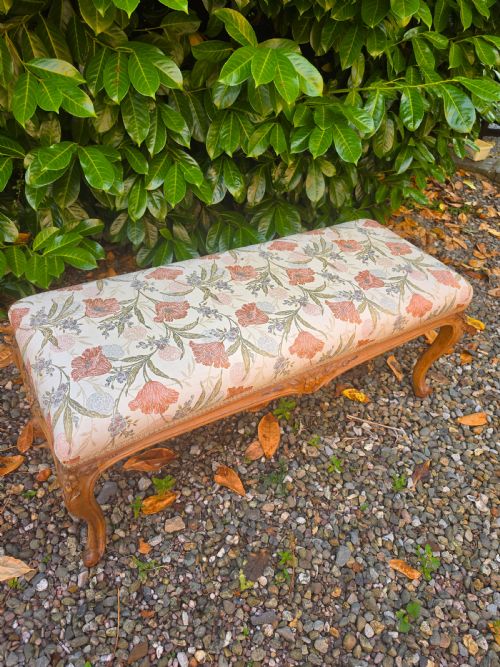
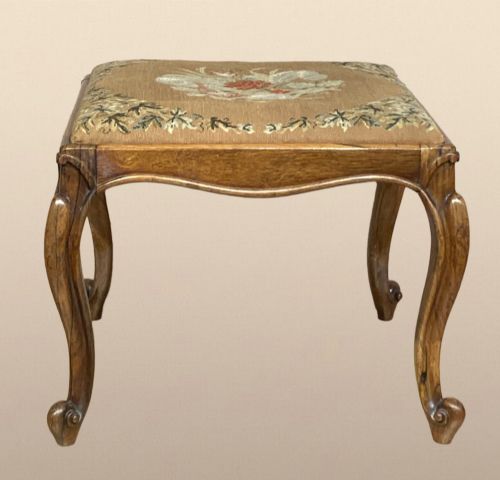
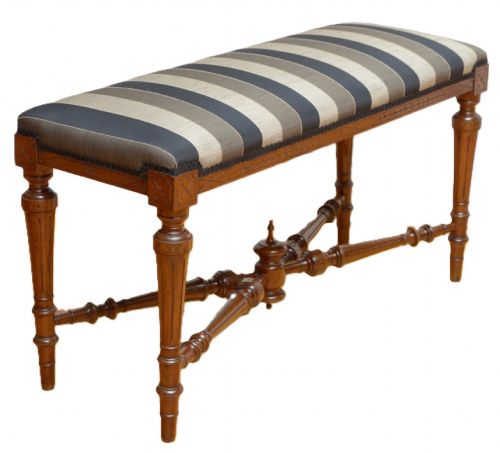
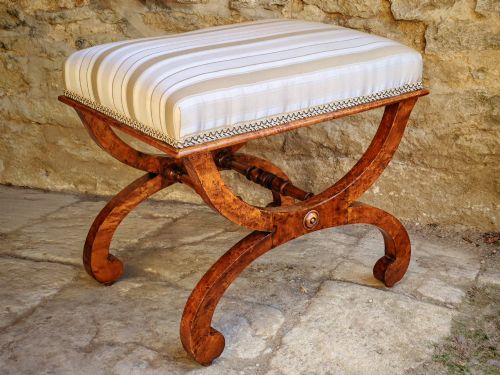


Carved Leg Piano Stool
These carved leg piano stool examples combine sturdy domestic function with ornate woodwork, offering a practical seating solution for any keyboard player.
Carved Leg Piano Stool
When you search for a carved leg piano stool, you encounter seating designed primarily for keyboard performance, often featuring mechanisms to alter height. The examples seen here span periods from the Regency era through to the early twentieth century, taking the form of revolving seats, adjustable screw mechanisms and fixed benches.
Victorian and nineteenth-century pieces dominate this selection, alongside Edwardian and later revivals in Queen Anne and Chippendale styles. Alongside dedicated music stools, the listings include dressing table stools, window seats and long benches sharing similar carved leg supports.
How they were made
Cabinet makers constructed the frames of these pieces using dense hardwoods such as walnut, mahogany, rosewood and goncalo alves, occasionally employing burr maple or gilt oak. These timbers provided the structural strength required to support intricate hand-carved details on the legs and frame borders.
Upholstered elements utilise textiles including traditional tapestry, needlepoint, leather and fabric, often mounted over stuffing to provide comfort during extended practice sessions. Brass components frequently appear on swivel mechanisms, adjustable screws and decorative feet such as ball and claw details.
Listings demonstrate that walnut and mahogany remain the dominant timbers used for these frames across the nineteenth and twentieth centuries.
What varies in quality
The distinction between standard domestic seating and superior examples rests in the crispness and depth of the timber carving. Sharp relief work on cabriole legs and frame edges demonstrates a higher level of artisan skill than softer, more generalized shaping.
Complexity of function also separates pieces, with smoothly operating rise-and-fall mechanisms or secure revolving swivel tops indicating superior engineering. The choice of rich timber veneers, such as burr maple or figured walnut, further elevates the status of an individual stool.
Jas Shoolbred
The Carved Leg Piano Stool Glossary
- Cabriole leg
- A furniture leg that curves outward at the knee and tapers inward toward the ankle, often finishing in a carved foot. This form became prominent during the eighteenth century and saw frequent revival in Victorian design.
- Revolving seat
- A rotating top mechanism allowing the pianist to adjust their position or height easily during performance. These typically operate on a threaded central screw hidden beneath the upholstery.
- Needlepoint
- Hand-stitched textile work utilising canvas ground, commonly found covering the seats of nineteenth-century stools. It provides a durable and decorative surface.
- Rise and fall
- An adjustable height mechanism operated by turning the seat top to raise or lower the seating platform. This allowed musicians of different statures to achieve correct posture.
Carved Leg Piano Stool: Frequently Asked Questions
How do I adjust the height?
Many nineteenth-century examples feature a swivel mechanism where turning the upholstered seat round raises or lowers it on a central wooden or metal screw.
Other variants use fixed frames or side levers, so checking the underside reveals whether the height is permanently set or mechanically adjustable.
How do I care for the wood?
Hardwoods such as walnut and mahogany require occasional dusting with a soft, dry cloth to prevent the accumulation of grit in the carved recesses.
Avoiding direct sunlight and excessive humidity protects both the polished timber surfaces and the underlying upholstery from fading or drying out.
Can I reupholster an antique stool?
Replacing worn textile or needlepoint covers is standard practice and helps preserve the structural integrity of the frame for daily use.
Traditional stuffing materials and attachment methods should be respected during restoration to maintain the historical character of the piece.