
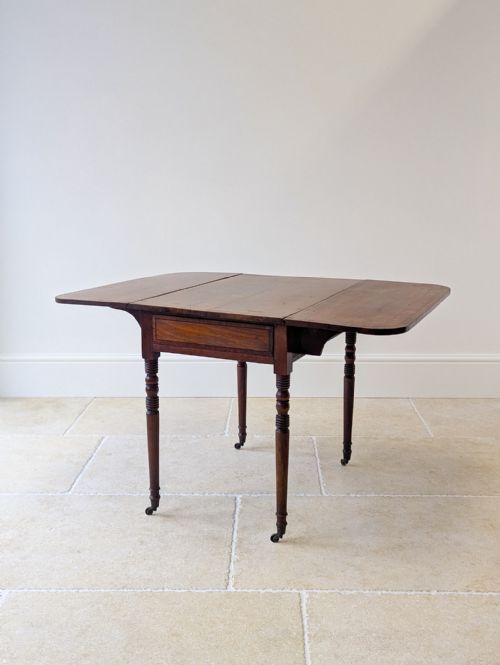
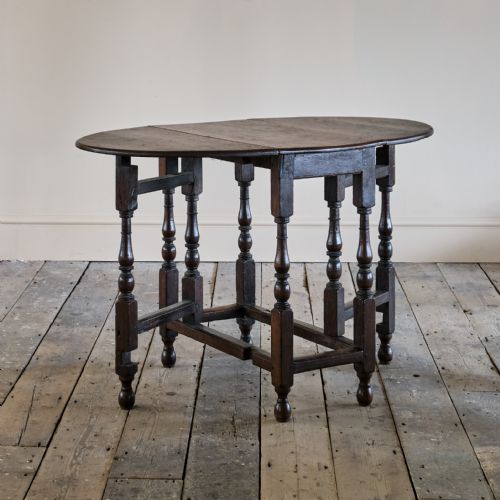
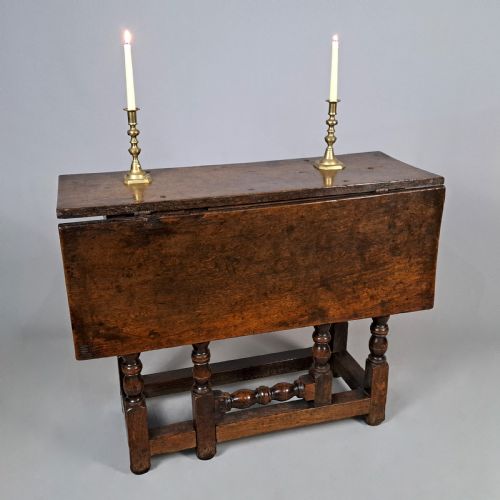
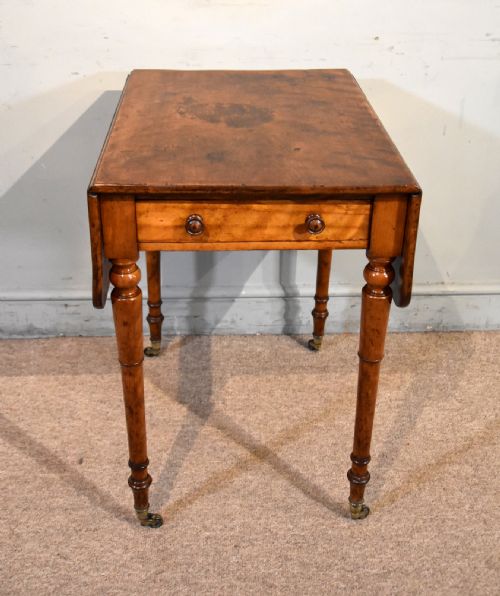

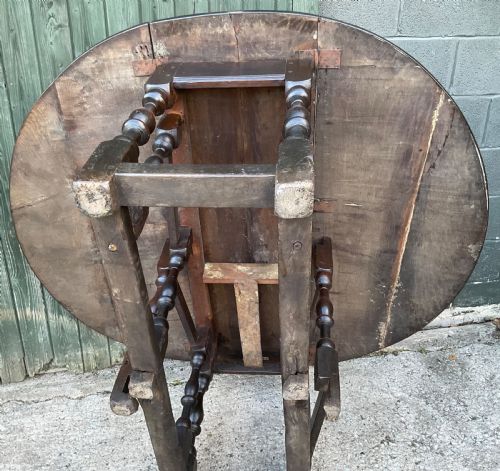


Carved Leg Drop Table
A carved leg drop table provides surface space when needed and folds away cleanly, spanning centuries of cabinetmaking in oak, mahogany and walnut.
Carved Leg Drop Table
When searching for a carved leg drop table, you encounter versatile folding tables designed with drop leaves or flaps supported by swing legs or gates. These pieces range from compact occasional tables to large six-seater dining tables, accommodating various rooms and domestic uses.
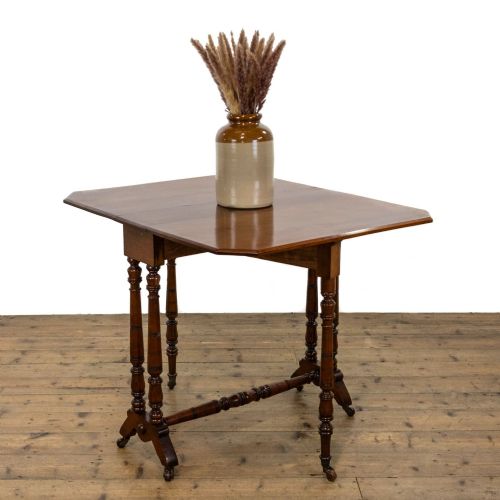
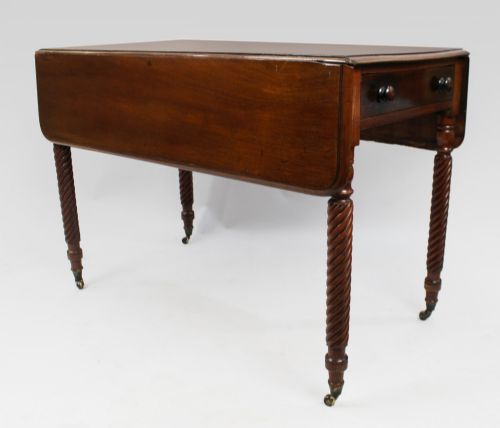
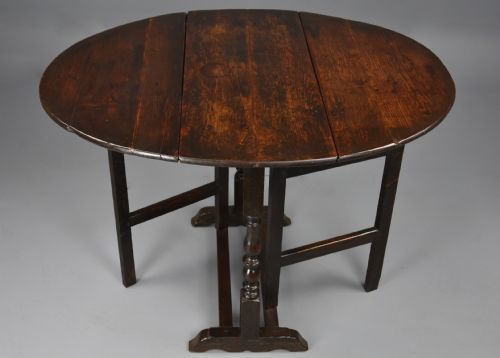
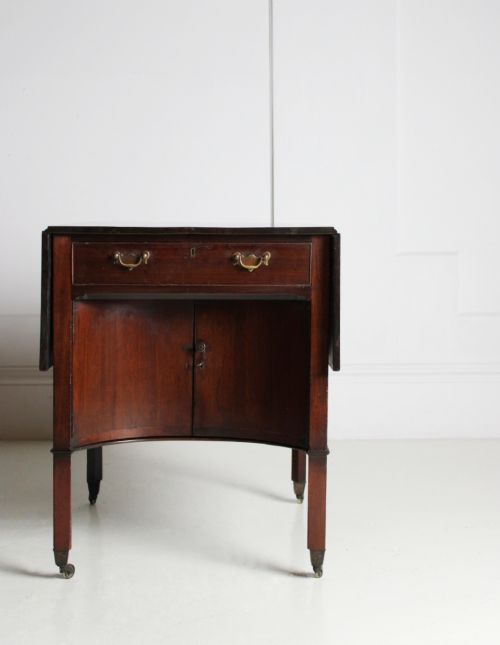
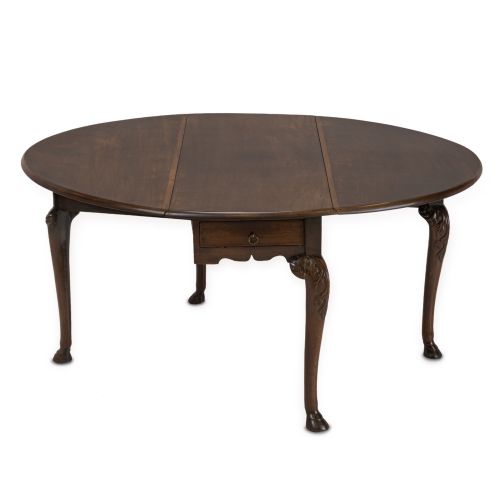
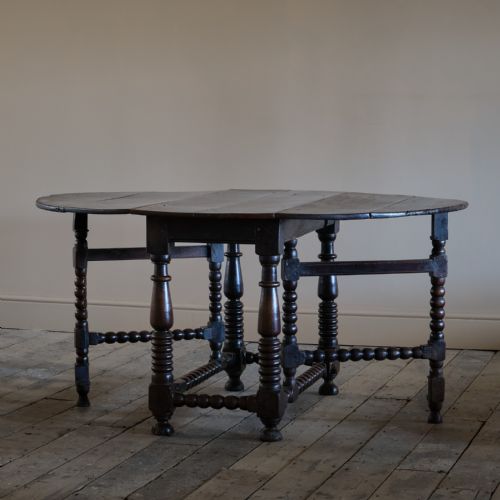
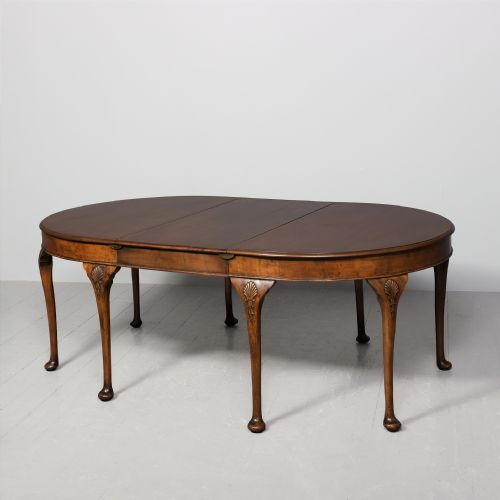
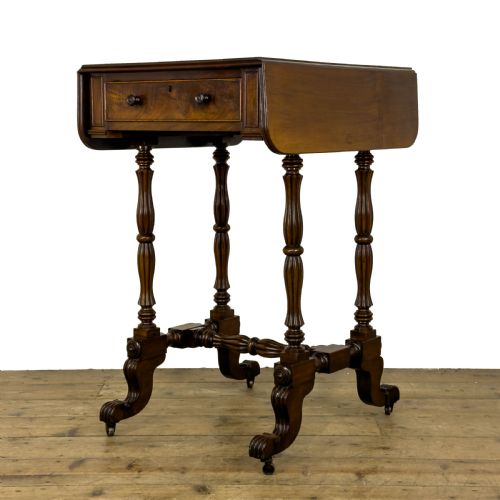
The versions most likely to appear on this page span the seventeenth century to the Victorian era, executed in solid oak, mahogany, walnut and rosewood. Forms include gateleg tables, Pembroke tables, side tables and dining tables displaying carved cabriole legs, bobbin turning or barley twist supports.
How they were made
Cabinetmakers constructed these tables using dense hardwoods like oak, mahogany, walnut and rosewood, often selecting figured veneers for tops and panels. Joinery techniques included sturdy framing and hinged leaves that allowed the side flaps to drop smoothly when not in use.
Carving was applied directly to structural elements such as cabriole legs, hoof feet, pad feet and stretcher bases. Turnery methods like bobbin turning and barley twisting shaped the upright legs, while patination developed naturally over decades of use.
Several tables operate on clever mechanical gates designed to feed hungry guests before collapsing quietly against the wall.
What varies in quality
Quality rests upon the selection of timber, the crispness of the hand-carved detail on the legs and the integrity of the folding mechanism. Superior examples utilise dense, well-figured woods and retain their original patination and operational stability.
Construction methods and proportions also differentiate standard items from exceptional pieces. Tables with balanced proportions, tight hinge fittings and harmonious carved motifs reflect higher workshop standards.
Johnstone and Jeanes·Jean-Joseph Chapuis
The Carved Leg Drop Table Glossary
- Gateleg table
- A table with hinged flaps and swinging legs that pull out to support the leaves when raised. These designs provide sturdy dining surfaces that collapse for compact storage.
- Pembroke table
- A rectangular table with two hinged drop leaves on opposing sides, frequently fitted with a small drawer. They gained popularity during the Georgian and Regency periods for domestic versatility.
- Cabriole leg
- A furniture leg that curves out in an arc and tapers inward, finishing in a foot such as a pad or hoof. This form derives from seventeenth-century design and appears frequently on eighteenth-century dining tables.
- Bobbin turning
- A form of woodturning consisting of a series of rounded, spherical shapes resembling bobbins on a thread. This technique is characteristic of seventeenth-century joinery.
- Patina
- The surface sheen and mellowed appearance developed by timber over long periods through handling, polishing and age. Original patination indicates minimal over-restoration.
Carved Leg Drop Table: Frequently Asked Questions
How do I use a drop leaf table daily?
Keep the leaves dropped against the sides to save floor space in smaller rooms, raising them only when you require extra surface area for dining or writing.
Ensure the swinging support gates or brackets are positioned correctly beneath the raised leaves to distribute weight safely across the table structure.
Where were drop tables placed in period homes?
These tables served multiple functions throughout the house, acting as dining surfaces in the kitchen or parlour, and as side or occasional tables against walls.
Pembroke and sofa tables were frequently positioned near seating areas or windows for writing, sewing and serving refreshments.
How can I tell a seventeenth-century table apart from a later revival?
Examine the timber grain, tool marks and construction methods beneath the top and around the hinge joints, as older pieces display hand-cut joinery and authentic surface wear.
Revival pieces made in later centuries often feature machine-cut components and timber preparation that differ from seventeenth-century workshop practices.