




Carved Hardwood Settee
A carved hardwood settee brings dense, regional detail to a room through heavy timber framing and deeply worked ornament.
Carved Hardwood Settee
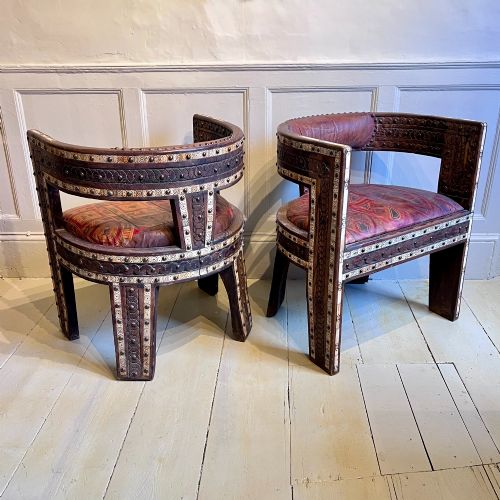
A carved hardwood settee is a substantial seating form produced across various international workshops from the nineteenth century into the early decades of the twentieth century. When searching for a carved hardwood settee, buyers encounter regional traditions ranging from Chinese export and Qing Dynasty pieces to Anglo-Indian, Syrian, and North African designs.
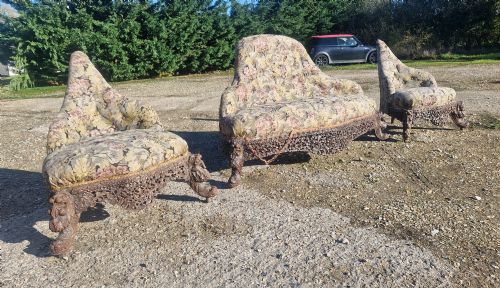
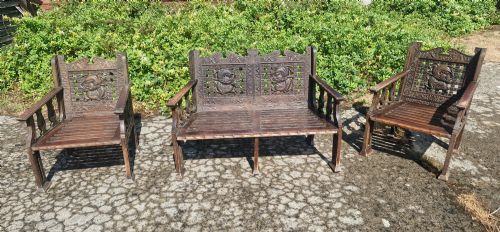
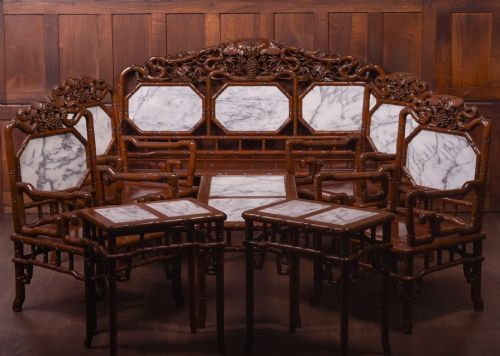
The inventory on this page demonstrates that these settees often form part of larger parlour suites, seating suites, or matching bench sets. Forms include daybeds, hall benches, and settees paired with armchairs or side chairs.
Originating predominantly from nineteenth-century production alongside examples dated around 1900, 1920, and 1930, these items utilise robust timbers adapted to diverse cultural aesthetics.
How they were made
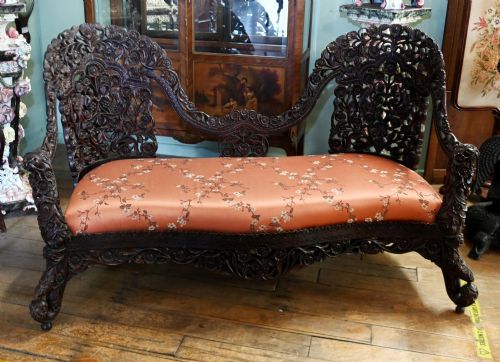
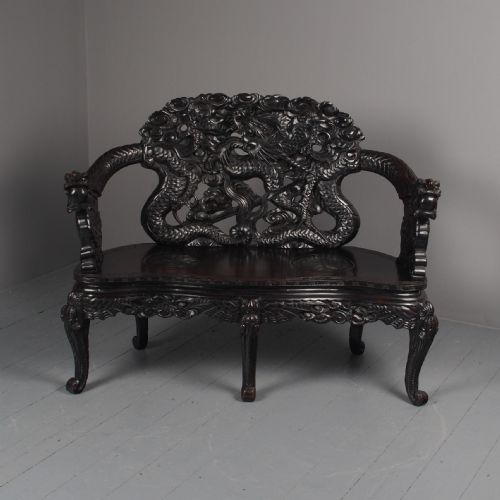
Construction relies entirely on dense hardwoods, including blonde wood, mahogany, and huanghuali, chosen for their structural strength and capacity to hold intricate carving. Artisans shaped these timbers using hand chisels and gouges to execute deep relief work depicting dragons, foliage, and geometric motifs.
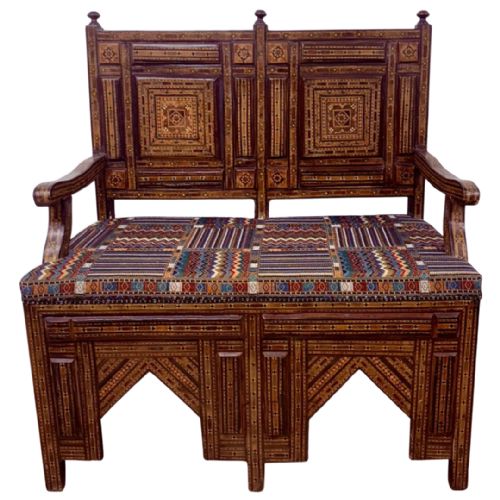
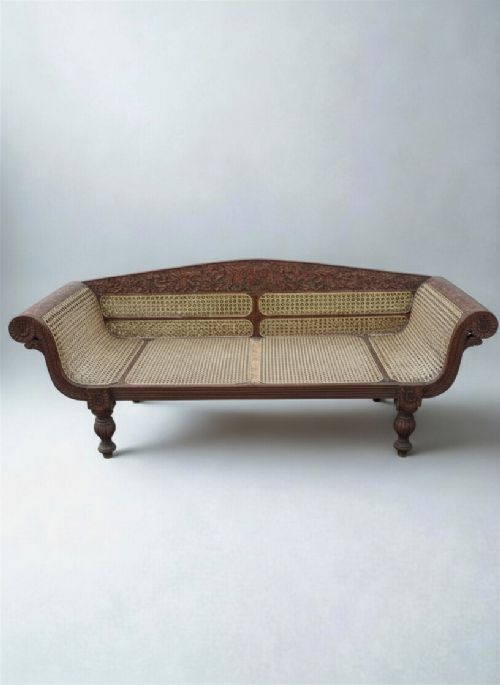
Surface ornamentation frequently incorporates contrasting materials inlaid directly into the wood grain. Bone, mother-of-pearl, and marble inserts appear alongside brass hardware, cane seating panels, and upholstered elements in leather and textiles.
Carved Hardwood Settee Retail Price Guide 2026
Typical asking prices for carved hardwood settee among the pieces listed under this phrase on Sellingantiques today, from the lower quarter to the upper quarter. They describe what is for sale here now, not the wider market.
Dragons peer out from the woodwork on several Chinese benches, watching over the parlour with fierce vigilance.
What varies in quality
The distinction between standard production and superior examples lies in the depth and crispness of the hand-carved detail across the timber frame. Finer pieces display deeply undercut relief and meticulous alignment in inlaid materials like mother-of-pearl and bone.
Integrity of the primary hardwood structure and the retention of original upholstery materials, cane panels, or marble inserts also govern the standing of an individual settee within its period.
The Carved Hardwood Settee Glossary
- Anglo-Indian
- A descriptive term for furniture made in India during the British colonial period, combining British furniture forms with local carving traditions and tropical hardwoods.
- Qing Dynasty
- The final imperial dynasty of China, spanning the seventeenth to the early twentieth century, known for elaborate decorative arts and intricate dragon motifs.
- Settle
- A wooden bench with high back and arms, often incorporating storage beneath the seat. It serves as heavy stationary seating in halls and parlours.
- Inlay
- A decorative technique where small pieces of contrasting materials such as bone or mother-of-pearl are embedded into the wood surface to create patterns.
Carved Hardwood Settee: Frequently Asked Questions
What is a carved hardwood settee?
A carved hardwood settee is a heavy wooden bench or sofa featuring extensive hand-carved ornamentation, produced in various global workshops during the nineteenth and early twentieth centuries.
These pieces utilise dense timbers and frequently incorporate regional decorative techniques such as mother-of-pearl inlay or cane panels.
Where were these settees made?
The pieces originate from diverse geographic regions including China, India, Syria, and North Africa. Each region applied distinct stylistic traditions to the hardwood frames.
Chinese examples often display dragon motifs and blonde wood or huanghuali construction, whilst Anglo-Indian and Syrian pieces feature intricate geometric carving and inlay.
How do I date a carved hardwood settee?
Dating relies on stylistic markers, timber types, and documented construction methods associated with periods such as the nineteenth century or the 1900s to 1930s. Comparative analysis of regional carving styles helps establish the likely decade of production.
Material combinations like mother-of-pearl inlay or cane seating also provide chronological context for these seating forms.
How do I care for a hardwood settee?
Maintenance involves keeping the timber away from direct heat sources and fluctuating humidity to prevent wood splitting or inlay displacement. Regular dusting with a dry cloth protects the carved surface.
Care should be taken to preserve integrated materials like leather, textiles, or marble inserts according to their specific material requirements.