



Carved Hardwood Jardiniere Stand
A carved hardwood jardiniere stand elevates heavy planters and porcelain vessels while anchoring a room with dense, figured timber and intricate Asian carving.
Carved Hardwood Jardiniere Stand
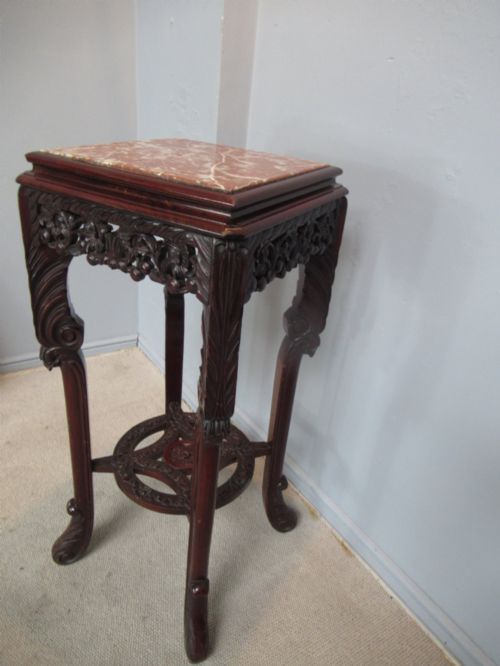
A carved hardwood jardiniere stand serves primarily as an elevated platform for large ceramic planters, urns, and bronze vessels. The form dates predominantly to the nineteenth century, encompassing low tables, tall pedestals, and multi-tiered plant stands.
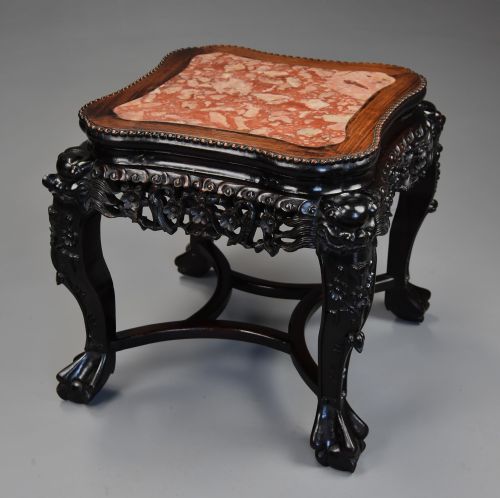
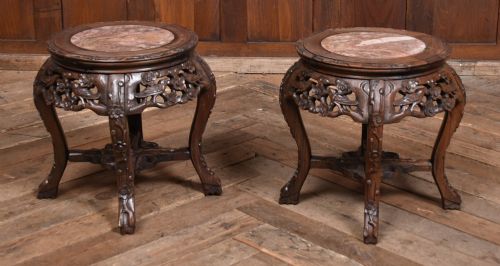
Most examples originate from China during the Qing Dynasty or through Chinese Export trade channels, alongside occasional Japanese Meiji period pieces and Anglo-Indian works. Buyers frequently encounter low stands with inset marble tops designed to protect the timber from moisture.
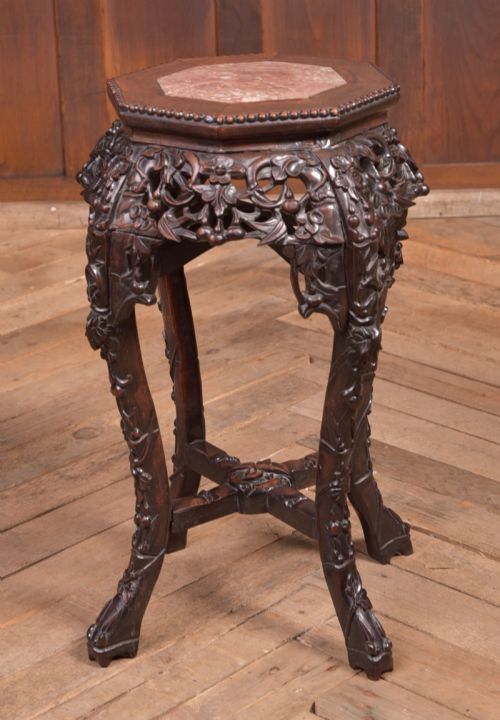
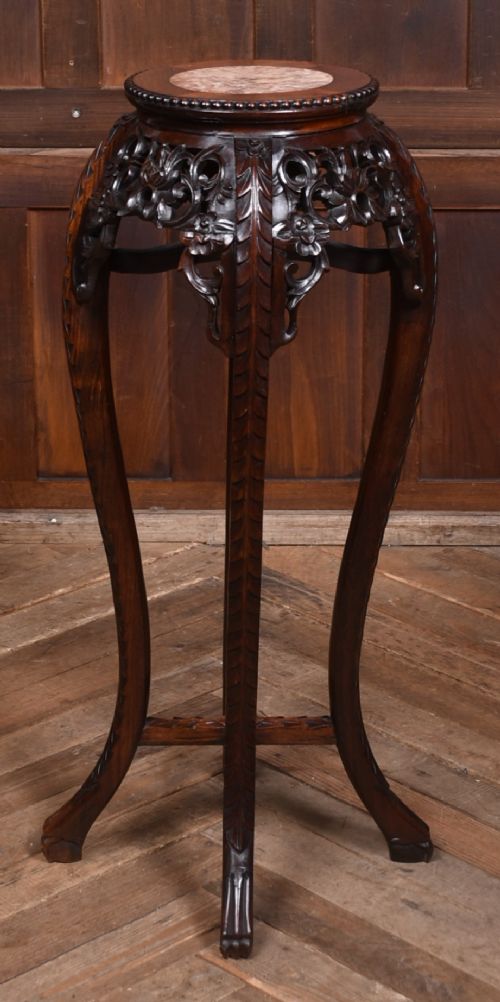
The profile ranges from simple cylindrical shapes to elaborate multi-legged structures with scrolling aprons and pierced carvings. These pieces function equally well as occasional lamp tables or side tables in contemporary interiors.
How they were made
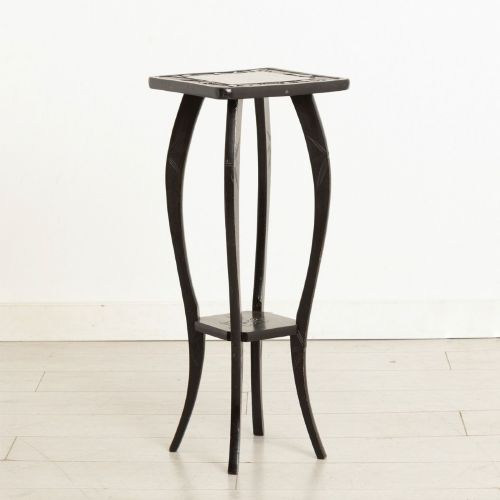
Makers utilised dense exotic timbers such as padouk, rosewood, teak, and heavy Hongmu hardwood, chosen for their structural strength and capacity to hold deep, undercut carving. Ebonised wood and lacquered surfaces also appear across the selection.
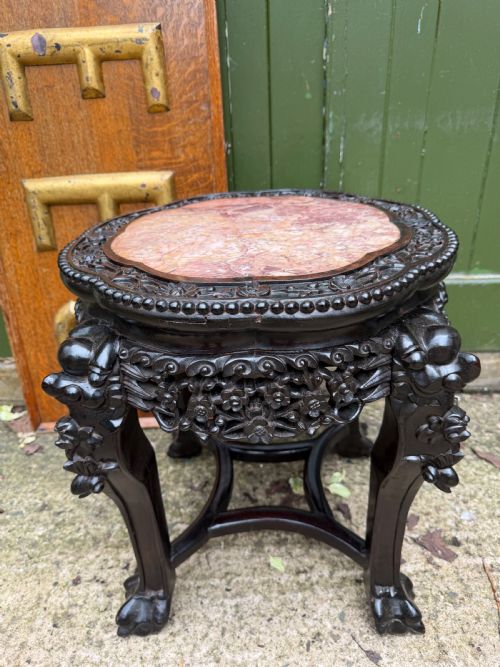
Many examples incorporate a contrasting inset panel of variegated rouge or white marble within the wooden frame, providing a cool, stable surface for damp plant pots. Joinery relies on traditional interlocking construction without metal fixings, allowing the heavy timber to adjust naturally to shifting indoor climates.
What varies in quality
The depth and crispness of the hand carving dictate the standing of an individual piece, moving from shallow, mechanical incisions to deeply undercut, spirited floral and zoomorphic motifs. Weight and timber selection indicate quality, with dense padouk and figured rosewood outperforming lighter, plainer domestic timbers.
The integration of the marble insert matters significantly; superior examples feature stones with rich natural veining that sit flush within a meticulously channelled wooden rebate. Condition of the joinery and retention of the original surface finish separate domestic utilitarian items from pieces made for export or elite domestic use.
Liberty of London
The Carved Hardwood Jardiniere Stand Glossary
- Jardiniere
- An ornamental ceramic or metal container for holding plants or flowers. These vessels require sturdy independent furniture to support their considerable weight.
- Hongmu
- A traditional Chinese term translating to red wood, applied to dense, high-grade hardwoods such as rosewood and padouk. This material takes a fine polish and supports intricate carving.
- Rouge marble
- A deep red or reddish-brown limestone with white or grey veining, frequently imported for furniture table tops. It offers a waterproof surface ideal for resting damp plant pots.
- Torchere
- A tall standing pedestal or column designed to elevate a lamp, vase, or sculptural jardiniere. They provide vertical emphasis within a room scheme.
- Qing Dynasty
- The final imperial dynasty of China, ruling from sixteen-forty-four to nineteen-twelve. Furniture from this era often displays complex floral carving and refined proportions.
Carved Hardwood Jardiniere Stand: Frequently Asked Questions
What is a jardiniere stand?
A jardiniere stand is a sturdy piece of furniture designed specifically to elevate heavy plant pots, flower bowls, and decorative urns off the floor. They bring plants closer to natural light while protecting underlying carpets and wooden flooring from water damage.
Historically, these stands functioned as decorative display pieces within principal rooms. Today, they easily adapt to serve as occasional side tables or lamp stands.
Why do many stands have marble tops?
Marble inset tops provided a practical, waterproof surface that prevented moisture from rotting the surrounding timber when owners watered their indoor plants. The cool stone also contrasted visually with the dark, richly figured exotic hardwoods.
Over time, these smooth stone surfaces proved equally useful for resting hot tea cups, vases, and portable lighting without risking ring marks on the wood.
How do I date a Chinese hardwood stand?
Dating relies heavily on observing the timber density, the style of the hand carving, and construction methods. Nineteenth-century examples often feature heavy padouk or rosewood with deep, crisp undercutting characteristic of the Qing Dynasty.
Later pieces from the early twentieth century may show slightly simplified joinery or softer carving profiles. Examining the natural patina of the wood surface helps confirm age.
Can I use these stands for modern lamps?
These sturdy stands make excellent pedestals for modern table lamps and reading lights. Their compact footprints and stable bases accommodate weighted lamp bodies safely.
Placing a lamp on a carved wooden stand introduces varied height and textural warmth to dark corners of a room.