



Carved Hardwood Armchairs
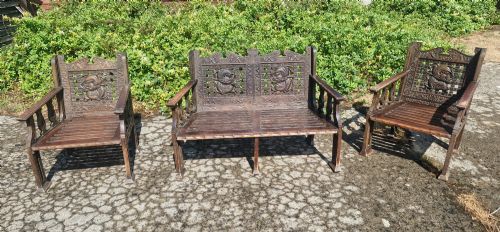
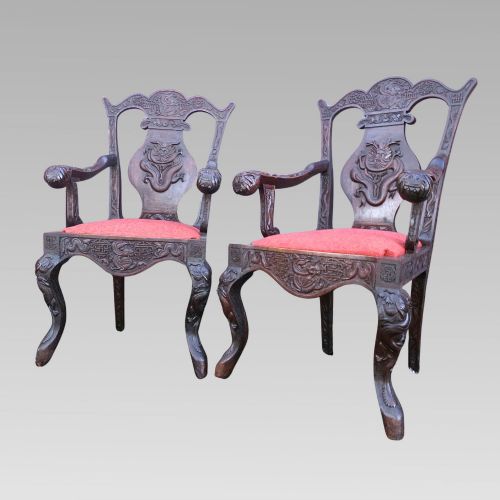
These carved hardwood armchairs bring substantial presence to a room, offering robust seating shaped by diverse regional traditions and centuries of craftsmanship.
What these carved hardwood armchairs are
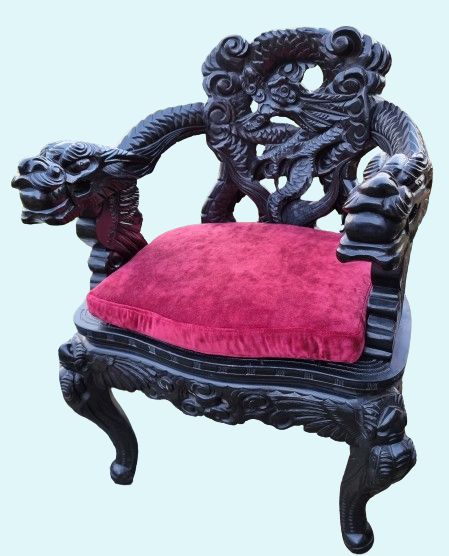
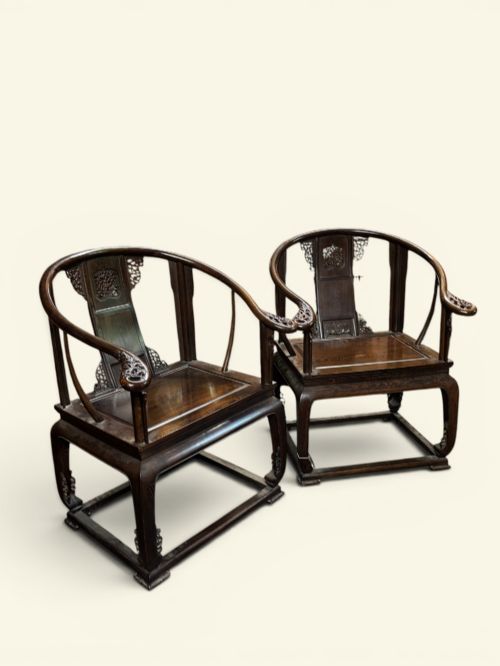
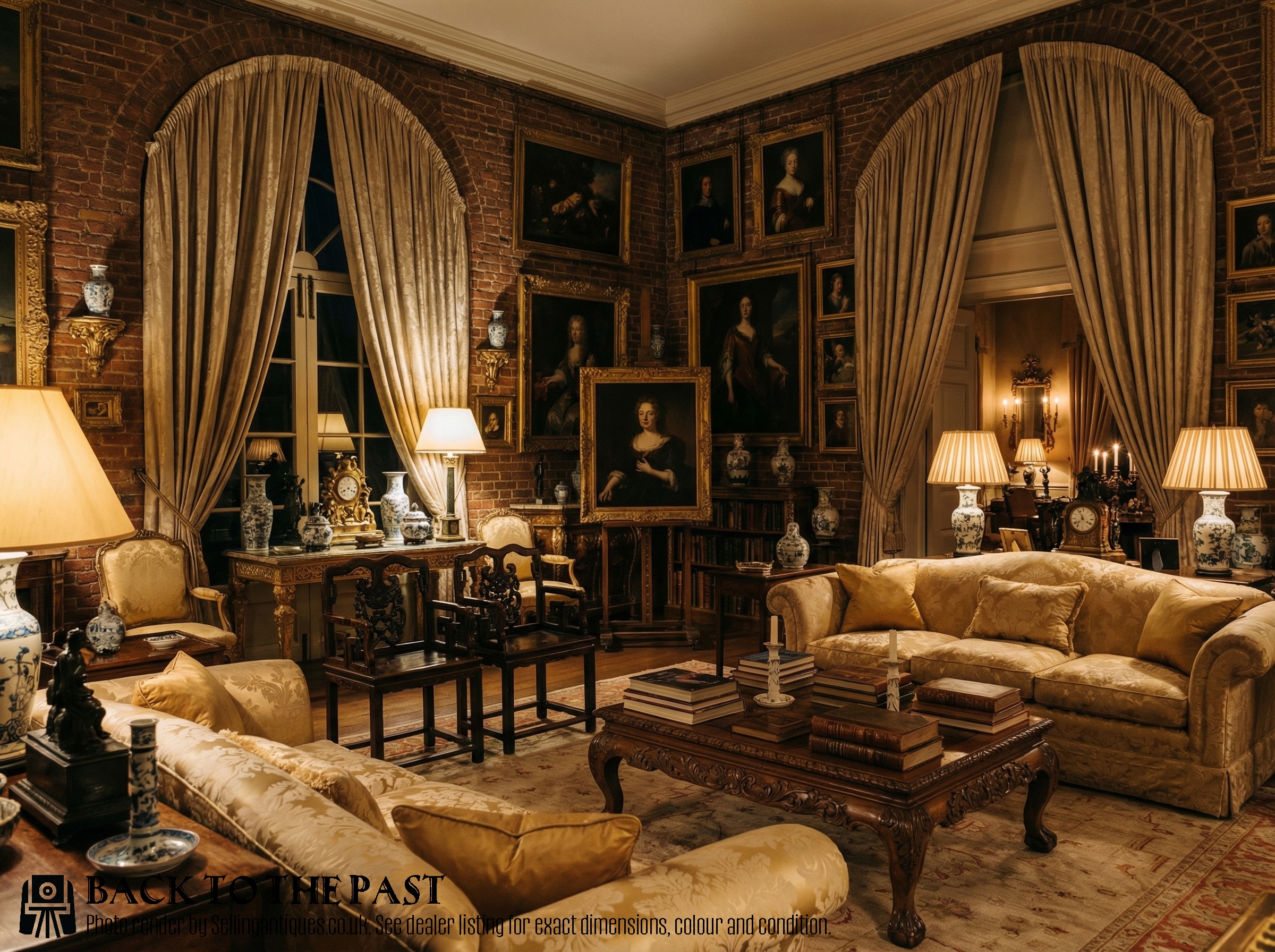
Carved hardwood armchairs span several distinct stylistic traditions, ranging from nineteenth-century Chinese export and Qing dynasty throne chairs to Anglo-Indian colonial designs and twentieth-century French Art Nouveau pieces. Buyers searching this phrase encounter substantial seating forms produced across the nineteenth and early twentieth centuries, utilising dense timbers and deep relief carving.
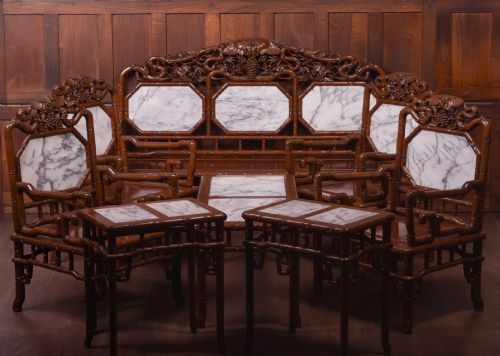
The selection on this page relies heavily on nineteenth-century examples, including folding armchairs and formal throne chairs executed in rosewood, hongmu, elm, walnut, and teak. Alongside these Asian export and dynastic forms, continental European makers contribute Art Nouveau interpretations in hard wood, occasionally incorporating fabric and marble elements.
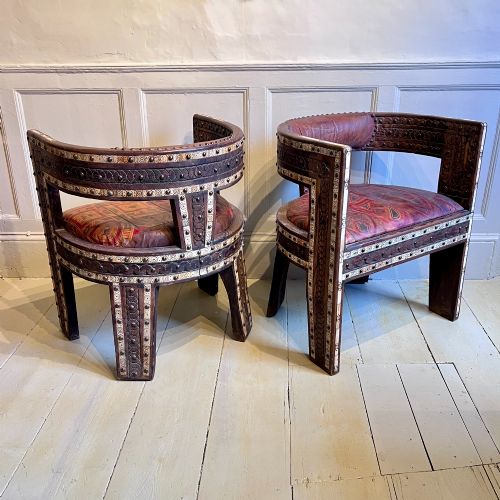
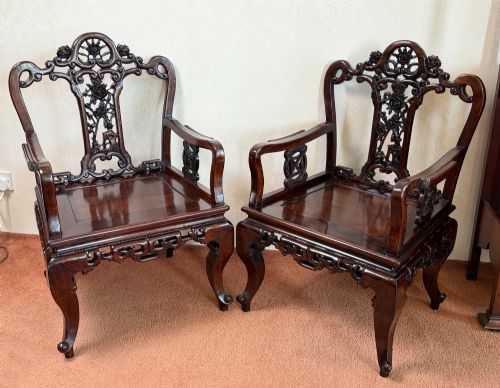
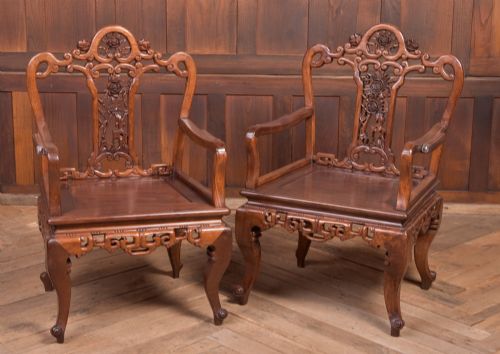
Traditional Chinese forms dominate the available pool, often constructed as matched pairs with hardwood seats or rigid frames intended for formal interiors. Anglo-Indian colonial examples introduce alternative carving vocabularies and scale, functioning equally well as large armchairs or hall seats within domestic architecture.
How they were made
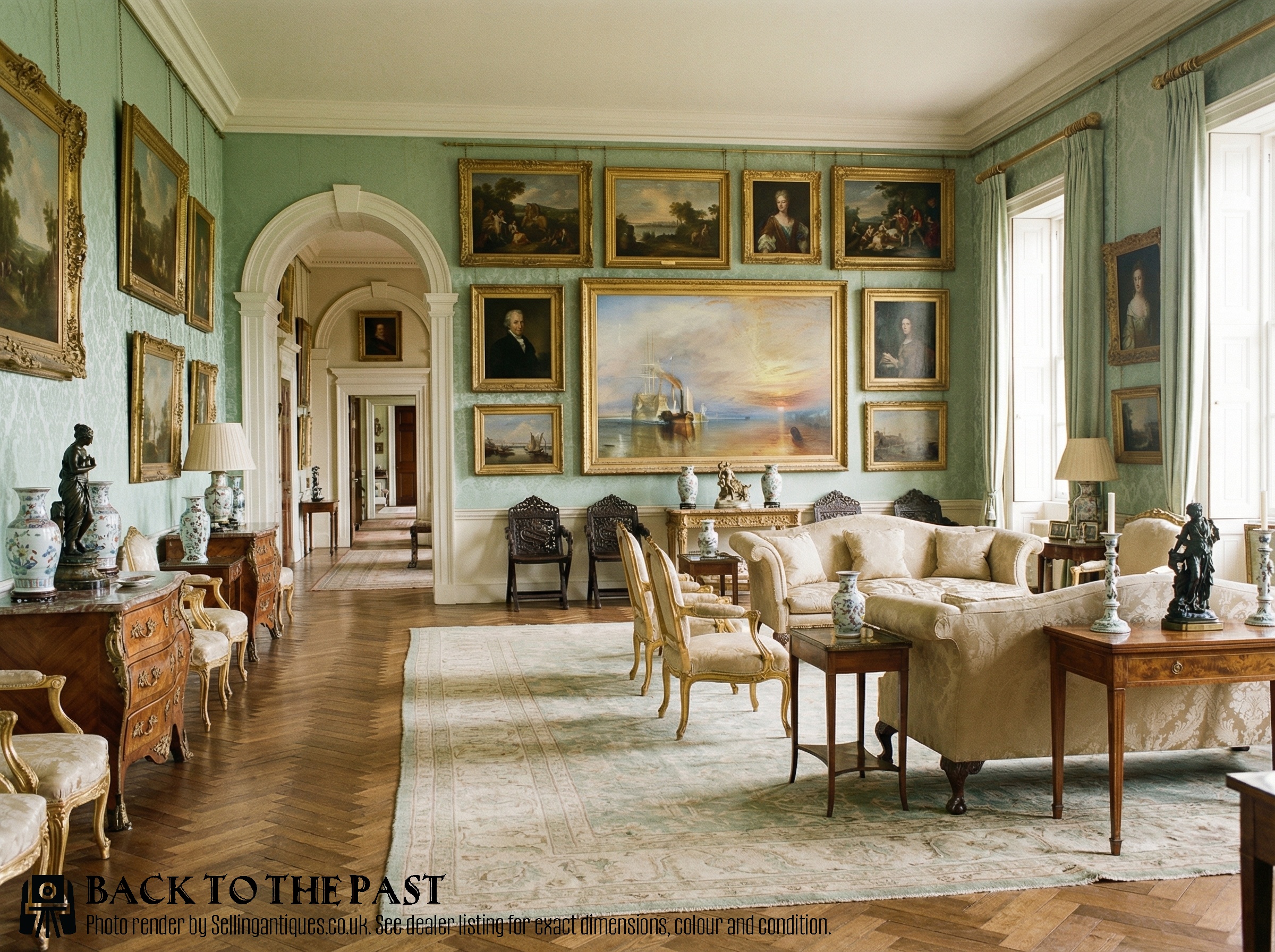
Makers utilised a variety of dense timbers, specifically selecting hongmu, rosewood, teak, walnut, and elm for their structural stability and capacity to hold intricate detail. These hardwoods were worked using traditional joinery techniques, often integrating panel construction and folding mechanisms that allowed large chairs to be collapsed or transported.
Surface enrichment relied on deep hand carving, establishing motifs rooted in Qing dynasty aesthetics or organic Art Nouveau curves depending on the origin of the workshop. Selected examples incorporated contrasting materials such as marble insets or upholstered fabric elements to soften the rigid hardwood frames.
Retail Price Guide 2026
Typical UK retail prices for carved hardwood armchairs, calculated from the Sellingantiques database of over a million retail prices indexed since 2003. This retail price guide relies exclusively on Sellingantiques data; no external sources or auction records are used, so the figures do not describe the wider market.
Listings feature nineteen-century and early twentieth-century examples, incorporating rosewood, hongmu, elm, walnut, and teak.
What varies in quality
Quality rests in the crispness of the hand carving and the selection of timber, where dense, figured hongmu or rosewood commands greater presence than plainer domestic hardwoods like elm. The depth and definition of the relief work separate routine workshop output from pieces commissioned for formal throne rooms or high-status export markets.
Structural integrity and the preservation of original joinery dictate the standing of an armchair, particularly in folding variants where mechanical hinges and pivots undergo physical stress. Matched pairs demonstrating uniform timber grain and symmetrical carving carry distinct advantages over single survivors or assembled pairs.
The Carved Hardwood Armchairs Glossary
- Hongmu
- A dense, dark tropical hardwood traditionally prized by Chinese cabinetmakers for its rich colour and heavy weight. It is frequently translated as red wood and was utilised for formal furniture.
- Qing Dynasty
- The final imperial dynasty of China, spanning from the seventeenth to the early twentieth century. Furniture from this era is characterised by formal symmetry and deeply carved symbolic motifs.
- Anglo-Indian Colonial
- A specific style of furniture produced in India under British rule, combining indigenous carving traditions with European seating forms. These pieces often feature dense overall floral or geometric relief.
- Art Nouveau
- An international decorative style prominent around nineteen hundred, defined by asymmetrical organic lines, whiplash curves, and flowing plant motifs. It appears in European interpretations of hardwood seating.
- Throne Chair
- A large, formal armchair designed to convey status and authority, featuring an elevated backrest and substantial structural proportions. Such chairs often serve as focal points within an interior.
Frequently Asked Questions
What periods do these armchairs come from?
The listings span the nineteenth and early twentieth centuries, with specific dates clustering around the late eighteen-hundreds and early nineteen-twenties. These decades capture both imperial Chinese production and colonial export periods.
European examples extend the timeline slightly into the twentieth century, reflecting Art Nouveau aesthetics applied to hard wood frames. Each period brings distinct timber choices and carving styles.
How were these large armchairs used originally?
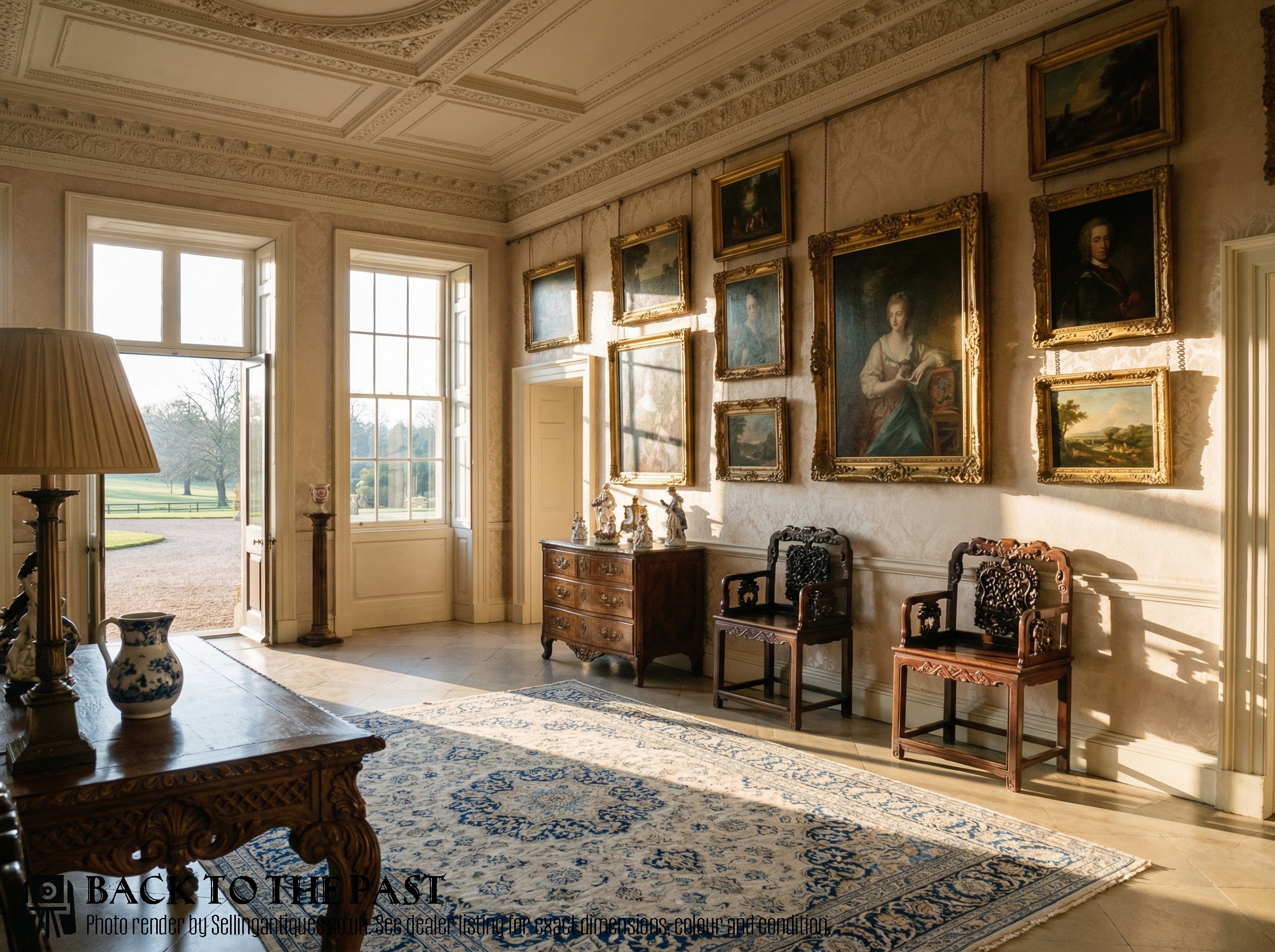
Many functioned as formal seating in reception rooms, halls, or imperial settings where status was visually communicated through scale and ornament. Throne styles and heavy hongmu chairs occupied prominent positions in traditional interiors.
Folding variants provided practical utility for transport or flexible living arrangements without sacrificing structural rigidity. Anglo-Indian examples frequently served as substantial hall seats in colonial residences.
How do I care for carved hardwood furniture?
Maintenance requires stable indoor humidity levels to prevent dense timbers like rosewood and teak from splitting or warping over time. Regular dusting with a soft, dry cloth preserves the intricate hand carving without building up residues.
Harsh chemical polishes should be avoided in favour of traditional wax formulations applied sparingly. Protecting the wood from direct sunlight maintains the natural colour of the grain.
Can I mix Chinese and European armchairs?
Mixing nineteenth-century Chinese forms with Art Nouveau European seating depends on the overall balance of the room and the shared density of the wood. The common thread of dark hardwood allows different regional interpretations to sit comfortably together.
Pairs naturally anchor a space, while individual armchairs work well as accent pieces against neutral walls. The heavy carving on both styles provides a strong visual link despite their different geographical origins.