
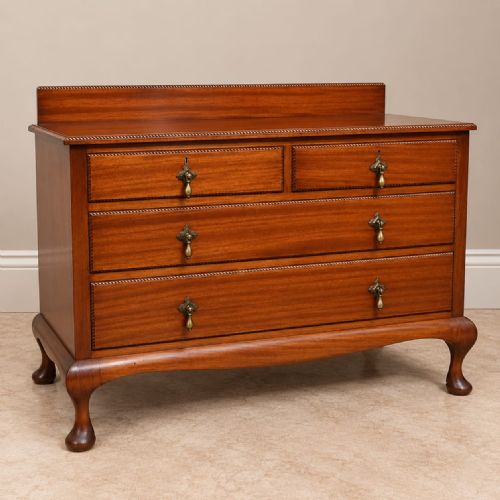
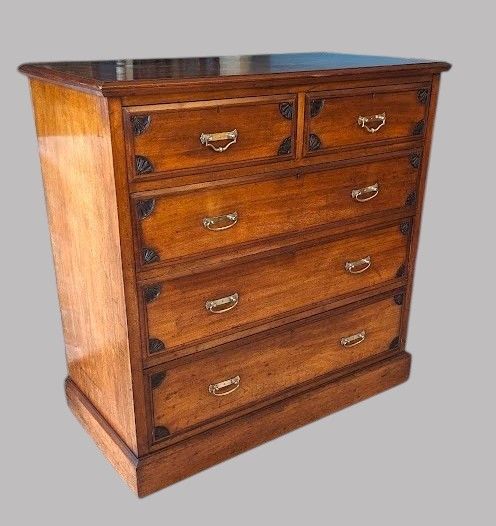
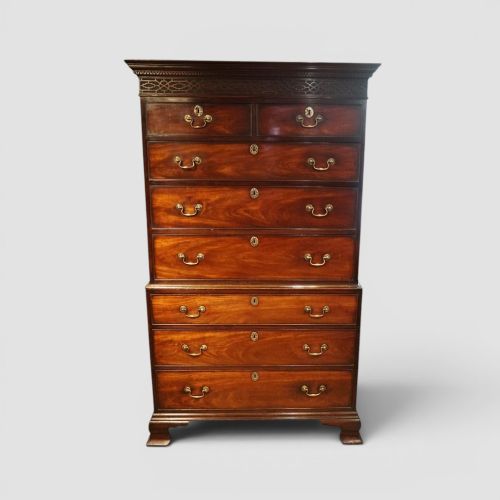
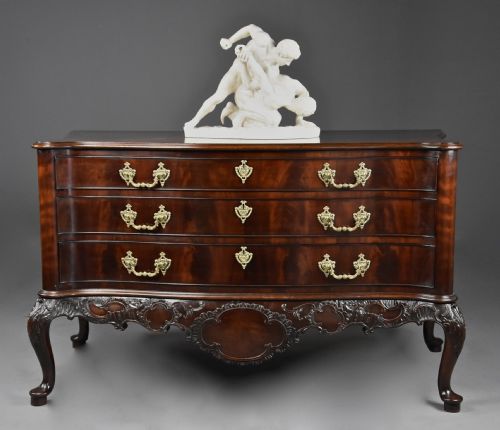
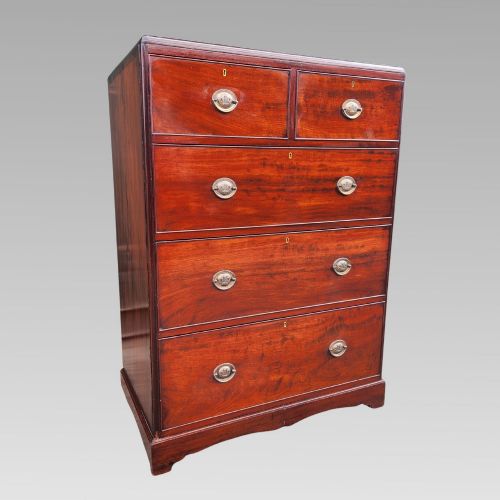


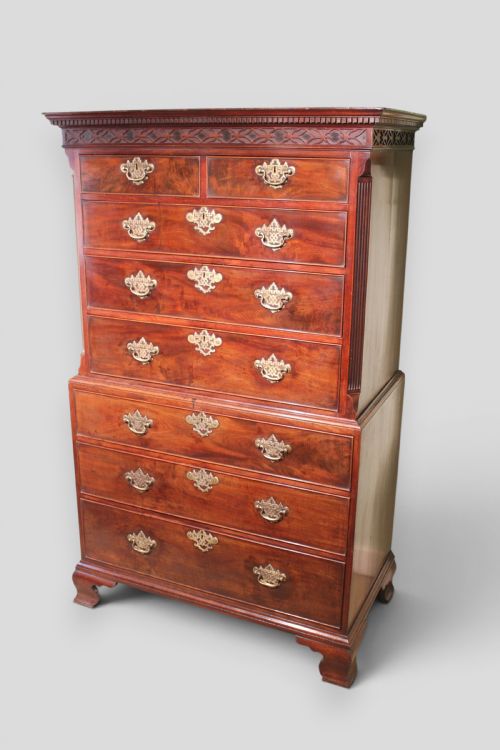


Carved Handle Mahogany Chest
These carved handle mahogany chest pieces offer period storage utility and classic timber warmth.
Carved Handle Mahogany Chest
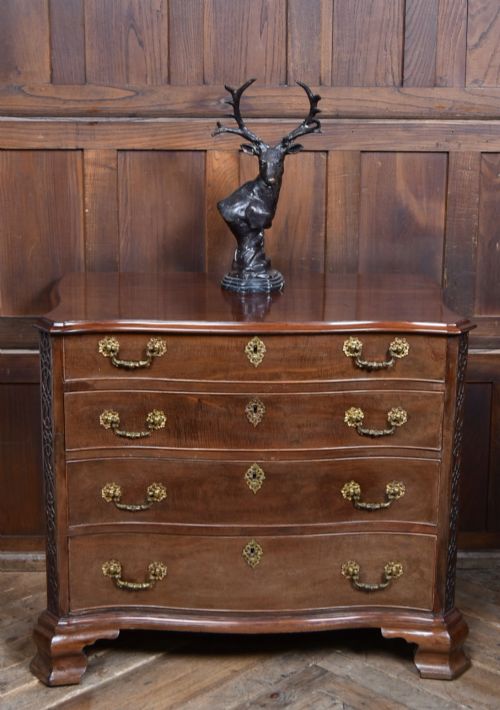
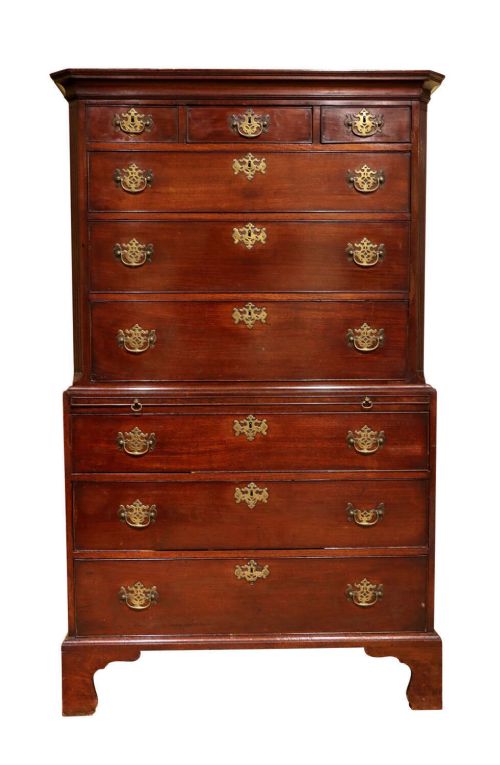
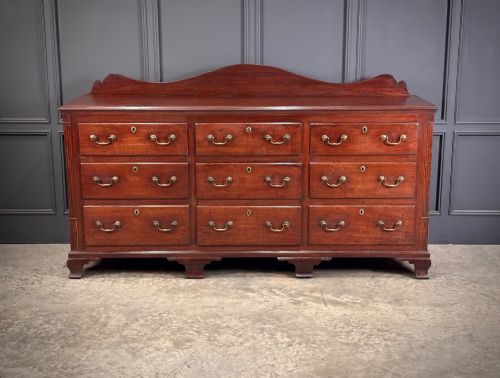
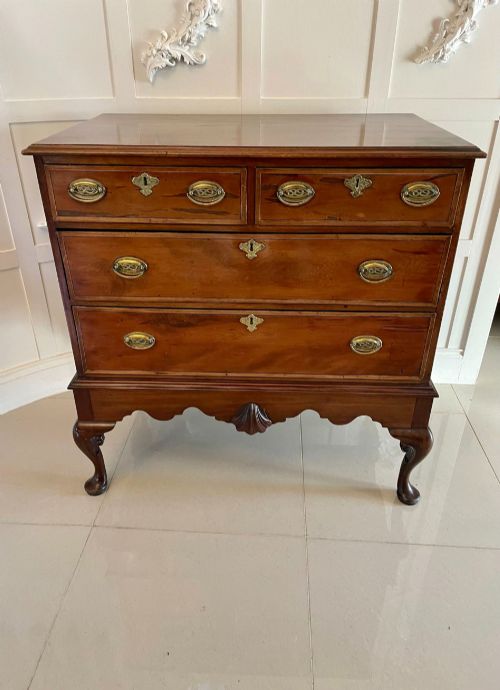
A carved handle mahogany chest is a storage form built primarily from mahogany timber, encompassing chests of drawers, tallboys, lowboys, and chests on stands. These pieces span periods from the 18th century through the Victorian and Edwardian eras, reflecting changing domestic requirements.
The version most commonly encountered on this page is the standard mahogany chest of drawers from the Georgian or Victorian periods, often featuring multiple drawer tiers. Variations include bowfront, serpentine, and block front configurations, alongside related forms like gentleman's chests and dressing chests.
Origin and regional variations also appear in the selection, including Dutch, Portuguese, and South African examples alongside English pieces. Styles range from George II and George III to Regency, Chippendale, and Egyptian Revival.
Materials and construction
Makers utilised solid mahogany and flame mahogany veneer applied to secondary timbers such as oak, creating durable frames and highly figured drawer fronts. Boxwood inlay adds linear contrast on specific surfaces.
Metal fittings such as brass handles and pierced brasses accompany carved wooden pulls, while glass elements occasionally feature in related cabinet work. Secondary materials like teak and stinkwood appear in specific regional pieces.
Listings feature pieces spanning the 18th century to the Edwardian period, incorporating flame mahogany veneer, brass, boxwood inlay, and glass.
Factors determining quality
Quality rests upon the selection of timber grain, particularly the vibrancy of flame mahogany veneer, and the crispness of carved details such as blind fret cornices, paw feet, and decorative handles. Proportion and architectural balance across tallboys and chests on stand set finer examples apart.
Internal construction standards, including the retention of original brasses, secondary linings, and the smoothness of drawer operation, separate workshop output from standard commercial production.
Maple and Co·Muirhead Moffat and Co·Morison and Co
The Carved Handle Mahogany Chest Glossary
- Chest on chest
- A tall storage unit comprising one chest stacked directly upon a slightly larger lower chest, also known as a tallboy. This form maximises vertical storage space in domestic chambers.
- Serpentine
- A front profile characterised by a convex central section flanked by two concave curves. This contour requires advanced woodworking skill to execute cleanly.
- Lowboy
- A small occasional table featuring one or more rows of drawers beneath the work surface. These pieces frequently served as dressing tables or side tables.
- Blind fret
- Carved ornamentation applied to a solid background so that the design appears pierced without actually cutting through to the timber beneath. It decorates cornices and friezes on mid-Georgian pieces.
- Flame mahogany
- Timber veneer sliced from logs where the grain creates a distinctive flickering flame pattern. Cabinet makers reserved this material for prominent drawer fronts.
Carved Handle Mahogany Chest: Frequently Asked Questions
What is a carved handle mahogany chest?
A carved handle mahogany chest is a traditional storage unit constructed from mahogany timber featuring carved pulls or handles rather than standard metal hardware. These pieces encompass chests of drawers, tallboys, and lowboys.
They date from the 18th century through to the Edwardian era, representing various regional and stylistic influences including Georgian and Regency designs.
How do I date a mahogany chest?
Dating relies on examining construction methods, timber choice, handle styles, and overall architectural proportions. Georgian pieces often display different drawer linings and carcass construction compared to Victorian examples.
Specific design cues like bracket feet, ogee bracket feet, paw feet, and cornice details help assign pieces to periods such as George III or the Regency era.
Where were these chests used?
These chests served primarily as domestic storage furniture placed within bedrooms, dressing rooms, and formal chambers for garments and linens. Gentlemans chests and dressing chests provided specialised compartments for personal items.
Lowboys and smaller chests functioned in hallways or parlours as supplementary surface and drawer space.
How should I care for mahogany furniture?
Mahogany furniture requires stable indoor humidity levels away from direct heat sources and strong sunlight to prevent timber movement and fading. Regular dusting with a soft, dry cloth preserves the polished surface.
Occasional application of appropriate wax polish maintains the moisture and lustre of the timber grain.