



Carved Gold Seal
A carved gold seal brings tangible history to your desk or finger, offering intricate hardstone carvings set in precious metal.
Carved Gold Seal
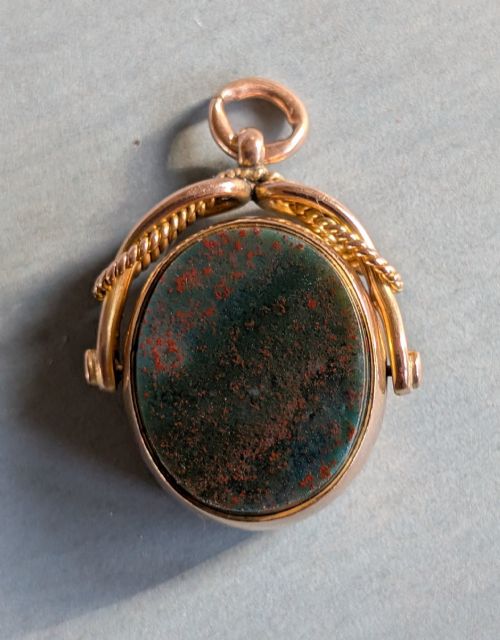
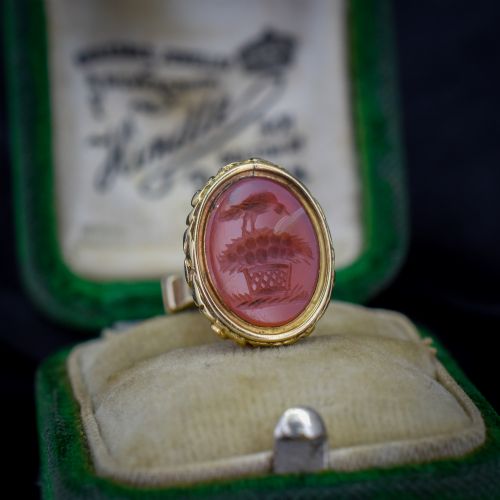
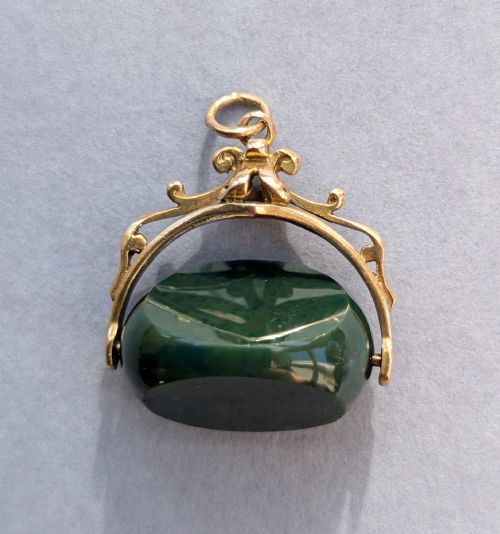
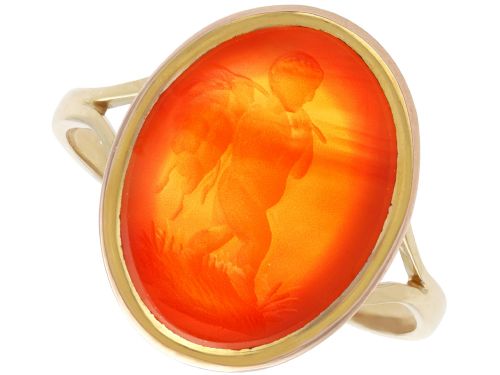
A carved gold seal combines precious metal mounts in 9ct or 18ct gold with hardstone intaglios, serving as portable signets or decorative fob pendants.
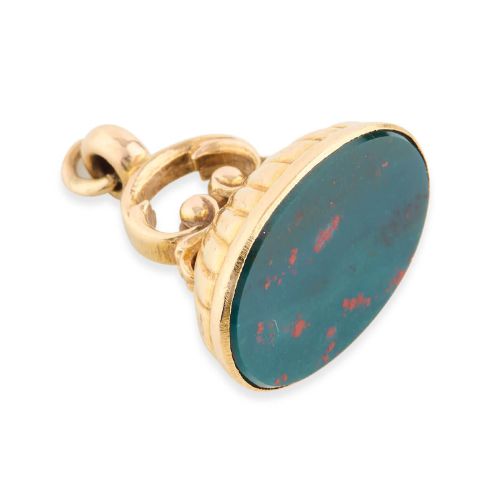
The most common examples on this page date from the Georgian, Victorian, and Edwardian periods, taking the form of spinning fobs, rings, and hanging charms.
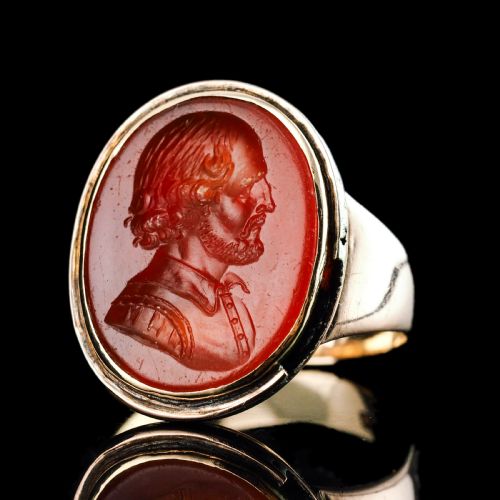
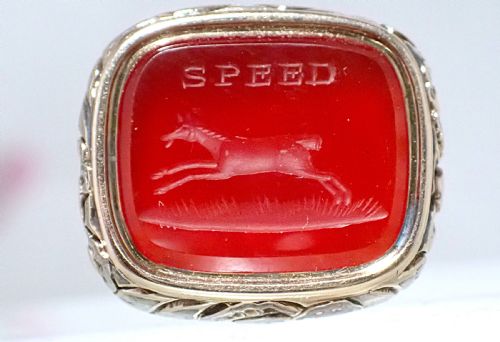
Makers utilised classic motifs such as classical figures, portraits, animals, and mottoes carved into stones like carnelian, bloodstone, agate, and chalcedony.
Materials and Construction
Craftsmen mounted rich stones including carnelian, bloodstone, agate, chalcedony, and rock crystal into yellow gold settings, utilising both 9ct and 18ct variants.
Lapidaries carved intaglio designs directly into the hardstone surface, creating sunken reliefs designed to leave a raised impression in sealing wax.
Metalworkers formed ornate swivel mechanisms and detailed bezels characteristic of Georgian, Victorian, and Edwardian jewellery.
Carved Gold Seal Retail Price Guide 2026
Typical asking prices for carved gold seal among the pieces listed under this phrase on Sellingantiques today, from the lower quarter to the upper quarter. They describe what is for sale here now, not the wider market.
Quality Variations
The crispness and depth of the stone carving dictate the visual fidelity of the intaglio, distinguishing master glyptic work from simpler commercial output.
The weight and purity of the gold mount, alongside the complexity of the cast or chased ornamentation on the fob or ring shank, separate standard examples from finer pieces.
The Carved Gold Seal Glossary
- Intaglio
- A design carved into the surface of a gemstone so that the impression produced is in relief. This technique is typical of signet rings and fob seals.
- Fob Seal
- A small pendant or swivel piece attached to a pocket watch chain, featuring a carved stone base for stamping wax. They were widely worn in the Georgian and Victorian eras.
- Hardstone
- A semi-precious gemstone such as carnelian, agate, or bloodstone used for carving. These stones offered the durability required for repeated stamping in wax.
- Chalcedony
- A cryptocrystalline form of silica, including varieties like carnelian and bloodstone. It served as a primary material for carved seals due to its smooth texture.
Carved Gold Seal: Frequently Asked Questions
What is a carved gold seal?
A carved gold seal is a portable stamping device featuring a precious metal mount and a hardstone base bearing an intaglio design. They were traditionally used to authenticate documents and letters using hot wax.
Today, they are worn as pendants or rings, appreciated for their miniature glyptic art and historical connection to personal stationery and heraldry.
How do I wear a fob seal?
Fob seals can be suspended from a chain around the neck as a pendant or attached to a waistcoat chain as originally intended. Ring variants are worn directly on the hand like traditional signet rings.
When wearing a seal ring or pendant daily, ensure the stone setting remains secure and avoid exposing softer stones to harsh impacts.
How do I identify the period?
Dating relies on stylistic clues in the gold mount, the nature of the intaglio subject matter, and the construction methods used by the jeweller. Georgian pieces often feature closed-back settings and neoclassical motifs.
Victorian and Edwardian examples introduce heavier cast ornamentation, spinning mechanisms, and distinct marker traits associated with nineteenth-century revival styles.
What stones were used for seals?
Carvers utilised durable hardstones such as carnelian, bloodstone, agate, chalcedony, sardonyx, and rock crystal. These minerals resisted the friction of pressing into wax.
Carnelian and bloodstone appear most frequently, prized for their rich natural colours and the striking contrast they create against the carved white or dark layers.