
Carved Giltwood Wall Console
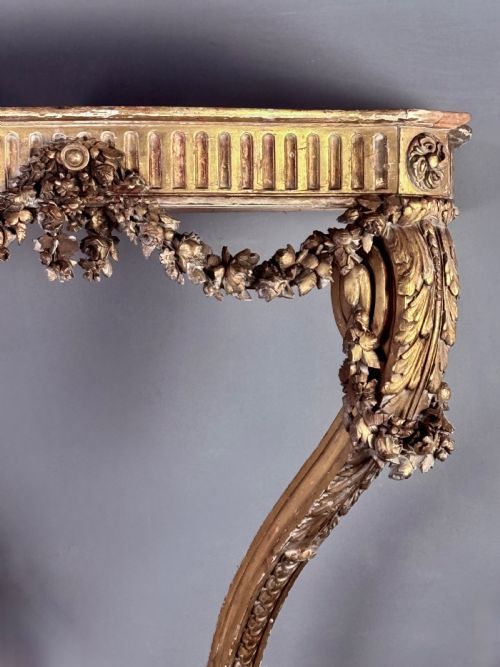
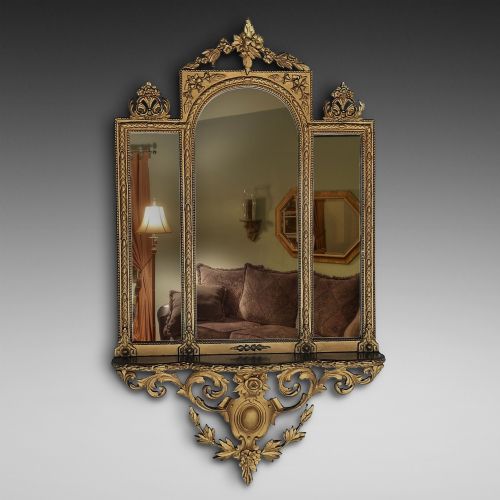
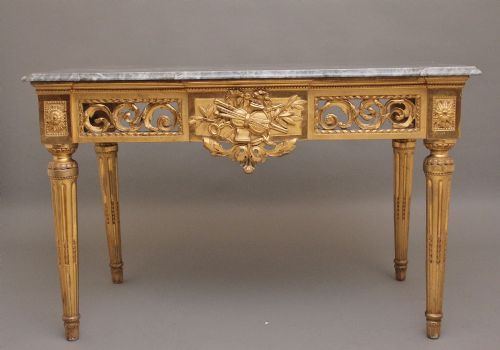
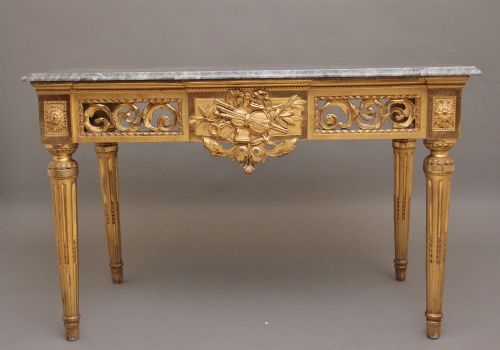
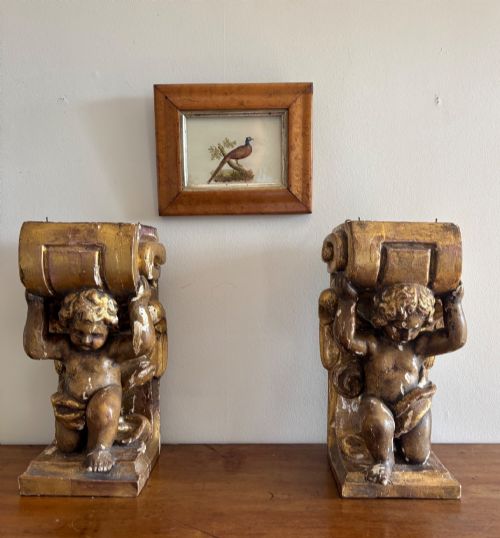
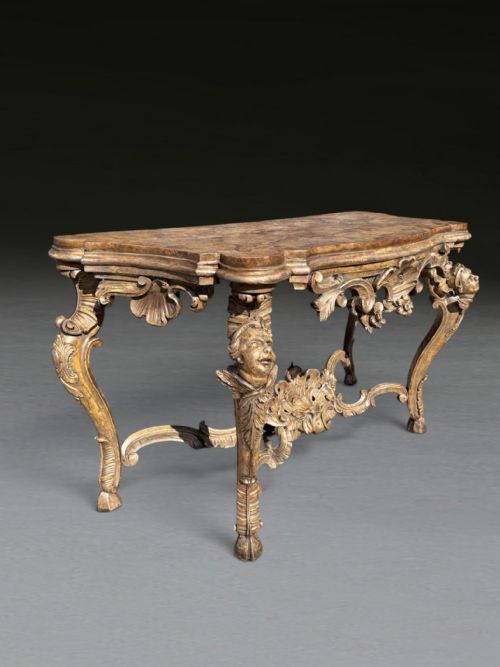
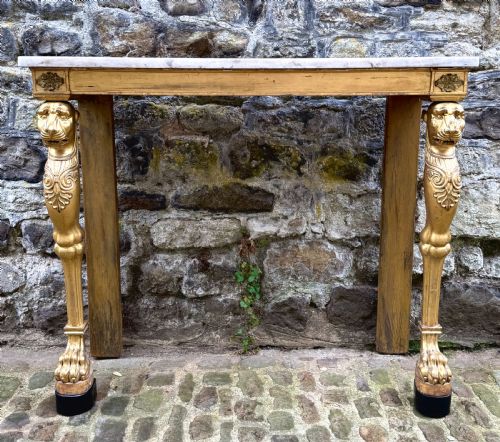
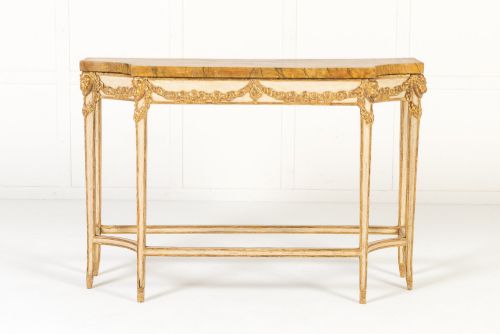
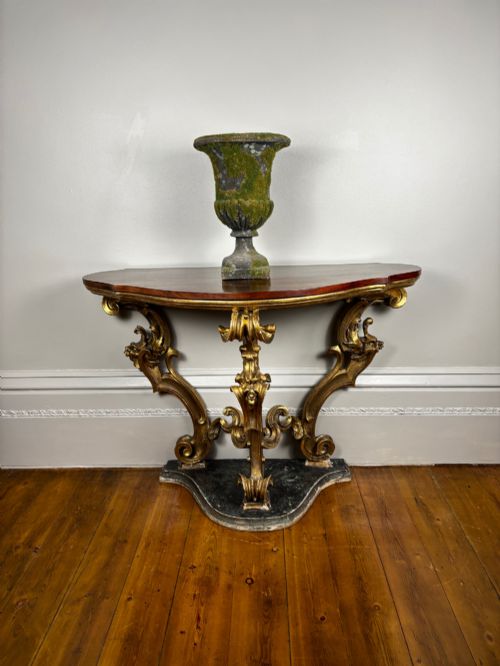
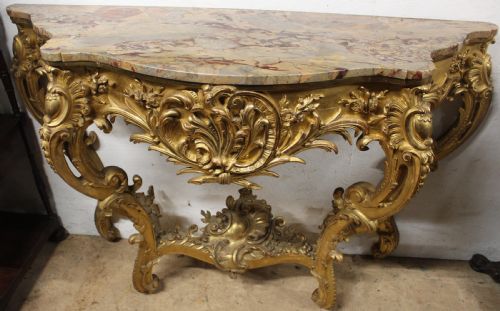
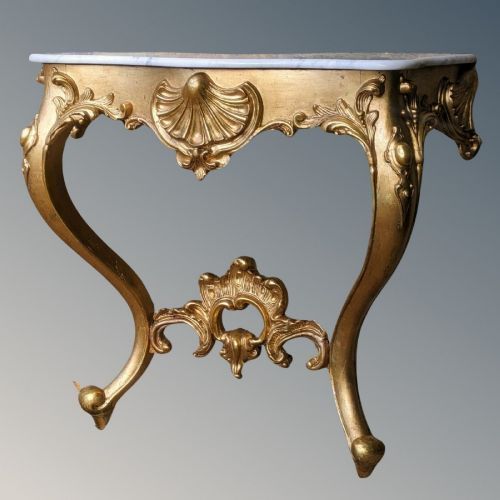
A carved giltwood wall console delivers a strong decorative presence with its gilded surface, carved timber frame, and stone top.
Carved Giltwood Wall Console
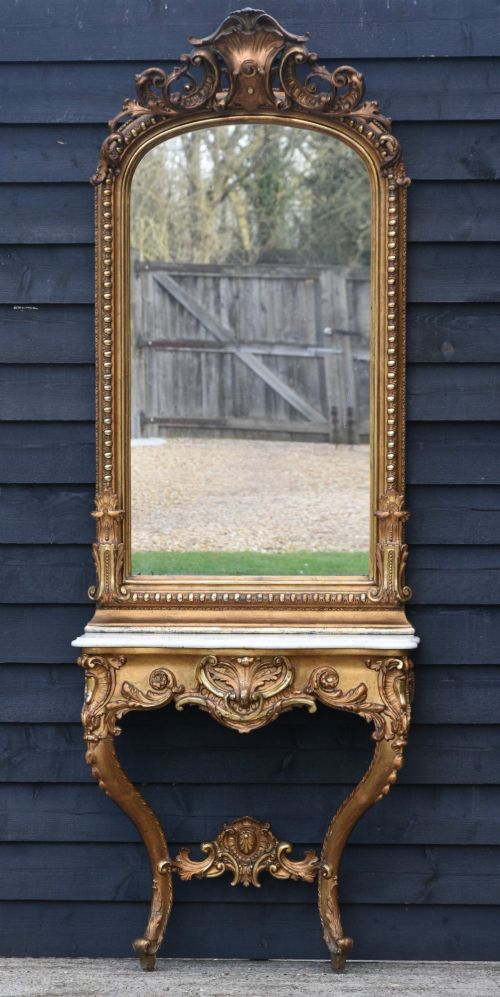
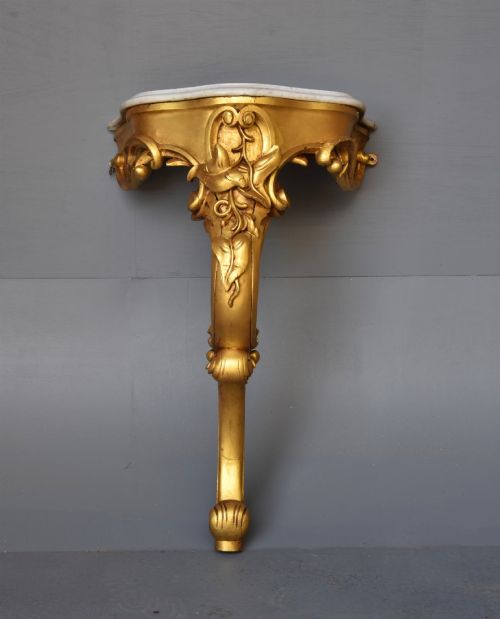
A carved giltwood wall console is a decorative furnishing designed to anchor against a room's wall, frequently accompanied by a fitted marble or mirror glass top. These tables appear across multiple periods including the eighteenth and nineteenth centuries, taking the form of console tables, wall brackets, and side tables.
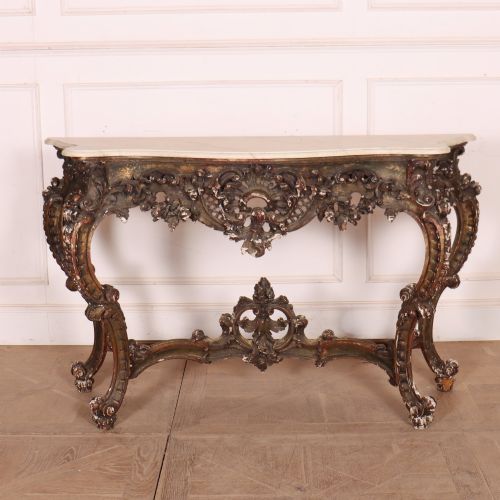
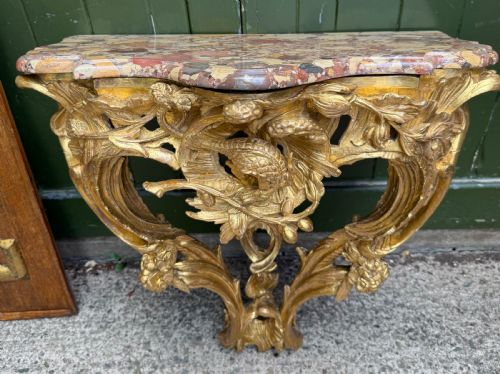
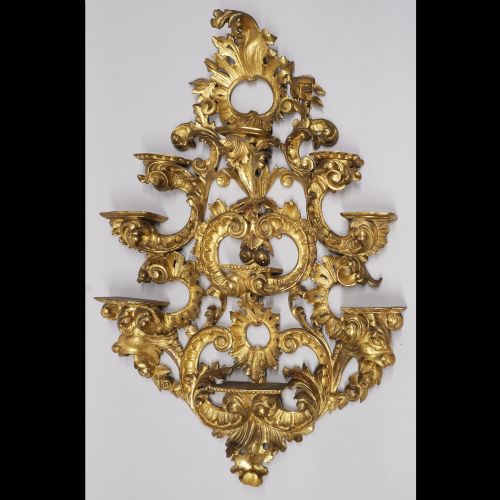
The prevailing styles on this page draw heavily from French and Italian traditions, notably Rococo, Neoclassical, and Baroque Revival designs. Pieces range from grand monumental tables with lion's paw supports to smaller serpentine front frames and wall-mounted brackets.
Originating largely from continental workshops in France, Italy, and Sweden, these items serve both functional and ornamental roles in domestic interiors. Buyers encounter matched sets, combinations with pier mirrors, and standalone bases.
How they were made
Craftsmen shaped the structural framework using carved wood, applying layers of gesso to smooth the surface before laying down gold leaf or gold paint. This technique produced the characteristic shimmering giltwood finish seen across the majority of the inventory.
Heavy stone slabs, including white Carrara and figured breccia marble, were precision-cut to fit the contoured tops of the tables. Where mirrors or glass components were included, artisans integrated mirror glass directly into the wall-mounted frames and accompanying pier mirrors.
Listings span the eighteenth century, nineteenth century, and early twentieth century, featuring both French and Italian regional designs.
What varies in quality
The depth and crispness of the wood carving distinguish higher tier items from simpler production, separating deep relief work from shallow detailing. Superior examples exhibit fluid movement in Rococo scrolls or precise symmetry in Neoclassical lines.
The selection and weight of the marble top significantly influence the overall calibre of the piece, particularly where figured varieties like breche d'alep or thick white slabs are employed. Integration between the carved wooden base and the fitted stone surface reveals the maker's original ambition.
Felix-Alfred Ternisien
The Carved Giltwood Wall Console Glossary
- Giltwood
- Timber coated with gold leaf or gold paint over a prepared gesso ground. This finish provides the characteristic metallic sheen seen on antique console frames.
- Console table
- A table supported by wall brackets or legs, designed to fit flush against a wall. Many examples feature fitted marble tops.
- Breccia
- A composite marble featuring angular rock fragments embedded in a fine-grained matrix. It appears frequently on Italian console tables.
- Pier mirror
- A large wall glass designed to hang directly above a console table, often forming a matched decorative set.
- Serpentine
- A furniture outline characterised by a wavy or undulating front edge. This shape is common on eighteenth and nineteenth century French console tables.
Carved Giltwood Wall Console: Frequently Asked Questions
How were console tables used historically?
These tables served primarily as decorative side supports in grand halls, parlours, and drawing rooms, positioned firmly against interior walls.
Because many lacked rear legs and relied on wall brackets or fixings for stability, they functioned best for display rather than heavy utility.
Do these tables come with marble tops?
Many of the console tables feature fitted stone tops, including white Carrara and figured breccia marble.
Some examples also pair with matching wall mirrors or take the form of carved wooden wall brackets without stone surfaces.
How do I identify a Rococo Revival piece?
Rococo Revival pieces typically display asymmetrical C-scrolls, naturalistic leaf motifs, and undulating serpentine outlines.
These nineteenth-century interpretations mirror the ornate curves of earlier eighteenth-century French and Italian designs.