
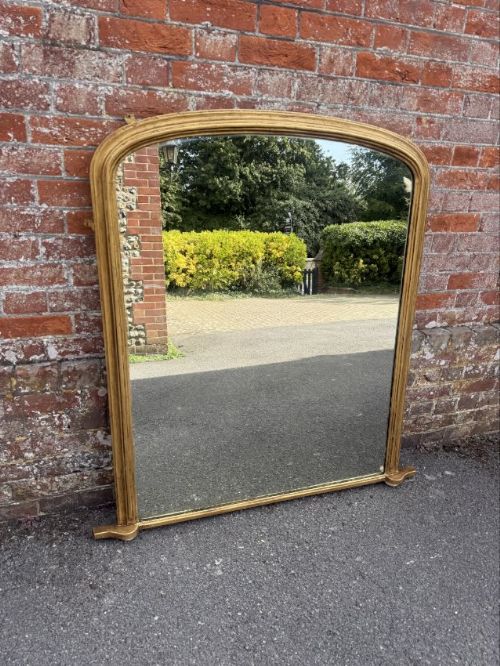
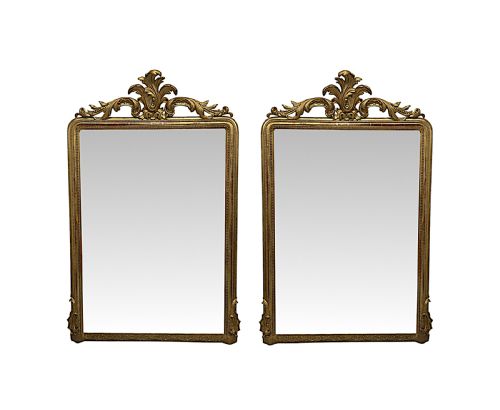
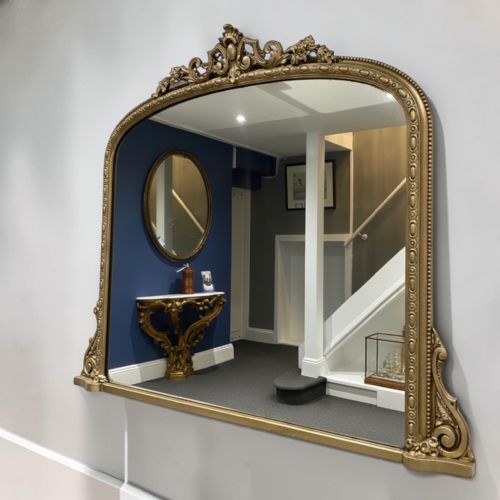
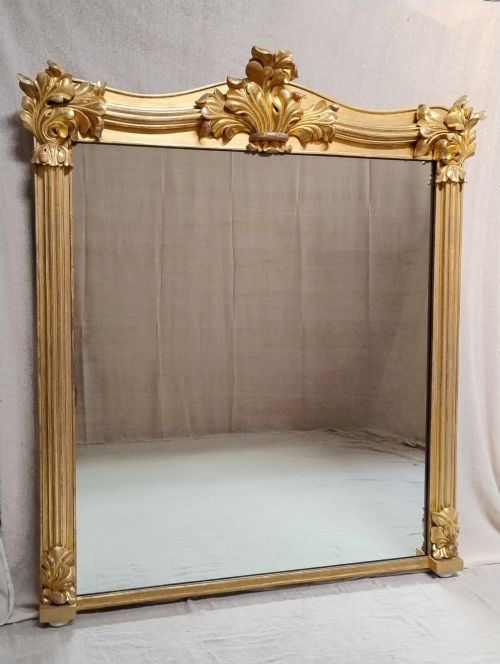
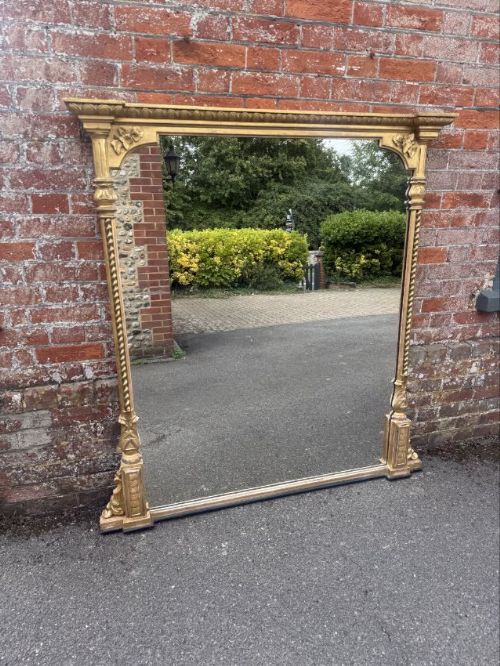
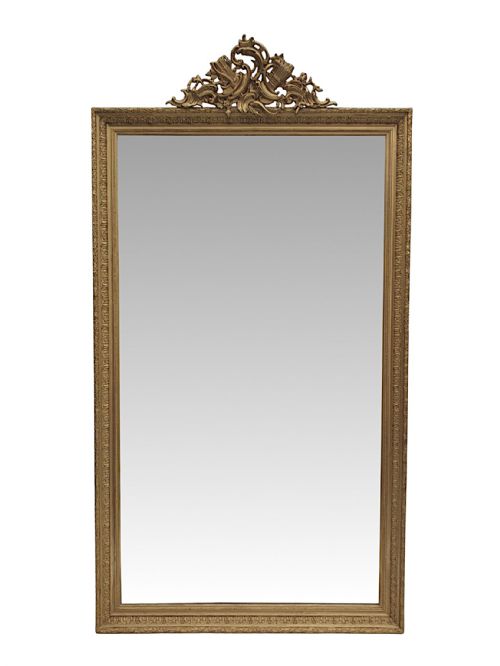
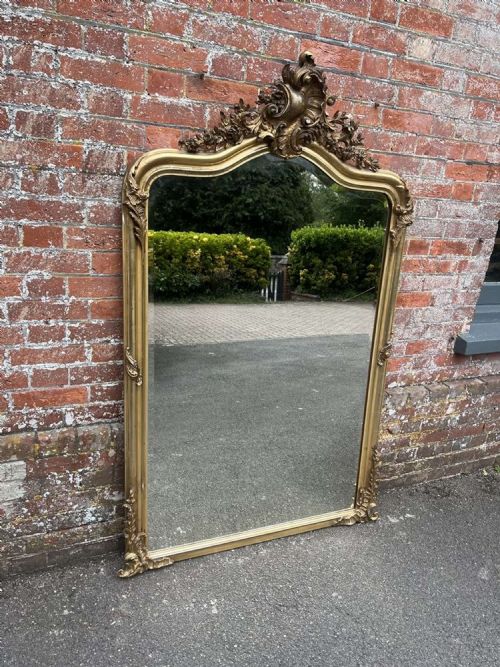
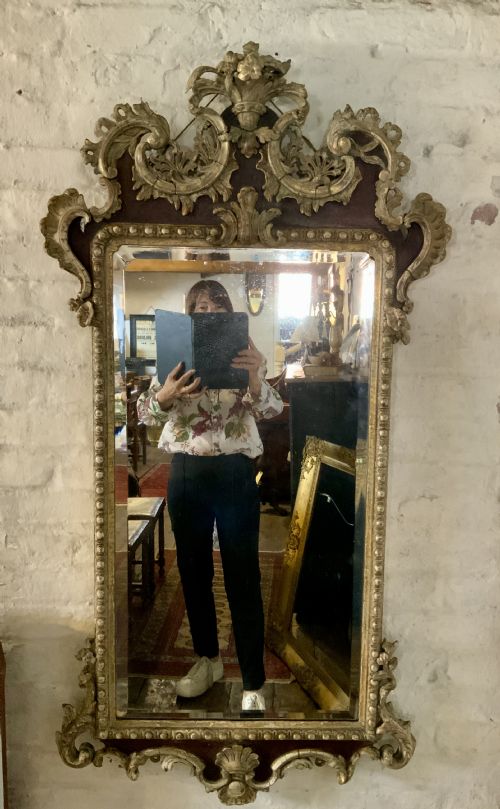
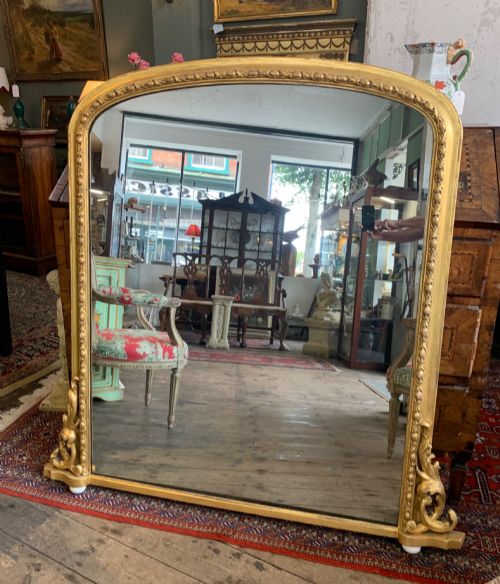
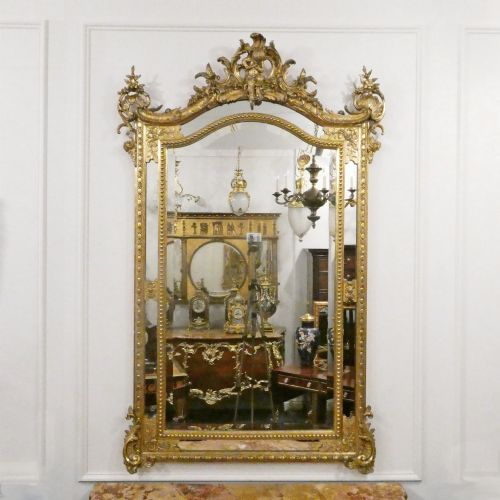
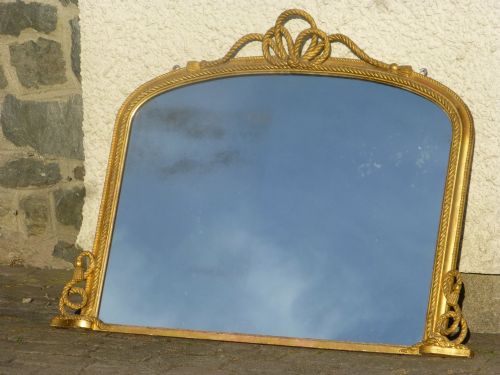
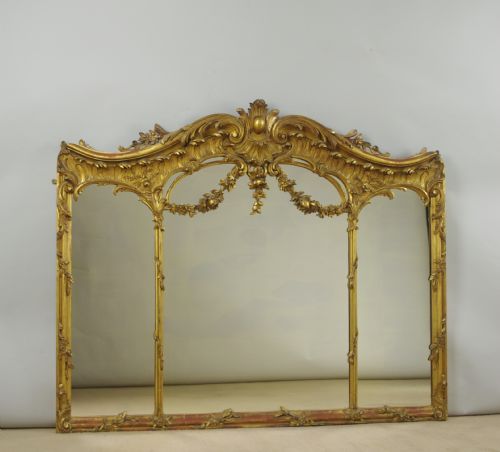
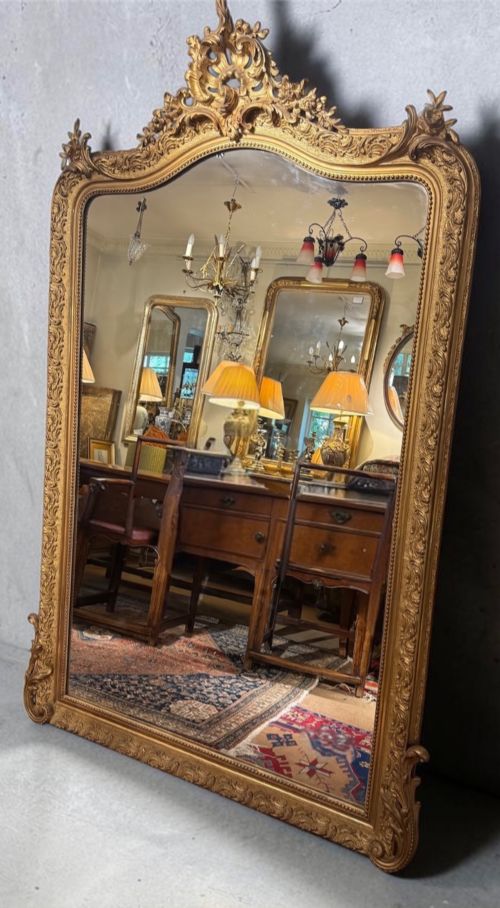
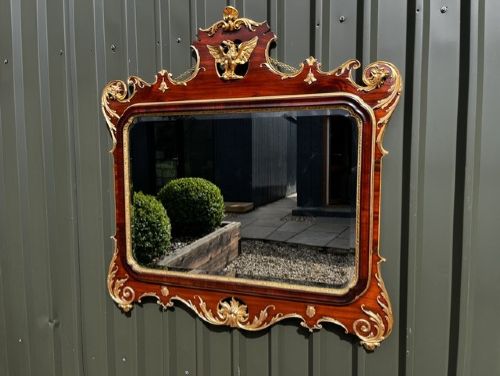
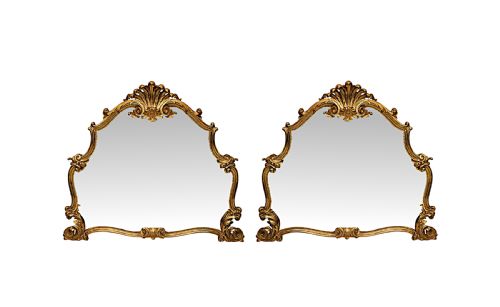
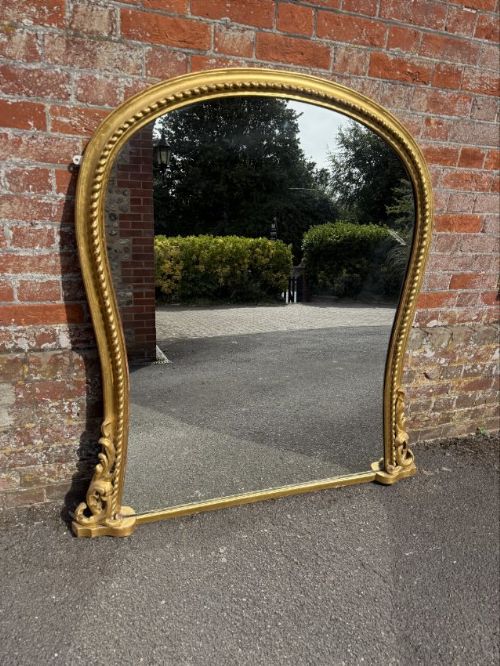
Carved Giltwood Mantle Mirror
A carved giltwood mantle mirror brings weight and golden warmth to a room, offering grand proportions and historic craftsmanship built to command a chimney breast.
Carved Giltwood Mantle Mirror
A carved giltwood mantle mirror is typically found as a large overmantel or wall-hanging glass designed to sit above a fireplace, anchoring the architecture of a period reception room.
The pieces appearing most frequently on this page belong to the nineteenth century, spanning Victorian, Regency, and Rococo Revival styles alongside French chateau and Georgian influences.
Makers and manufacturers produced these mirrors in varied formats, including grand triple plate overmantels, arched tops, shaped frames, and trumeau designs featuring painted elements.
How They Were Made
Carved wood and gesso form the structural base of these frames, with plaster and composition ornamenting the moulded details, rope twists, and cartouches before finishing.
Gold leaf or liquid gilding covers the prepared surface, providing the reflective metallic sheen characteristic of period giltwood.
Original mirror plates, sometimes bevelled or configured as marginal glass, are fitted into timber rebates behind the heavy frames.
Keep an eye out for hidden handwritten framer notes tucked behind old pine backboards.
What Varies in Quality
The depth and crispness of the hand-carving in the wooden foundation determine the artistic merit of the frame, separating deep, sharp relief from soft, moulded composition.
The retention of original gold leaf and the nature of the underlying gesso layers dictate the authenticity and visual depth of the aged surface.
The preservation of the original glass plate, whether featuring period silvering degradation or clean bevelling, influences the integrity of the piece.
The Carved Giltwood Mantle Mirror Glossary
- Giltwood
- Timber that has been prepared and coated with gold leaf or metallic powder. This finish ages to a warm, soft lustre over the underlying gesso.
- Gesso
- A plaster-like mixture applied to wood frames to provide a smooth ground for gilding and relief moulding. It allows intricate decorative details to be cast or carved.
- Overmantel
- A large mirror specifically proportioned to hang on the wall directly above a fireplace mantle. These pieces often feature wide horizontal formats or arched tops.
- Trumeau
- A decorative wall mirror incorporating a painted panel or carved artwork directly above the glass plate. Originating in French interior design, they served as architectural wall decorations.
- Rococo Revival
- A nineteenth-century design style drawing on eighteenth-century asymmetrical curves, scrolling foliage, and naturalistic motifs. Frames in this taste display exuberant, flowing ornamentation.
Carved Giltwood Mantle Mirror: Frequently Asked Questions
Where should I hang a mantle mirror?
These large mirrors are traditionally positioned directly above a fireplace mantelpiece, where their expansive proportions reflect light and fill the vertical space of the chimney breast. They also work effectively mounted low on a principal wall in a hallway or drawing room as a commanding focal point.
Because of their substantial weight and scale, they require secure wall fixings tied directly into masonry or structural studs. Leaner versions can rest safely on a sturdy sideboard or mantle if anchored properly to prevent tipping.
How can I tell a Victorian mirror from a Georgian one?
Georgian mirrors, including those in the Chippendale or Regency taste, typically feature precise, restrained carving, mahogany or pine foundations, and distinct architectural symmetry. They often display heavier construction methods and older plate glass characteristics.
Victorian and Rococo Revival pieces from the mid to late nineteenth century lean towards exuberant ornamentation, heavier use of moulded composition over gesso, and grander, more theatrical proportions. Examining the backboards, fixings, and timber shrinkage helps clarify the manufacturing era.
What is an overmantel mirror?
An overmantel mirror is a specialised wall glass designed specifically to sit horizontally above a fireplace. Their dimensions match the width of standard hearths, making them ideal for unifying the fireplace wall.
These mirrors often feature architectural elements like arched tops, shaped crestings, or tripartite plates intended to bounce natural light around historic rooms.