



Carved Giltwood Lamp Bases
Carved giltwood lamp bases bring a warm metallic gleam and sculptural presence to a room, combining old craftsmanship with practical lighting.
Carved Giltwood Lamp Bases
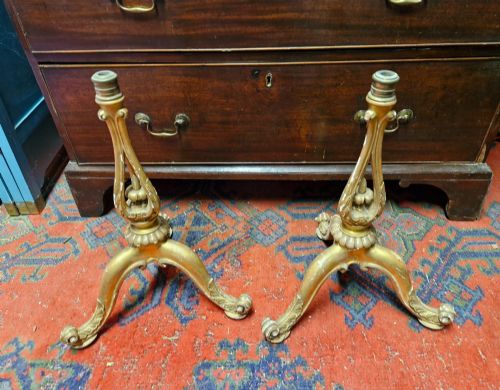
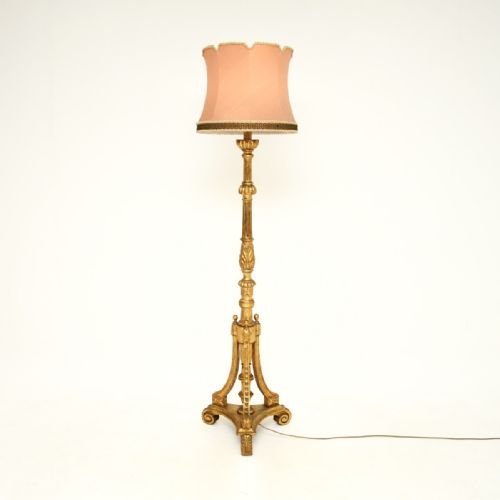
When you search for carved giltwood lamp bases, you encounter a selection of lighting supports and converted candlesticks shaped from timber. These pieces span the eighteenth century through to the early twentieth century, showing influences from Italian Baroque to Regency Revival styles.
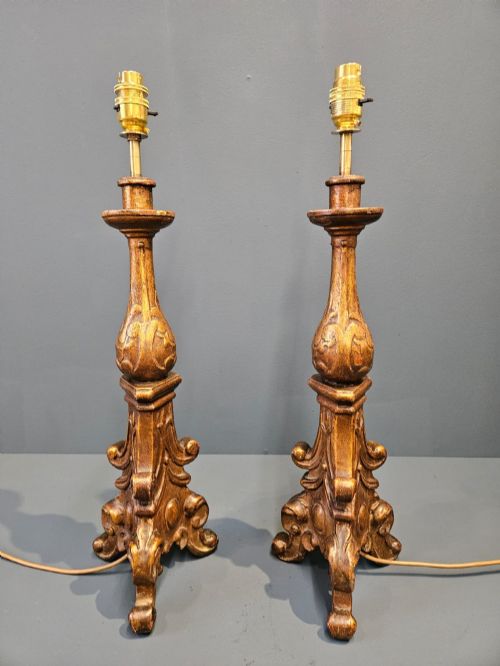
You are most likely to meet standard floor lamps and smaller table-standing versions on this page. Many examples originate from Italy or England, often taking the form of fluted columns, tripod supports or modified pricket sticks.
The inventory includes pairs as well as individual items, sometimes paired with marble tops or brass fittings. Their forms draw heavily on neoclassical motifs and French rococo curves, translating architectural and furniture design into domestic lighting.
How they were made
Makers shaped these pieces from carved timber, applying layers of gesso to smooth the surface before adding gold leaf or surface gilding. This traditional technique created a receptive base for intricate chisel work and deep relief moulding.
Selected items combine carved wood with secondary materials such as marble, brass and metal mounts. Surface treatments sometimes incorporate paint alongside the primary gilt finish to highlight specific decorative details.
Carved Giltwood Lamp Bases Retail Price Guide 2026
Typical asking prices for carved giltwood lamp bases among the pieces listed under this phrase on Sellingantiques today, from the lower quarter to the upper quarter. They describe what is for sale here now, not the wider market.
Listings span multiple centuries, ranging from eighteenth-century English baroque examples to early twentieth-century Italian standard lamps.
What varies in quality
The depth and crispness of the original carving separate standard turnings from superior sculptural work. Sharp edges on acanthus leaves and clean fluting indicate skilled hand tool use rather than mass production.
The preservation of the gold leaf and the underlying gesso layer determines the visual impact of the piece. Intact gilding with natural ageing shows how well the surface has survived decades of domestic use.
The Carved Giltwood Lamp Bases Glossary
- Giltwood
- Timber covered with a thin layer of gold leaf or metal powder. This finish provides a reflective surface that catches candle or electric light.
- Gesso
- A plaster mixture applied to carved wood to create a smooth surface for gilding. It fills minor grain imperfections before the gold leaf is laid down.
- Pricket stick
- A candlestick featuring an upward-pointing metal spike to secure the wax candle. Many older lamp bases started life as these liturgical or domestic candle stands.
- Neoclassical
- A style drawing on classical Greek and Roman art. It manifests here in symmetrical forms, urn shapes and restrained architectural ornament.
Carved Giltwood Lamp Bases: Frequently Asked Questions
Are these lamps originally wired for electricity?
Most older pieces began as candlesticks, oil lamps or decorative stands before receiving modern electrical fittings later in life. Conversions often use the central column to run flex discreetly down to the base.
Buyers should inspect the current wiring setup to ensure it meets local safety standards. Rewiring is a straightforward task for a qualified electrician when adapting these vintage items for home use.
How do I clean a giltwood lamp base?
Dust the carved surfaces gently with a soft, dry brush to prevent dirt accumulation in the recessed areas. Avoid using liquid cleaners, abrasive cloths or chemical polishes, which can strip away the delicate gold leaf.
Water and harsh solvents will damage both the gesso and the underlying gilding permanently. Regular, careful dusting is all that is required to maintain the surface finish.
Can I find matching pairs here?
The selection occasionally includes matched pairs of standard lamps or table candlesticks. These matching sets are particularly useful for placing on either side of a sideboard or framing a seating area.
Single pieces also feature prominently, offering strong focal points for smaller tables or corners. Availability shifts as items sell and new stock arrives.
How do I date a giltwood lamp?
Dating relies on examining the carving style, the type of timber used, and the composition of the gesso and gilt layers. Eighteenth-century examples often display heavier baroque carving, while nineteenth-century pieces lean towards revival aesthetics.
Tool marks left by the carver and the natural oxidation of the materials provide further clues. Comparing the proportions to known furniture styles of the period helps narrow down the decade of manufacture.