

Carved Giltwood Glass
Carved giltwood glass brings interior light and formal weight to a room through gilded frames and reflective plates.
Carved Giltwood Glass
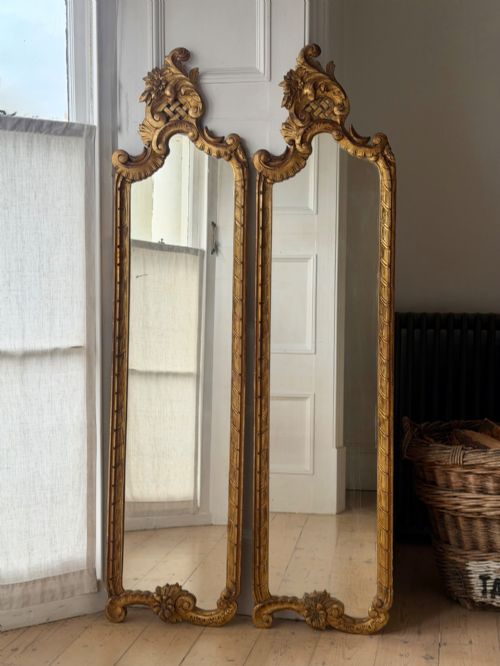
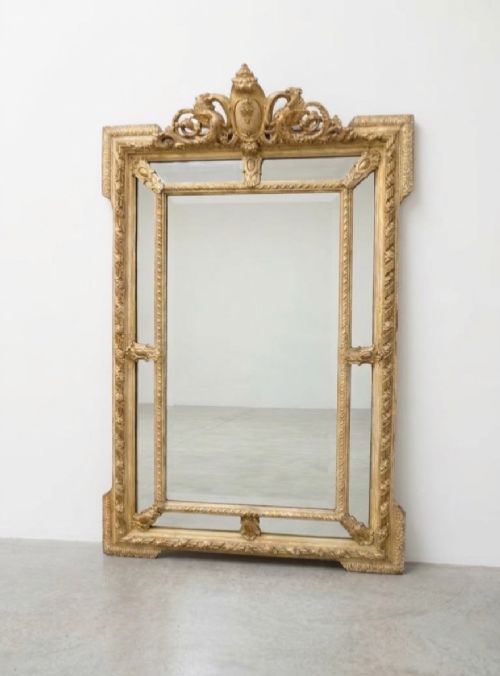
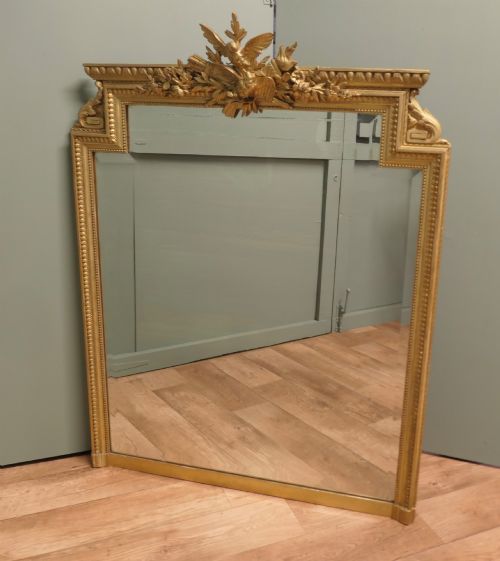
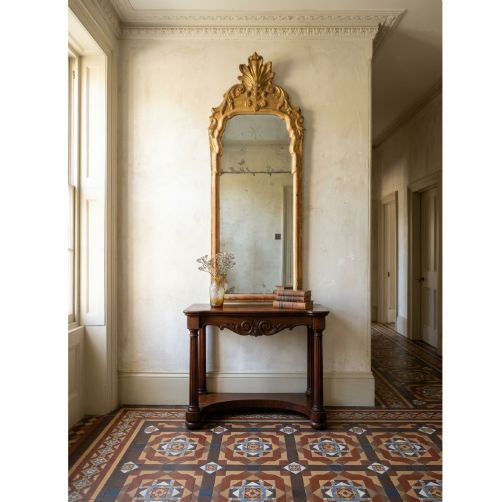
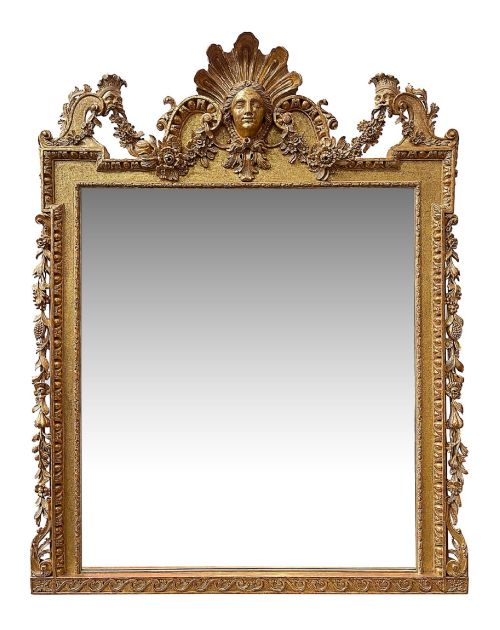
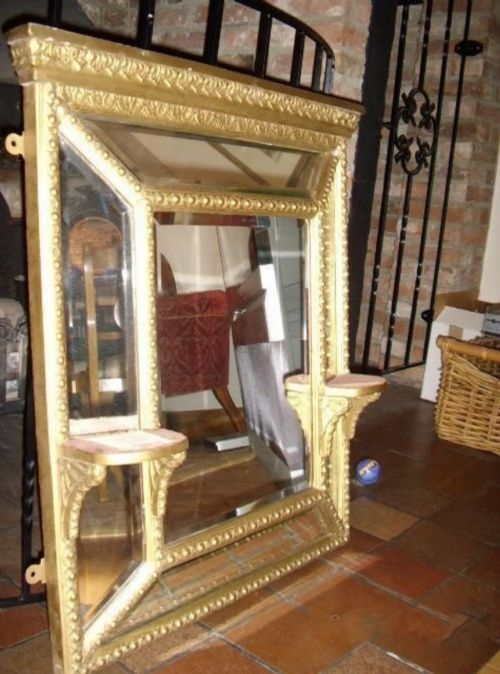
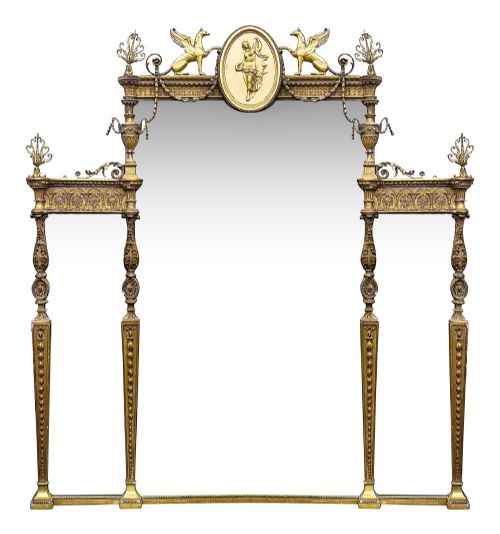
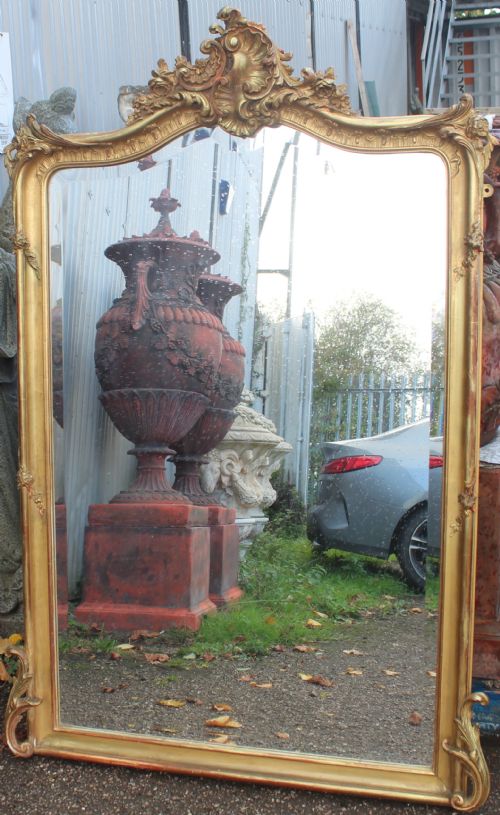
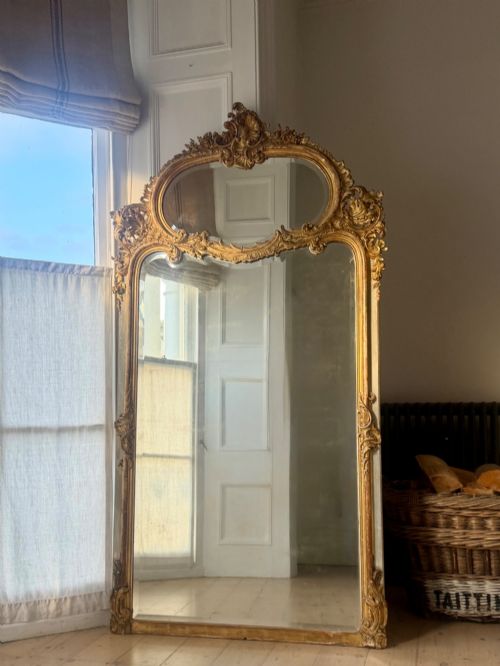
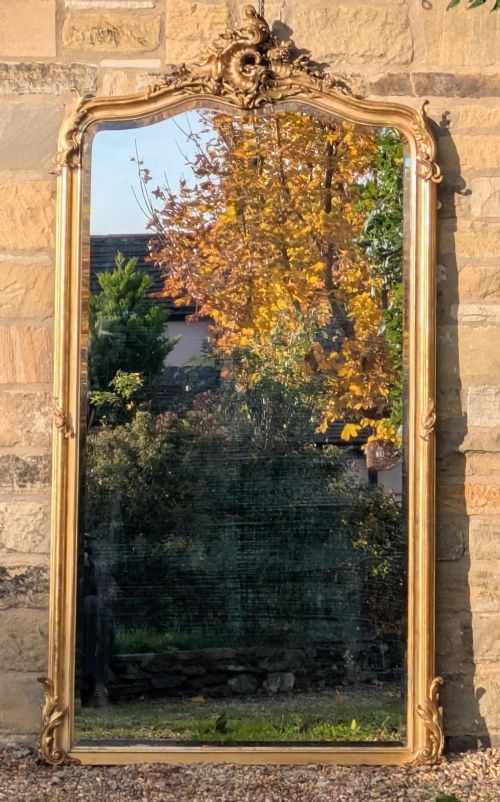
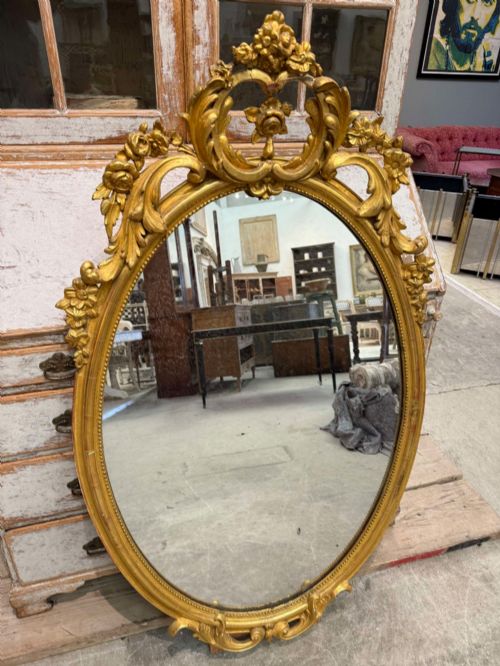
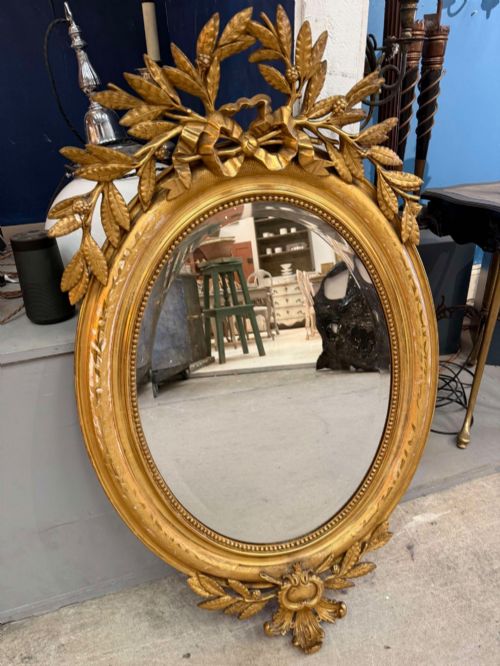
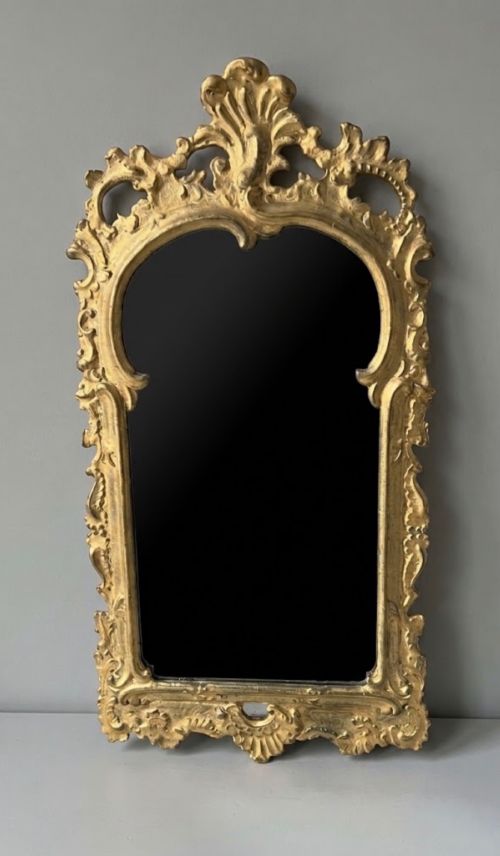
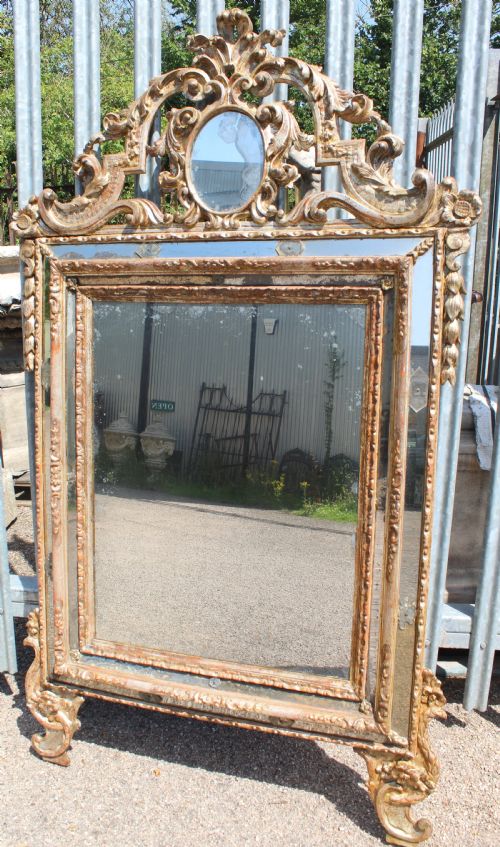
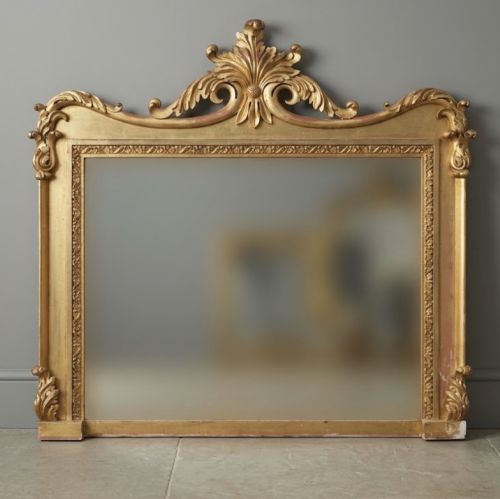
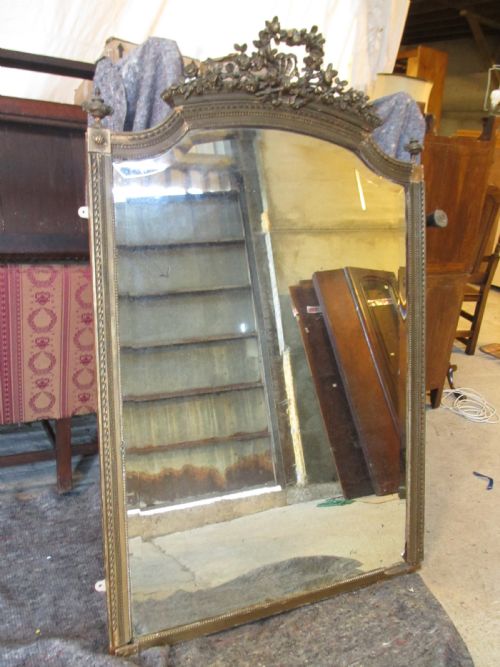
When you search for carved giltwood glass, you encounter wall mirrors, overmantel mirrors, and console tables framed in carved timber with gold finishes. The selection spans the Georgian, Regency, and Victorian eras, alongside French Napoleon III and Rococo Revival pieces.
The most common formats on this page are large overmantel mirrors and wall mirrors intended for principal reception rooms. These objects frequently display elaborate crests, urn top pediments, or pierced foliage.
Origin points divide broadly between English workshops and French ateliers, each carrying distinct regional ornament from the eighteenth and nineteenth centuries.
How they were made
Carved giltwood glass relies on a timber substructure of pine, mahogany, or other soft and hard woods, often enriched with moulded gesso or composition details. Artisans applied thin sheets of gold leaf over bole to achieve the metallic sheen.
Mirror plates consist of traditional glass, occasionally featuring bevelled edges, mercury backing, or foxed patination developed over long periods. Frames unite joinery with manual carving, rope twists, and applied floral or mythological motifs.
Carved Giltwood Glass Retail Price Guide 2026
Typical asking prices for carved giltwood glass among the pieces listed under this phrase on Sellingantiques today, from the lower quarter to the upper quarter. They describe what is for sale here now, not the wider market.
Listings span the 18th century, Georgian, Regency, and Victorian periods, extending into Napoleon III and Edwardian revival styles.
What varies in quality
The distinction between ordinary and superior carved giltwood glass rests on the depth and sharpness of the hand carving rather than surface decoration alone. Crisp undercut foliage and well-defined gesso ornament indicate skilled craftsmanship.
Originality of the mirror plate and gilding surface governs historical integrity. Retaining early glass plates alongside undisturbed layers of gold leaf elevates the standing of an antique mirror or console set.
The Carved Giltwood Glass Glossary
- Giltwood
- Wood that has been coated with gold leaf over a prepared ground such as gesso. This finish provides a warm, reflective metallic surface.
- Gesso
- A plaster mixture applied to wood frames to create a smooth surface for subsequent carving or gilding. It allows for crisp ornamental detail.
- Overmantel mirror
- A large mirror designed specifically to hang above a fireplace mantelpiece. These pieces often span the width of the hearth.
- Pier mirror
- A tall mirror designed to hang on the wall space between two windows. They frequently pair with matching console tables.
- Trumeau
- A decorative wall mirror or panel featuring painted wood or inset artwork above the glass plate. Originating in France, these pieces suit formal interiors.
Carved Giltwood Glass: Frequently Asked Questions
What is an overmantel mirror?
An overmantel mirror is a wide format glass piece built to sit directly above a fireplace surround. These objects anchored nineteenth-century drawing rooms by reflecting hearth light across the space.
Their proportions usually match the width of the mantel shelf below them.
How do I identify a Regency mirror?
Regency mirrors date from the early nineteenth century and typically display classical restraint with architectural motifs. Look for ball-bearing friezes, reeded columns, and convex or rectangular formats.
Their gilding methods and timber construction align with the neoclassical tastes of that period.
What is foxed glass?
Foxed glass refers to mirror plates that have developed dark spots and degradation behind the reflective surface over time. This natural ageing process creates a mottled appearance.
Many collectors value foxed plates for the authentic historical atmosphere they impart.
How do French and English mirrors differ?
French mirrors from the nineteenth century often lean towards exuberant Rococo Revival curves, elaborate crests, and painted trumeau elements. English examples tend to follow Georgian or Regency architectural lines.
Both traditions utilise carved wood and gesso substrates beneath gold leaf.