
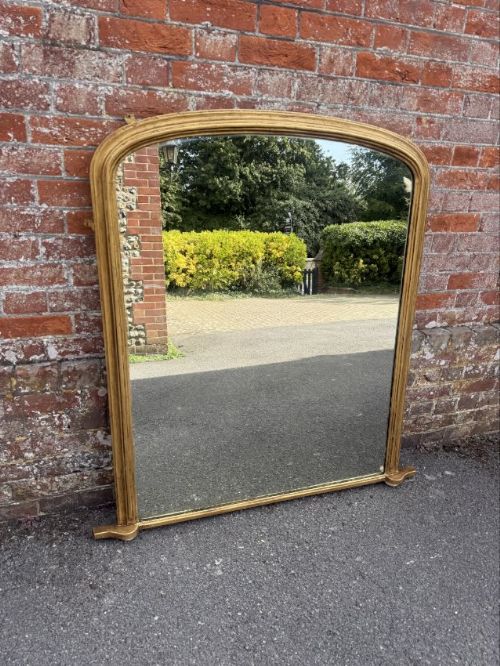
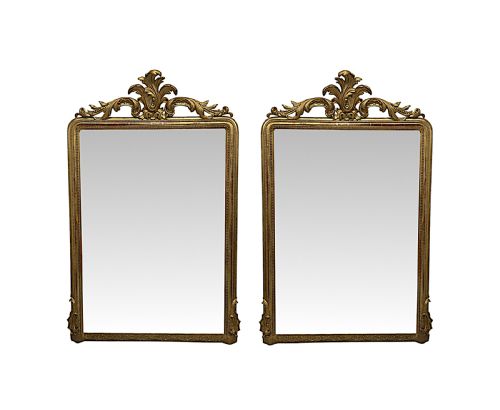
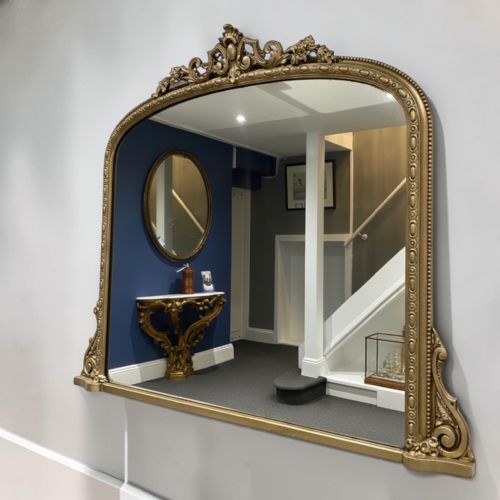
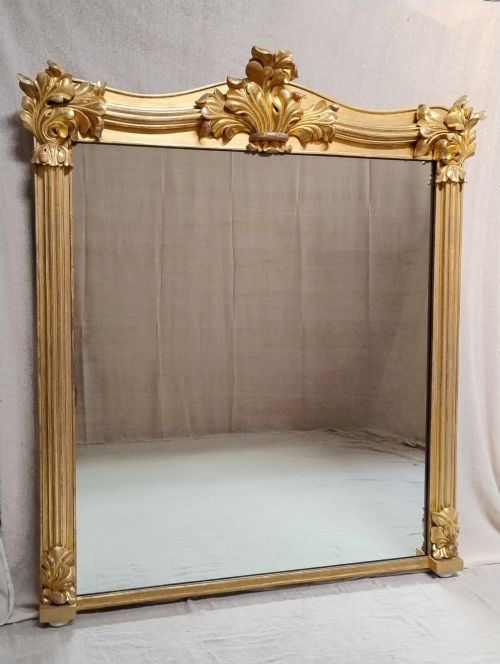


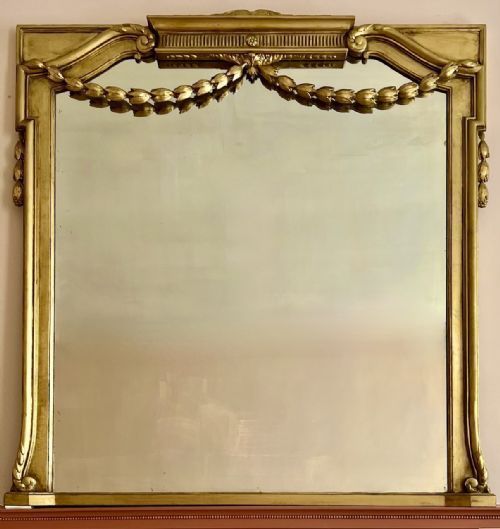
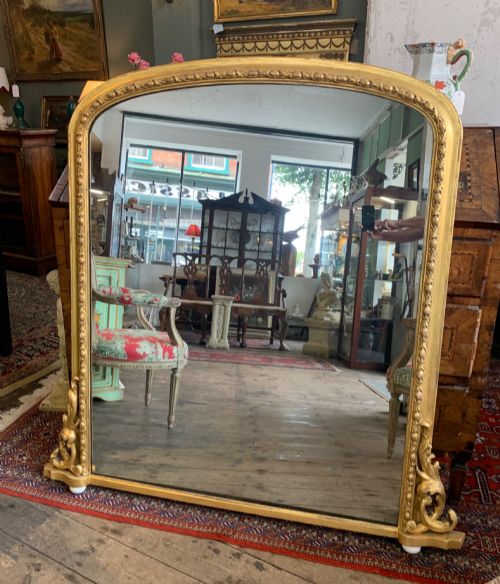
Carved Giltwood Fireplace Mirror
A carved giltwood fireplace mirror brings warmth and reflective breadth to a room, anchoring the hearth with period presence.
Carved Giltwood Fireplace Mirror
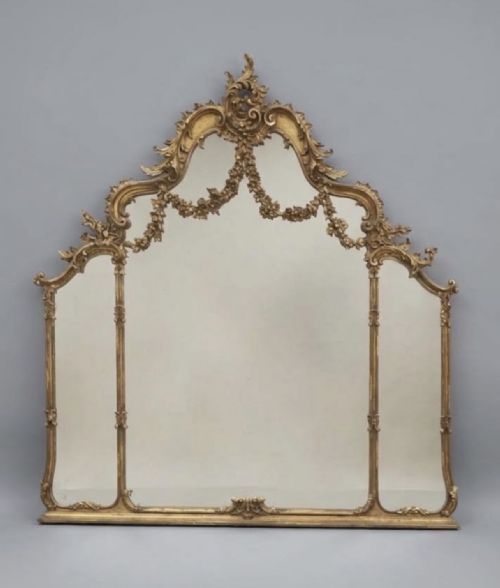
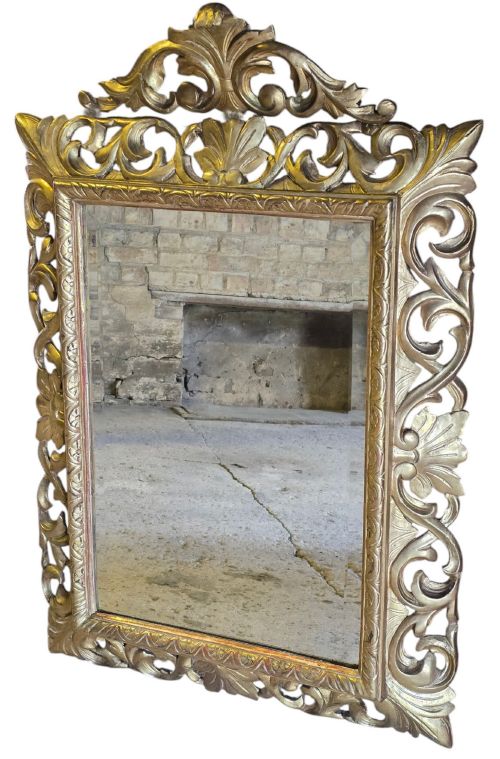
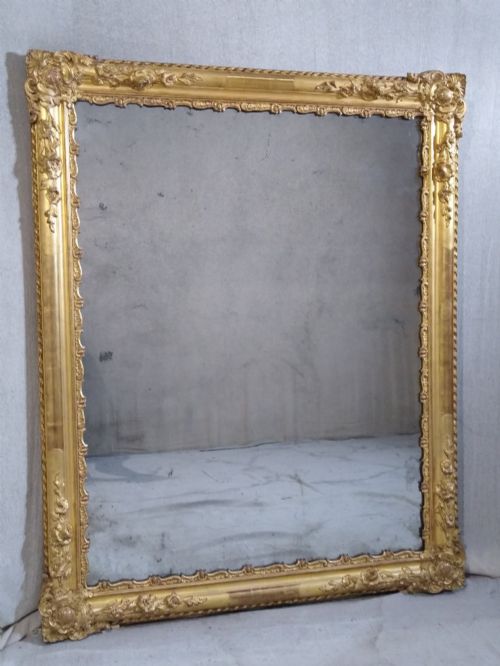
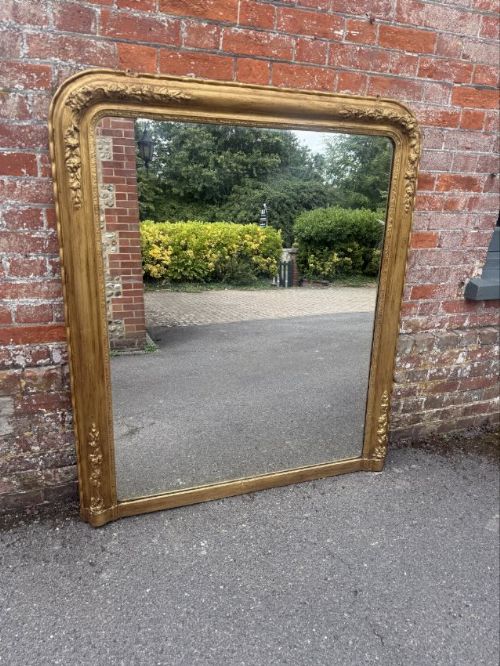
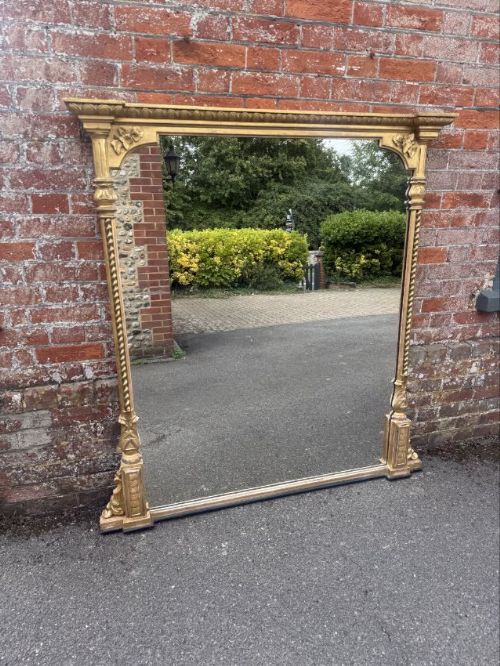
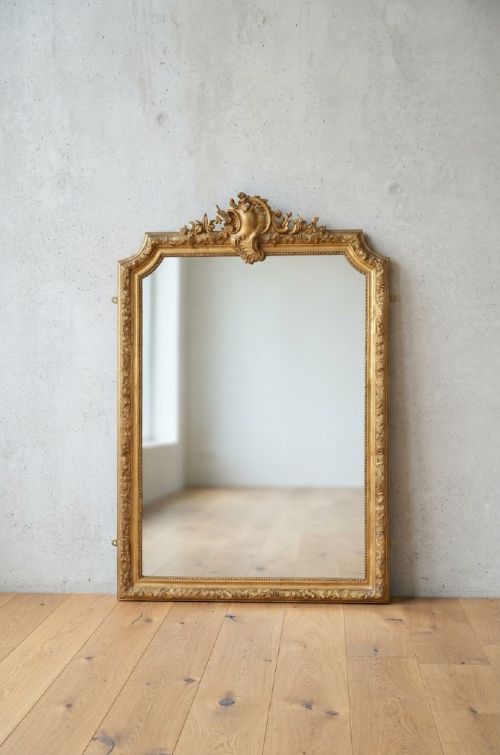
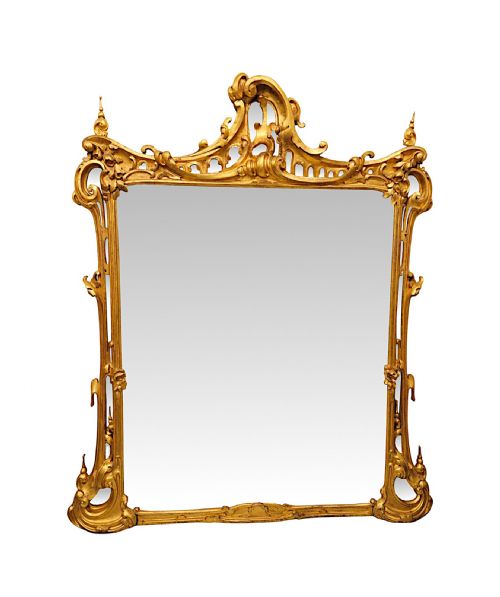
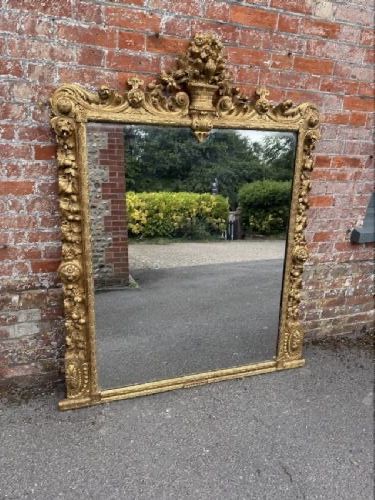
A carved giltwood fireplace mirror is typically encountered on this page as a large overmantel mirror designed to sit directly above a mantelpiece. These pieces span the 19th century, Victorian era, Regency period, and early 20th century, adopting forms such as arched tops, triple plates, and rectangular frames.
The majority of items originate from English and French workshops, incorporating styles ranging from Rococo Revival and Chinese Chippendale to Louis Revival and Florentine. They function primarily as expansive wall mirrors that reflect light and expand the visual proportions of interior spaces.
How They Were Made
Craftsmen shaped frames from wood and gesso, applying composition ornamentation to build intricate relief details such as rope twists, cartouches, and floral motifs. Artisans then laid gold leaf or applied gilding over the prepared surfaces to achieve a luminous finish.
Mirror plates were set into the carved wooden structures, occasionally featuring bevelled edges or surviving with original foxed glass that records the passage of time.
Listings span the 19th century, Victorian era, and Regency period, showcasing wood, gesso, and gold leaf materials.
What Varies in Quality
Quality rests in the crispness of the hand-carved wood and gesso relief work, where deeply undercut foliage and sharp moulding distinguish superior examples from simpler moulded pieces. The depth of the gilding and the preservation of original surfaces also set finer statement pieces apart.
Structural integrity of the heavy wooden frames and the clarity or character of the mirror glass contribute significantly to the overall distinction of each piece.
The Carved Giltwood Fireplace Mirror Glossary
- Giltwood
- Wood coated with gold leaf or a gold-coloured metallic application. This finish provides the characteristic metallic sheen seen on period frames.
- Gesso
- A plaster-like mixture applied to wood frames to create a smooth base for carving or moulding details. It allows for intricate relief ornamentation before gilding.
- Overmantel mirror
- A large mirror specifically proportioned to hang above a fireplace mantel. These pieces often feature horizontal emphasis to match the width of the hearth below.
- Composition
- A moulded mixture of whiting, resin, glue, and oil pressed into decorative shapes. It was widely used in the 19th century to produce ornate frame details quickly.
- Foxed glass
- Mirror glass displaying dark spots or patches resulting from the degradation of the silver backing over decades. Collectors value this patination for its authentic antique appearance.
Carved Giltwood Fireplace Mirror: Frequently Asked Questions
How do I hang a heavy overmantel mirror safely?
These substantial frames require secure fixing directly into wall studs or masonry using heavy-duty brackets suited to the weight of wood and glass. Professional installation ensures the mirror is adequately supported above the fireplace.
Positioning the piece at the correct height ensures it reflects the room properly while maintaining a balanced visual relationship with the mantelpiece below.
What styles are common in 19th-century mirrors?
Nineteenth-century pieces frequently display Rococo Revival curves, Chinese Chippendale fretwork, or formal Regency and Victorian architectural lines. French influence also appears through ornate chateau and Louis Revival designs.
These varied stylistic revivals reflect the eclectic decorative tastes of the Victorian period and earlier Regency eras.
Can these mirrors be placed on the floor instead?
Many large overmantel mirrors are proportioned well for leaning against a wall rather than hanging. This placement creates a relaxed interior atmosphere while still offering generous reflection.
Ensuring the base rests securely on a stable surface prevents movement when the mirror is positioned without wall fixings.
How should I clean a giltwood frame?
Dusting gently with a soft, dry brush prevents accumulation without disturbing fragile gold leaf or composition details. Moisture and commercial cleaning agents should be avoided entirely to protect the historic surface.
Preserving the original gilt finish maintains the visual integrity and character of the antique piece.