
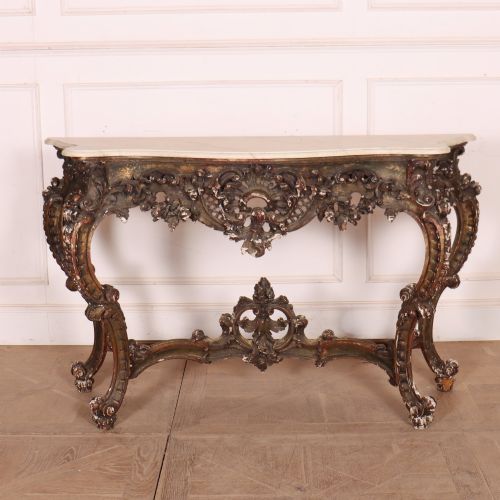
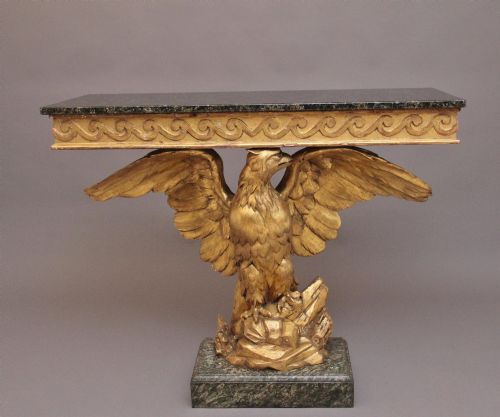
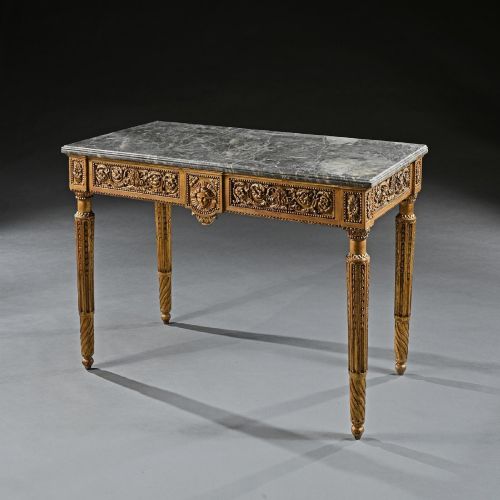
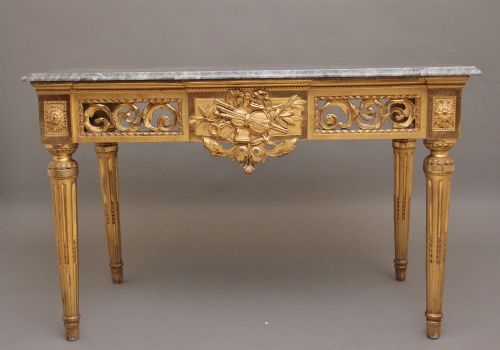
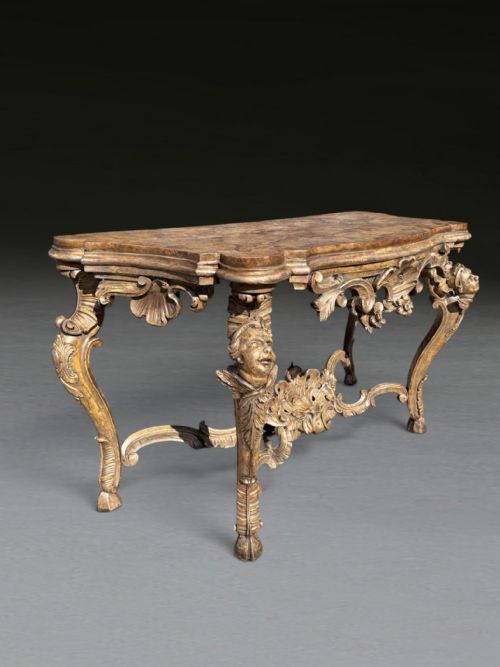
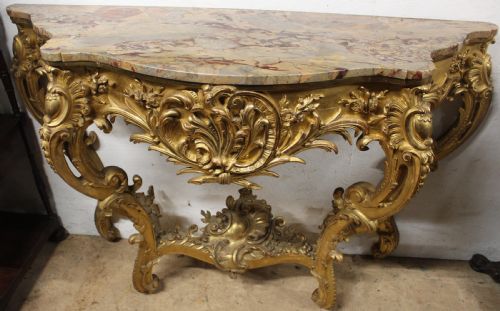
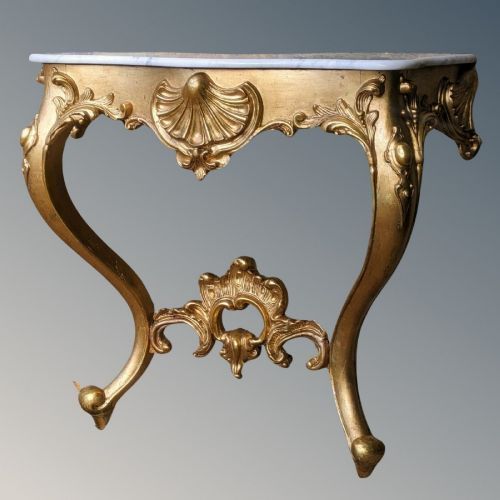
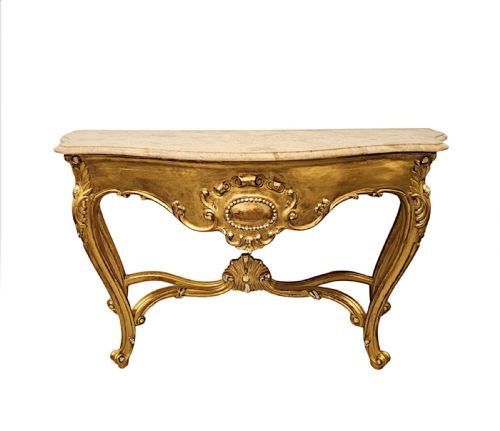
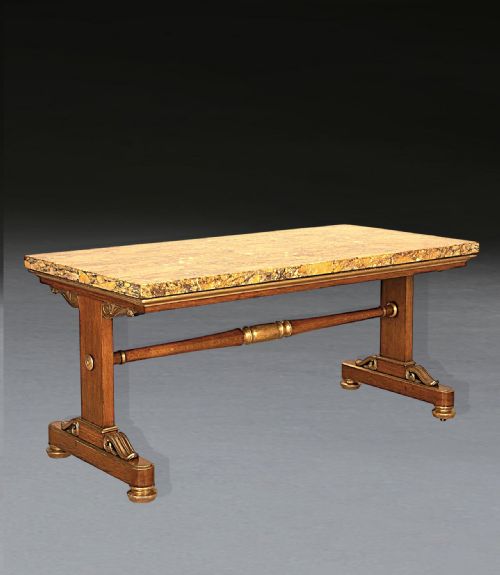


Carved Giltwood Entry Table
A carved giltwood entry table brings heavy 18th or 19th-century French and Italian grandeur straight into a hallway, pairing carved gilt surfaces with cool marble tops.
Carved Giltwood Entry Table
A carved giltwood entry table represents grand decorative furniture designed primarily for hallways, saloons, and drawing rooms. The selection here spans console tables, centre tables, and combined console table and mirror sets.
Most examples you will encounter date from the 18th and 19th centuries, originating mainly from French and Italian workshops. Styles range from French Rococo and Louis XVI to Italian Baroque and Neoclassical designs.
These forms frequently combine heavy wooden or gesso frames with inset marble tops, sometimes featuring painted wood finishes alongside traditional gilding.
How they were made
Carved wooden structures form the foundation, shaped from timber and layered with gesso before the application of gold leaf or paint. Artisans carved intricate details by hand, creating scrolling foliage, figural heads, and architectural motifs.
Heavy marble slabs, including Siena varieties, rest upon the wooden bases to serve as durable and decorative table tops. Glass is also integrated when tables are paired with matching wall mirrors.
The listings feature pieces spanning the 18th and 19th centuries, alongside early 20th-century revivals in French and Italian styles.
What varies in quality
Depth and crispness of the hand-carving separate ordinary production from superior examples, particularly in figural elements like putti, rams, and maidens. The finesse of the original gesso and gold leaf application dictates how well the surface catches the light.
The choice and thickness of the marble top significantly influence the overall substance of the piece, alongside the architectural integrity of the underlying wooden frame.
The Carved Giltwood Entry Table Glossary
- Giltwood
- Wood covered with a thin layer of gold leaf or gold paint. This technique gives the carved surface a bright, metallic sheen.
- Console table
- A table fixed against a wall, often supported by ornamental brackets or console legs. They were traditionally designed for entryways and reception rooms.
- Gesso
- A plaster mixture applied to wood surfaces as a base for painting or gilding. It creates a smooth ground for detailed carving work.
- Sienna marble
- A distinctive yellow-brown ornamental marble quarried in Italy. It is frequently found on the tops of fine period console tables.
Carved Giltwood Entry Table: Frequently Asked Questions
Where do I put a console table?
These tables fit naturally against a hallway wall or beneath a large mirror to anchor an entrance space.
Because they are narrow, they occupy minimal floor space while providing a surface for display.
How do I spot an 18th-century table?
Look for hand-carved wooden frames showing the soft patination of age beneath the gold leaf and gesso.
Construction methods and regional carving styles from France and Italy help distinguish the earlier periods from later revivals.
Are marble tops original?
Period console tables typically feature heavy fitted marble slabs, such as Siena or white variants, resting directly on the frame.
Matching the weight and edge profile of the marble to the era of the base confirms its authenticity.
What is the difference between console and centre tables?
Console tables sit flat against a wall and often require support from the vertical structure behind them. Centre tables stand independently in the middle of a room with finished detail on all sides.