





Carved Giltwood Bracket Mirrors
These carved giltwood bracket mirrors combine reflective glass with integral shelves and brackets, offering both decorative presence and practical display space for interiors.
Carved Giltwood Bracket Mirrors
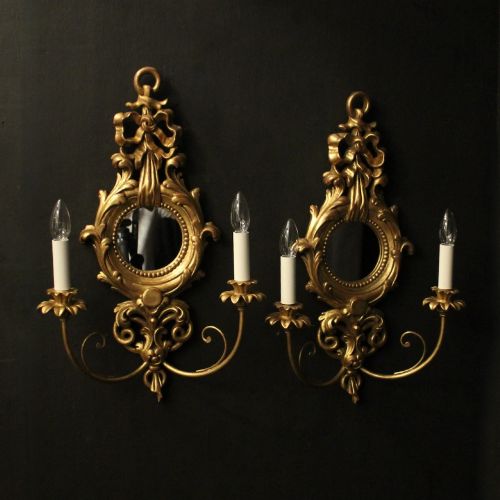
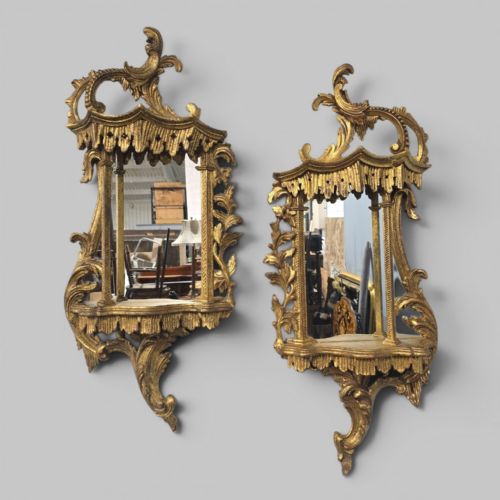
When you search for carved giltwood bracket mirrors, you encounter reflective wall pieces that incorporate shelves, consoles, or mounting arms designed to hold small objects. The pieces appearing here span the nineteenth century, the Victorian era, and the early twentieth century, taking forms such as pier glasses, wall étagères, girandoles, and overmantel mirrors. You find items featuring French Rococo revival, Chinese Chippendale, and Neoclassical styles alongside Irish nineteenth-century examples.
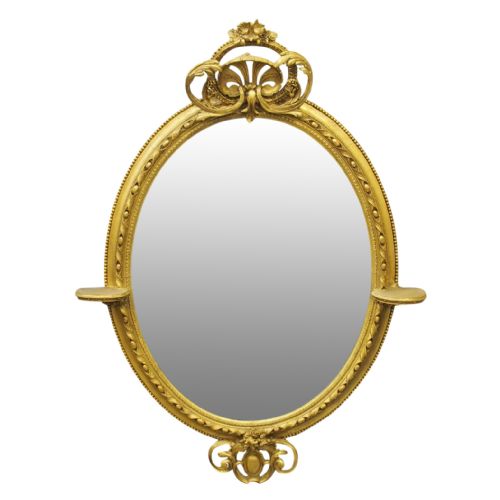
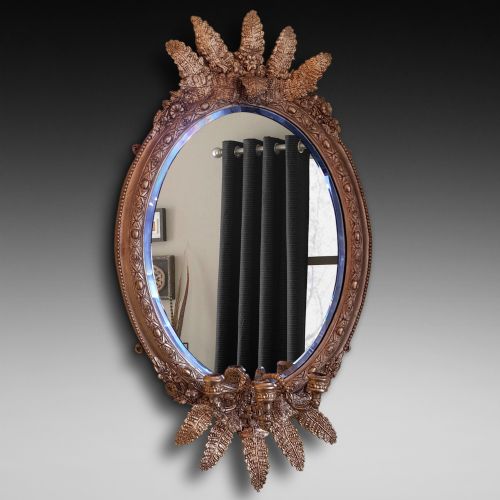
The version you are most likely to meet on this page is a Victorian wall mirror constructed with giltwood and gesso, often displaying carved detail or oval formats. Pair configurations appear alongside single wall items, bringing symmetry to a room through matching twin arm girandoles or paired wall mirrors. These items function simultaneously as light-reflecting glass surfaces and miniature display shelves for decorative objects.
How they were made
Maker construction relies on timber frames shaped and carved to form the structure of the mirror and its bracket or shelf component. Artisans apply gesso over the wood substrate to build up crisp relief detail before applying the gold leaf finish that defines giltwood. Painted wood elements also appear on select French revival pieces, complementing the gilded surfaces.
Reflective surfaces utilise mirror glass fitted securely within the carved frames. Metal components support structural elements such as twin arms on girandoles or shelf attachments beneath console mirrors. The combination of carved wood, applied gesso, and glass creates the traditional weight and appearance of these wall furnishings.
Carved Giltwood Bracket Mirrors Retail Price Guide 2026
Typical asking prices for carved giltwood bracket mirrors among the pieces listed under this phrase on Sellingantiques today, from the lower quarter to the upper quarter. They describe what is for sale here now, not the wider market.
What varies in quality
Quality in these objects lies in the depth and precision of the carved detail upon the giltwood and gesso frames. Finer examples display sharp definition in motifs ranging from Rococo scrollwork to Chinese Chippendale ornamentation, whereas lesser pieces show softer, shallower moulding. The integrity of the original gilding and the quality of the underlying gesso build-up determine the visual richness of the surface.
The integration of the bracket or shelf structure relative to the mirror frame dictates the structural success of the piece. Superior items maintain harmonious proportions between the reflective glass and the functional shelf or twin arms, using robust timber framing and quality mirror glass that ages evenly.
Strahan of Dublin
The Carved Giltwood Bracket Mirrors Glossary
- Giltwood
- Timber carved and surfaced with gold leaf. This material provides the characteristic brilliant finish seen across traditional decorative frames.
- Gesso
- A plaster-like mixture applied to wood frames to create a smooth base for carving and gilding. It allows artisans to model intricate relief ornamentation.
- Girandole
- A branched wall sconce or mirror fitted with candle arms. These fixtures reflect candlelight across interiors while providing illumination.
- Pier glass
- A tall mirror designed to hang on the wall space between windows. They frequently incorporate console tables or brackets beneath.
- Overmantel mirror
- A wide mirror intended for placement above a fireplace mantel. These pieces anchor room layouts by reflecting light across the main living space.
Carved Giltwood Bracket Mirrors: Frequently Asked Questions
What is a bracket mirror?
A bracket mirror combines a reflective glass surface with an attached shelf or console projection beneath. This design allows the piece to serve both as a wall mirror and as a display ledge for small decorative objects.
Such items function effectively in hallways, living rooms, and bedrooms where surface space is limited. The integrated shelf offers a practical spot for small items while the mirror enhances room light.
What distinguishes Victorian giltwood mirrors?
Victorian giltwood mirrors utilise carved wooden frames finished with gold leaf, often incorporating gesso mouldings to achieve ornate relief detail. These pieces frequently adopt revival styles such as Neoclassical or Rococo forms.
Oval and rectangular formats appear across this period, sometimes including integrated shelves or overmantel proportions. The combination of timber, gesso, and glass creates a substantial decorative object.
How do you style a wall étagère?
A wall étagère combines mirror glass with multiple tiers or shelves for display. You mount the piece securely to a wall to support the weight of the frame and displayed items.
Use the shelves to hold small collectibles or ornaments while letting the mirror surface reflect surrounding room elements. Pair configurations work well balanced on either side of a focal point.