

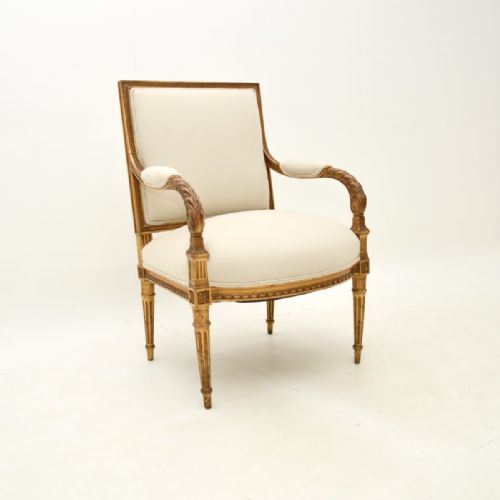
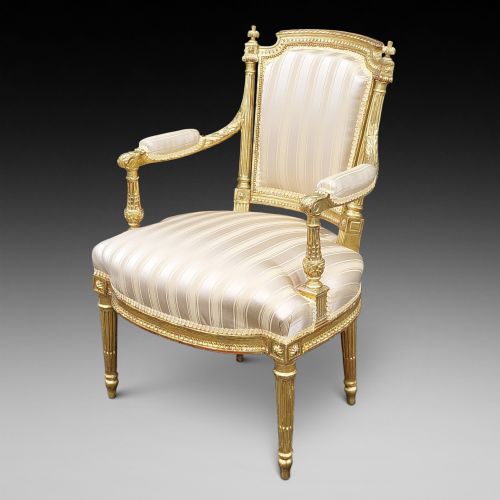
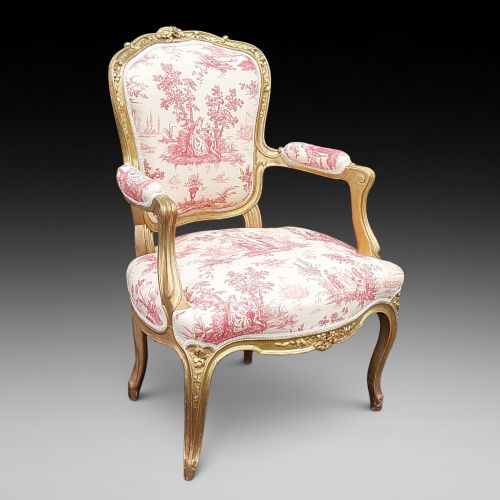
Carved Gilt Salon Chair
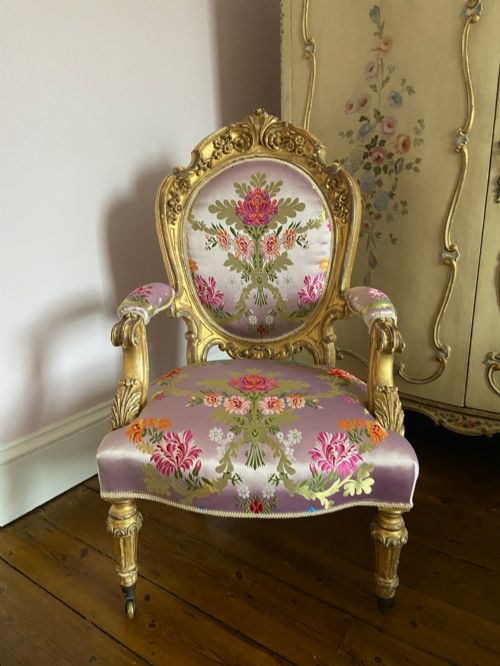
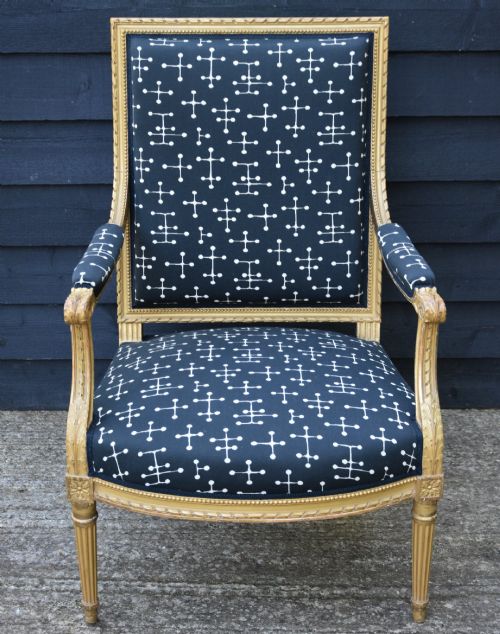
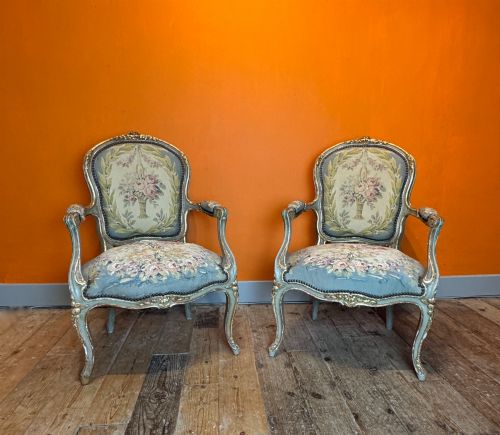
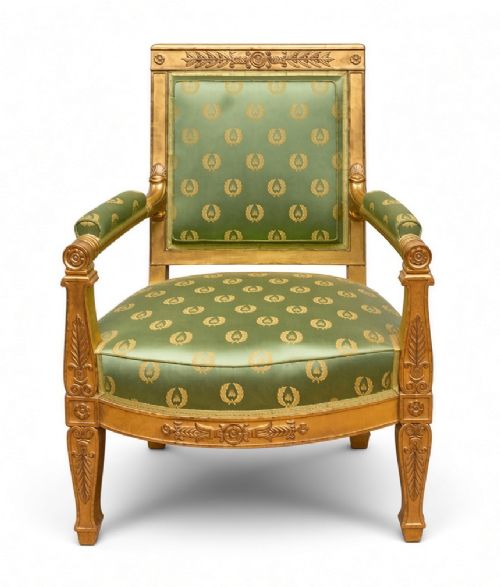
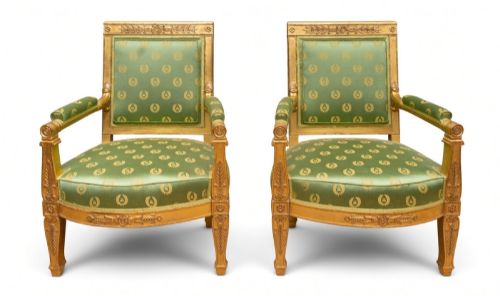
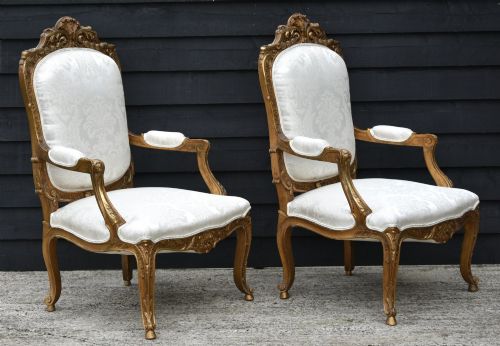
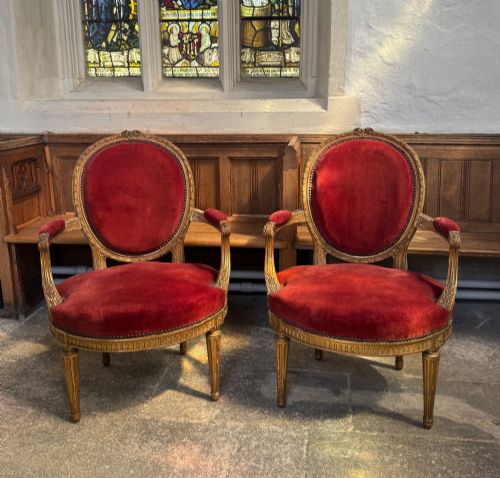
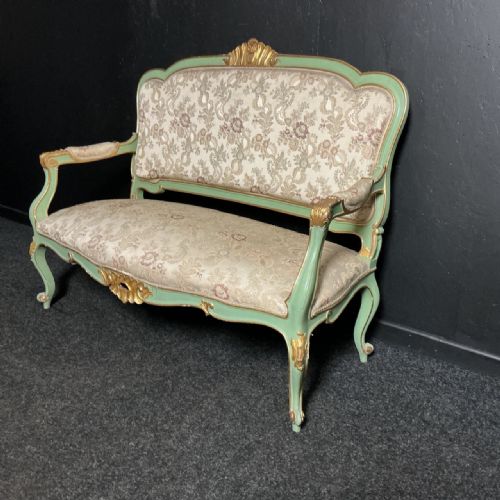
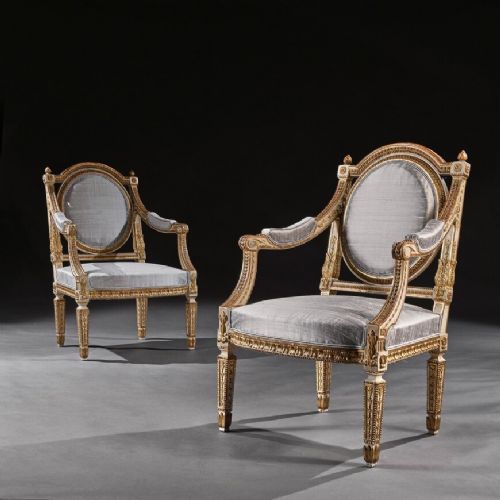
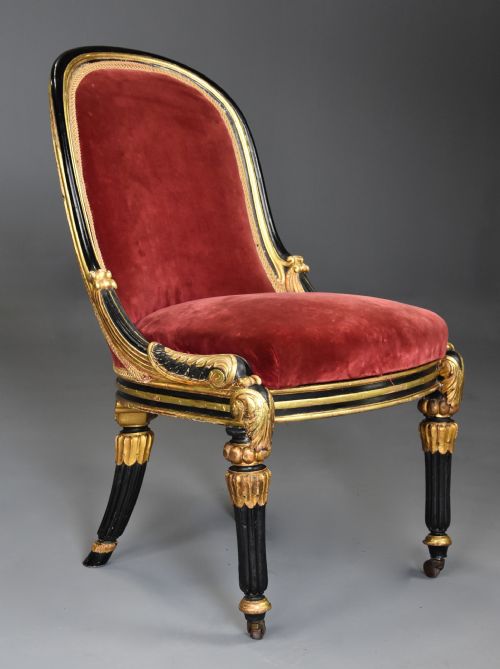
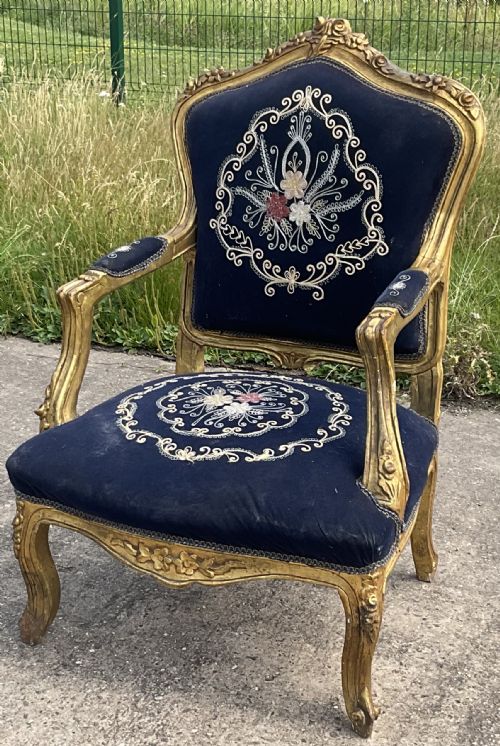
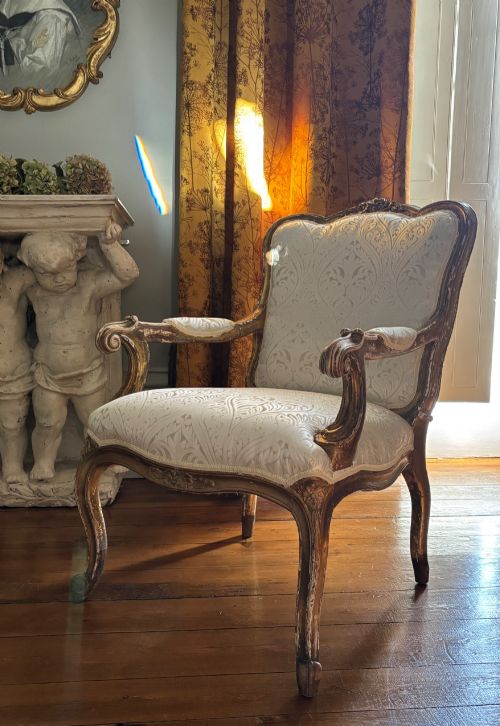
A carved gilt salon chair brings French rococo and classical revival elegance into a room with its gleaming timber frame and upholstered seat.
Carved Gilt Salon Chair
A carved gilt salon chair is a decorative seating form designed for formal reception rooms, drawing upon historical French design idioms. When searching for a carved gilt salon chair, buyers encounter pieces primarily from the nineteenth century alongside eighteenth-century models and twentieth-century revivals.
The selection ranges from open armchairs and fauteuils to side chairs and bergères, often appearing in pairs or larger matching sets. Most examples originate from French workshops following Louis XVI, Louis XV, or Régence styles, though English Regency and Italian interpretations also surface.
These seating forms function as both practical furniture and decorative statements, frequently upholstered in silk, velvet, tapestry, or modern fabric. The form prioritises ornate carved wooden frames covered in gold leaf or paint over utilitarian comfort.
Materials and construction
The underlying frames of these chairs rely on hardwoods such as beech, walnut, and general timber, which provide the structural stability necessary for intricate hand-carving. Craftsmen shaped these woods into fluted legs, curved cabriole supports, and elaborate floral or scroll motifs along the crest rails.
Once carved, the timber received a preparation of gesso before the application of gold leaf or parcel gilt highlights, creating the signature metallic brilliance. Upholstery techniques varied from traditional webbing and stuffing to modern textile replacements finished with decorative gimp braid.
Listings feature beech, walnut, and timber frames finished in gold leaf, silver gilt, and paint.
Markers of distinction
The depth and crispness of the hand-carved wood ornamentation dictate the primary tier of craftsmanship in these chairs. Superior examples display sharp, undercut botanical and scroll details executed directly in the solid timber rather than relying on heavy plaster composition moulds.
The application of the gold leaf itself reveals much about the origin and grade of the piece, with genuine leaf showing subtle warmth and ageing compared to flat modern metallic paints. Furthermore, the integrity of the joinery and the retention of original structural pegs separate workshop masterworks from later decorative copies.
Jacob Desmalter·Blaise Maucuy·Holland and Sons
The Carved Gilt Salon Chair Glossary
- Giltwood
- Timber that has been coated with thin sheets of gold leaf over a prepared gesso ground. This finish provides the characteristic metallic sheen seen on classical European seating.
- Fauteuil
- An open-framed armchair with upholstered back and seat, featuring exposed wooden arms. This French seating form typically includes padded armrests known as manchettes.
- Bergère
- An enclosed upholstered armchair with solid padded sides integrated into the backrest. These chairs frequently feature loose squab cushions filled with down or traditional stuffing.
- Parcel Gilt
- A decorative treatment where only specific carved elements or raised details are gilded, leaving the underlying painted or stained wood exposed. This technique contrasts metallic brilliance with muted base tones.
- Louis XVI Style
- A neoclassical design aesthetic characterised by straight tapered legs, geometric symmetry, and classical motifs such as acanthus leaves and ribbons. It emerged during the late eighteenth century and saw major revivals throughout the nineteenth century.
Carved Gilt Salon Chair: Frequently Asked Questions
How do I identify a true nineteenth-century gilt chair?
Examine the construction joints, the wear patterns on the gold leaf, and the preparation layers beneath the surface. Older pieces often show hand-cut joinery and subtle craquelure in the gesso.
Look closely at the wood type beneath any chips in the gilding, as beech and walnut indicate traditional European workshop practices rather than modern manufactured timber.
Can I use these antique chairs for everyday seating?
These chairs were built for formal entertaining in reception rooms rather than heavy daily lounging. Their delicate carved frames and antique joinery require considerate use.
Positioning them as accent seating or occasional chairs preserves their structural integrity while allowing them to function within a modern interior scheme.
How should I care for antique giltwood surfaces?
Dust the carved wooden frames gently with a dry, soft microfibre cloth to prevent the accumulation of grit. Avoid using liquid polishes, chemical sprays, or abrasive cleaners, which can strip or dissolve historical gold leaf.
Keep the chairs away from direct sunlight and fluctuating radiator heat to prevent the underlying gesso and wood from drying out and cracking.