
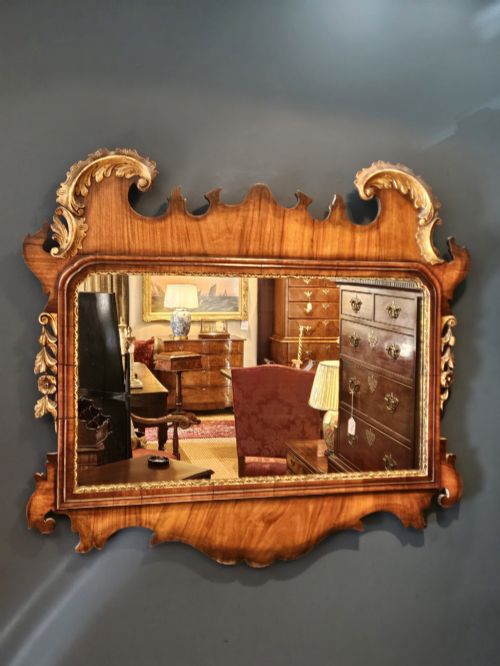


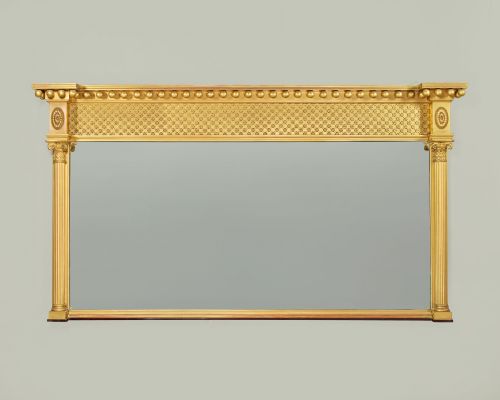


Carved Gilt Landscape Mirror
A carved gilt landscape mirror brings breadth and reflected light into a room, spanning periods from George III to Art Deco.
Carved Gilt Landscape Mirror
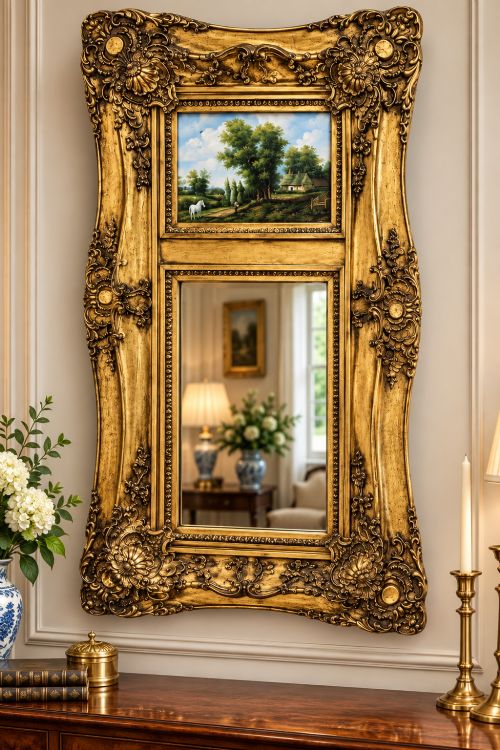
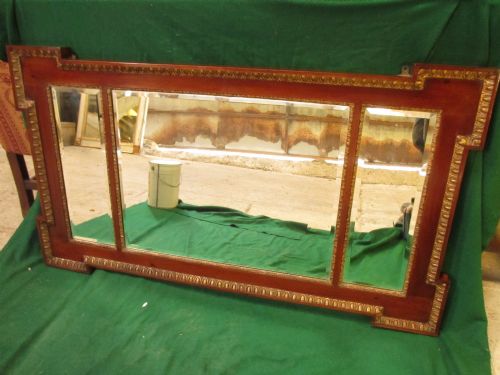
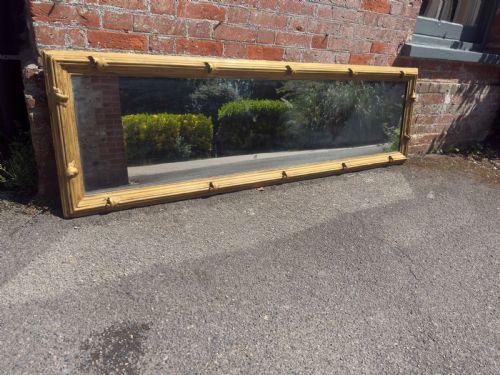
A carved gilt landscape mirror typically spans a horizontal format, designed to hang above a mantelpiece or anchor a principal wall. The examples on this page range from compact Georgian pier glasses and Regency overmantels to grand Victorian triple-plate specimens.
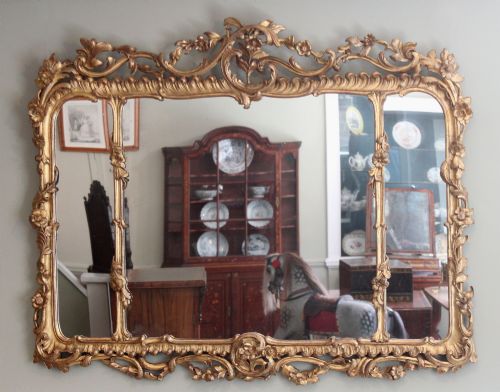
Makers and craftsmen employed styles including Chippendale, Neoclassical, and French Chateau, alongside later Edwardian and Art Deco interpretations. Buyers encounter forms described variously as overmantels, trumeau mirrors, and wall-hanging landscape glasses.
Materials and construction
Carved frames rely fundamentally on timber carcasses, predominantly mahogany, walnut, or softwoods, which receive layers of gesso to build up intricate relief ornament. Craftsmen then applied gold leaf or surface gilding over the prepared ground.
Secondary materials such as composition material appear in moulded details, while original glass plates display the bevels and silvering traits characteristic of eighteenth, nineteenth, and early twentieth century manufacture.
Judging quality and execution
Quality rests upon the crispness of the hand-carved wooden ornament and the depth of the gesso detailing before gilding. Superior examples retain their original gold leaf surfaces and primary mirror plates rather than later replacements.
Proportion and structural integrity distinguish finer pieces, particularly in larger multi-plate overmantels and trumeau formats where frame alignment dictates visual balance.
Ciceri and Co
The Carved Gilt Landscape Mirror Glossary
- Gesso
- A plaster-like mixture applied to wooden frame foundations to receive fine carving and surface gilding. It provides a smooth base for intricate relief work.
- Giltwood
- Timber frames covered in thin sheets of gold leaf or metal leaf. This finish defines the reflective warmth characteristic of antique mirrors.
- Overmantel
- A large horizontal mirror specifically scaled to hang above a fireplace mantelpiece. These pieces often feature multi-plate configurations.
- Trumeau
- A decorative wall mirror incorporating a painted panel or carved artwork within the upper section of the frame. They reflect French influence in interior design.
- Pier glass
- A tall, narrow mirror designed to hang on the wall space between windows. They frequently match smaller console tables below them.
Carved Gilt Landscape Mirror: Frequently Asked Questions
Are triple plate mirrors original?
Many nineteenth-century overmantel mirrors utilise three adjacent glass plates to span a wide landscape format. Close inspection of the silvering and edge bevels helps determine if the plates share the same period.
Minor variations in oxidation across the glass often confirm age and originality. Replacement plates typically show brighter, cleaner silvering without historical foxing.
How should I clean a giltwood frame?
Gilt surfaces require very gentle dusting with a soft, dry brush to remove surface particles. Moisture and modern chemical cleaners will strip the delicate gold leaf or damage the underlying gesso.
Avoid touching the gilded areas with bare hands, as natural oils can tarnish antique metal leaf over time. Professional conservation is recommended for deep cleaning.
What is the difference between Regency and Victorian mirrors?
Regency mirrors frequently lean towards Neoclassical restraint, featuring clean architectural lines, ball-stud mouldings, and classical motifs. Victorian examples tend towards heavier proportions and elaborate floral or avian carvings.
Comparing the framing depth and decorative density clarifies the stylistic shift. Victorian pieces often embrace grand scale and multi-plate constructions.