
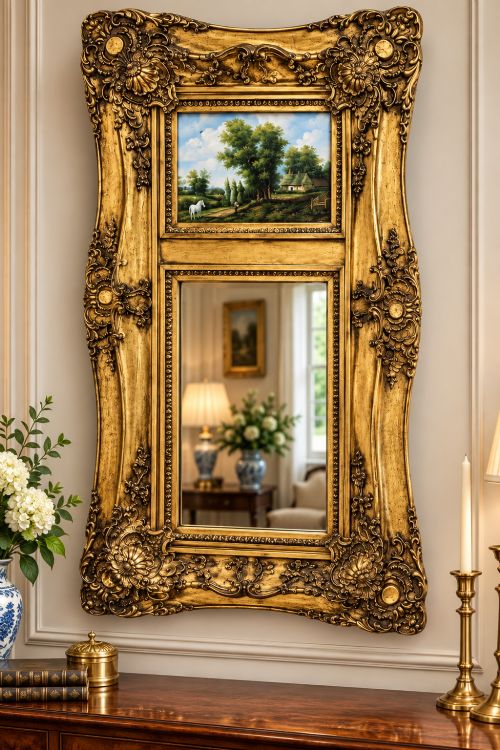
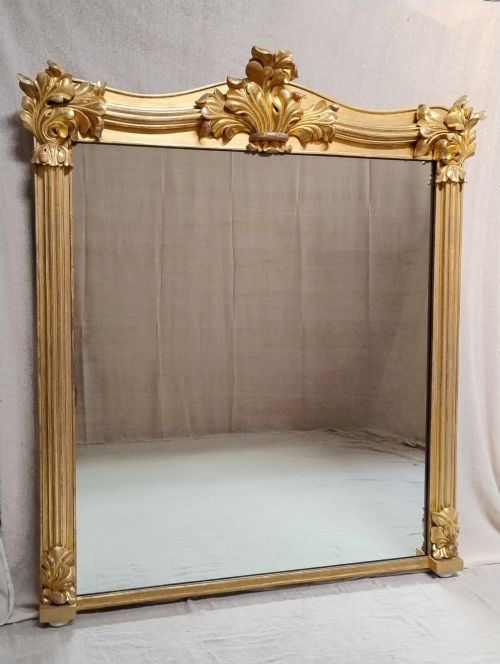
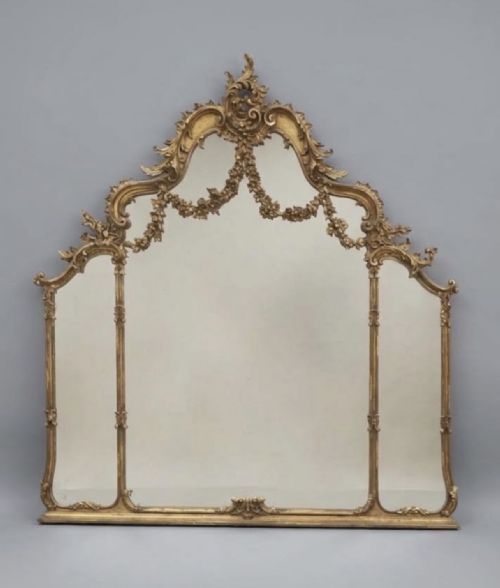
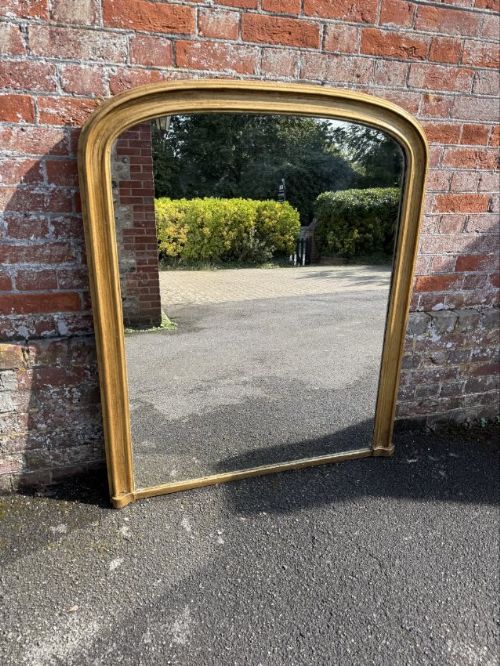
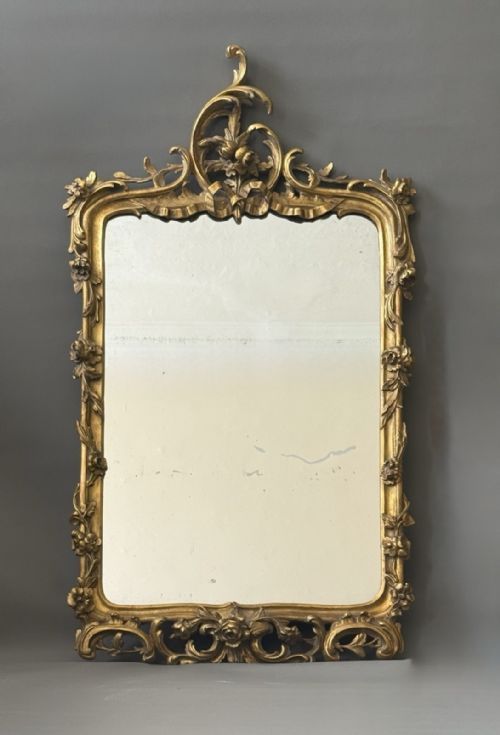
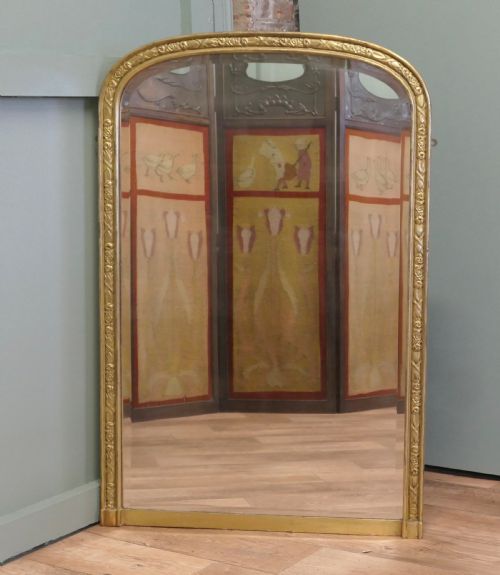
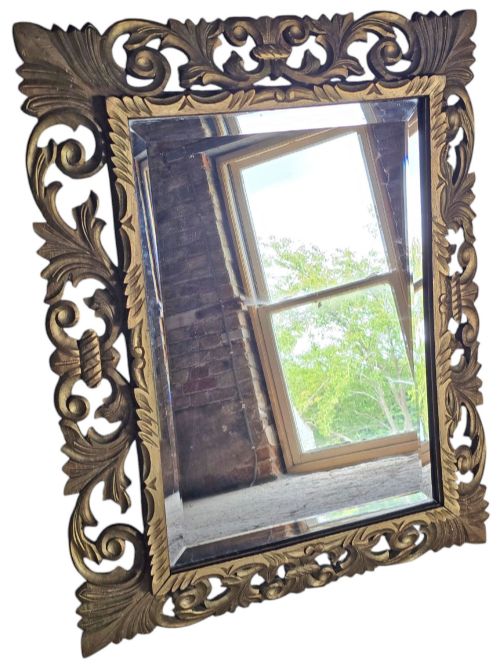
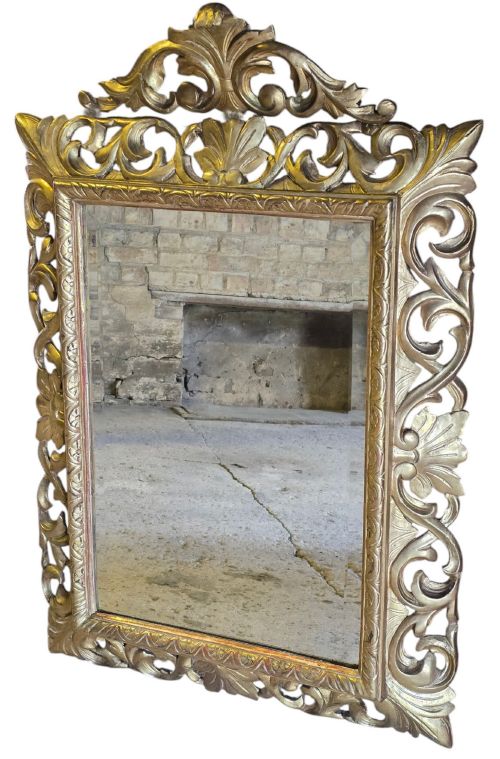
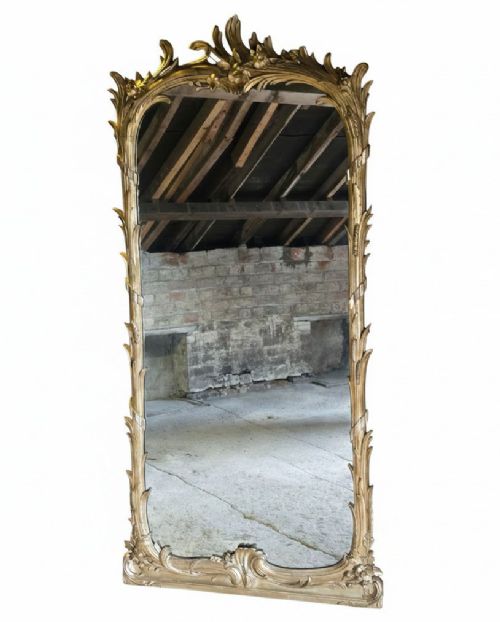
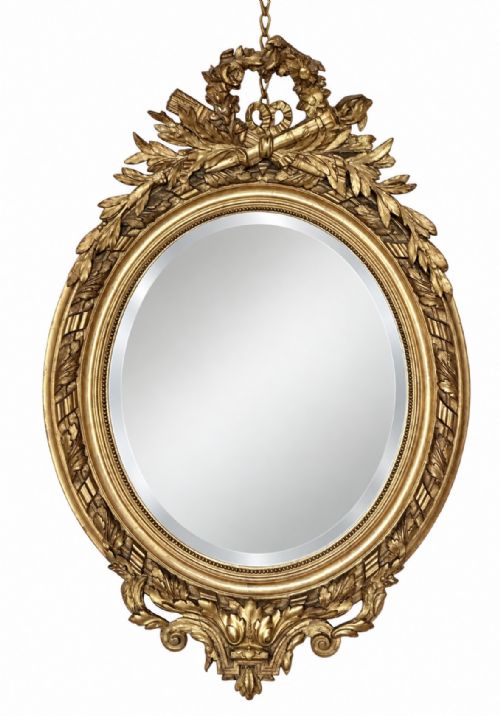
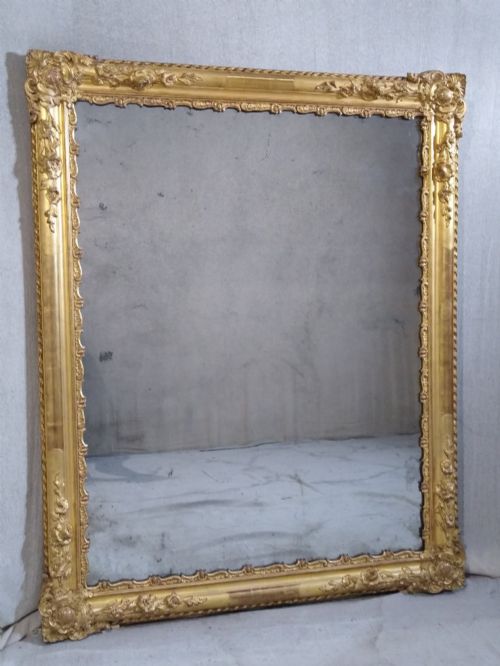
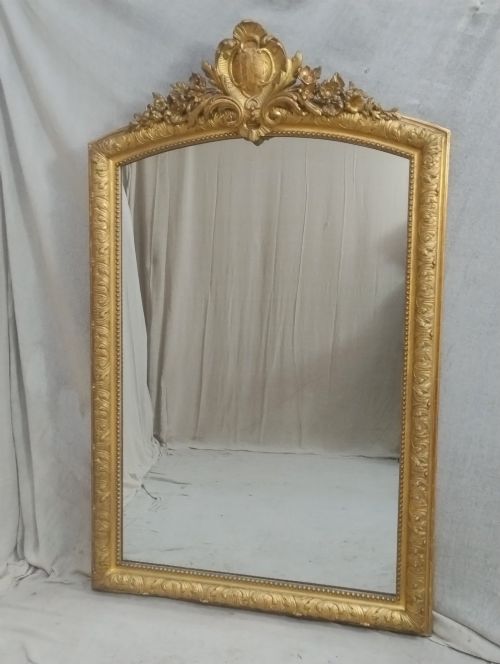
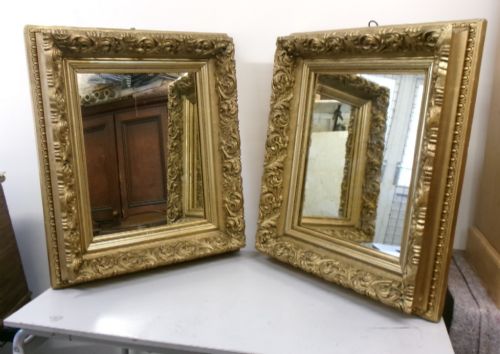


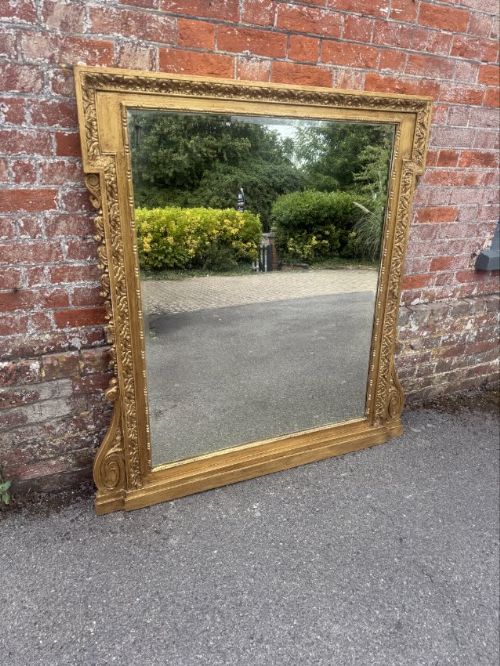
Carved Gilded Overmantel Mirror
A carved gilded overmantel mirror brings commanding scale and luminous reflection to a principal room, anchoring a chimney breast with period presence.
Carved Gilded Overmantel Mirror
When you search for a carved gilded overmantel mirror, you encounter large horizontal or tall arched wall looking-glasses designed specifically to sit above a fireplace mantelpiece. The pieces gathered here span from the eighteenth century through the Victorian era and into the early twentieth century, reflecting varied continental and English tastes.
The most frequent examples you meet on this page date from the nineteenth century, adopting styles such as French Rococo Revival, Louis Philippe, and English Victorian. These items serve both as functional household objects and as decorative focal points created to amplify natural light within formal reception rooms.
Materials and Construction
Carved wooden foundations of pine or hardwood form the core structural framework of these pieces, often enriched with applied layers of gesso to build up intricate relief decoration. Artisans then meticulously applied gold leaf or composition mouldings to create the luminous gilded surface.
Mirrored glass plates complete the construction, historically utilising antique mercury plate or standard mirror glass set securely within the heavy rebated frame. Joinery techniques employed robust corner bracing and sturdy backing boards to support the immense weight of the timber and glass assembly.
Listings span multiple stylistic revivals including French Rococo, Louis Philippe, and English Victorian periods executed in gilded wood and gesso.
Evaluating Quality and Execution
The refinement of the hand-carved ornamentation separates superior examples from routine production, distinguishing crisp acanthus leaves and fluid scrolls from softer, mass-produced composition castings. Depth and precision in the wood and gesso work indicate the hand of a skilled artisan rather than standard workshop output.
The integrity of the original gilding and the character of the glass plate heavily influence the standing of any piece. Retaining genuine gold leaf alongside period mirror plates with natural foxing preserves the authentic historical depth demanded by serious collectors.
The Carved Gilded Overmantel Mirror Glossary
- Gesso
- A plaster-like mixture applied to wooden frame foundations to create a smooth surface for subsequent gilding and deep relief carving. It allows intricate floral and scroll motifs to be modelled directly onto the timber base.
- Giltwood
- Timber frames coated in gold leaf or gold paint to provide a rich, reflective metallic finish. This material defines the luxurious aesthetic of nineteenth-century formal interior decoration.
- Overmantel
- A large mirror or painting specifically proportioned to hang on the wall directly above a fireplace mantel. Its horizontal or tall arched format mirrors the hearth below to balance the architectural elevation.
- Mercury Glass
- An antique style of mirror plate created by applying a mercury and tin amalgam behind the glass prior to the mid-nineteenth century. It produces a distinctive mottled, dark reflection known as foxing.
- Composition
- A moulded paste of whiting, resin, linseed oil and glue pressed into shape and applied to wooden frames for ornamentation. It offered a cost-effective alternative to deep hand-carving during the Victorian period.
Carved Gilded Overmantel Mirror: Frequently Asked Questions
What is an overmantel mirror?
An overmantel mirror is a large wall-hanging looking-glass traditionally scaled to sit horizontally or in an arched format directly above a fireplace mantelpiece. These substantial pieces were designed to reflect candlelight and natural daylight while anchoring the architectural focus of a formal room.
Over the centuries, cabinetmakers and gilders produced them in diverse regional styles ranging from restrained Regency designs to exuberant French Rococo and Victorian interpretations. Their generous proportions distinguish them from standard wall mirrors found in hallways or dressing rooms.
How do I hang a heavy mirror safely?
Hanging a heavy nineteenth-century mirror requires locating solid masonry or securing substantial timber wall studs behind the plaster to bear the considerable combined weight of the wood, gesso, and glass. Professional mirror plates and heavy-duty steel brackets screwed firmly into the frame back provide the necessary physical support.
Given the monumental scale often encountered in these pieces, professional installation by a specialist art handler is strongly recommended to protect both the historic frame and your wall structure. Ensuring the weight rests evenly prevents warping of the timber framework over time.
How do I date a gilded mirror?
Dating a gilded mirror involves examining the construction methods of the wooden framework, the composition of the gesso layers, and the characteristics of the mirror plate itself. Eighteenth-century examples often display hand-carved pine with distinct joinery and early mercury glass, while Victorian pieces frequently utilise moulded composition ornament over machine-sawn timber.
Stylistic cues such as the presence of Rococo Revival scrolls, Napoleon III motifs, or Edwardian bevelled edges further narrow the chronological window. Comparing the backboards, fixings, and wear patterns against known period examples provides additional confirmation of age.
Can these mirrors be used in modern rooms?
These mirrors integrate remarkably well into contemporary interiors by introducing historic texture, warmth, and a strong sense of vertical or horizontal scale. Placing one above a modern fireplace or leaning it against a plain wall creates an effective juxtaposition between old-world craftsmanship and minimalist decor.
The luminous quality of the gilded surface and the reflective depth of the antique glass help to bounce light around smaller spaces, making rooms feel larger and brighter regardless of interior style.