

Carved Gemstone Jewellery
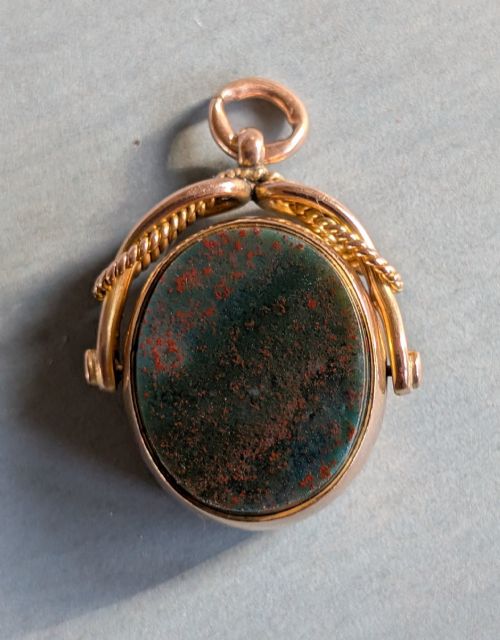
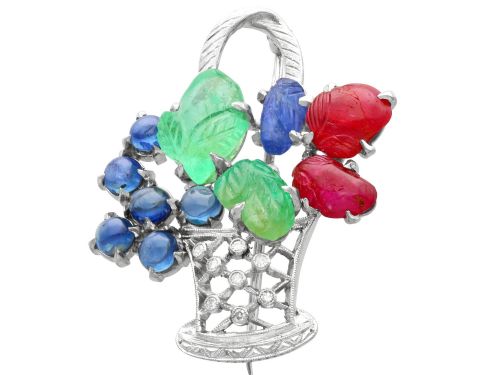
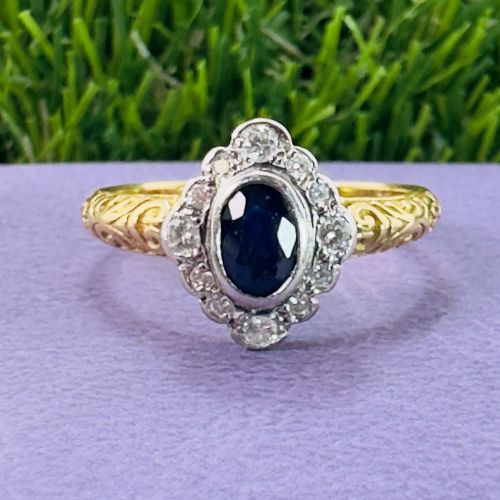
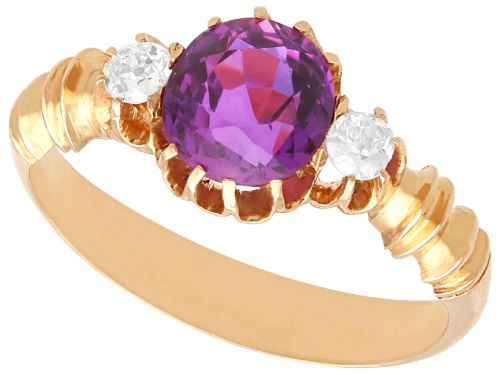
Carved gemstone jewellery brings together tactile sculpted minerals and precious metals, taking the form of rings, pendants and brooches spanning the Victorian era to the mid-century.
Carved Gemstone Jewellery
Carved gemstone jewellery spans several distinct eras, appearing in nineteenth-century intaglios and twentieth-century jade carvings. The selection on this page relies heavily on Victorian, Edwardian, and Art Deco designs, drawing on a palette of natural minerals set into gold, platinum, or silver.
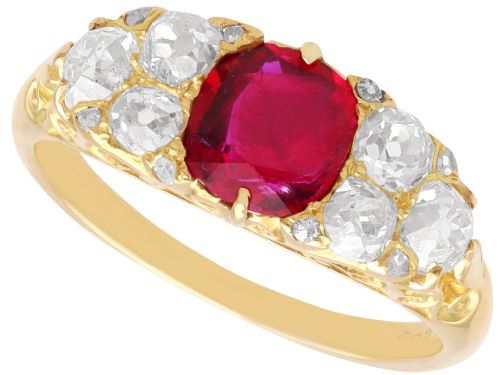
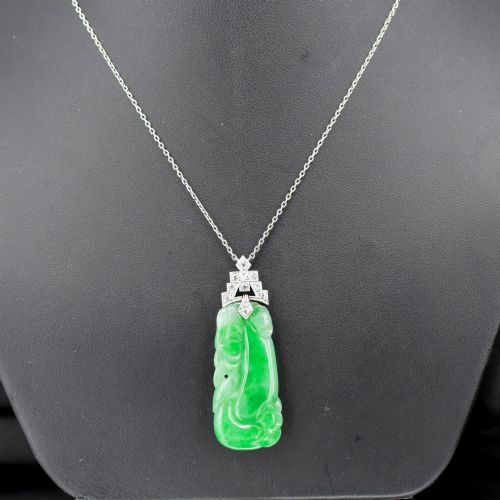
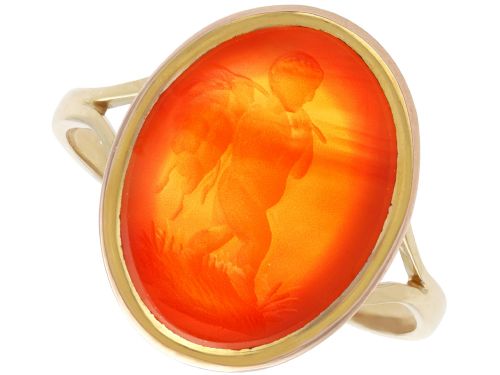
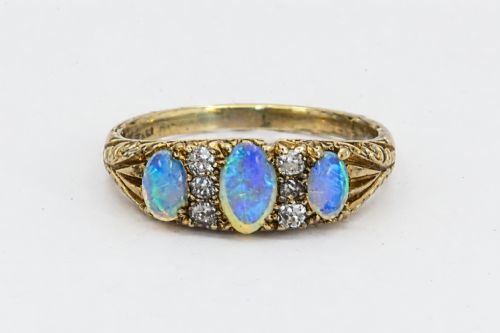
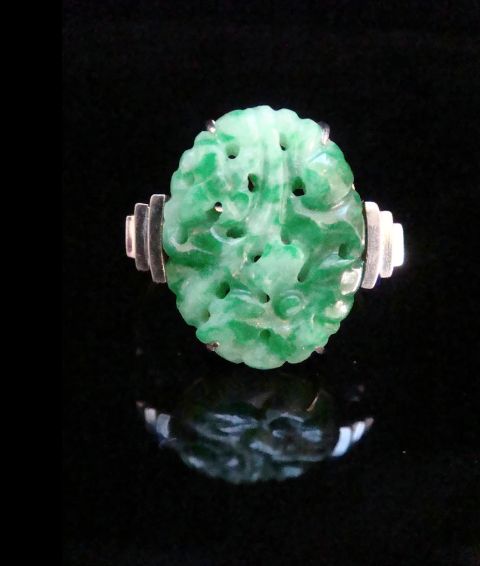
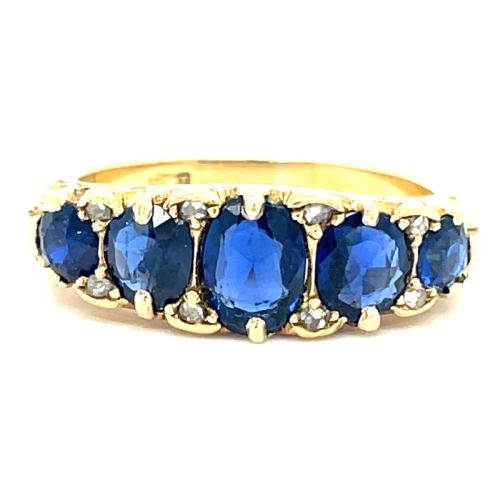
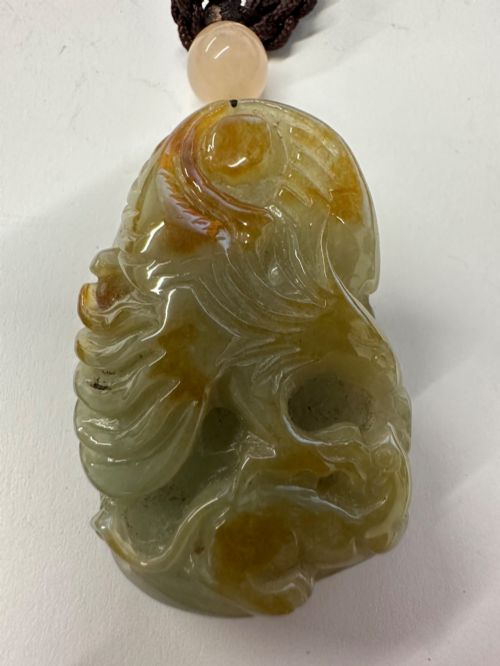
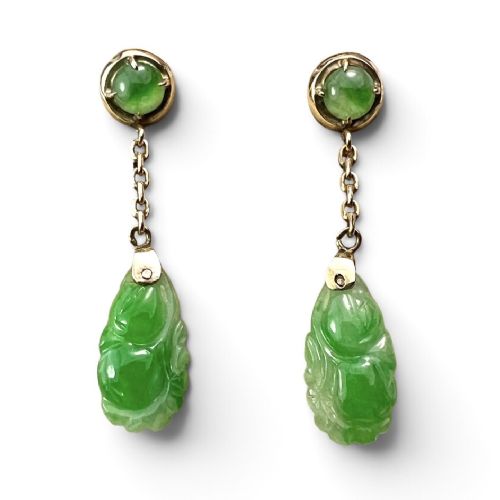
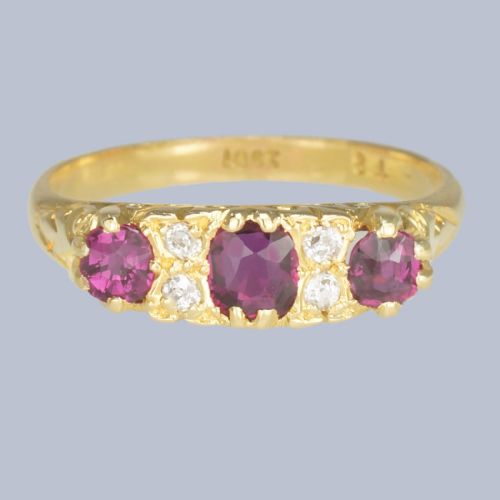
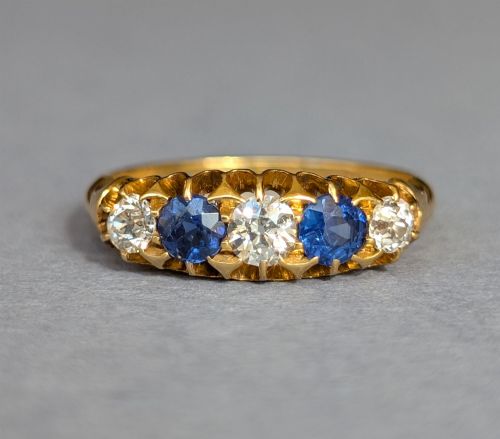
Rings form the largest group, ranging from boat-shaped ruby and diamond clusters to heavy gold intaglios depicting figures or side profiles. Pendants and necklaces introduce larger carved surfaces, including Chinese jade phoenix motifs and green chalcedony flower drops.
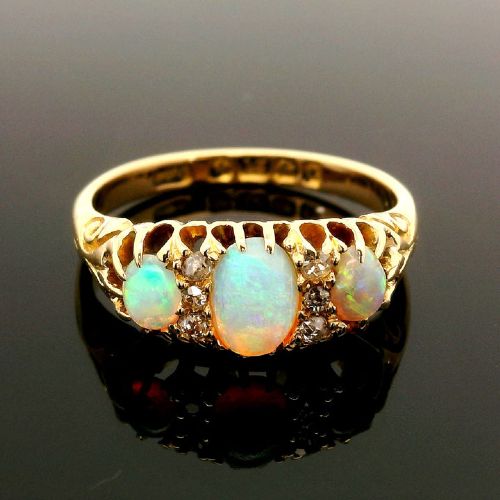
The materials span hardstones and precious gems, bringing together agate, carnelian, jade, jadeite, opal, ruby, sapphire, and diamond. These elements appear across earrings, brooches, and beaded strands fitted with figa hand clasps or secure hooks.
How they were made
Lapidary techniques shape the stones, utilising hand-cutting and polishing methods to produce low-relief intaglios, rounded cabochons, and pierced jade plaques. Hardstones like agate and carnelian receive detailed figural incisions, while softer jadeite and nephrite take the form of smooth beads and dragons.
Precious metals provide the structural mounts, cast and forged in eighteen-carat yellow gold, platinum, and sterling silver. Settings include bezel and claw arrangements designed to secure stones without obscuring the carved profiles.
Assembly combines metalwork with stone setting, integrating old mine cut diamonds and calibrated rubies around central carved elements. Beads are strung securely, and pendants incorporate hinged bails or integrated loops for suspension.
Carved Gemstone Jewellery Retail Price Guide 2026
Typical asking prices for carved gemstone jewellery among the pieces listed under this phrase on Sellingantiques today, from the lower quarter to the upper quarter. They describe what is for sale here now, not the wider market.
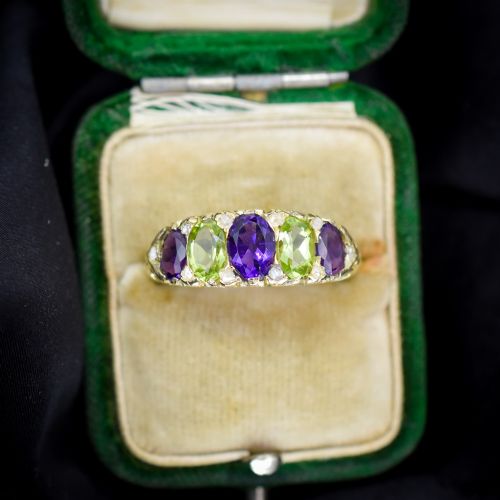
Materials represented in the jewellery include jade, jadeite, carnelian, agate, opal, sapphire, ruby, diamond, amethyst, peridot, and turquoise.
What varies in quality
The precision of the carving defines the visual impact of the piece, separating crisp, detailed intaglios and balanced jade pierced work from softer, less distinct lines. Depth of relief and symmetry in motifs such as phoenixes or double dragons dictate the skill involved in the lapidary work.
Metal fabrication and stone selection establish the baseline of manufacture, distinguishing substantial eighteen-carat gold and platinum settings from lighter silver mounts. The clarity, colour saturation, and lively play of light in accompanying diamonds, rubies, or opals elevate the overall composition.
The Carved Gemstone Jewellery Glossary
- Intaglio
- A gemstone carved with a sunken design or inscription, intended to produce an impression when pressed into sealing wax. These pieces frequently feature classical figures, coats of arms, or gentleman profiles set into carnelian, agate, or other hardstones.
- Cabochon
- A gemstone shaped and polished with a smooth, convex domed surface rather than faceted edges. This cut is utilised for opals, jade, and star stones to highlight internal play of colour or soft lustre.
- Boat ring
- A ring setting featuring a curved, elongated boat shape that tapers toward the shoulders, popular during the Georgian and Victorian periods. These mounts frequently house rows of graduated gems interspersed with diamonds.
- Jadeite
- A dense, pyroxene mineral valued for its toughness and varied translucent green hues, heavily utilised in Chinese carvings and Art Deco pendants. It differs structurally from nephrite jade while sharing similar historical applications.
- Old mine cut
- A diamond cut characteristic of the nineteenth and early twentieth centuries, featuring a square-ish girdle, high crown, and large open culet. These stones catch candlelight warmly due to their broad, hand-polished facets.
Carved Gemstone Jewellery: Frequently Asked Questions
How do I care for carved gemstone jewellery?
These pieces require gentle handling due to the delicate edges of carved motifs and the specific hardness of different minerals. Organic gems like opals and jade benefit from soft cloth wiping and avoidance of harsh chemical cleaners or ultrasonic baths.
Secure storage in individual lined compartments prevents the harder stones from scratching softer intaglios or wearing down delicate gold and platinum settings over time.
What is the difference between jade and jadeite?
Jade is an umbrella term that encompasses two distinct mineral species: nephrite and jadeite. Nephrite is tougher and historically common in ancient carvings, while jadeite exhibits a brighter crystalline structure and higher translucency.
Both materials appear in twentieth-century pieces on this page, prized for their cool touch and varied green, white, and russet tones.
How can I date an intaglio ring?
Dating relies on a combination of the metal mount's construction, hallmark evidence where present, and the stylistic execution of the carved figure. Nineteenth-century examples often utilise heavy yellow gold closed-back or open-backed bezel settings with distinct neoclassical motifs.
Later Victorian and Edwardian iterations shift toward lighter claws and refined shanks, while the subject matter of the carving frequently reflects the prevailing tastes of the decade in which it was made.