



Carved Frame Velvet Armchair
A carved frame velvet armchair brings tactile warmth and carved timber presence into a room, offering robust seating shaped by centuries of revival styles.
Carved Frame Velvet Armchair
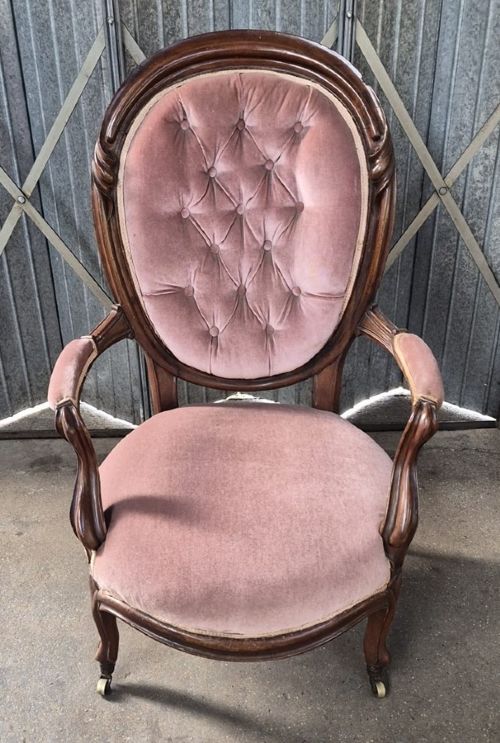
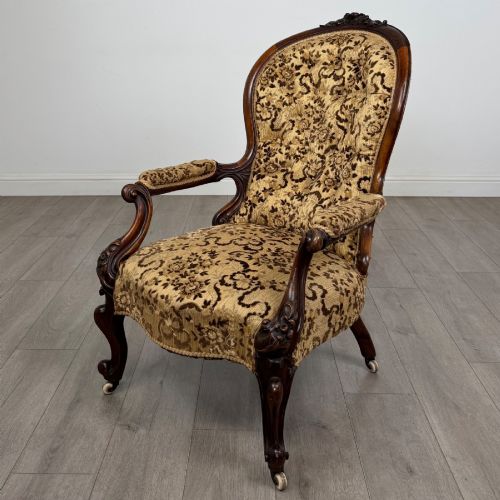
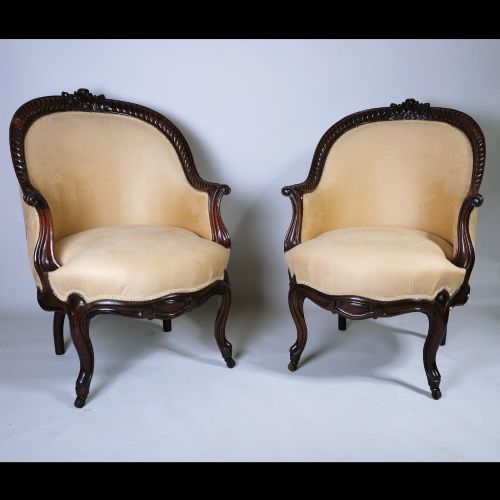
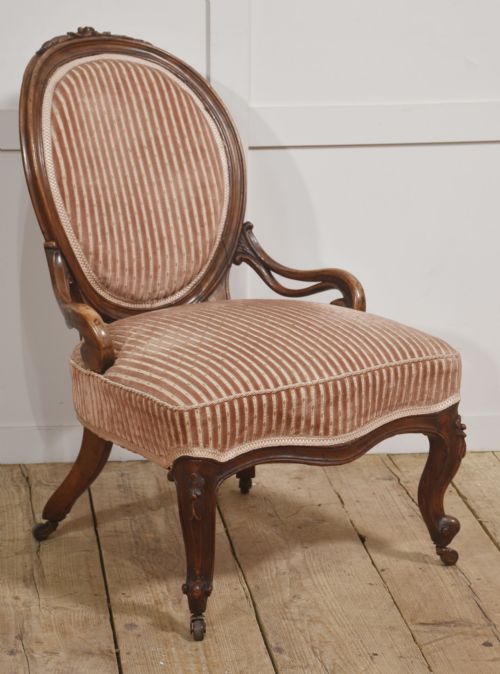
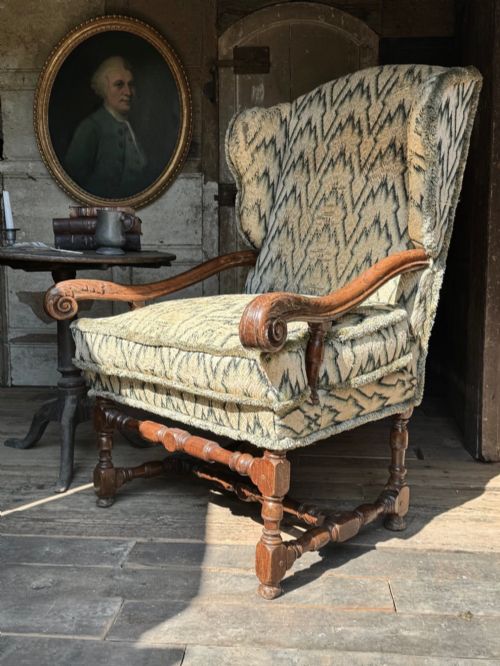
The version you are most likely to meet on this page is the Victorian walnut framed armchair, often featuring open arms, button-backed upholstery, or a show frame. These pieces reflect the enduring popularity of revival aesthetics, from Louis XV Rococo flourishes to William and Mary influences and Jacobean details.
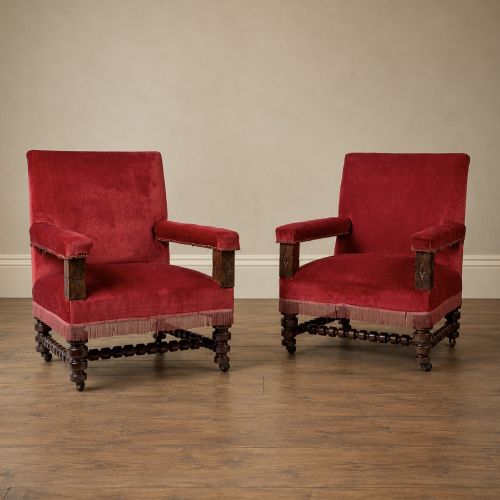
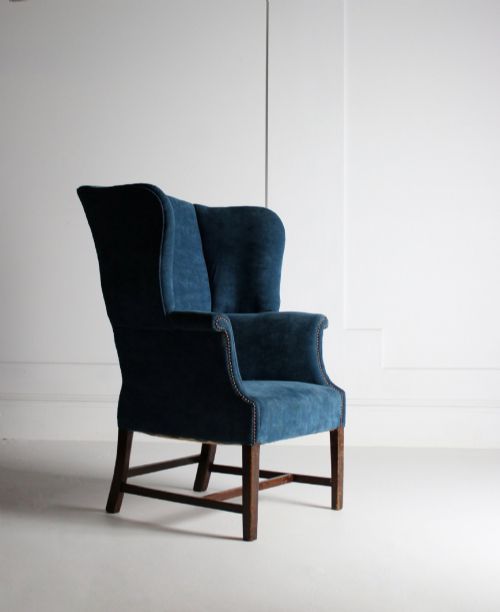
Alongside standard domestic armchairs, the inventory includes folding chairs, accent chairs, and pairs of oversized seating. Materials span from walnut and mahogany to oak, goncalo alves, and painted finishes, paired with plush velvet, textile, and cane.
How they were made
Makers constructed these frames predominantly using durable hardwoods such as walnut, mahogany, and oak, occasionally selecting exotic timbers like goncalo alves or employing painted finishes and ebonisation. Structural joinery relied on traditional methods, complemented by brass elements, casters, and intricate hand-carved ornamentation along the crest rails, stiles, and cabriole legs.
Upholstery techniques involved supportive internal webbing and stuffing finished with tactile velvet and other textiles, alongside cane panels on specific bergère models. Woodturning techniques, including barley twist details, also appeared on select frames to add texture and visual rhythm to the timber supports.
Carved Frame Velvet Armchair Retail Price Guide 2026
Typical asking prices for carved frame velvet armchair among the pieces listed under this phrase on Sellingantiques today, from the lower quarter to the upper quarter. They describe what is for sale here now, not the wider market.
A solitary Black Forest folding chair waits among the heavy walnut frames, offering a nimble woodland retreat.
What varies in quality
The distinction between tiers of these armchairs lies in the depth of hand-carving and the choice of primary timber, where dense figured walnut or mahogany commands greater regard than standard pine or secondary woods. The crispness of the carved details on the show frames and the sophistication of the revival style execution indicate the skill of the original workshop.
Proportion and structural integrity define the higher end of the range, seen in balanced open arm designs and substantial frame constructions that support grand proportions. Additionally, the integration of supplementary materials, such as finely turned wooden elements and quality brass hardware, elevates individual examples.
The Carved Frame Velvet Armchair Glossary
- Fauteuil
- An open-armed upholstered armchair originating in France, characterised by exposed carved wooden arm supports and legs. The armrests usually feature padded elbow rests.
- Show frame
- A wooden chair frame where significant portions of the carved timber structure remain visible around the upholstered sections. This construction highlights the grain and carving of the walnut, mahogany, or oak.
- Spoonback
- An upholstered chair back shaped in a concave, oval contour resembling the bowl of a spoon. This silhouette became particularly popular during the mid-nineteenth century.
- Barley twist
- A decorative turning style resembling a spiralling rope or barley sugar stick. Craftsmen utilised this technique on the wooden legs and stretchers of seating frames.
Carved Frame Velvet Armchair: Frequently Asked Questions
What periods do these armchairs cover?
The inventory spans multiple centuries, incorporating pieces from the early eighteenth century, the Regency era, and the Victorian period. Later examples extend into Edwardian and early twentieth century production.
Revival styles heavily influence these dates, drawing upon Louis XV, Louis XVI, William and Mary, and Jacobean aesthetics.
How do I identify a French bergere?
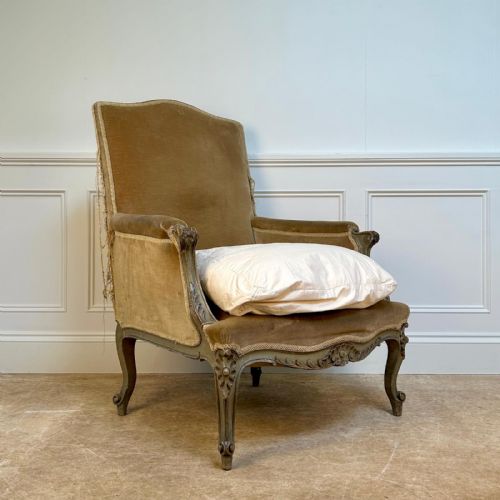
A French bergère typically presents an enclosed upholstered construction with a rounded back, distinct from open-armed chairs. Many examples feature exposed painted or carved wooden frames alongside cane side panels.
These pieces often reflect Louis XVI or provincial styling with characteristic curved lines and carved floral motifs.
Where were fireside armchairs used?
Fireside armchairs served as comfortable seating positioned near hearths in country houses and parlours. Their proportions often provided extra warmth and support during colder months.
Victorian and Edwardian versions frequently utilised mahogany or walnut frames paired with plush velvet or textured textiles.
What is a show frame armchair?
A show frame armchair displays its carved wooden structure openly around the upholstered components rather than concealing the timber beneath fabric. Walnut and mahogany were frequent choices for these exposed frames.
Victorian makers often employed this technique to showcase button-backed upholstery and elaborate woodwork.
How do I distinguish walnut from mahogany?
Walnut typically exhibits a rich brown colour with prominent grain patterns and sometimes dark figuring, favoured for intricate carving in revival pieces. Mahogany tends to display a reddish-brown tone with a straight grain that darkens gracefully with age.
Both timbers provided sturdy structural foundations for nineteenth-century seating frames.