
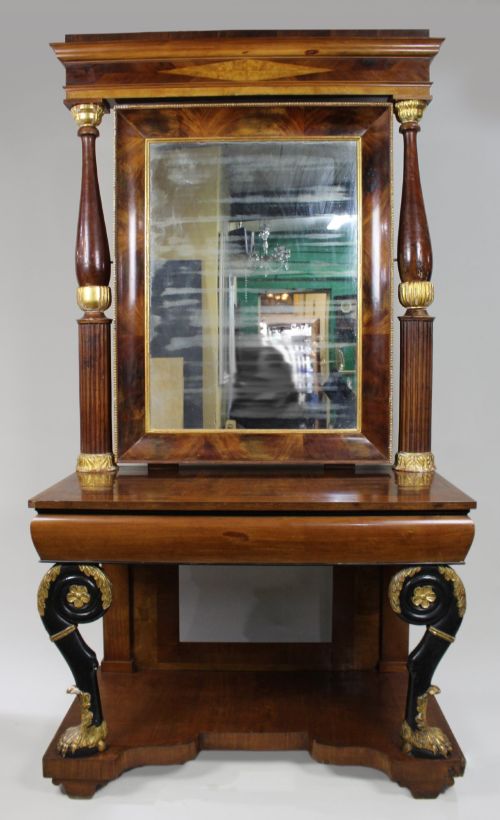
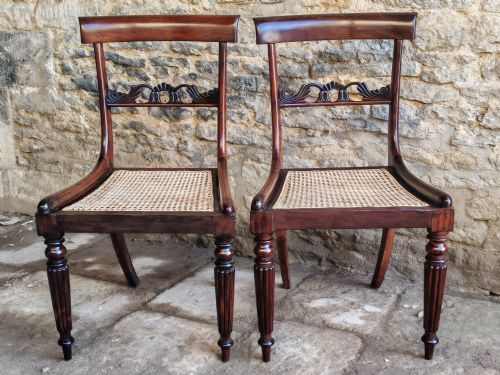
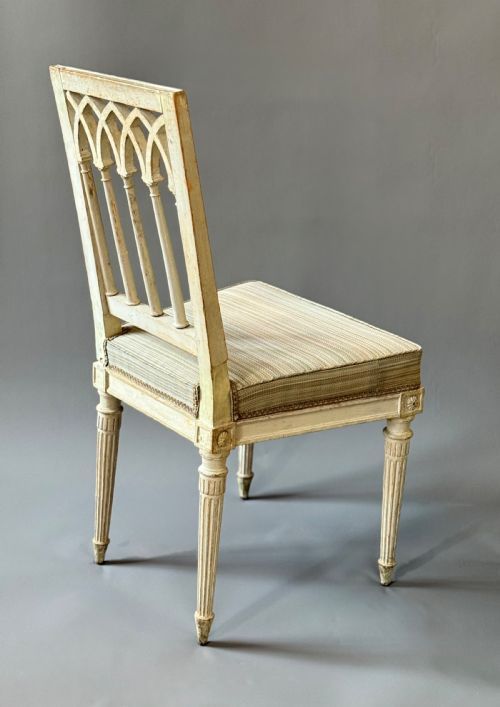
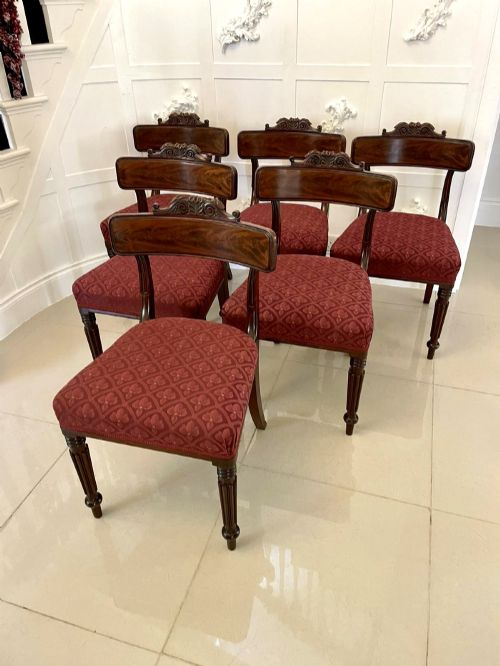
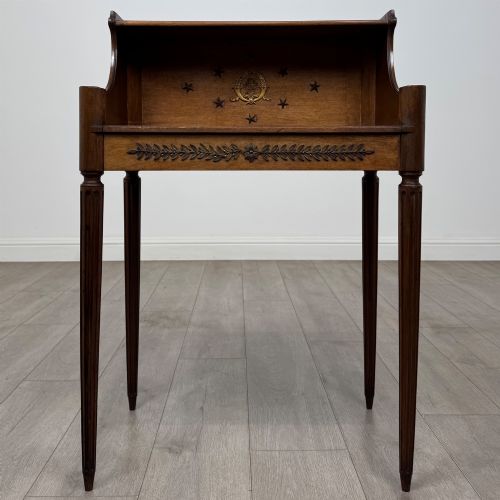
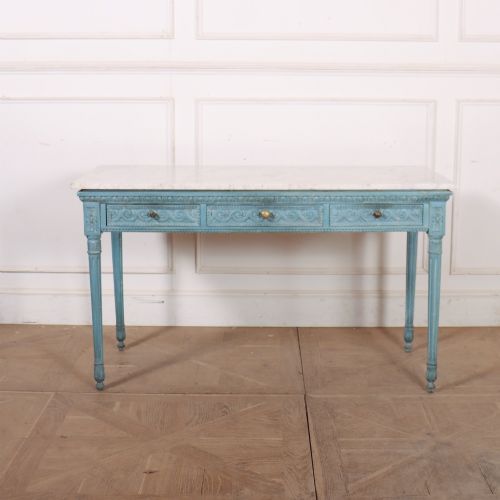
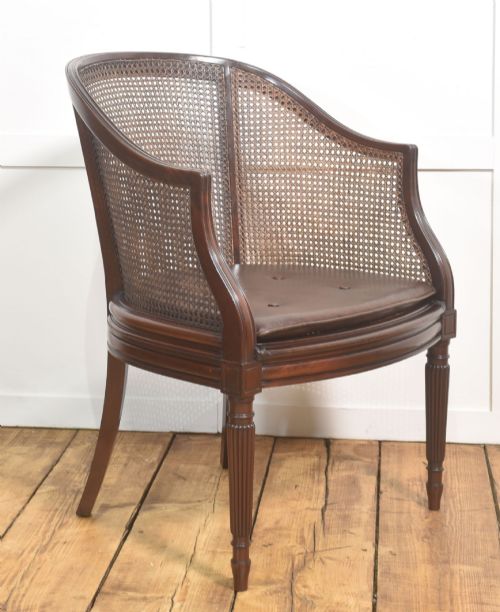
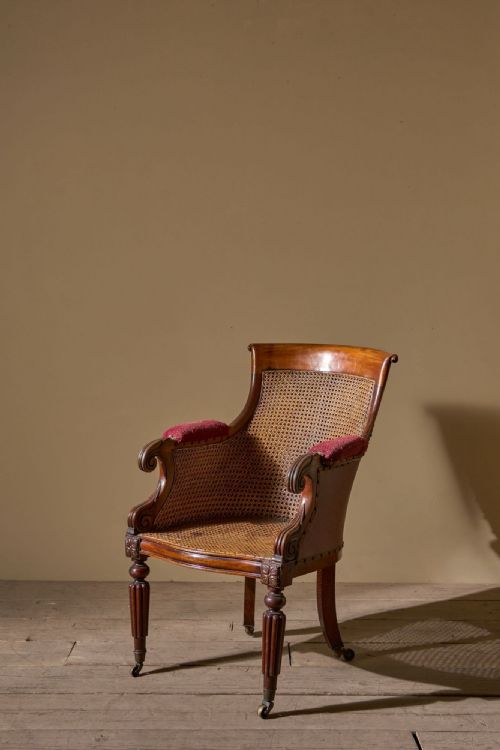
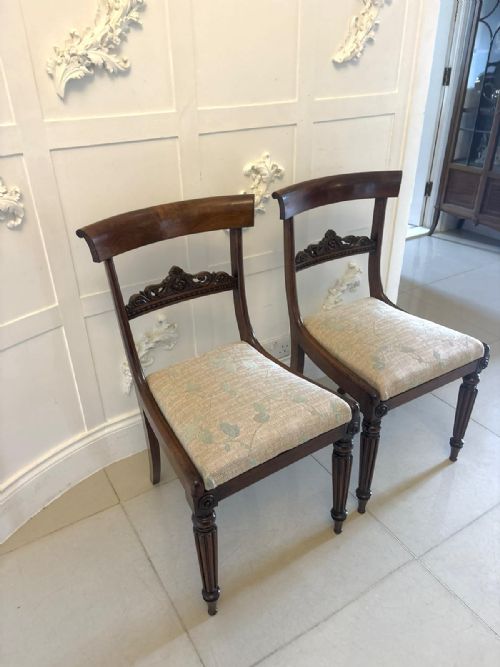
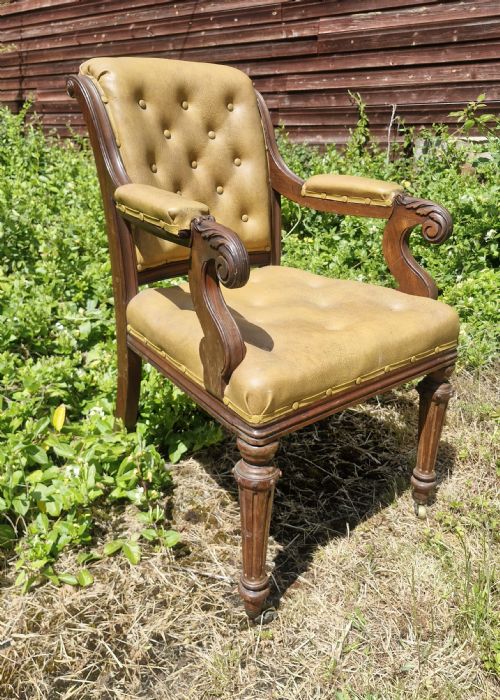

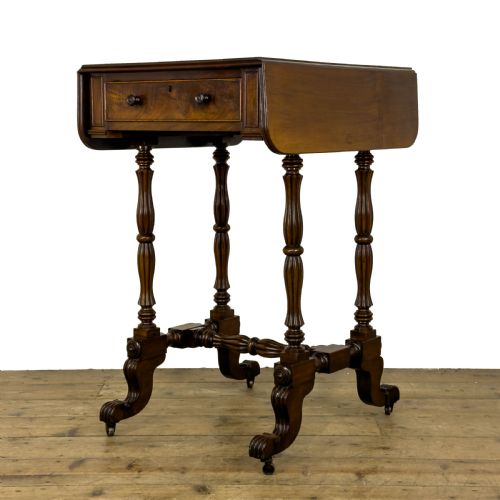


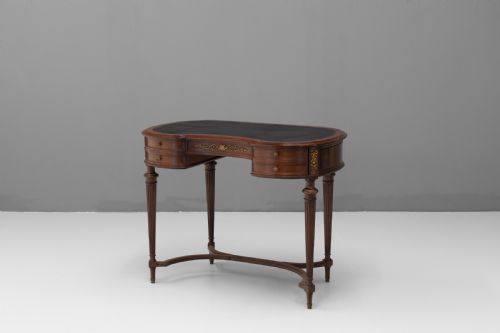
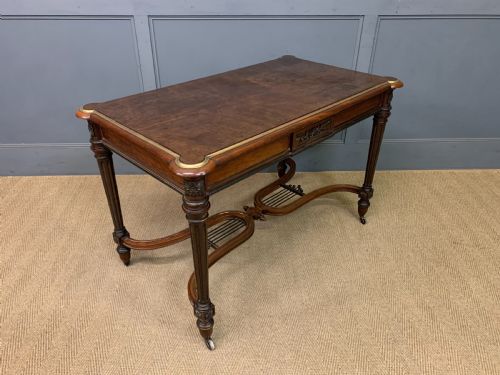
Carved Fluted Leg Desk
A carved fluted leg desk offers a refined workspace, bringing period character and architectural detail to a room.
Carved Fluted Leg Desk
A carved fluted leg desk unites practical writing space with classical architectural detailing, most frequently appearing in mahogany across nineteenth-century and Edwardian examples. These tables and writing surfaces often incorporate turned supports alongside intricate woodwork.
Buyers encounter forms ranging from compact writing tables to larger library desks and bureau plat styles. Continental and English makers frequently integrated marble tops or leather writing surfaces into these designs.
How they were made
Makers utilised dense timbers such as mahogany and rosewood, often pairing the structural woodwork with brass mounts or leather inserts. Painted finishes and gilt work also appear on specific continental interpretations.
The characteristic fluting on the legs required precise hand-carving to achieve uniform channels running vertically down the timber. Joinery relied on traditional methods to ensure stability across both freestanding writing tables and smaller work desks.
Listings feature nineteenth-century and Edwardian examples constructed primarily in mahogany, rosewood, and painted wood.
What varies in quality
The distinction between standard examples and superior pieces rests on the crispness of the hand-carving along the fluted legs and the selection of timber figures. Rich mahogany grain and deeply defined channels indicate careful craftsmanship.
Original secondary materials, such as fitted leather skivers or matching brass hardware, elevate an example above those altered or restored later. The integration of fine details like marble inserts further separates standard production from exceptional workshops.
Gillows·Henry Dasson
The Carved Fluted Leg Desk Glossary
- Fluting
- Vertical parallel grooves carved into the shaft of a leg or column. This classical detail draws the eye upward and adds architectural rhythm to the piece.
- Bureau plat
- A freestanding writing table fitted with drawers across the frieze. Originating in France, these desks typically feature finished backs for placement in the centre of a room.
- Carlton House desk
- A form of writing desk featuring a superstructure of small drawers and compartments arranged in a horseshoe curve. It provides numerous pigeonholes above the main writing surface.
- Mahogany
- A durable tropical hardwood prized for its deep reddish-brown colour and stability. It serves as the primary material for the majority of these desks.
Carved Fluted Leg Desk: Frequently Asked Questions
Where should I place a fluted leg desk?
These desks suit studies, libraries, or living spaces where the piece can be viewed from multiple angles. Freestanding tables look particularly effective positioned away from walls.
Ensure the height allows for comfortable seating while complementing surrounding period furniture.
How do I care for the leather top?
Leather writing surfaces require gentle cleaning with a slightly damp cloth followed by a suitable leather cream to prevent drying. Avoid harsh chemical cleaners.
Keep the desk away from direct sunlight to preserve the colour and suppleness of the hide.
How do I identify the wood?
Mahogany displays a warm reddish-brown hue that deepens with age, often showing distinct grain patterns across the flat surfaces. Rosewood exhibits darker grain contrasts and heavy density.
Close inspection under good light reveals the natural pores and finish characteristic of nineteenth-century cabinetmaking.
Are these desks suitable for daily work?
Many period writing desks accommodate modern laptops and paperwork comfortably, provided the dimensions match your ergonomic requirements. Drawer space varies by design.
Consider the kneehole clearance and surface area before selecting a specific table or bureau.