


Carved Floral Nursing Chair
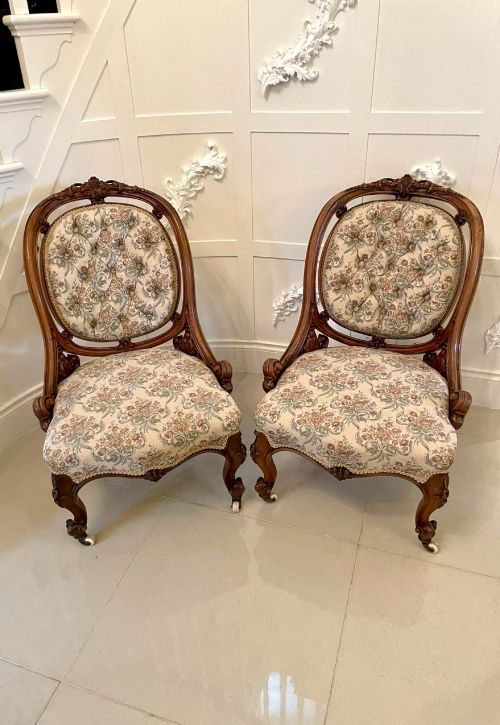
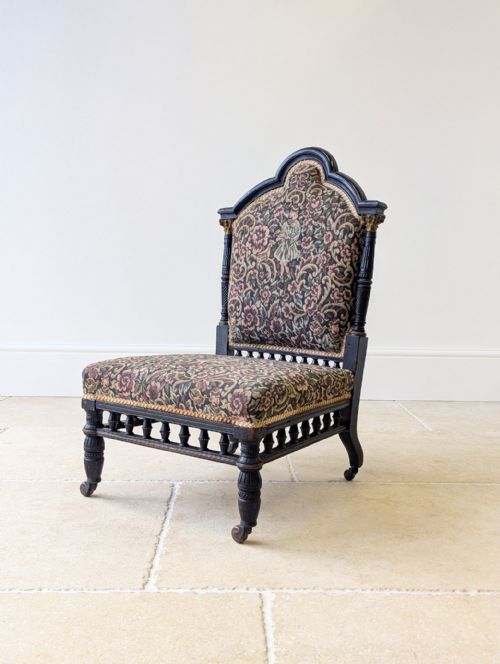
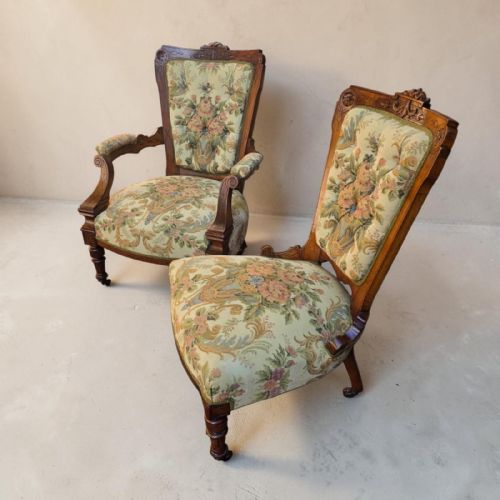
These carved floral nursing chair examples offer low seats and upright backs, combining Victorian and Edwardian timber frames with traditional upholstery.
Carved Floral Nursing Chair
When you search for a carved floral nursing chair, you encounter low-slung seating designed originally for the Victorian and Edwardian periods. These low profiles allowed women to sit comfortably while tending to infants or dressing, often featuring padded seats and supportive backs.
The versions most common on this page span Victorian walnut and mahogany frames alongside Edwardian beech occasional chairs. Many pieces incorporate floral tapestry, needlework, or fabric upholstery that complements the carved woodwork.
Object types overlapping with these listings include salon chairs, slipper chairs, and bedroom chairs. Their compact proportions make them suitable for modern dressing rooms, bedrooms, and quiet corners.
How they were made
Carpenters shaped structural frames from hardwoods such as walnut, mahogany, oak, and beech, often finishing surfaces with ebonising or natural polish. Carving was applied to crest rails, stiles, and cabriole legs to introduce floral and scroll motifs.
Upholstery techniques involved webbing, springs, and stuffing covered in tapestry, fabric, or needlework, sometimes secured with brass or ceramic elements. Frame construction frequently relied on traditional joinery to support the low centre of gravity.
The listings span Victorian, Edwardian, and nineteenth-century periods, utilising walnut, mahogany, oak, beech, brass, and ceramic.
What varies in quality
The depth and crispness of the timber carving separate standard production frames from finer workshop pieces. Superior examples exhibit hand-carved floral details that remain sharp and well-defined across walnut and mahogany surfaces.
The integrity of the frame construction and the original choice of covering material dictate the overall standard. Pieces retaining period tapestry or needlework upholstery alongside sturdy hardwood frames represent the upper tier of the range.
R Whytock of Edinburgh·Gillows
The Carved Floral Nursing Chair Glossary
- Nursing chair
- A low-seated chair designed in the nineteenth century for comfort and ease of dress, typically featuring an upholstered back and seat.
- Prie-Dieu chair
- A devotional chair characterised by a tall, narrow back often topped with a shelf or rest, designed for kneeling and prayer.
- Aesthetic Movement
- A late nineteenth-century design style focusing on visual beauty and artistic expression rather than narrative or moral themes.
- Slipper chair
- An upholstered chair with low legs, historically used in bedrooms for changing shoes or garments.
- Needlework
- Hand-stitched textile work using yarn or thread on canvas, frequently seen on Victorian chair upholstery.
Carved Floral Nursing Chair: Frequently Asked Questions
How do I date these chairs?
Dating relies on timber choices, leg profiles, and upholstery styles recorded across the Victorian and Edwardian eras. Walnut and mahogany frames generally point to mid-to-late nineteenth-century production.
Later Edwardian examples frequently utilise beech and incorporate lighter decorative details. Comparing structural joinery and carved motifs helps clarify the period.
Where should I place one?
These compact seats fit easily into bedrooms, dressing areas, and small sitting rooms where space is limited. Their low profile prevents them from dominating smaller architectural layouts.
They function well as occasional accent seating next to low tables or fireplaces. Their decorative floral upholstery allows them to coordinate with traditional or eclectic interiors.
Are original textiles common?
Original tapestry and needlework covers survive on selected pieces, reflecting nineteenth-century textile preferences. Many chairs have undergone reupholstering to suit modern domestic use.
Examining the underlying webbing and padding reveals whether the upholstery retains its period construction. Both original needlework and fresh fabric are documented in these listings.