


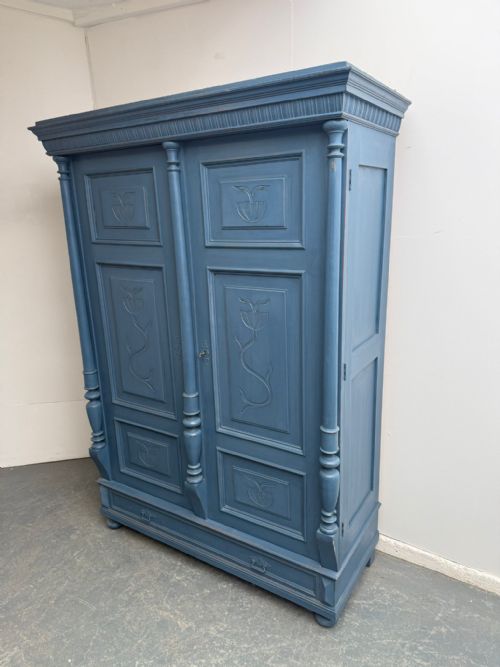


Carved Floral Cupboard
A carved floral cupboard brings organic motifs into daily storage, offering robust utility wrapped in botanical relief.
Carved Floral Cupboard
When you examine a carved floral cupboard, you encounter a diverse group of storage furniture united by plant ornamentation and timber construction. These pieces span utility forms like bedside tables and corner cabinets up to grand display cabinets, wardrobes, and dressers. The lineage stretches from the eighteenth century through Victorian production into the early twentieth century.
On this page, you are most likely to meet Victorian and nineteenth-century examples alongside items from the nineteen-hundreds. Oak, walnut, and mahogany dominate the offerings, often taking the form of bedside cabinets, wall cabinets, or floor-standing corner units. International origins appear regularly, from Dutch marquetry to Anglo-Indian and Hungarian folk pieces.
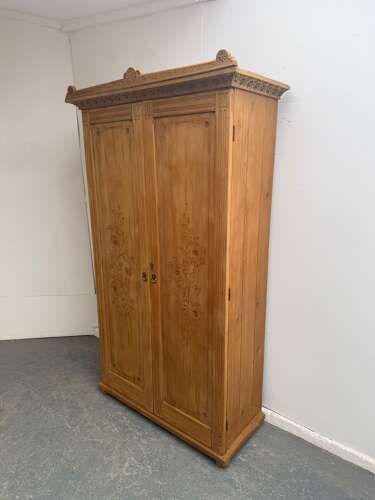
Domestic storage needs dictate the variety of forms, ranging from tall wardrobes to compact wall-hanging cupboards. Floral carving acts as the unifying thread, applied across diverse regional workshops and stylistic movements including Arts and Crafts and Dutch Baroque. Each piece combines practical enclosure with botanical relief work carved directly into the wood.
Materials and Construction Techniques
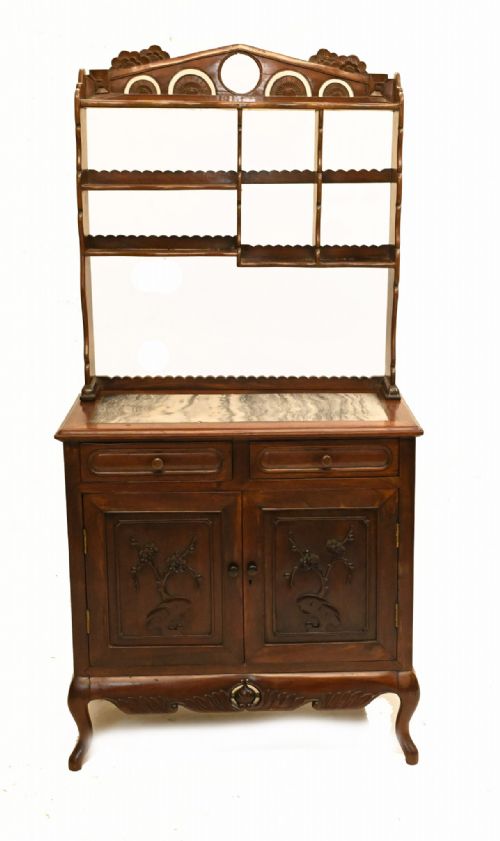
Makers relied primarily on sturdy hardwoods such as oak, walnut, and mahogany for the structural carcass and doors. Softer woods and pine appear in regional or vernacular pieces, while specialist items incorporate fruitwood, satinwood, and hardwood veneers for intricate inlay work. Brass hardware often secures doors and drawers, occasionally complemented by marble tops on bedside pieces.
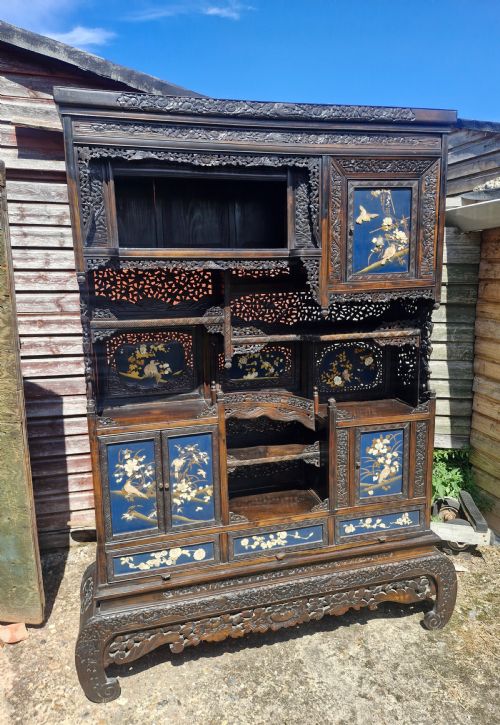
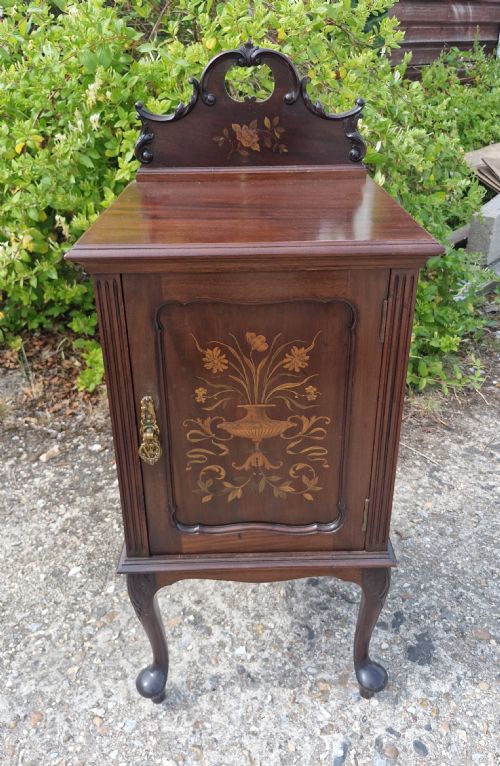
Surface decoration relies heavily on hand carving, creating floral motifs in relief across doors, panels, and cornices. Marquetry and pokerwork introduce further botanical detail through contrasting veneers and burned wood decoration. Painted finishes and wax treatments protect the timber while highlighting the depth of the floral carving.
Joinery methods reflect the period of origin, utilising traditional panel construction to accommodate seasonal wood movement in large wardrobes and dressers. Carved elements are either worked directly from the solid timber of the door frames or applied as separate carved mouldings. French polishing and wax finishes seal the mahogany and walnut surfaces.
Several pieces combine floral relief with unusual finishes, including vibrant blue paint and delicate pokerwork.
Distinctions in Quality and Execution
The standard of carving sets the upper tier apart from simpler production, separating crisp, deep botanical relief from shallow, mechanical shaping. Figured timbers such as burr walnut or select mahogany indicate superior material selection by the maker. The integration of floral marquetry with precise hand-cut inlays also marks out exceptional craftsmanship.
Structural integrity and original hardware contribute significantly to the standing of an item. Pieces retaining matching brass fittings, sound internal shelving, and stable door alignment demonstrate careful survival through the decades. The harmony between the botanical carving and the overall proportions defines the visual success of the piece.
The Carved Floral Cupboard Glossary
- Marquetry
- Decorative veneer work forming pictures or patterns, frequently featuring floral motifs in contrasting woods. This technique requires meticulous cutting and fitting of thin timber sections onto the carcase.
- Corner Cabinet
- A storage unit designed to fit neatly into ninety-degree room angles, utilising space efficiently. These often feature glazed doors for display or solid carved wooden doors.
- Pokerwork
- The art of decorating wood by burning designs with a heated tool, seen in floral cupboard panels. It produces sepia-toned shading and fine linear detail.
- Bureau Cabinet
- A writing desk combined with an upper cupboard or bookcase section, enclosed by doors or a fall-front. They provide dual utility for correspondence and storage.
- Chiffonier
- A low sideboard or cabinet featuring shelves and cupboards, popular in Victorian interiors for serving and display. They frequently incorporate carved floral panels on the lower doors.
Carved Floral Cupboard: Frequently Asked Questions
What rooms suit a carved floral cupboard?
Bedside cabinets and small wall-hanging cupboards integrate easily into bedrooms and hallways for compact storage. Larger wardrobes, dressers, and corner cabinets require designated wall space in living areas or dining rooms.
Their botanical carving allows them to complement both traditional and eclectic modern interiors. Selecting the correct scale ensures the piece anchors the room without overwhelming the floor space.
How do I identify Victorian examples?
Victorian pieces often display dark carved oak or figured walnut, frequently featuring deep botanical relief work. Common forms include bedside pot cupboards, corner units, and hall wardrobes.
Construction details like hand-cut dovetails and traditional timber framing point to nineteenth-century workshop practices. Comparing the hardware and timber ageing helps confirm the period.
Were these cupboards used for food?
Certain regional dressers and food cupboards served utilitarian storage roles in kitchens and dining spaces. Other forms, such as pot cupboards and bedside units, were designed for personal items in bedrooms.
Display cabinets and chiffoniers focused on exhibiting porcelain, glassware, or linens rather than provisions. The internal layout usually reveals the original intended function of the piece.
How should I care for the wood?
Maintain stable humidity levels in the room to prevent the solid hardwoods and veneers from splitting. Regular dusting with a soft, dry cloth preserves the wax or polish finish without harming the carving.
Avoid placing timber furniture near direct heat sources or strong sunlight. Occasional gentle waxing helps nourish walnut, oak, and mahogany surfaces.