
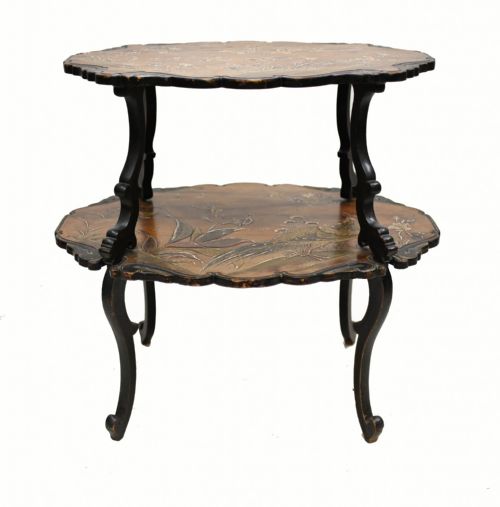


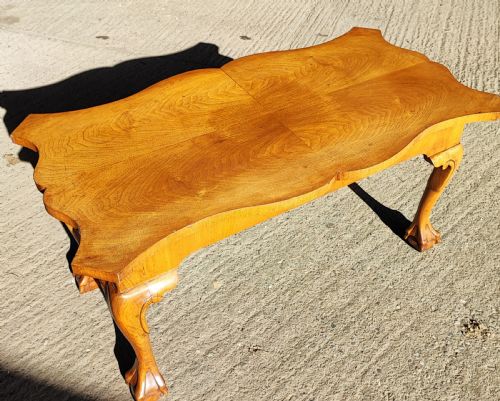


Carved Edge Coffee Table
A carved edge coffee table brings solid timber grain and shaped borders into a sitting room, offering a functional surface rooted in traditional cabinet making.
Carved Edge Coffee Table
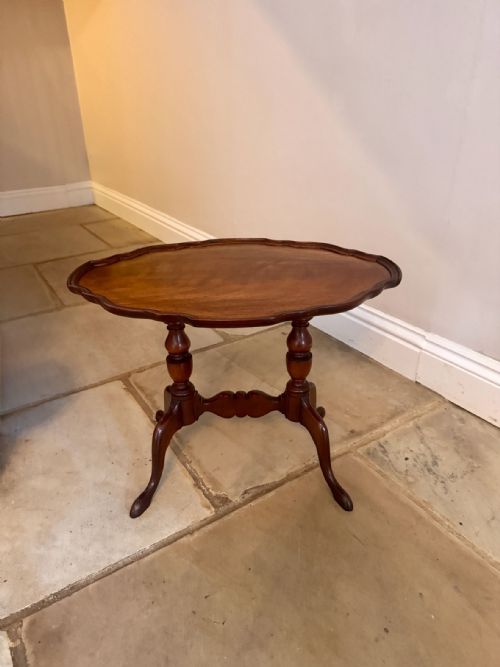
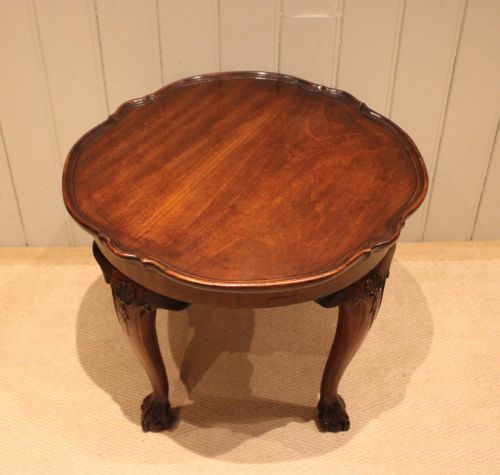
A carved edge coffee table brings together lower timber surfaces and shaped borders, with designs spanning from the Georgian period through to the 1930s. Buyers searching for a carved edge coffee table frequently encounter pie crust borders and shaped timber tops derived from earlier revival movements.
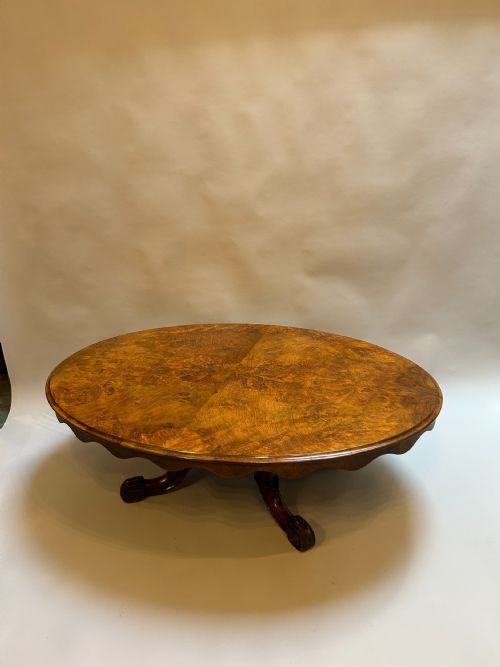
The selection ranges from Victorian burr walnut pieces to Edwardian and 1920s mahogany or oak examples, alongside occasional tables and nests adapted for modern rooms. These low tables often adapt older occasional, side, or games table forms to suit contemporary seating heights.
Origin variations include French ebonised finishes, Venetian painted tray tops, and inlaid marble chess tables from India alongside domestic British revivals. Walnut and mahogany predominate, supported by specialist items like lacquered etageres and ebonised woodwork.
How they were made
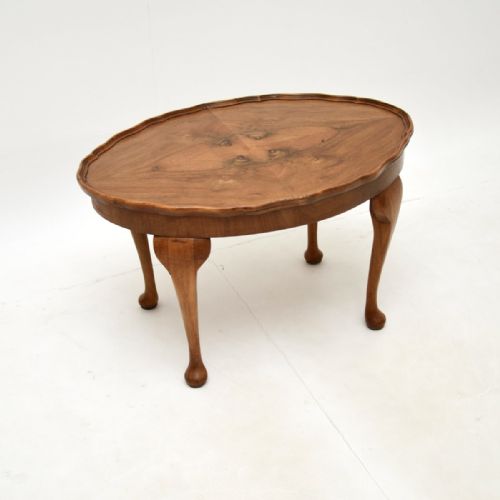
Cabinet makers utilised dense hardwoods such as mahogany and walnut, frequently selecting figured burr veneers to create varied grain patterns across the circular or oval surfaces. Timber was selected for stability before edge mouldings were hand shaped.
Surface decoration incorporated traditional techniques including japanning, hand painting, and inlaid marble work, matched with raised pie crust rims carved directly from the solid edge of the top. Frames relied on traditional joinery to support the low coffee table proportions.
Listings demonstrate a strong presence of 1920s production alongside Georgian, Victorian, and 1890s examples, utilising mahogany, walnut, burr walnut, and oak.
What varies in quality
Quality rests in the crispness of the carved edge detail and the depth of figure within the walnut or mahogany timber. Finer examples display harmonious grain alignment and careful hand shaping along shaped pie crust rims.
Construction integrity distinguishes standard production from superior pieces, particularly where turned supports and legs meet the underside of the table. The fidelity of revival styles, from Queen Anne to Chippendale, dictates the visual success of the piece.
The Carved Edge Coffee Table Glossary
- Pie crust
- A raised, scalloped edge carved into the perimeter of a circular table top, resembling pastry work. This decorative border is characteristic of finer walnut and mahogany occasional tables.
- Burr walnut
- Timber taken from a tree growth or burl, yielding intricate, swirling grain patterns. It is sliced into veneers to cover table surfaces.
- Japanning
- A European imitation of East Asian lacquering techniques, involving layered varnishes and painted designs. It appears on late nineteenth century etagere tables.
- Etagere
- A set of open shelves or tiered surfaces used for display. These pieces were later adapted into low table formats.
- Occasional table
- A small, movable table designed for minor uses around a room. Many current coffee tables originated as taller occasional or side tables.
Carved Edge Coffee Table: Frequently Asked Questions
What periods do these tables come from?
The pieces span from the Georgian era through Victorian and Edwardian decades, with a heavy concentration of items produced in the 1920s and 1930s. Many of these later tables adopt earlier styles such as Queen Anne and Chippendale.
Revival pieces borrow decorative motifs from eighteenth century workshops, applying them to lower proportions suited to modern living rooms alongside genuine antique examples.
Are these original low tables?
Most pieces from the nineteenth century and earlier were originally produced as taller occasional, side, or games tables before being adapted to coffee table height. Tables made in the 1920s and 1930s were frequently manufactured directly as low tables.
Lowering older frames was a common practice to meet twentieth century seating requirements, altering the original height while retaining the historic top and base.
What wood types should I expect?
Mahogany and walnut are the primary timbers encountered across the listings, with figured walnut and burr walnut providing decorative grain patterns. Oak, ebonised wood, and lacquered surfaces also appear.
Finish variations include painted Venetian tray tops and inlaid marble surfaces, reflecting different regional origins and decorative traditions from Britain, France, Italy, and India.
How do I care for a walnut surface?
Polishing walnut requires gentle cleaning with a soft cloth to preserve the patina of the wood and the delicate finish of figured veneers. Avoid placing the table in direct sunlight to prevent timber fading.
Use coasters to protect antique polished tops from moisture and heat, ensuring the traditional wax or French polish remains undamaged over years of daily use.