





Carved Ebonised Chair Pair
A carved ebonised chair pair brings striking dark wood and intricate detail to a room, offering both seating and strong visual character.
Carved Ebonised Chair Pair
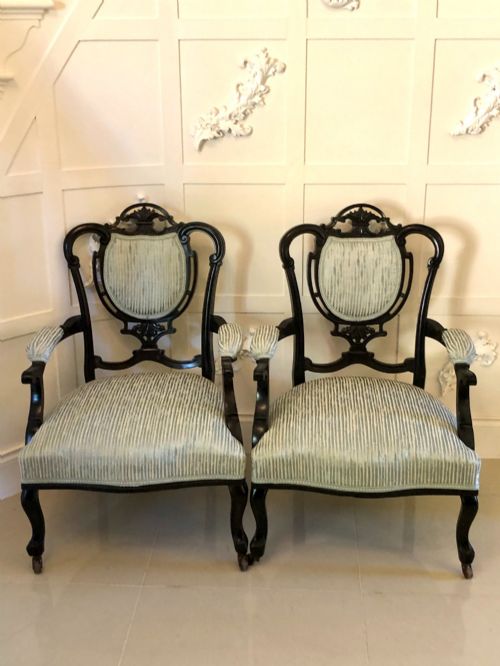
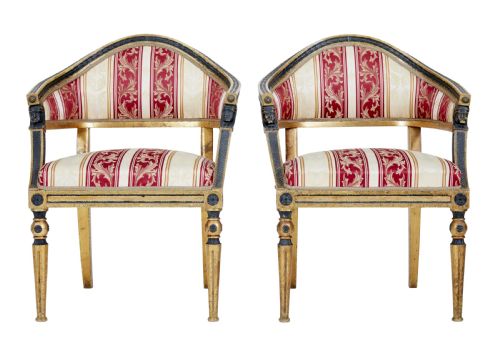
A carved ebonised chair pair consists of matching seats shaped from wood treated to resemble costly ebony, appearing frequently in Victorian rooms and revival styles. These pieces range from substantial library armchairs to lighter side chairs designed for desks or salons.
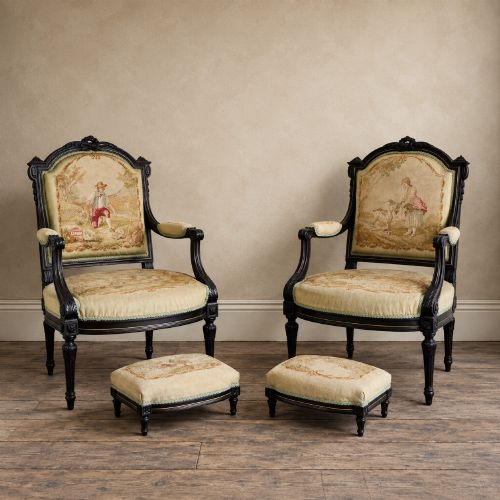
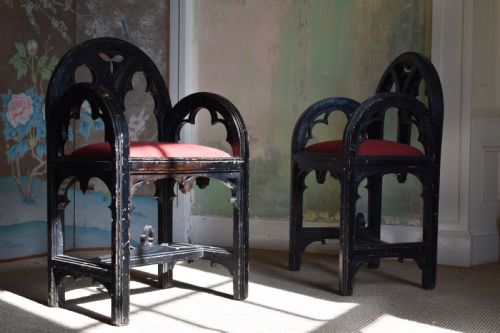
The selection here draws heavily from nineteenth century workshops, capturing Victorian tastes alongside French Louis XVI and Gothic revivals. Buyers encounter various forms, including upholstered armchairs, cane-seated examples, and occasional side chairs with elaborate carved decoration.
Materials and construction methods
The makers behind a carved ebonised chair pair typically utilised native hardwoods like beech or oak, applying a dark finish to imitate exotic ebony. Artisans then carved intricate relief patterns directly into the timber frame.
Upholstery and textiles complete many of these pieces, incorporating contemporary fabrics, tapestry, or cane seating secured with brass elements.
Carved Ebonised Chair Pair Retail Price Guide 2026
Typical asking prices for carved ebonised chair pair among the pieces listed under this phrase on Sellingantiques today, from the lower quarter to the upper quarter. They describe what is for sale here now, not the wider market.
Victorian craftsmen occasionally ebonised ordinary fruitwood to trick guests into thinking the household owned expensive exotic ebony furniture.
Distinguishing quality across examples
Quality in a carved ebonised chair pair rests upon the crispness of the wood carving and the depth of the dark finish. Superior examples display sharp relief work that retains its definition beneath the ebonised surface.
The integrity of the underlying timber frame and the appropriateness of any secondary materials, such as brass fittings or textile choices, further separate standard production from exceptional pieces.
Bruce J. Talbert
The Carved Ebonised Chair Pair Glossary
- Ebonised
- Wood treated with stain, paint, or chemical processes to imitate the dark, dense appearance of true ebony. This technique gained immense popularity during the nineteenth century for furniture mimicking more expensive materials.
- Gothic Revival
- A nineteenth century design movement drawing inspiration from medieval architecture and motifs. Pieces from this style often feature pointed arches, heavy tracery, and solemn carved details.
- Aesthetic Movement
- A late nineteenth century design phase prioritising visual beauty over narrative or moral function. Furniture from this circle frequently employs ebonised surfaces alongside Japanese-inspired motifs.
- Louis XVI Revival
- A nineteenth century French style reviving neoclassical symmetry and straight lines. Such chairs typically incorporate restrained carving and classical proportions.
Carved Ebonised Chair Pair: Frequently Asked Questions
What rooms suit these chairs?
These dark wood chairs work well in studies, drawing rooms, or hallways where their dramatic finish provides a strong focal point. They pair easily with both traditional interiors and modern minimalist spaces.
Positioning a pair together enhances their symmetry and visual impact, particularly when placed against lighter background walls.
How should I clean the finish?
Maintenance requires gentle dusting with a soft, dry cloth to prevent dirt accumulation on the carved surfaces. Avoid harsh chemical polishes that can degrade the dark ebonised treatment over time.
Conditioning the wood occasionally with appropriate specialist wax helps preserve the lustre of the finish without harming the underlying timber.
Were these used as dining seats?
Most surviving examples serve as library, salon, or side chairs rather than heavy dining furniture. Their delicate carvings and upholstered frames were intended for reception rooms and studies.
Using them as occasional seating preserves their structure and prevents excessive wear on the vintage fabrics and cane panels.
How do I identify a Victorian piece?
Victorian examples often feature dense oak or beech carcasses with dark ebonising and characteristic revival styling such as Gothic or aesthetic motifs. Examining the joinery and underside usually reveals period construction methods.
Matching the recorded dates from the eighteen sixties and seventies helps confirm the era of manufacture.