
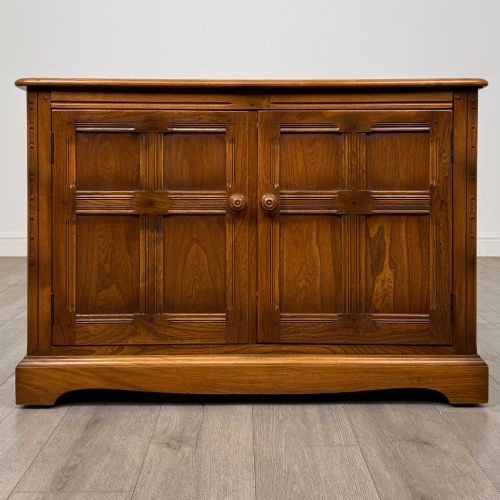
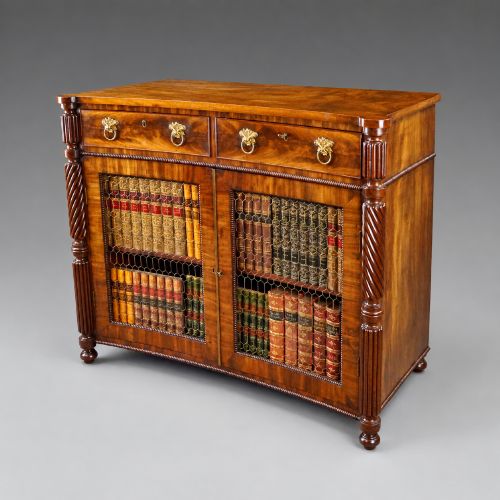
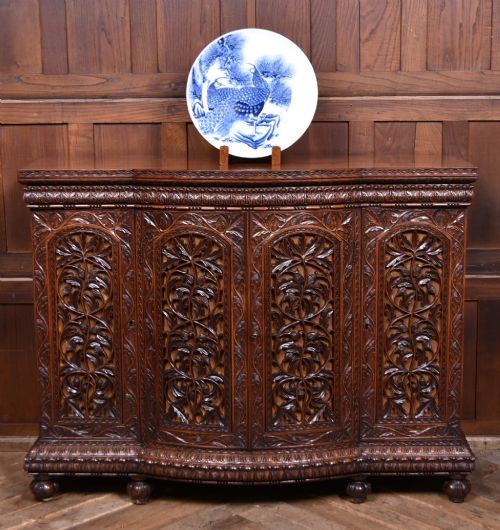
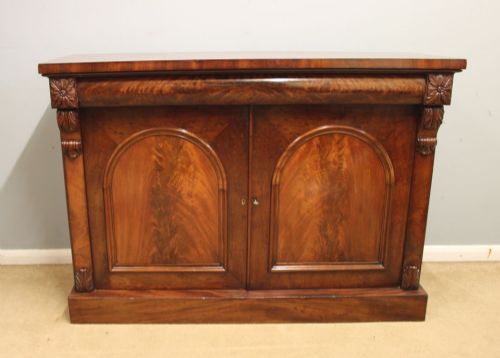
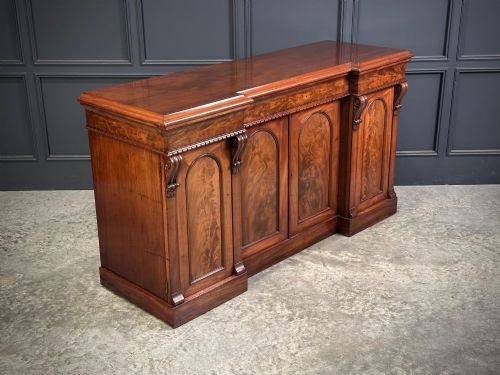
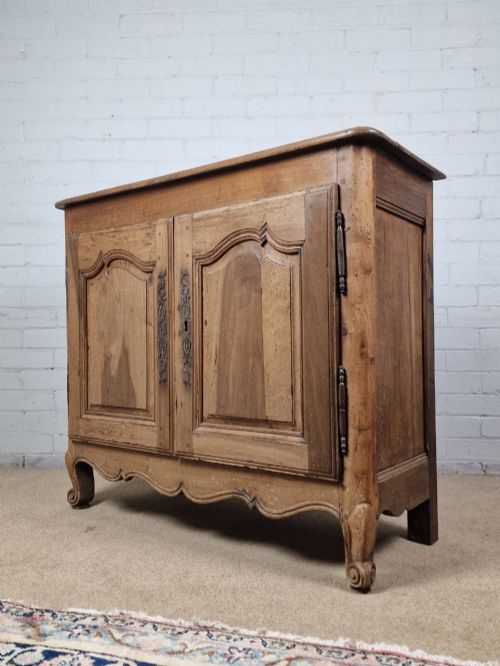
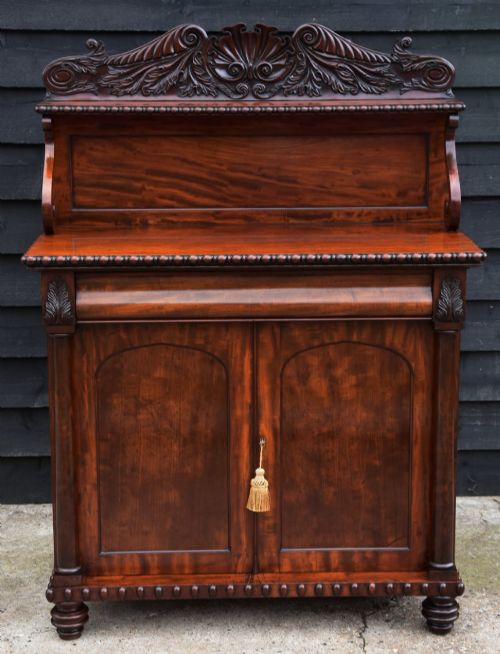
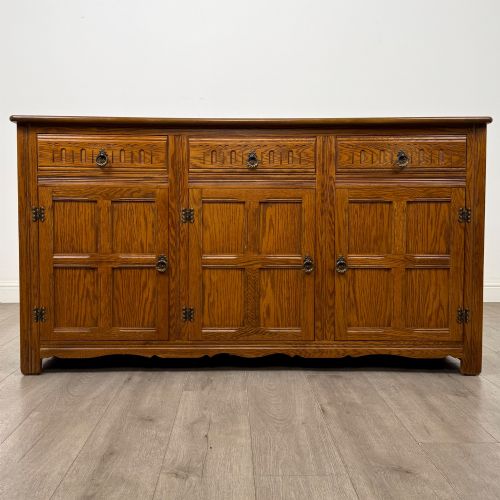
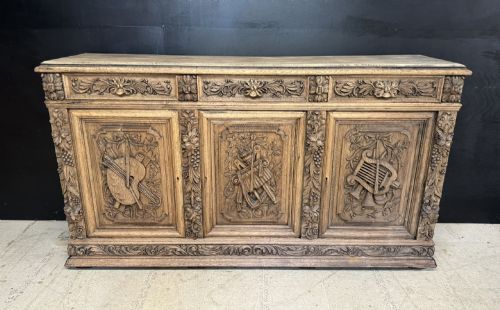
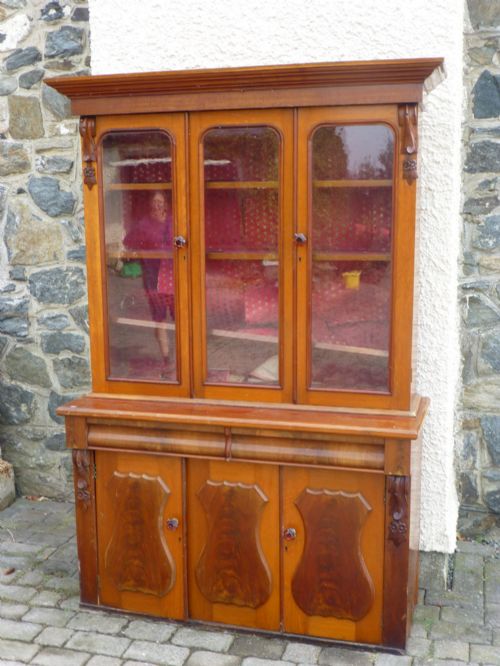
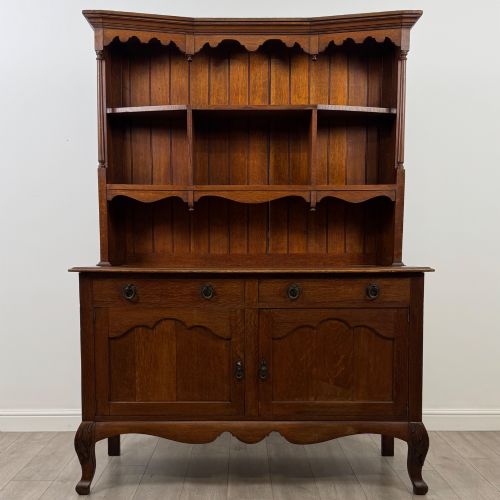
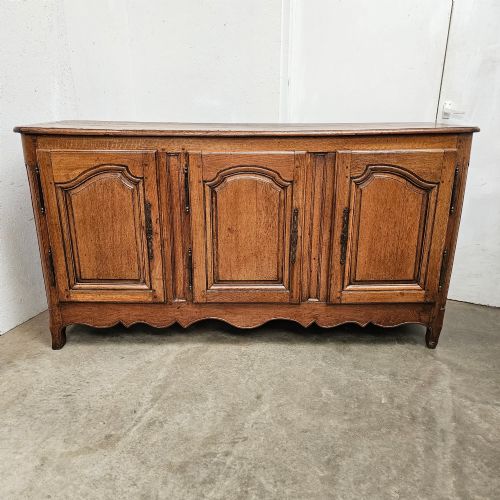
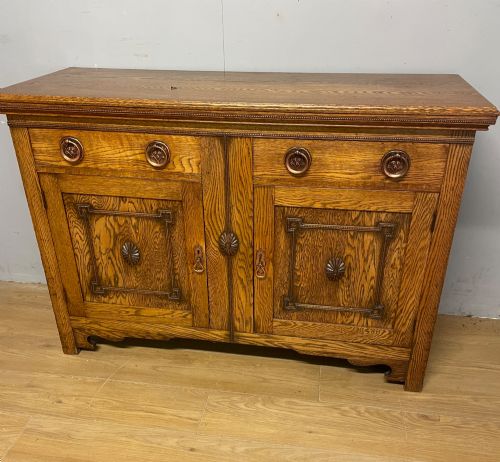
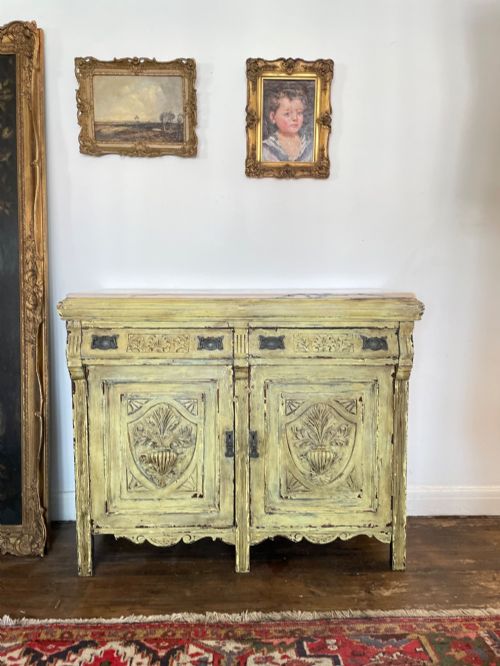
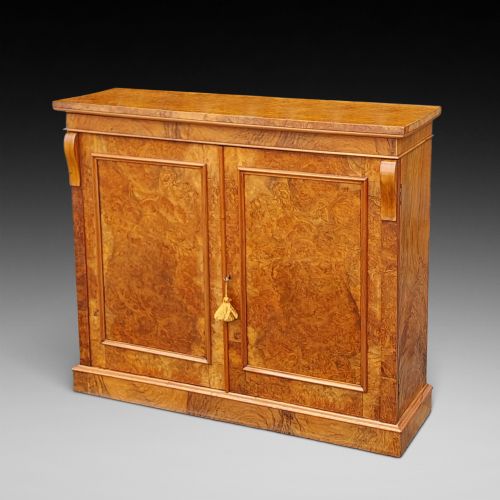
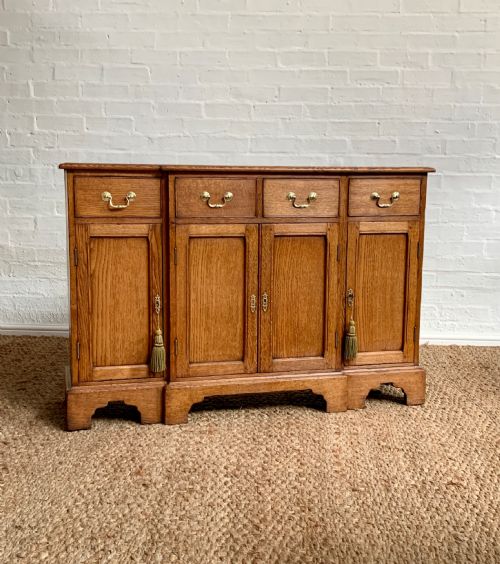
Carved Door Sideboard
A carved door sideboard offers substantial dining room storage through heavy timber and sculpted panels.
Carved Door Sideboard
A carved door sideboard is a substantial storage piece found across the Victorian, Edwardian, and Regency periods, utilising timber structures to anchor a dining room or hall. You will frequently encounter examples in oak, mahogany, and burr walnut, ranging from multi-door sideboards to smaller side cabinets and chiffoniers.
The pieces on this page span the nineteenth and twentieth centuries, incorporating styles from Gothic Revival and Jacobean Revival to French Provincial. These variations reflect the changing domestic requirements for serving food, storing linens, and displaying silver over successive decades.
Timber and Construction
Cabinet makers utilised dense hardwoods such as oak, mahogany, rosewood, and walnut, often selecting figured veneers like burr walnut or flame mahogany for the primary visual surfaces. These timbers were joined using traditional framing techniques to support heavy doors and marble or wooden tops.
Carving was executed directly into the solid timber or applied in relief, creating deep mouldings, panels, and decorative motifs characteristic of styles like Gothic Revival and Jacobean Revival. Brass handles, hinges, and glass panels frequently complete the construction.
Listings feature timbers including oak, mahogany, walnut, rosewood, and teak, spanning the nineteenth and twentieth centuries.
Assessing the Execution
Quality rests in the selection of the timber and the depth of the carving, where crisp, undercut details on solid oak or mahogany distinguish high-end workshops from simpler production pieces. The handling of secondary timbers inside drawers and the weight of the brass hardware further separate standard items from exhibition pieces.
The integrity of the structural joints and the matching of veneer grains across multiple doors dictate the longevity and visual harmony of the sideboard. Pieces retaining original polished surfaces and fitted interiors demonstrate superior preservation.
The Carved Door Sideboard Glossary
- Chiffonier
- A low sideboard or cabinet, popular in the Regency and Victorian eras, often featuring a raised shelf or mirror at the back. These pieces were designed for smaller entertaining spaces.
- Credenza
- A sideboard or display cabinet lacking legs, sitting flush to the floor, frequently associated with mid-Victorian marquetry and marble tops. They provide enclosed shelving for dining china.
- Enfilade
- A suite of rooms or a long cabinet arrangement aligned in a straight row, seen in continental pieces such as French oak examples. This layout emphasises continuous surface length.
- Pollard Oak
- Oak timber taken from trees that have been pollarded, producing a clustered, highly figured grain pattern. Cabinet makers used these burls for decorative drawer fronts and panels.
- Marquetry
- The art of applying pieces of veneer to a structure to form decorative patterns and pictures. It appears on high-status Victorian credenzas and cabinets.
Carved Door Sideboard: Frequently Asked Questions
Where should I place a sideboard?
A carved door sideboard suits dining rooms, large hallways, or living spaces where substantial storage and surface area are required. Ensure adequate clearance for the doors to swing open fully.
Position the piece against a solid wall away from direct heat sources to protect the timber and any veneered surfaces from drying out.
How do I clean the carved panels?
Dust the carved recesses regularly with a soft, dry brush to prevent dirt accumulation in the intricate woodwork. Apply a quality beeswax periodically to nourish the timber.
Avoid using modern liquid polishes containing silicone, which can build up and dull the natural grain of oak, mahogany, or walnut over time.
What is a chiffonier?
A chiffonier is a compact version of a sideboard that gained popularity during the Regency and Victorian periods. It typically includes enclosed lower cupboards and a useful upper shelf.
These pieces were originally utilised for serving wine and storing tableware in smaller dining rooms where a full-size sideboard would prove too large.
How do I identify a Victorian piece?
Victorian sideboards frequently employ dense mahogany, walnut, or pollard oak with heavy proportions and deep, confident carving. Stylistic influences often include Gothic Revival or robust classical revivalism.
Interior construction details, such as hand-cut dovetails on drawer boxes and the use of secondary timbers like pine or oak, help confirm the nineteenth-century origin.