





Carved Cresting Hall Chair
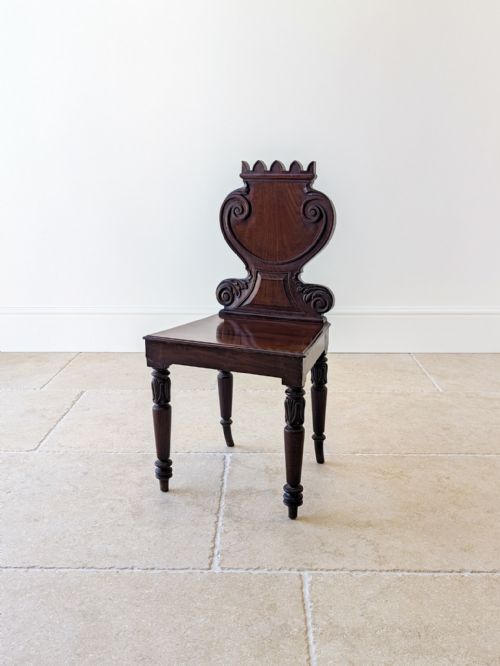
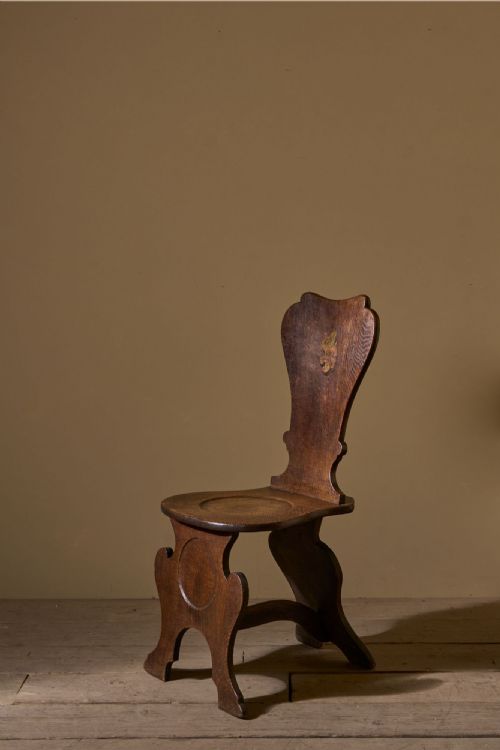
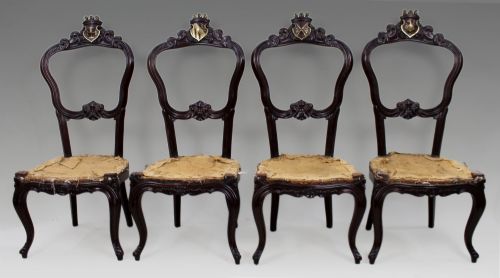
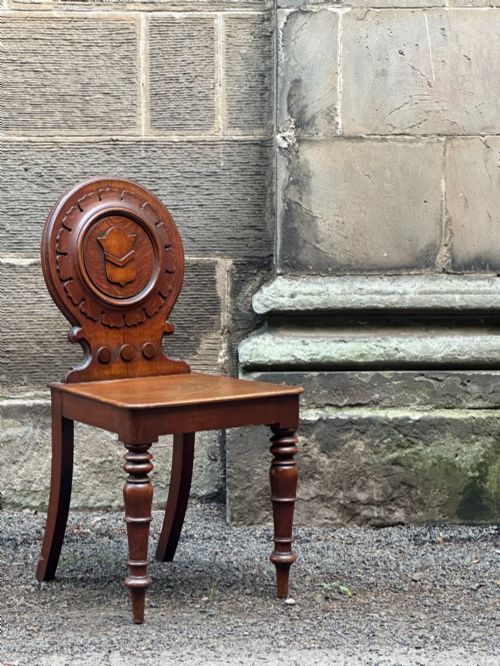
A carved cresting hall chair brings immediate architectural presence and heraldic weight to an interior, built for the grand entrance ways of historic houses.
Carved Cresting Hall Chair
When you search for a carved cresting hall chair, you encounter tall, upright seating designed primarily for reception spaces rather than long hours of dining. The examples recorded here span from the robust seventeenth century through to the Regency, Victorian, and later revival periods.
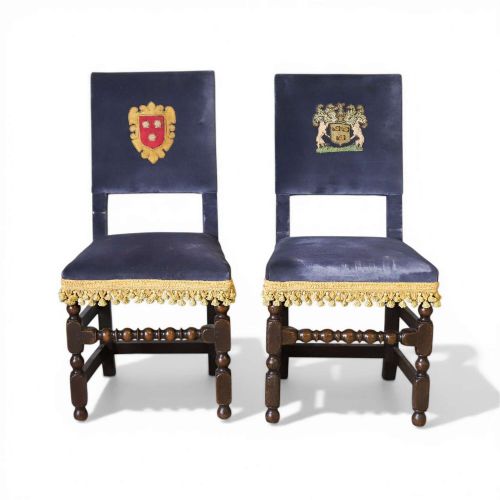
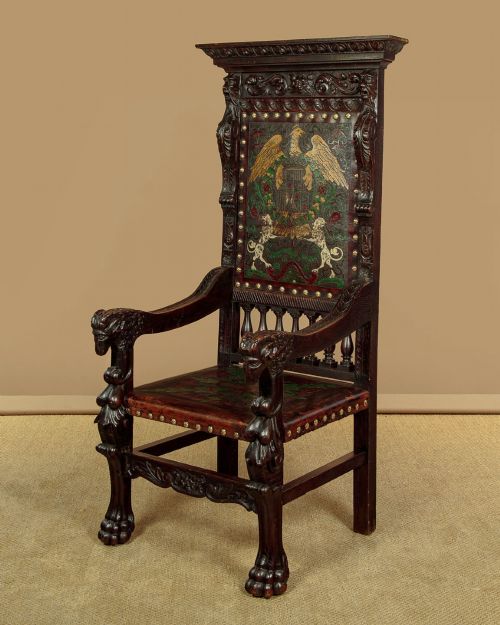
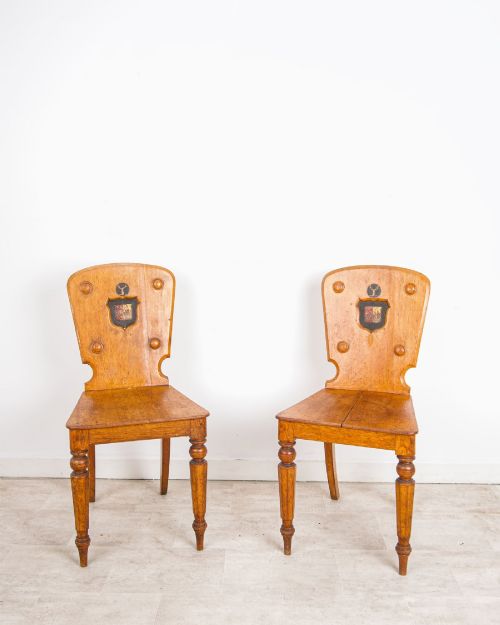
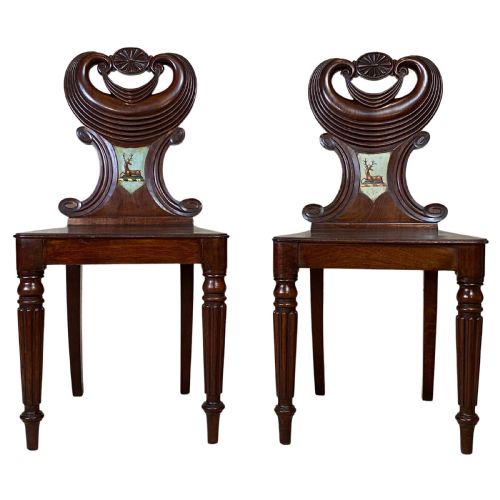
Makers shaped these seats in oak, mahogany, walnut, and rosewood, frequently incorporating carved heraldic shields, crests, and armorial bearings into the timber. The form ranges from strict single wooden seats to padded versions upholstered in velvet, leather, or cane.
Timbers and Construction Methods
Makers relied heavily on solid oak for early pieces, transitioning to dense mahogany and walnut as styles shifted towards the Regency and Victorian eras. Selected timbers allowed for deep relief carving along the crest rail and back panel.
Joinery methods involved sturdy mortise and tenon joints to withstand the heavy use of entrance halls. Additional decorative elements such as brass accents, painted leather, and cane work were integrated into the structural frames.
Recorded forms include shield backs, shell backs, caned seats, and armorial chairs with velvet or painted leather upholstery.
Assessing the Standard of Craft
The depth and crispness of the carved cresting dictate the visual impact of the chair. Superior examples display sharp, undercut detail in heraldic motifs and armorials rather than soft, flat moulding.
The weight of the timber and the integrity of the joinery separate standard production items from workshop pieces attributed to known makers. Grain selection in mahogany and oak further distinguishes finer seating from utilitarian versions.
Gillows·Waring and Gillow
The Carved Cresting Hall Chair Glossary
- Armorial
- A design displaying a coat of arms or heraldic crest. These were frequently carved into the wood or painted on hall chairs.
- Shield back
- A chair back shaped like a heraldic shield. This form is common in Georgian and Regency hall seating.
- Backstool
- An early term for an upholstered or wooden chair without arms. These date predominantly to the seventeenth century.
Carved Cresting Hall Chair: Frequently Asked Questions
Where were hall chairs placed?
These seats stood in entrance halls, corridors, and reception areas of substantial homes. They served as waiting seats for visitors rather than comfortable lounging furniture.
Their rigid wooden construction and upright posture encouraged brief, formal use rather than extended sitting.
How do I date a carved oak chair?
Dating relies on construction marks, timber choice, and the style of the carving. Seventeenth-century pieces display pegged joints and heavy grain, while revival items from the nineteenth century show machine assistance or later tool marks.
Examining the wear patterns on the seat and feet also helps determine the age of the timber.
Can I use these chairs daily?
Most historic hall chairs are structurally robust enough for light daily use in modern hallways or studies. Solid hardwood frames tolerate normal sitting provided the joints remain tight and stable.
Protective placement away from direct heat sources helps preserve old timber and applied finishes.