




Carved Crest Rail Seat
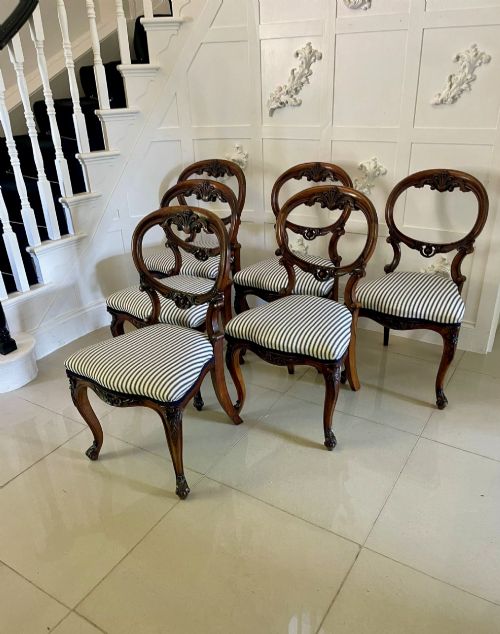
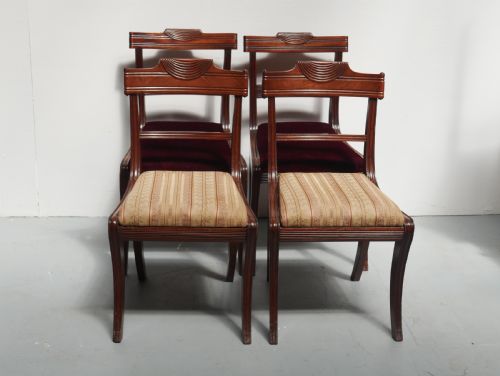
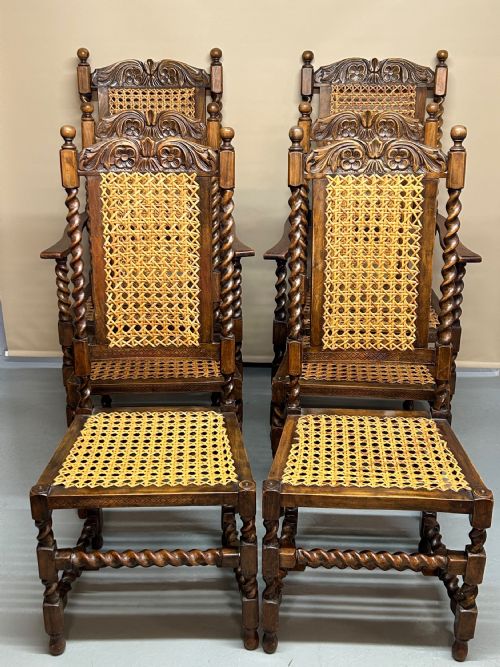
A carved crest rail seat brings a distinct sculptural top to traditional chairs, offering both support and notable period character.
Carved Crest Rail Seat
When searching for a carved crest rail seat, buyers encounter a variety of traditional seating forms including dining chairs, armchairs, side chairs, accent chairs, and hall chairs. The selection spans periods from the nineteenth century into the twentieth century, encompassing Regency, Victorian, William IV, and Edwardian eras.
The most common examples on this page are dining chairs fashioned in sets, alongside individual armchairs and side chairs. Woods such as mahogany, oak, walnut, and rosewood dominate the inventory, often paired with fabric, cane, velvet, or textile seats.
How they were made
Cabinetmakers and joiners constructed these chairs using solid hardwoods such as mahogany, oak, walnut, and rosewood, employing traditional jointing techniques to ensure structural integrity. Surface decoration often involved hand-carving along the top rail, alongside contrasting inlays or turned wooden elements.
Seat construction varied according to the period and purpose, utilising drop-in textile pads, woven cane panels, or Bergere backs and seats. Details such as bone button decorations and fluting added refined finishing touches to the framework.
Listings feature oak, mahogany, walnut, and rosewood across Victorian, Regency, and Edwardian periods.
What varies in quality
The refinement of the hand-carved crest rail sets finer examples apart, showing crisp detailing and depth rather than shallow or mechanical shaping. Selection of timber figure, such as well-grained mahogany, rosewood, or quarter-sawn oak, signals greater ambition in the original workshop.
Cohesion within matching sets demonstrates higher original status, particularly in larger dining groups where timber matching and turning uniformity matter. The integration of decorative elements, including brass inlay or bone buttons, reflects the maker's investment of time and skill.
The Carved Crest Rail Seat Glossary
- Crest rail
- The top horizontal member of a chair back, frequently shaped or carved. It receives the primary visual focus when the chair is viewed in a room.
- Klismos
- An ancient Greek chair form with curved legs and a sweeping concave backrest, revived during the Regency period. This profile offers both ergonomic comfort and a classical silhouette.
- Bergere
- An upholstered armchair or dining chair with an enclosed wicker or canework back and sides. The cane allows for a lighter physical structure while retaining support.
- Turner's chair
- A sturdy, heavy armchair constructed entirely from turned wooden spindles and posts, often associated with the Old Saxon revival style. These pieces rely on geometric repetition rather than surface carving for their decorative effect.
Carved Crest Rail Seat: Frequently Asked Questions
What is a carved crest rail seat?
A carved crest rail seat refers to chairs featuring a decorative, shaped upper wooden rail across the backrest. These pieces span various historical periods and seating types.
They serve both decorative and functional roles in traditional interiors, often anchoring a dining table or providing a striking accent in a hallway.
How do I date a wooden chair?
Dating relies on examining the timber species, construction methods, and stylistic markers such as Regency curves or Victorian revival details. Secondary woods and tool marks can also reveal the era of manufacture.
Comparing the specific carved motifs against known period designs helps narrow down the decade or movement.
Where should I place an antique armchair?
Antique armchairs with carved crest rails work well in studies, bedrooms, or living rooms as standalone accent pieces. Their sculptural backs ensure they look complete when viewed from behind in an open room.
Placement should protect the timber and upholstery from direct sunlight and extreme temperature fluctuations.