



Carved Crest High Chair
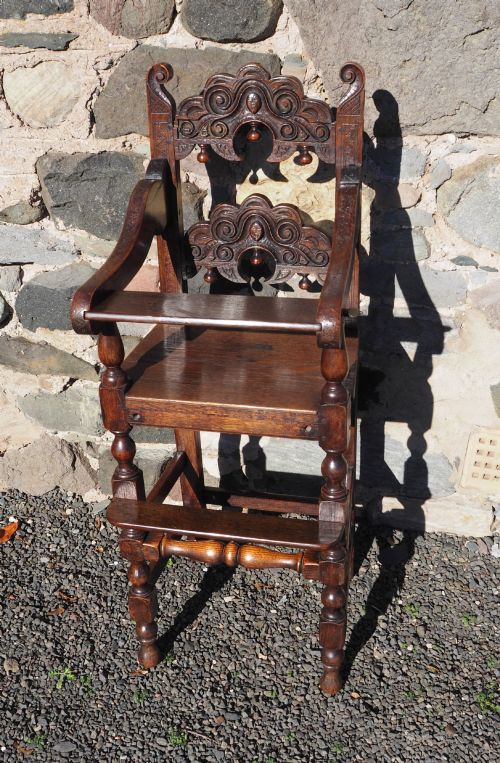
A carved crest high chair brings seventeenth-century presence and robust timber framing directly into a modern interior.
Carved Crest High Chair
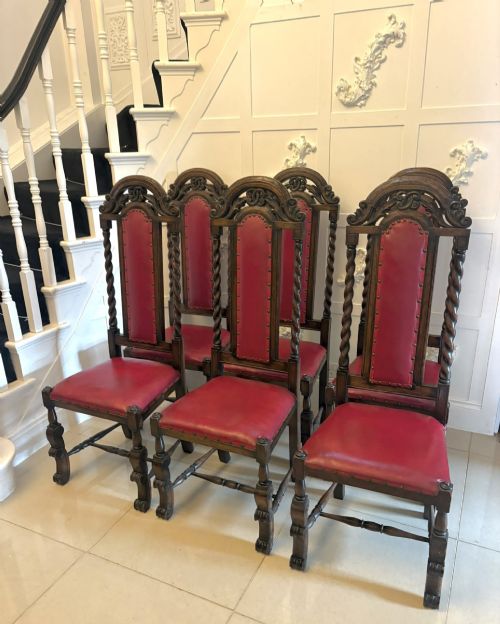
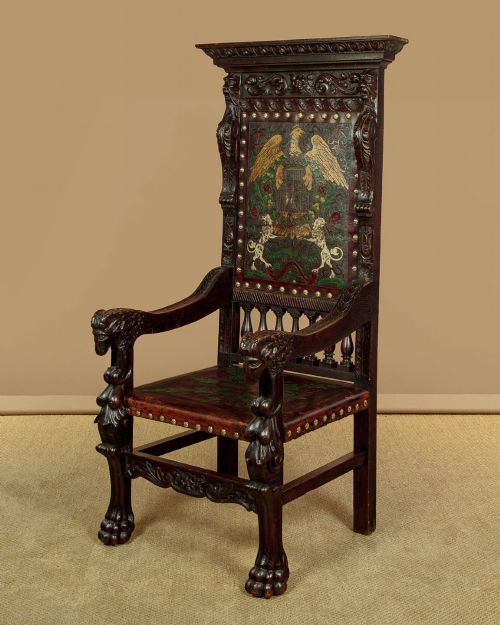
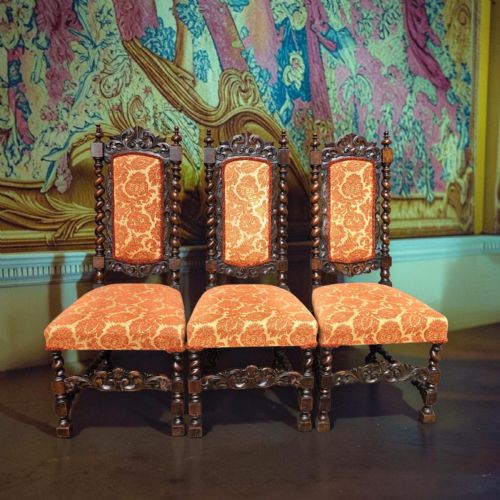
A carved crest high chair draws on seventeenth-century forms, specifically drawing inspiration from Carolean, Jacobean, and William and Mary styles. These pieces often feature elevated backs topped with ornate wooden cresting, alongside related seating forms like highback dining chairs and armchairs.
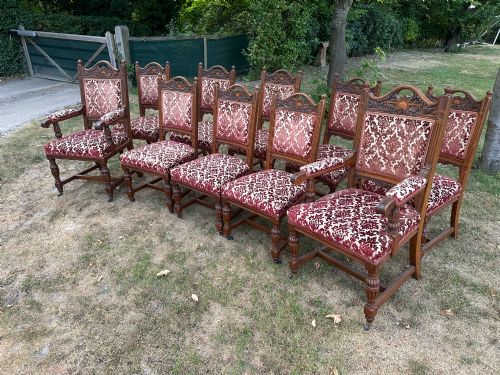
The selection ranges from early oak examples to later revivals spanning the Victorian and Edwardian periods, as well as early twentieth-century interpretations. Walnut and beech appear alongside oak, occasionally complemented by cane, leather, and fabric elements.
Buyers will encounter both genuine seventeenth-century seating and later revival pieces from the nineteenth and early twentieth centuries. Both categories demonstrate substantial upright proportions and detailed crest work designed to command attention in a room.
Materials and Construction Methods
Solid timber forms the structural foundation of these pieces, with oak and walnut dominating the construction. Beech also appears in specific revival items, providing a dense base capable of holding deep chisel work.
Carpenters utilised traditional joinery techniques alongside manual carving to shape the elaborate crests and upright stiles. Secondary materials such as cane, brass, leather, and textile upholstery were integrated into backs and seats to provide contrast and comfort.
Carved Crest High Chair Retail Price Guide 2026
Typical asking prices for carved crest high chair among the pieces listed under this phrase on Sellingantiques today, from the lower quarter to the upper quarter. They describe what is for sale here now, not the wider market.
Design styles present in the selection include Jacobean, Carolean, William and Mary, and Art Nouveau interpretations.
Factors That Distinguish Quality
The depth and crispness of the chisel work on the crest rail dictate much of the visual merit. Superior examples display sharp relief carving where the motifs retain their original definition without softening from wear or later sanding.
The choice and integration of secondary materials further separate the pieces. High-grade items incorporate well-fitted cane work, substantial leather panels, or tightly secured textiles that complement the heavy timber frames.
Waring and Gillow
The Carved Crest High Chair Glossary
- Crest rail
- The horizontal top member of a chair back, frequently shaped, pierced, or carved with decorative motifs. It serves as the primary focal point for highback seating.
- Carolean
- A seventeenth-century style associated with the reign of Charles II, characterised by rich carving, scrolling foliage, and open crown-and-thistle motifs. Revival versions emerged in later centuries.
- Jacobean style
- A heavy, formal seventeenth-century aesthetic defined by straight lines, dark oak timber, and geometric paneling. Later revivals replicate these sturdy proportions.
- Barley twist
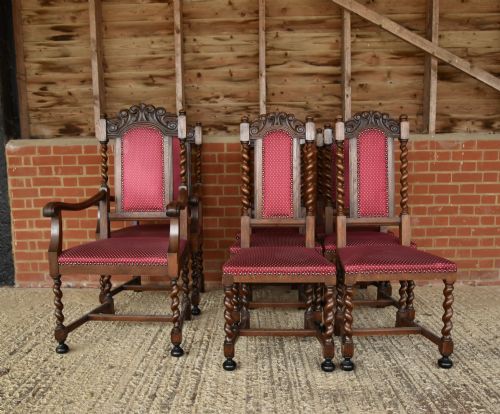
- A turned wooden furniture leg or stretcher shaped to resemble a spiralling rope or barley sugar stick. This decorative turning is common in seventeenth-century and Victorian revival seating.
- Caning
- Woven rattan or split cane used for chair seats and backs to create a resilient, lightweight panel. It allows airflow and light through the frame.
- Bergere
- An enclosed upholstered armchair with a wooden frame and cane panels on the sides and back. It offers a distinct profile compared to solid timber highbacks.
Carved Crest High Chair: Frequently Asked Questions
How do I spot a revival piece?
Revival pieces often display machine-assisted turning alongside hand-carving, and the timber patination appears more uniform than on seventeenth-century originals. Examining the construction joints and tool marks helps reveal the actual age of the wood.
Maker details, specific revival styles such as Jacobean or Carolean, and secondary materials like twentieth-century textiles also point towards later manufacture dates.
How were these chairs originally used?
These tall chairs served ceremonial or prominent functions in domestic interiors, often placed at the head of a dining table or in a grand hall. Their elevated backs signified status and importance.
Over time, their role shifted towards decorative seating in libraries and reception rooms, where the ornate cresting could be fully appreciated against a wall.
How should I care for the wood and upholstery?
Maintain the timber by applying appropriate wax polish sparingly to nourish the grain without buildup. Keep the chairs away from direct heat sources and strong sunlight to prevent the timber and leather from drying out.
If the piece incorporates cane panels or fabric upholstery, brush gently to remove dust and avoid placing heavy loads on delicate woven seats.