


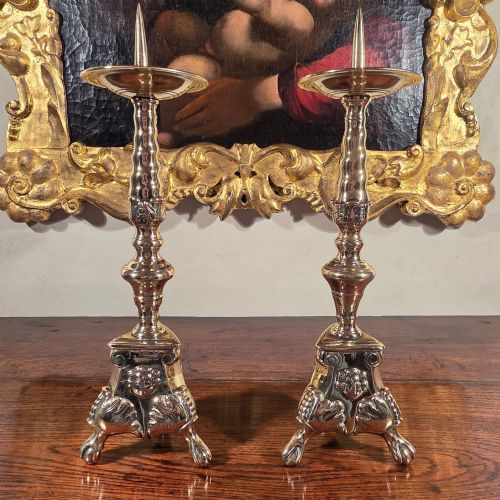


Carved Church Altar Table
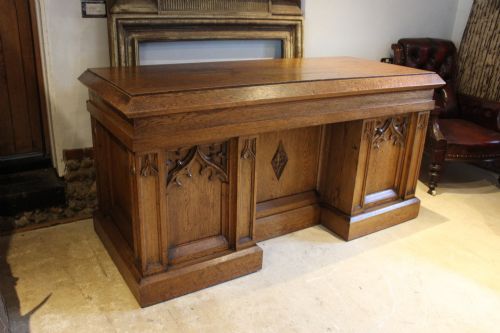
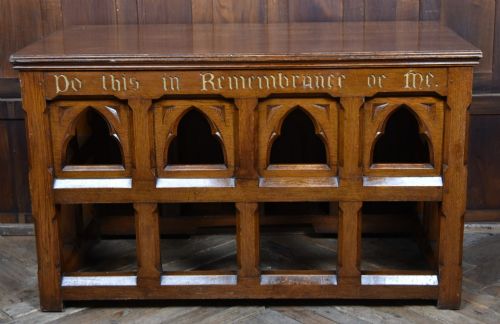
A carved church altar table brings heavy timber, ecclesiastical presence and substantial scale straight into a domestic interior.
Carved Church Altar Table
When you search for a carved church altar table, you are looking at ecclesiastical furniture adapted from chapels, churches and abbeys for secular use. These pieces include substantial oak tables from the Victorian and later periods alongside pieces influenced by earlier centuries.
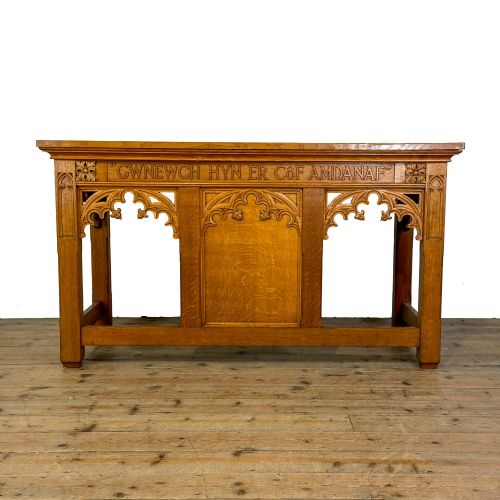
You are most likely to meet solid oak examples from the Victorian Gothic Revival period on this page, often featuring architectural tracery and robust construction. Welsh chapel tables and pitch pine variants also appear, showing how regional makers interpreted ecclesiastical designs.
The forms range from long, heavy altar tables suitable for kitchen islands or large halls down to smaller side tables and related pieces like altars. Their origins sit firmly within the nineteenth century, drawing on Gothic, Georgian and Baroque styles of decoration.
Materials and construction
Carpenters built these tables using heavy domestic hardwoods, predominantly solid oak and pitch pine, chosen for their structural strength and ability to take deep hand carving. Ebonised wood and giltwood also feature alongside iron and brass hardware.
Construction relies on traditional joinery methods suited to large ecclesiastical furniture, including pegged mortise and tenon joints designed to bear heavy weight. Surfaces display meticulous hand carving in Gothic Revival motifs, tracery and linenfold panels.
Carved Church Altar Table Retail Price Guide 2026
Typical asking prices for carved church altar table among the pieces listed under this phrase on Sellingantiques today, from the lower quarter to the upper quarter. They describe what is for sale here now, not the wider market.
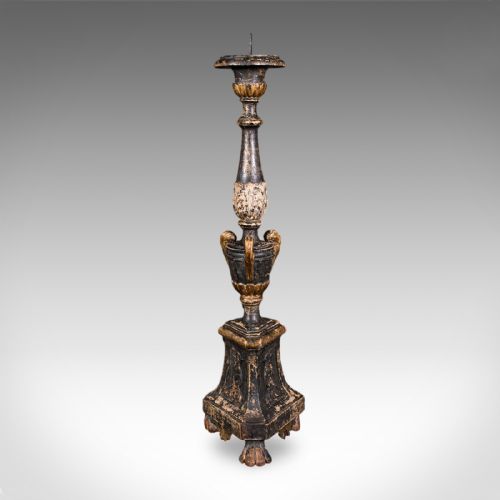
Object types recorded across these selections include altar tables, console tables, candlesticks and associated chapel furnishings.
Judging quality in church furniture
Quality rests on the depth and crispness of the hand carving, where sharply chiselled tracery and confident mouldings separate finer workshop production from simpler vernacular pieces. The choice of timber also dictates standing, with dense, figured oak outperforming softer pine alternatives.
Proportion and structural integrity define the better examples, ensuring that tables converted for domestic use retain their architectural balance without looking awkward. Original surfaces, whether polished oak or historic ebonisation, hold more authority than later stripped finishes.
The Carved Church Altar Table Glossary
- Gothic Revival
- An architectural and decorative style drawing inspiration from medieval forms, prevalent during the nineteenth century. It manifests in pointed arches, trefoils and heavy structural timbers.
- Pricket candlestick
- A specific type of candlestick featuring a sharp metal spike at the top to secure a large candle. These often appear in ecclesiastical settings alongside altar tables.
- Pitch pine
- A resinous softwood utilised extensively in nineteenth-century church joinery and furniture. It offers a distinct grain pattern when finished.
- Ebonised wood
- Timber treated with chemical stains or dark finishes to imitate expensive ebony. This technique gained popularity during the Victorian era for formal and ecclesiastical furnishings.
Carved Church Altar Table: Frequently Asked Questions
What is a carved church altar table?
A carved church altar table is a heavy wooden furnishing originally constructed for religious services in chapels, churches and abbeys. They are typically built from solid oak or pitch pine with detailed Gothic Revival ornamentation.
Today, buyers repurpose these substantial tables as statement dining tables, kitchen islands or console tables in large rooms.
How do I date a church altar table?
Dating relies on examining the timber species, construction marks and decorative styles present in the woodwork. Pieces from the Victorian Gothic Revival period often display machine-assisted saw marks alongside hand-finished joinery and specific architectural motifs.
Earlier eighteenth-century influences appear in pieces built with different plank widths and simpler, deeper hand-cut joints without later industrial intervention.
Can I use an altar table daily?
These tables were engineered for heavy ecclesiastical use, making them exceptionally sturdy and well-suited for everyday domestic tasks. Solid oak and pitch pine surfaces withstand regular wear provided you use appropriate protection against heat and moisture.
Their substantial height and depth mean you should measure your intended space carefully before arranging seating around them.
What styles match church furniture?
Church furniture pairs naturally with industrial items, early English oak antiques and rustic farmhouse interiors that balance heavy timber. The dark tones of ebonised wood and aged oak contrast sharply against whitewashed walls and minimalist backdrops.
Avoid delicate or ornate French Rococo pieces, which tend to clash with the severe architectural lines of Gothic Revival woodwork.