


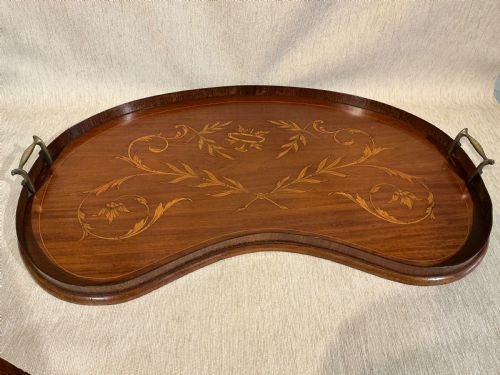


Carved Butler Tray
A carved butler tray brings a sturdy, portable surface into a room, combining the practicality of deep wooden sides with decorative carving.
Carved Butler Tray
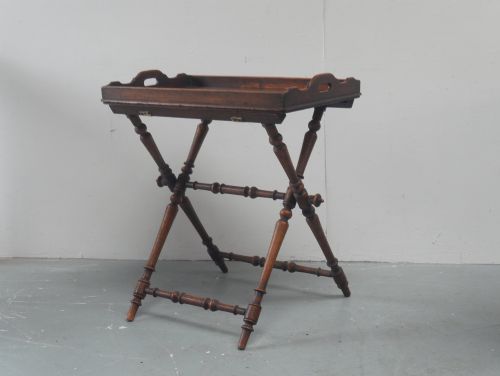
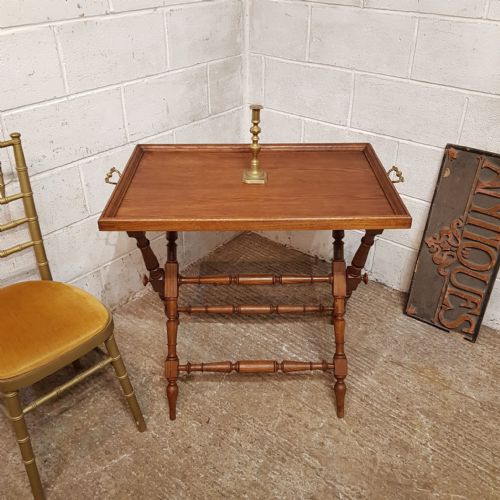
A carved butler tray is a serving surface or tray table designed for domestic service and entertaining, frequently paired with a folding stand to create a versatile table. These pieces emerge from the Georgian, Victorian, and Edwardian periods, stretching into the early twentieth century.
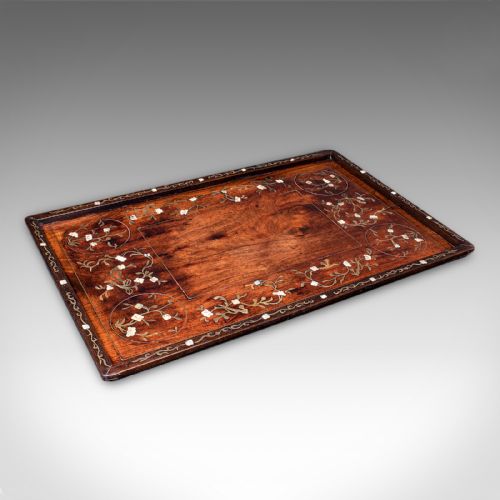
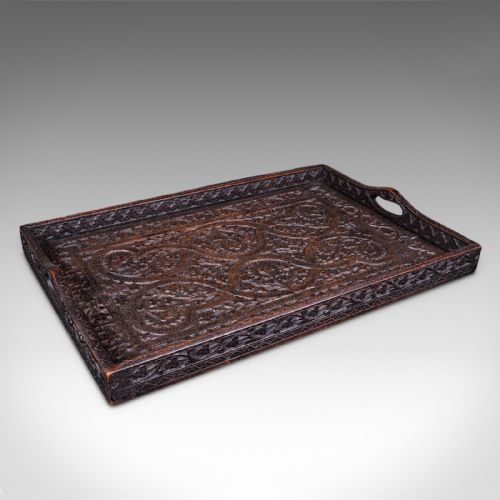
You will most commonly encounter mahogany, oak, and teak versions from the nineteenth century, often featuring gallery edges and folding stands. Styles range from plain English country pieces to heavily carved Anglo-Indian and Japanese interpretations.
The form functions equally well as a portable serving tray or set atop a stand as an occasional table. Surviving examples demonstrate the enduring utility of these traditional wooden serving pieces.
How they were made
Cabinetmakers constructed these trays from dense hardwoods such as mahogany, oak, teak, walnut, and satinwood, frequently selecting timber for stability and grain. Trays often incorporate brass hinges, handles, or gallery fittings to secure the edges.
Carving techniques vary from simple scalloped edges and pierced handles to intricate foliage and figural motifs seen on Anglo-Indian and Gothic Revival pieces. Stands are constructed to fold flat for storage, joining the tray with cross-frame wooden supports.
One unexpected variant on this page is a pair of carved figures doubling as dumb waiters or card butlers.
What varies in quality
Quality rests in the crispness of the hand-carving and the selection of the timber, where dense, well-figured mahogany or oak stands apart from plain secondary woods. The integration of the folding stand and the strength of the joints dictate the structural integrity of the piece.
Refined pieces display careful attention to corner joints, hand-turned stand supports, and substantial brass hardware rather than mass-produced replacements. The depth and precision of the carved borders distinguish standard serving items from more ambitious decorative examples.
Orivit
The Carved Butler Tray Glossary
- Butler tray
- A portable wooden tray with raised sides, often featuring handholds or hinges, designed to rest on a folding stand.
- Gallery
- A raised wooden border surrounding the edge of a tray to prevent items from sliding off during service.
- Anglo-Indian
- A descriptive term for nineteenth-century furniture made in India for British households, noted for dense, intricate plant and floral carving.
- Gothic Revival
- A nineteenth-century style drawing inspiration from medieval architecture, often shown in pointed arches and heavy oak construction.
Carved Butler Tray: Frequently Asked Questions
How were butler trays used?
These pieces served households by carrying food and drink from the kitchens to the dining room or parlour. The removable tray top allowed servants to clear rooms quickly without carrying heavy furniture.
Once the meal concluded, the stand folded flat for storage while the tray stored separately. This dual purpose made them essential items in large nineteenth-century homes.
How do I style a tray table?
Position the tray on its folding stand beside a sofa or armchair to function as a compact occasional table. The raised edges keep books, lamps, and decorative items secure.
You can also lift the tray off the stand and place it on a sideboard or dining table when serving guests. The timber grain adds warmth to both traditional and modern interiors.
Are the trays fixed to the stands?
Most traditional butler trays lift off their folding stands entirely. This design allowed the serving surface to be carried independently before being returned to the base.
Some variations include hinged folding actions or specific locating pegs, but the majority remain removable. Checking the fit between the tray underside and the stand will confirm how the pieces interact.
How do I identify the period?
Look to the timber selection, hardware, and carving style to determine the age of the piece. Georgian and early nineteenth-century examples often use solid mahogany with subtle scalloped edges.
Later Victorian and Edwardian pieces frequently incorporate heavier oak, elaborate carving, or marquetry inlay. The construction methods of the folding stand also help date the piece.